Why AC units freeze up in sticky New York summers

Tell a local repair pro what your air conditioner is doing.

Connect with a pro

Why does my AC keep freezing up in this humidity?

You keep the house comfortable, and right now your AC is doing the opposite. Ice on the lines or the unit itself means it's not cooling the way it should, and in a sticky New York summer that's the kind of problem that gets worse fast. You want to know what's causing it before you decide what to do next.

It freezes because airflow or refrigerant is low, and humid air makes the ice build fast

The coil inside your AC gets cold enough to pull moisture out of the air. If airflow across that coil drops, from a clogged filter or blocked vents, or if the refrigerant charge is low, the coil gets too cold and the moisture freezes onto it instead of draining away. Once ice starts forming, it blocks even more airflow, so the problem feeds itself. New York summers push a lot of moisture through that coil, which means a system that's already struggling has more water in the air to freeze. By the time you see ice, the unit has usually been running below where it should for a while, and the fix is finding what's starving it of airflow or refrigerant, not just thawing it out.

An outdoor air conditioner condenser unit on a concrete pad beside a house with beige horizontal siding and a stone-veneer base, with refrigerant lines running to a gray wall-mounted electrical box, surrounded by dark mulch, a flowering shrub and an evergreen on the left.

Running the way it should

Air moves freely through the vents, the outdoor unit hums along, and the lines stay dry. Warm air goes in one side and cold air comes out the other, no ice anywhere. That's what lets it keep up when the air outside is thick with moisture.


An outdoor air conditioning condenser unit on a concrete pad beside a house with light vinyl siding, an electrical disconnect box and conduit on the wall, bare shrubs and mulch to the right, and a concrete walkway in the foreground.

Iced over and losing ground

Once frost builds on the coil or the lines, the unit can't pull heat out of the air anymore. Airflow drops further, more ice forms, and the house slowly warms up even with the system running. Left alone, it stops cooling altogether.

What's Behind the Ice: Charge or Airflow

Low refrigerant

  • A low charge drops the pressure in the coil low enough that the moisture in the air freezes on it instead of draining off as condensation.
  • This almost always means a leak somewhere in the line set or the coil, not just a unit that needs a top-off.
  • Ice builds from the inside out, so you may see frost on the indoor coil well before it shows up anywhere you can check it yourself.
  • A contractor has to find the leak and fix it before adding refrigerant, or the same ice comes back in a few weeks.
  • The compressor can take damage if it keeps running low on charge, which turns a repair into a bigger one.

Restricted airflow

  • A dirty filter or blocked vents cut down how much air moves across the indoor coil, and the coil gets cold enough to freeze the moisture on it.
  • Furniture pushed against a return vent or registers closed off in unused rooms can be enough to cause it.
  • A blower motor running weak or dirty has the same effect even if every vent in the house is wide open.
  • Once ice forms it blocks airflow even further, so the problem gets worse the longer the unit keeps running.
  • This is usually the faster fix of the two, since clearing or replacing what's blocking the air doesn't touch the refrigerant system at all.
An outdoor air conditioning condenser unit on a concrete pad beside a house with white horizontal lap siding, with an electrical disconnect box and insulated refrigerant line on the wall and a shrub over mulch to the right.

Airflow is doing its job

Air comes off the coil cold and moves through the house without a fight. The lines running to the disconnect box stay dry, no sweating, no ice. The unit outside runs steady without short cycling or straining to keep up on a humid afternoon.

An outdoor air conditioner condenser unit on a concrete pad beside a house with light horizontal lap siding, with an electrical disconnect box and conduit on the wall behind it.

Ice has taken over

Frost has built up on the lines running along the foundation, and the unit looks like it's been fighting this for a while. Once ice forms it blocks airflow across the coil, which only makes more ice. Left alone, this can push liquid refrigerant back into the compressor.

An older woman with short gray hair in a cream cable-knit turtleneck sweater smiles while looking to the side in a wooden kitchen, with a round loaf of bread on a board in the foreground and a lit candle by a dark window.
A woman with dark hair in a bun sits wrapped in a chunky knit blanket on a couch with a child resting his head on her shoulder, eyes closed, beside a lit lamp and bookshelf indoors.
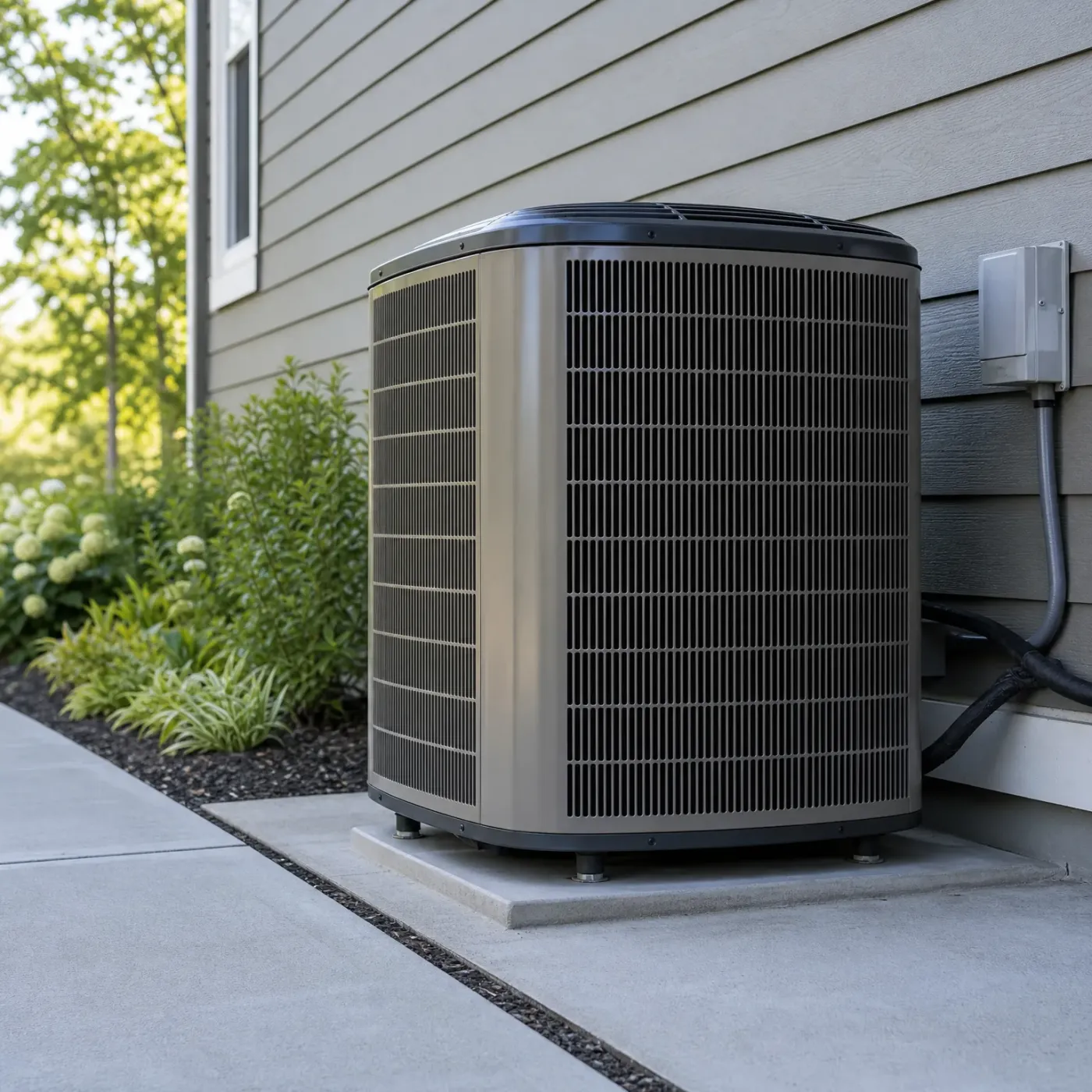
An outdoor air conditioning condenser unit on a concrete pad beside a house with horizontal lap siding, with a gray electrical disconnect box and conduit on the wall and green shrubs and trees to the left.

A pro who works on air conditioners

The pro who reaches out is licensed in New York.

A local pro who knows air conditioners gets your details and gets in touch.

Find a licensed pro

There's no charge for the request.

What are you noticing around your house right now

Walk past the vents and the air feels weak or barely moving, even with the thermostat set low. The outdoor unit might be caked in ice across the coil, or you'll see a thick layer on the copper line running into the house. Sometimes it's water instead, pooling near the indoor unit once the ice melts, or a damp patch spreading on the ceiling below it if that unit sits in an attic. The house stays sticky no matter how long the system runs. Left alone, that meltwater can soak insulation or stain a ceiling, and a system straining like this in a New York summer is one more hot stretch away from not cooling the house at all.

An outdoor air conditioner condenser unit on a concrete pad beside a house wall, with a gray electrical disconnect box and conduit above it and grass in the foreground.

Why the coil freezes first

The evaporator coil runs cold enough to pull moisture out of the air, that's how it cools. When airflow is weak or the charge is low, the coil gets colder than it should, and that moisture freezes on the metal instead of draining away. Once a little ice forms, it blocks more air, so the coil gets even colder and more ice builds on top of it. That's why a small problem turns into a solid block of ice on the line within a day.

A gray outdoor air conditioner condenser unit on a concrete pad beside a house with horizontal lap siding, surrounded by white gravel and a lawn, with a white wall at left.

Why New York humidity makes it worse

A sticky New York summer loads the air with more moisture than the coil has to handle on a dry day. That extra moisture is more condensation forming on the coil at once, so a system that's already struggling with low airflow or a low charge freezes faster and harder than it would somewhere drier. The same weak airflow that might just mean a dirty filter in April can mean a frozen coil by July, because the air coming through is carrying so much more water with it.

A woman stands in the open doorway of a white stucco house holding the dark door, facing a man in a black cap and shirt seen from behind in the blurred foreground, with a potted flowering plant beside the entry.

What's actually happening inside the unit

Cold refrigerant moves through the evaporator coil and the blower pushes house air across it. That's the whole job: warm air in, heat pulled out, cool air pushed back through the vents. The coil only stays above freezing if enough warm air keeps moving across it. Cut that airflow down, with a clogged filter or a dirty coil or a duct that's blocked, and the coil keeps dropping in temperature until it hits 32 degrees. Once that happens, the moisture it's supposed to be pulling from the air freezes onto the metal instead, and the ice builds from there.

New York summers make this worse because the air holds more moisture to begin with. A coil that's borderline in a dry climate will ice over fast here. Figuring out whether it's airflow, charge, or something else means getting hands on the unit, checking static pressure, checking the charge against what the manufacturer specs for that model. A local contractor who works on this equipment all summer has usually seen the exact failure behind it before matching you with one means someone comes who already knows what tends to go wrong on units like yours in this kind of heat.

A living room corner with a beige sofa and cushion, a round wooden coffee table holding a pale ceramic vase of eucalyptus stems and a wooden bowl, and a curtained window with a potted plant above a latticed radiator cover in the background.
  1. Airflow or charge drops, so the coil runs colder than it should

  2. Moisture in the air freezes on the cold coil instead of draining off

  3. Ice builds up and blocks what little airflow was getting through

  4. The system keeps running, cooling less while the ice keeps growing

A woman with dark hair in a bun wearing a cream knit sweater sits on a gray sofa in a bright living room, looking off to the side.
A woman wrapped in a knit blanket sits on a gray sofa in a living room, looking toward a bright window with houseplants and an armchair in the background.
A woman in a gray cowl-neck sweater sits on a light sofa with cushions, smiling and looking to the side, with a kitchen and window visible behind her.
A woman with dark hair in a bun, wearing a light linen shirt, sits on a sofa and looks to the side, with a window, houseplants and a kitchen with pendant lights blurred behind her.
A two-story cream-colored house with horizontal siding and a gray hipped roof, flanked by large green trees and shrubs, with a concrete walkway crossing a lawn to a wet street in the foreground.

New York summer air carries a dew point that averages 62°F across June, July and August, per NOAA. That's heavy air, the kind that feels damp on your skin even standing still. Your AC has to wring more water out of the air just to cool the house, which means the evaporator coil is working harder and running colder for longer stretches. That's the condition that pushes a coil past freezing in the first place. If your system already runs low on charge or airflow, this is the stretch of summer when it shows up as ice instead of just weak cooling.

NASA POWER T2MDEW county cells weighted by homes

Ice on your AC is a sign of a real problem, not weather it needs to tough out, and running it through a humid New York summer while it's frozen only risks the compressor. Weak airflow and low refrigerant both point to a repair, not a reset, and the fix has to match whatever's actually wrong with your unit. A contractor local to New York who works on these systems all summer has seen what usually fails first, whether it's a coil fighting a dirty filter or a slow leak in the line set, and can tell the difference fast. You'll be matched with one licensed contractor suited to your situation, not a handful of companies competing for the job, so you're dealing with one call and one visit instead of sorting through strangers. Shut the system off, let the ice clear, and get someone out who can find the actual cause before you run it again.

An outdoor air conditioner condenser unit on a concrete pad beside a dark horizontal-lap sided house, with mulch beds, shrubs and ornamental grasses nearby.

Get your air conditioner to the right pro

Only one pro gets your request, so you hear from one company.

RepairCentral ACNew York
Step 1 of 2

What ZIP code is the job in?