

Why your AC is running but not cooling in New York

RepairCentral ACNew York
Step 1 of 2

What ZIP code is the job in?

Why is my AC running but not cooling my house?

The blower is running, you can feel air coming out of the vents, but the house still feels sticky and the temperature on the thermostat won't budge. In a New York summer, with the humidity doing most of the damage, that's worrying, especially if there's someone at home who needs the house to stay cool and comfortable.

The air isn't being cooled before it reaches the vents

Your AC has two separate jobs: moving air and cooling it. The blower can keep running and pushing air through the ducts even when the refrigerant side of the system has stopped working. That usually means a low refrigerant charge, a failing compressor, or a coil so iced over or dirty that it can't pull heat out of the air passing by it. In New York, where summer humidity makes an AC work harder to pull moisture out of the air along with the heat, a system that's already low on charge or struggling with a dirty coil shows the problem faster than it would in a drier climate.

  1. Warm air passes over an evaporator coil that should pull out heat.

  2. A dirty filter or frozen coil blocks that airflow from moving through.

  3. Low refrigerant means the coil can't absorb heat from the air.

  4. Air blows out the vents but was never cooled down first.

Frozen Coil or Low Refrigerant

Frozen Coil

  • Ice forms on the evaporator coil when airflow is blocked, usually from a dirty filter or a closed vent somewhere in the house.
  • Once ice builds up, the coil can't pull heat out of the air passing over it, so the vents blow room-temperature air or warmer.
  • Shutting the system off and running just the fan can melt the ice in a few hours, letting a contractor check what caused it.
  • Running the AC with a frozen coil can push liquid refrigerant back to the compressor, which is a more expensive problem to fix.
  • A filter replaced on schedule prevents most of these freeze-ups before they start.

Low Refrigerant

  • Refrigerant doesn't get used up, so a low charge almost always means there's a leak somewhere in the line set or coil.
  • A system low on charge can still blow air, but the coil won't get cold enough to pull the humidity and heat out of it.
  • Hissing or bubbling near the indoor unit or outdoor line can point to where the refrigerant is escaping.
  • Adding refrigerant without fixing the leak means the same problem comes back within weeks or months.
  • Only a licensed contractor can legally handle refrigerant, locate the leak, and recharge the system to the right level.
An outdoor air conditioning condenser unit on a concrete pad beside a house with horizontal lap siding, with an electrical disconnect box and conduit on the wall and a green shrub to the right.

Running clean

A unit like this is doing its job. The pad is clear, the louvered panels are open to the air, and the disconnect box above it is wired tight. Airflow moves through it the way it's supposed to, so the coil inside can actually pull heat out of your house.


An outdoor air conditioner condenser unit on a concrete pad beside a house with horizontal siding and a lower concrete foundation wall, with coiled refrigerant lines at right.

Running dirty

Grime on the louvers and the fan grille blocks the airflow this unit needs to work. Dirt builds up on the coil fins the same way, and once that happens the coil can't absorb heat from the air moving past it. The blower still runs. The air just doesn't get cold.

An outdoor air conditioner condenser unit on a concrete pad beside a house wall with stucco lower section, horizontal siding above, and a white downspout to the right.
Before you get your air conditioner repair
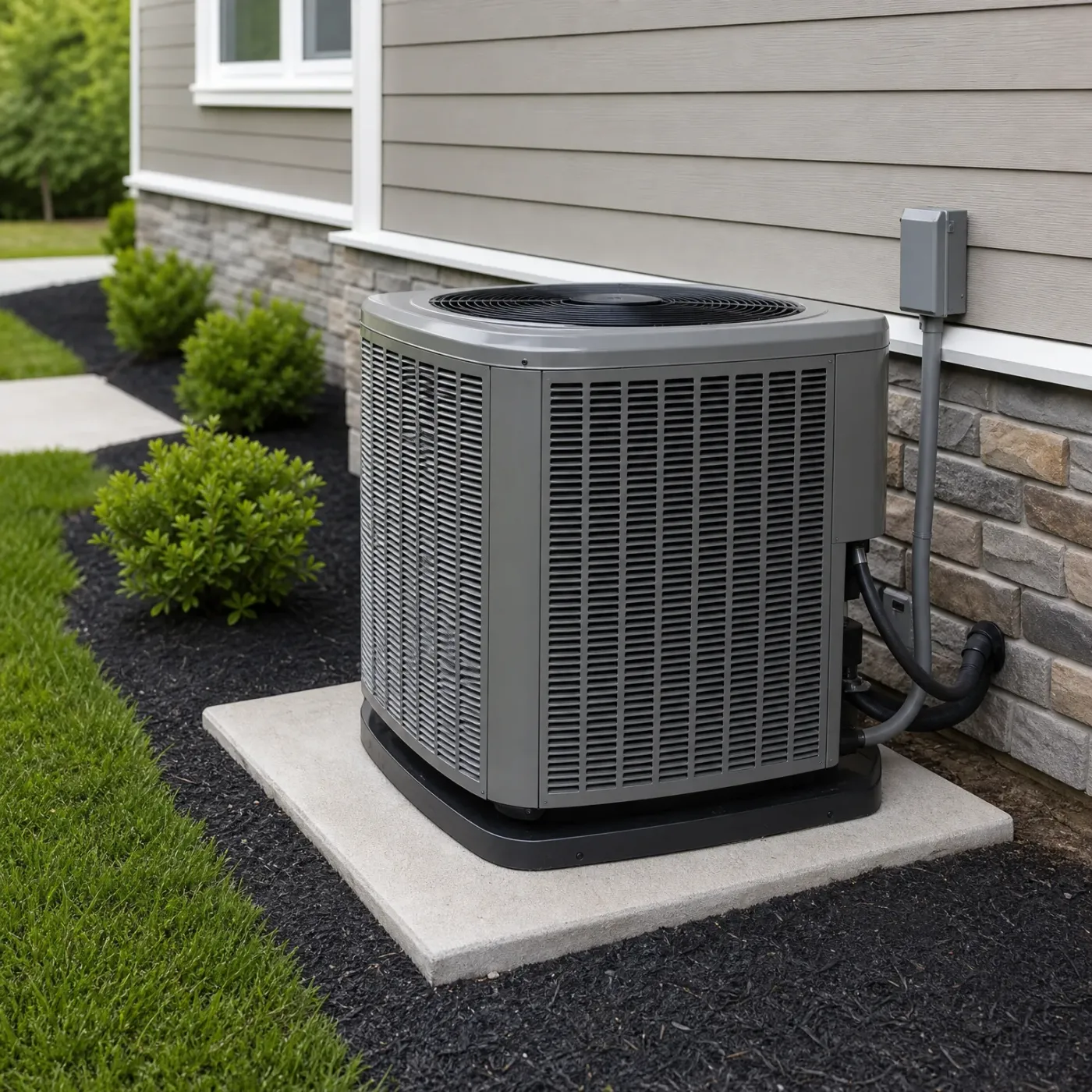
A gray outdoor air conditioning condenser unit on a concrete pad beside a house with horizontal lap siding, with a wall-mounted electrical disconnect box and refrigerant lines, shrubs, mulch and lawn around it.
After you get your air conditioner repair
A gray outdoor air conditioning condenser unit on a composite pad beside a house with horizontal lap siding, with a wall-mounted disconnect box, refrigerant lines, and a wooden fence and shrubs to the left.

Working as it should

This unit sits clear on its pad, lines and conduit run straight up to the disconnect, and nothing is blocking the cabinet. Air moves through it the way it was built to, so the coil inside pulls heat out of your house and the air at the vents actually feels cold.

An outdoor air conditioning condenser unit on a concrete pad beside a house with light vinyl siding, with electrical conduit running to a wall-mounted disconnect box and a shrub in mulch to the right.

Running but not cooling

From outside this one looks almost the same, pad, conduit, wiring all in place. But a unit can run like this for hours and never cool a room if the coil is iced over, the charge is low, or the airflow going through it is blocked.

An older woman with short blond hair in a cream turtleneck sweater stands smiling and looking off-camera in a kitchen, with a loaf of bread, a lit candle, a window showing darkness outside, and wood cabinets behind her.
A woman with hair in a bun sits on a couch holding a sleeping child, both wrapped in a chunky knit blanket, in a dimly lit room with a lamp and bookshelves behind.
A gray outdoor air conditioner condenser unit on a concrete pad beside a house with horizontal siding and a stone veneer base, with a wall-mounted disconnect box, conduit and refrigerant lines, surrounded by black mulch, shrubs and lawn.

The right pro for this job

Describe your air conditioner job once, to one pro.

Describe your air conditioner job, and a local pro who handles it gets in touch.

Find an air conditioner pro

No fee to send it, and nothing to sign.

What does it feel like inside when this is happening?

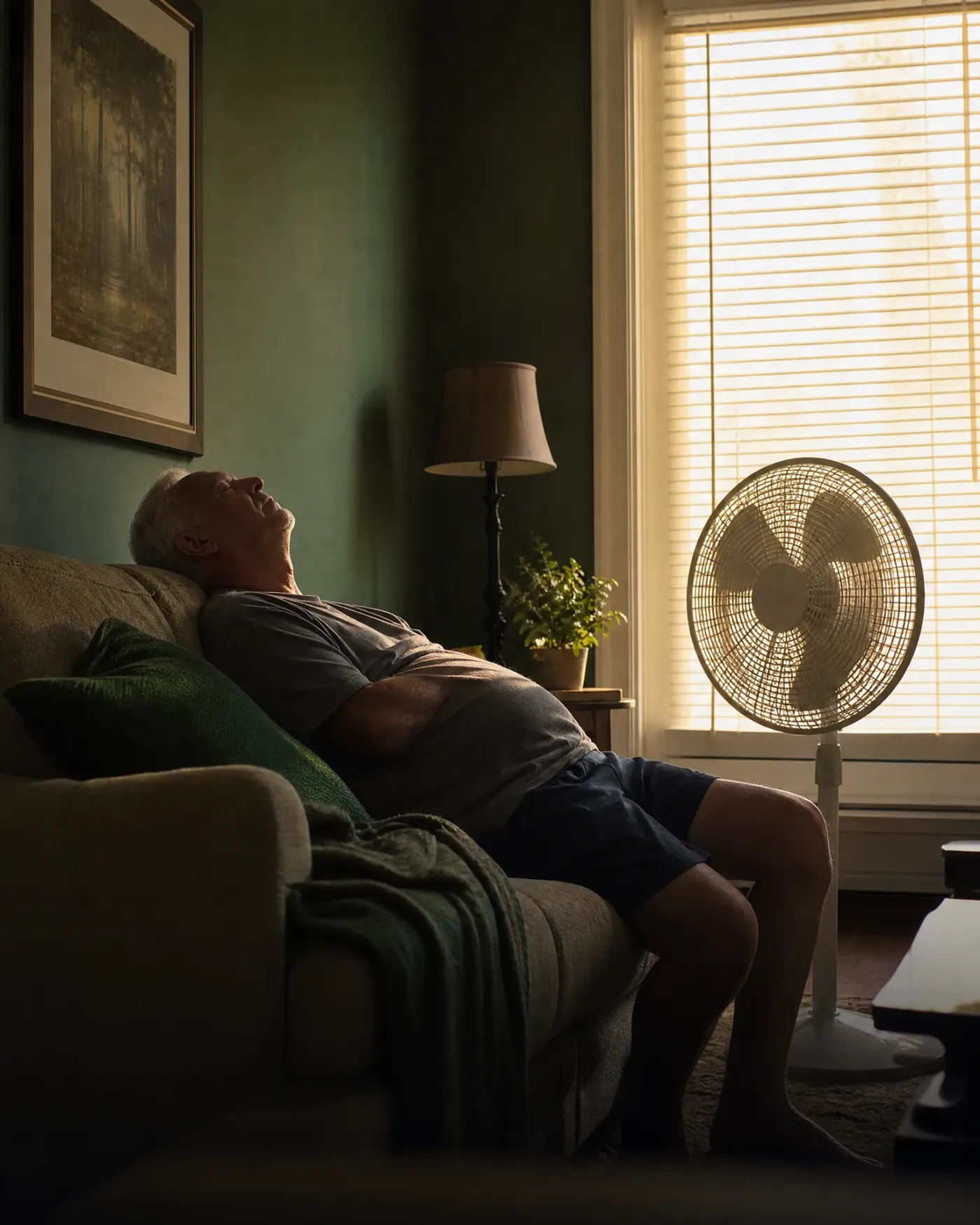
You'll notice it room by room before the thermostat admits anything is wrong. The air from the vents feels room temperature, not cold, even though the blower sounds like it always does. Upstairs stays warmer than downstairs, or the opposite, and no amount of lowering the setpoint changes it. The house feels damp, clothes feel limp, and anyone sitting still starts sweating indoors. If you check the outdoor unit, you might hear it running constantly, cycling less than usual, or not kick on at all. Left alone through a stretch of New York humidity, this usually means the system works harder for less result, and the people trying to sleep or get through the day at home feel it first.

A woman with long brown hair wearing a green V-neck top and beige cardigan sits on a light sofa, looking off to the side, with a dining table, lamp and framed picture in the background.
A woman in a beige cardigan sits on a light-colored sofa with a blanket over her lap, looking off to the side, in a living room with large houseplants and a window.
A woman with long wavy brown hair in a grey ribbed sweater sits on a couch indoors, looking toward a window, with a potted palm-like plant and fireplace behind her.
A woman with long dark hair in a cream knit sweater sits on a beige sofa indoors, looking toward a bright window with a houseplant and framed picture in the background.
A gray outdoor air conditioning condenser unit sits on a concrete pad beside a house with horizontal siding, connected by insulated lines to a wall-mounted disconnect box, with a shrub and gravel bed to the right.
A unit like this one moves air freely through clean coil fins, so it can still pull heat out of your house on a sticky day.
An outdoor air conditioning condenser unit sits on a concrete pad beside a house with horizontal vinyl siding, with a gray electrical disconnect box and insulated refrigerant line on the wall above, surrounded by bare mulched ground.
Caked-on dirt like this blocks airflow through the coil fins, and a unit in this shape struggles to pull any heat out of the air.

A New York summer doesn't pause while your AC sits there blowing warm air. The humidity climbs back into the house within hours, and anyone home all day feels it first, in the kitchen, in a bedroom upstairs, wherever the airflow is worst. If there's a frozen coil behind this, running the system longer only keeps the ice building, and that can push water past the drain pan and onto your floor or ceiling below. A refrigerant leak left alone doesn't fix itself either; it gets lower, and the system works harder to move the same warm air for less and less effect, which shows up on your next power bill. The longer the house stays humid, the harder it is on anyone sensitive to heat, and on wood floors and furniture that don't do well with damp air sitting on them for days at a time.

Power costs 26.39 cents per kilowatt-hour statewide

At 26.39 cents per kilowatt-hour, a struggling AC costs you twice. It runs longer trying to reach a temperature it can't hit, and every one of those extra hours shows up on the bill at a rate higher than almost anywhere else in the country. A unit that's actually cooling pays for itself faster here than in most states.

EIA-861 2025 statewide residential average

Where this leaves you

  • Warm air from the vents almost always traces back to blocked airflow, a frozen coil, or a refrigerant leak.
  • A unit that keeps running without cooling isn't resting between cycles the way a working system does.
  • Checking the filter and the vents takes a minute and rules out the simplest cause first.
  • Ice on the coil or a hissing sound near the lines points to a problem a homeowner can't fix alone.
  • Calling around to different repair companies and repeating the same symptoms to each one takes real time you don't have in a heat wave.
  • The sooner the actual cause gets found, the sooner the house stops running hot while the system runs anyway.

A system that runs but doesn't cool comes down to one of three things: something blocking airflow, ice on the coil, or refrigerant that's gotten low. All three stop the coil from doing the one job it has, pulling heat out of the air moving past it. You can check the filter and the vents yourself, and it's worth doing, since a closed vent or a filter packed with dirt is the easiest fix there is. Past that point, ice on the coil or a hissing sound near the lines means refrigerant or a sealed part, and that's a repair, not a chore for a Saturday afternoon.

What usually costs people the most time isn't the fix itself, it's getting there. Finding a repair company, calling two or three, explaining the same symptoms each time, waiting to hear back, then weighing quotes that don't even cover the same work. In a New York summer, with the heat and humidity climbing back into the house within hours of the AC falling behind, that back and forth is time you feel in every room upstairs.

The house doesn't cool down on its own while any of this gets sorted out. The blower keeps moving air, the bill keeps climbing at a rate higher than almost anywhere else in the country, and the thermostat number doesn't move until the actual cause gets found and fixed. That's the part worth getting to quickly.

Sunlight falls across a beige upholstered sofa with a textured woven cushion and a chunky knit throw, beside a dark wood cabinet holding a ceramic vase with green leafy branches, near a white-framed window.
A sunlit corner of a room with a wooden side table holding a ceramic vase of green foliage and a wooden bowl, beside a light upholstered sofa with a knit throw and rust-colored pillow, with window shadows cast on a beige wall.
A sunlit room corner with beige walls, a white-framed window with sheer cream curtain, wood floor with a light rug, and a woven basket holding a knit blanket.
A beige ceramic vase holding a leafy green branch sits on a wooden cabinet in a corner, with sunlight through a sheer curtain casting leaf shadows on the wall.
A grey upholstered sofa with a rust-orange velvet cushion and a textured throw sits beside a window with linen curtains, next to a wooden side table holding a pale ceramic vase of olive branches.

Matched to your air conditioner job

Fill out one short form instead of calling around.

Get a local pro

Sending the form costs nothing.