Why your AC is blowing warm air in New York

RepairCentral ACNew York
Step 1 of 2

What ZIP code is the job in?

Why is my AC blowing warm air in New York?

You turn the thermostat down and the air coming out feels like room temperature, not cold. With a sticky New York summer outside, that's not something you want to wait on. Before you call anyone, it helps to know what's actually going on with the system and whether this is something simple or a sign the unit needs real attention.

Your AC is low on refrigerant, the airflow is blocked, or the compressor has failed

Warm air from your vents usually means one of three things. A dirty filter or blocked return can starve the system of airflow, so the coil freezes and stops pulling heat from the air. A refrigerant leak does the same thing from the other direction, there isn't enough refrigerant left to absorb heat properly. Either way the system runs but can't cool. The third cause is more serious: a failed compressor, which means the unit isn't cooling at all, just moving air. In New York, where summer humidity makes the air feel worse than the temperature alone, a system that's merely weak can feel like it's blowing warm even when it's only partly working. A technician can tell which of these it is in a single visit.

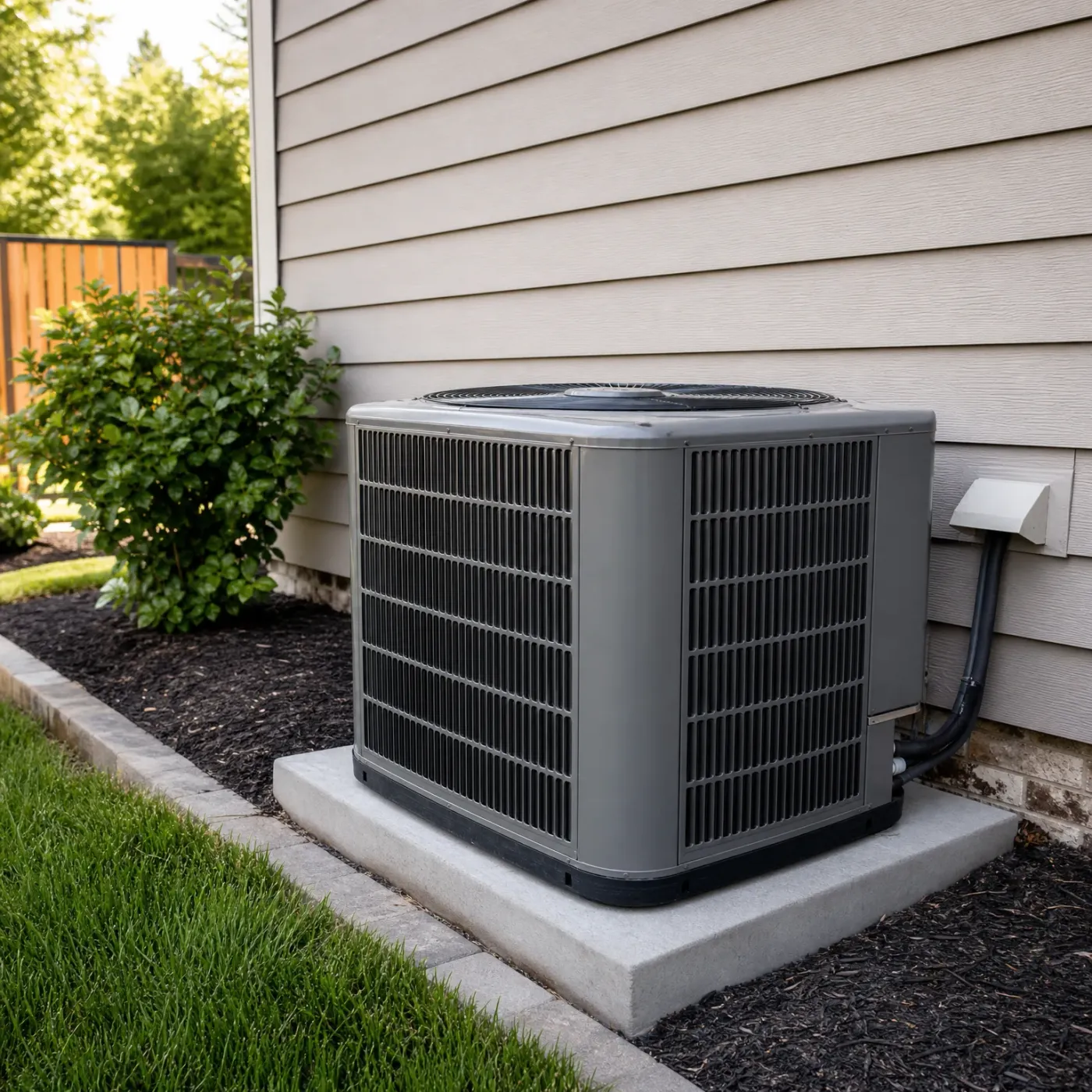
An outdoor air conditioner condenser unit sits on a concrete pad beside a shingled house wall, surrounded by mulch, broad-leaved shrubs and a lawn in low evening light.

You're out back around seven, the light still gold but low over the fence line. The grass is damp from the air, the way it gets on these thick New York evenings. You walk past the condenser on your way to turn on the hose and something stops you. It's quiet. Too quiet. The fan inside the unit should be spinning, pushing that low hum you never really notice until it's gone. It isn't moving at all. You crouch down and feel near the vents. No air coming off it, no warm exhaust, nothing. Inside, you already know what you'll find when you check the thermostat. The house has been holding at eighty for an hour and you just didn't want to be the one to notice first.
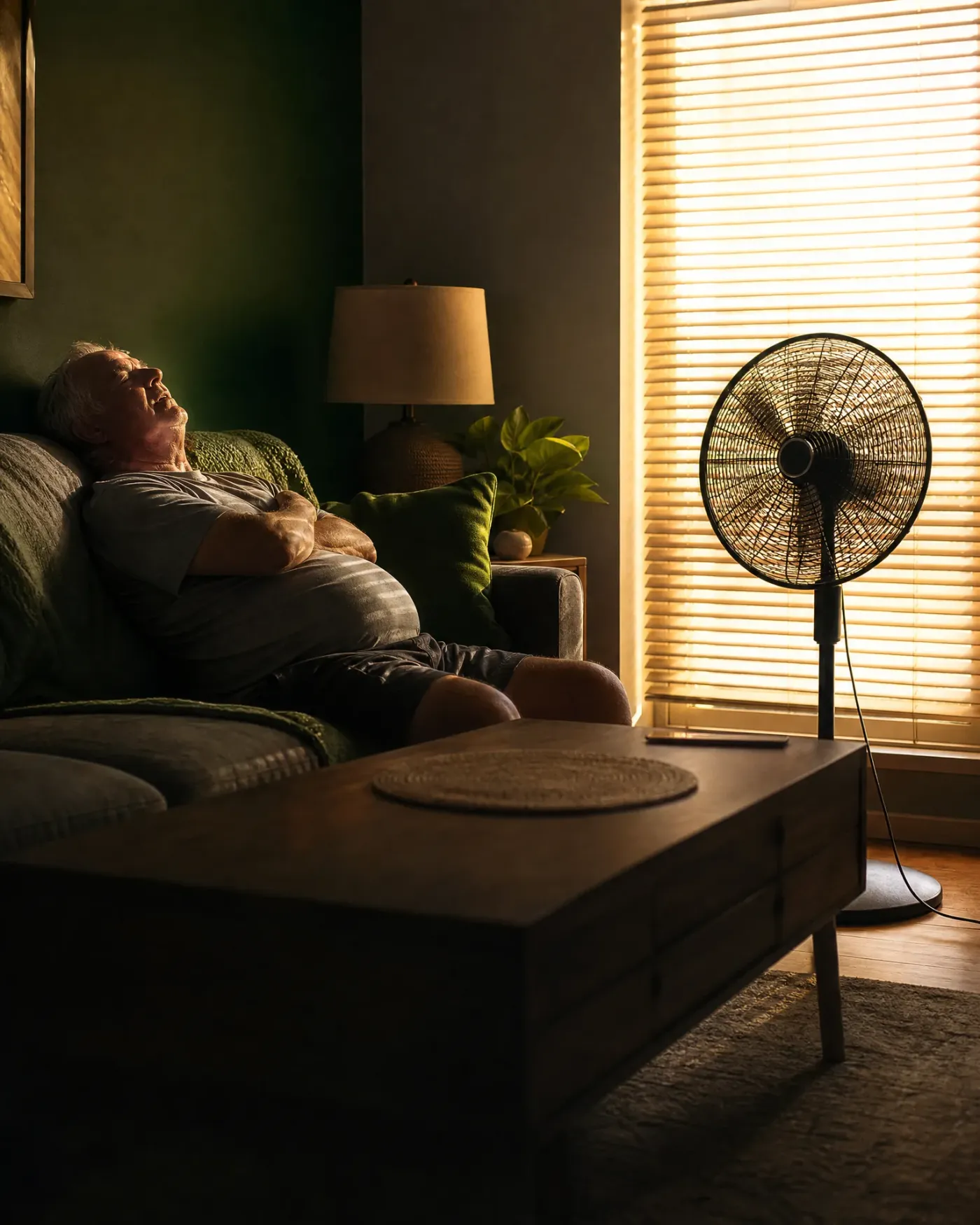

Is the air just not cold, or has it stopped moving too

Put your hand up to the vent. If air is coming out but it's warm, that's different from barely any air moving at all. A warm breeze usually points to the outdoor unit or the refrigerant in the lines. Weak airflow that's also warm points more toward the blower or a filter so clogged it's choking the system. Either way, the house stops cooling evenly. Bedrooms upstairs get stuffy first, usually by afternoon. Run it like this for long and the system works harder than it should, and on a New York electric bill that shows up fast. Left alone, a struggling compressor can fail outright, and then you're not looking at a repair anymore.

A gray outdoor air conditioner condenser unit sits on a concrete pad beside a house with horizontal lap siding, with conduit and an electrical disconnect box on the wall, dark mulch and a shrub to the left, and a concrete walkway in the foreground.

Running but not cooling

The outdoor unit hums along, fan spinning, no ice anywhere on the lines. It looks like it's doing its job. If warm air is still coming through the vents, the problem is more likely low refrigerant or a failing part inside the unit than anything blocking it.

An outdoor air conditioning condenser unit on a concrete pad beside a house with horizontal lap siding, with a shrub and mulch bed to the left and conduit and a small electrical box on the wall to the right.

Dirty or struggling

Dirt built up on the grilles chokes off airflow the unit needs to release heat. A disconnect box with loose or corroded wiring can cause it to cycle oddly or quit early. Either one leaves the unit running without actually cooling your home.

A woman with long blonde hair in a light blue shirt leans back on a beige sofa with her eyes closed, in a softly lit living room with cushions and a blurred plant and shelf in the background.
A woman with long dark hair in a gray knit sweater sits on a gray sofa with a cushion, looking toward a window in a living room with framed pictures and a lamp in the background.
A woman with long dark hair in a light grey knit sweater sits on a sofa indoors, looking to her right, with a framed landscape picture, a potted plant and a curtained window behind her.
A woman with long dark hair leans back against a gray sofa with her eyes closed, in a living room with a curtained window, a potted plant, and a dark screen in the background.
A gray outdoor air conditioning condenser unit on a concrete pad beside a house with horizontal vinyl siding, with mulch, a shrub, and lawn nearby.

A local pro for your air conditioner repair

Send the request and finding a pro stops being your problem.

Say what's going on with your air conditioner, and a pro who works on them reaches out.

Request a pro

No fee to send it, and nothing to sign.

Frozen Coil or Failing Compressor

Frozen coil

  • Ice on the indoor coil blocks airflow, so what reaches the vents feels warm even though the system is running.
  • This usually starts with low refrigerant or a return vent that's blocked or closed off somewhere in the house.
  • A dirty air filter can cause the same freeze-up by choking off the airflow the coil needs to stay above freezing.
  • Running the system with ice on the coil can push liquid refrigerant back to the compressor and damage it.
  • Switching the thermostat to fan only for a few hours can melt the ice so a contractor can see what caused it.
  • If the ice comes back soon after it melts, that points to a leak rather than a one-time blockage.

Failing outdoor unit

  • If the condenser outside isn't running at all, the indoor blower just moves the air around your house without cooling it.
  • A tripped breaker, a bad capacitor, or a failed contactor can all stop the outdoor unit from starting.
  • Listen for a humming sound with no fan movement, which usually means the capacitor or motor has gone bad.
  • A compressor that short cycles, turning on and shutting off within a minute or two, is often near the end of its life.
  • With New York power rates among the highest in the country, a struggling compressor can raise the bill before it fails outright.
  • This kind of failure needs a licensed contractor, since diagnosing the compressor or capacitor means working inside the electrical panel.
A gray outdoor air conditioning condenser unit on a concrete pad beside a house with horizontal lap siding and a stone veneer base, with a disconnect box and conduit on the wall, mulch bed and shrub to the right, and mowed grass in the foreground.
The unit outside looks clean, the fan turns, and the disconnect box sits wired and untouched on the wall beside it.
An outdoor air conditioner condenser unit on a gray composite pad beside a house with horizontal siding, a concrete foundation, a basement window, and a conduit and disconnect box on the wall.
A cabinet caked in dust and dirt like this one struggles to pull in the air it needs to cool your home.

A central air system cools by moving heat, not by making cold air out of nothing. Refrigerant runs through the indoor coil and pulls heat out of the air passing over it, then carries that heat outside through the lines to the condenser, where the outdoor fan pushes it into the air around your house. For that to work, the refrigerant has to arrive at the right pressure, and the system needs enough airflow on both ends to move the heat along. Drop the charge even a little, from a slow leak at a fitting or a worn valve, and the coil can't pull in enough heat to matter. The air leaving your vents still moves, but it's only passed by the coil, not cooled by it. A contractor checks this with gauges on the line set, not by guessing from how the air feels at the vent.

Power costs 26.39 cents per kilowatt-hour statewide

At 26.39 cents per kilowatt-hour, running a struggling air conditioner costs you more here than almost anywhere else. A unit low on refrigerant or fighting a dirty coil pulls power the whole time it runs without giving you cold air back. Getting it fixed instead of letting it limp along is what keeps that bill from climbing further.

EIA-861 2025 statewide residential average

Where This Leaves You

  • Warm air from the vents usually traces back to the outdoor unit, the refrigerant level, or airflow blocked somewhere between the coil and the vent.
  • A fan spinning outside doesn't mean the system is working right, since low refrigerant or a worn part can run alongside a healthy-looking fan.
  • Ice on the indoor coil cuts off airflow and sends warm air through the vents even while the system keeps running.
  • A clogged filter or a closed return vent can starve the system of airflow and bring on the same warm air and frozen coil.
  • A struggling unit draws power the whole time it runs without cooling your home, which adds up fast on a New York electric bill.
  • None of these problems clear up by waiting them out, and the muggy air outside only adds to what the system is fighting.

Warm air from the vents has a short list of real causes, and they all trace back to the same two places: the outdoor unit and refrigerant, or something blocking airflow between the coil and the room. A fan that spins and a cabinet that looks clean tell you less than you'd think, since a system can run the whole time and still not cool a thing. Ice on the coil is a sign, not a separate problem, and it usually points back to low refrigerant or air that can't get through, whether that's a dirty filter or a return vent someone closed and forgot about. Whatever the cause, the unit keeps drawing power the entire time it runs. On a New York electric bill, that is not a small thing to let ride. The humidity outside doesn't cause any of this, but it makes a struggling system work harder and makes the warm air coming out feel worse than it would on a dry day. None of this sorts itself out by giving it another day. A refrigerant leak doesn't seal itself, a worn part doesn't recover, and a frozen coil needs the airflow problem behind it fixed before it can do its job again. Knowing which of these is happening in your house takes someone looking at the actual unit, the actual coil, the actual vents. That's the next step from here.

A smiling older woman with gray shoulder-length hair in a cream cable-knit turtleneck sweater stands behind a wooden board holding a round loaf of bread, in a warmly lit kitchen with a dark window and shelves behind her.
A woman with dark hair in a bun sits on a sofa with a child resting his head on her shoulder, both wrapped in a cream knit blanket, with a lit lamp and bookshelf in the dim background.

Get the right pro for your air conditioner

Warm air from the vents almost always comes down to the outdoor unit, the refrigerant, or something blocking airflow between the coil and the room. None of those get better by running the system longer. A contractor can check the charge, look at the coil, and tell you which part is behind it. Send the form and that search becomes someone else's job instead of yours, and with a sticky New York summer outside, that's worth having off your plate.

Get matched

After this form, you can stop searching for an air conditioner pro.

Sending the form costs nothing.