








Why your mini split freezes up in New York

RepairMini-splitNew York
Step 1 of 2

What ZIP code is the job in?

Why does my mini split keep freezing up?

A frozen mini split is one of those problems that gets worse the longer you run it. You've probably noticed ice building up on the coil or the lines outside, maybe even water dripping where it shouldn't. With how humid New York summers get, it's tempting to just let it run and hope the ice melts on its own, but that usually makes the real problem harder to find.

Low refrigerant or restricted airflow is almost always the cause

When a mini split freezes, it's almost always one of two things. Either the refrigerant charge is low, which drops the coil temperature below freezing even on a humid day, or air isn't moving across the coil the way it should, usually from a dirty filter or a blower that isn't pulling its full load. Either way, moisture in the air lands on a coil that's colder than it's supposed to be and turns to ice. In a New York summer, with the air outside already heavy with moisture, that ice can build fast once it starts. Running the unit longer only adds more ice. The fix depends on finding which of the two is actually happening, which means a contractor checking the charge and the airflow before touching anything else.

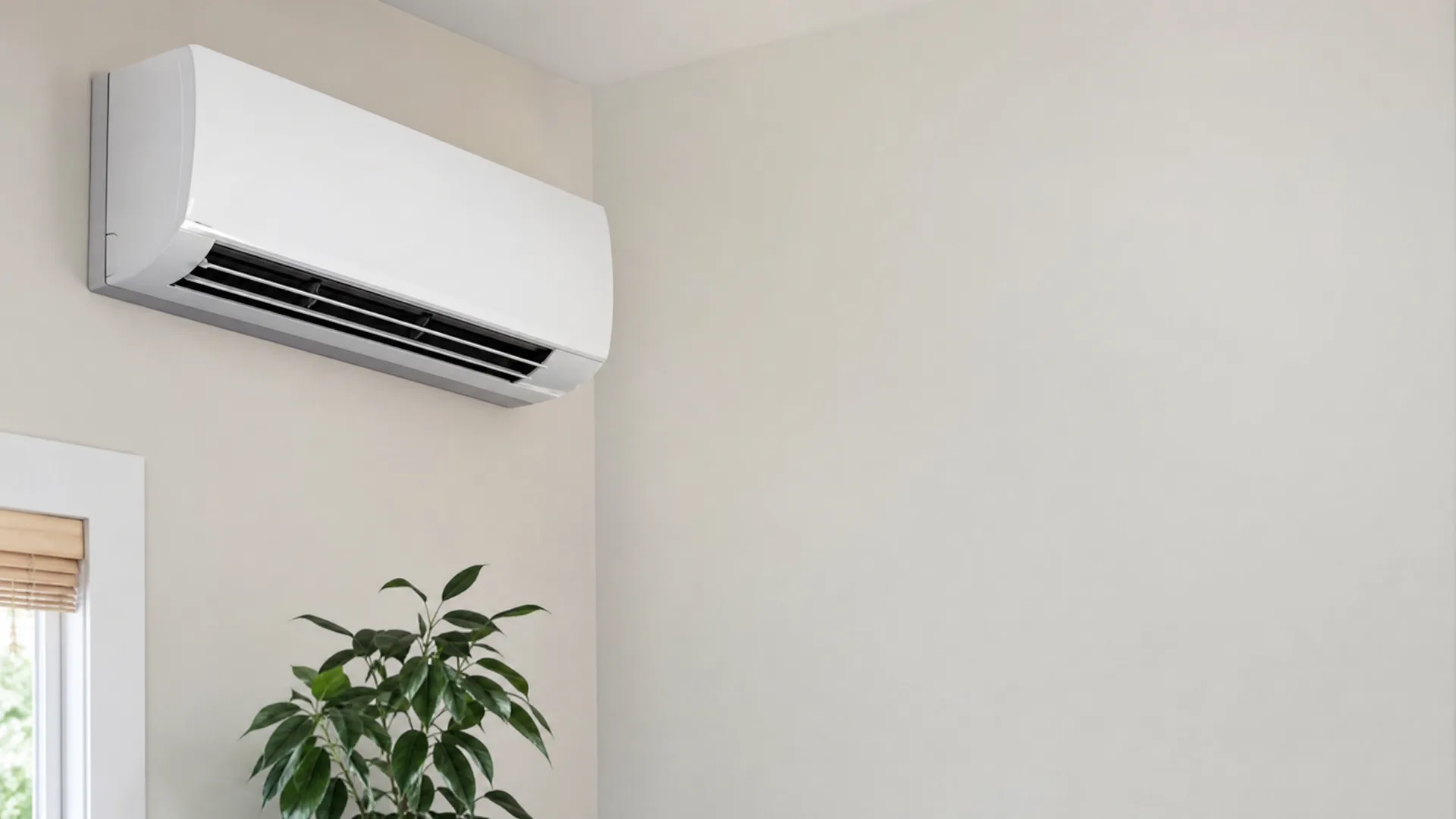
A white wall-mounted mini-split air conditioner near the ceiling of a beige interior corner, with a green houseplant and a curtained window at the lower left.

Why low refrigerant causes ice

A mini split runs refrigerant through the coil to pull heat out of the air. When the charge is low, pressure in the coil drops and the coil gets colder than it should. Moisture in the air freezes on contact instead of draining off as condensate. Once ice forms, it blocks airflow across the coil, which drops the temperature further and builds more ice. A leak is usually behind the low charge, and that's a repair for a licensed contractor, not something to top off on your own.

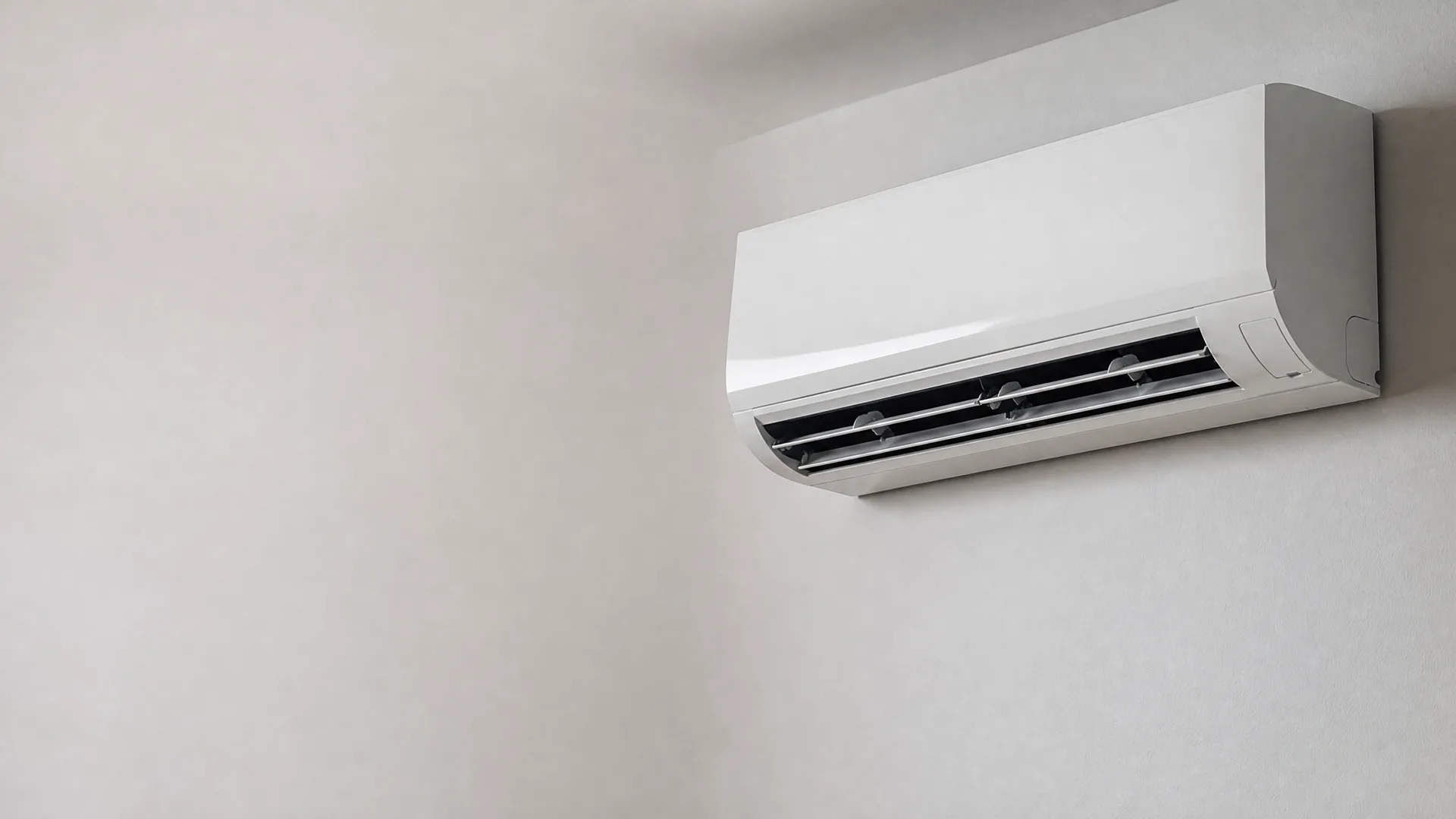
A white wall-mounted mini-split air conditioner indoor unit on a plain light gray wall, positioned to the right of frame.

Airflow problems do the same thing

A dirty filter, a blocked return, or a blower losing strength all starve the coil of warm air moving across it. Without enough airflow, the coil runs too cold and ice forms the same way it would with a low charge. This matters in New York because summers here get sticky, and a coil already working against high humidity has less room for error when airflow drops. Someone who services this equipment every season can tell from how the ice is spread whether it's an airflow issue or something else.

Run It or Shut It Off

Keep running it

  • Ice spreads across the coil fast once it starts, so the longer it runs, the more the coil builds up.
  • A frozen coil blocks airflow, so the unit works harder and still cools less than it should.
  • Running it iced up can push liquid refrigerant back into the compressor, which is what actually ends up costly to replace.
  • Water from the melt can land on the wall or floor below the indoor unit, not just the drain pan.
  • Electric rates in New York make a system straining against ice an expensive way to get worse cooling.

Shut it off and call

  • Turning it off lets the ice melt on its own instead of a contractor having to work around it.
  • A contractor who services mini splits all summer in New York has seen which parts fail first in this climate.
  • One contractor means one visit and one diagnosis, not several companies calling about the same unit.
  • A local contractor can check refrigerant charge and airflow together, since either one alone can cause the freeze.
  • Catching it before the compressor is involved usually means a simpler repair than catching it after.
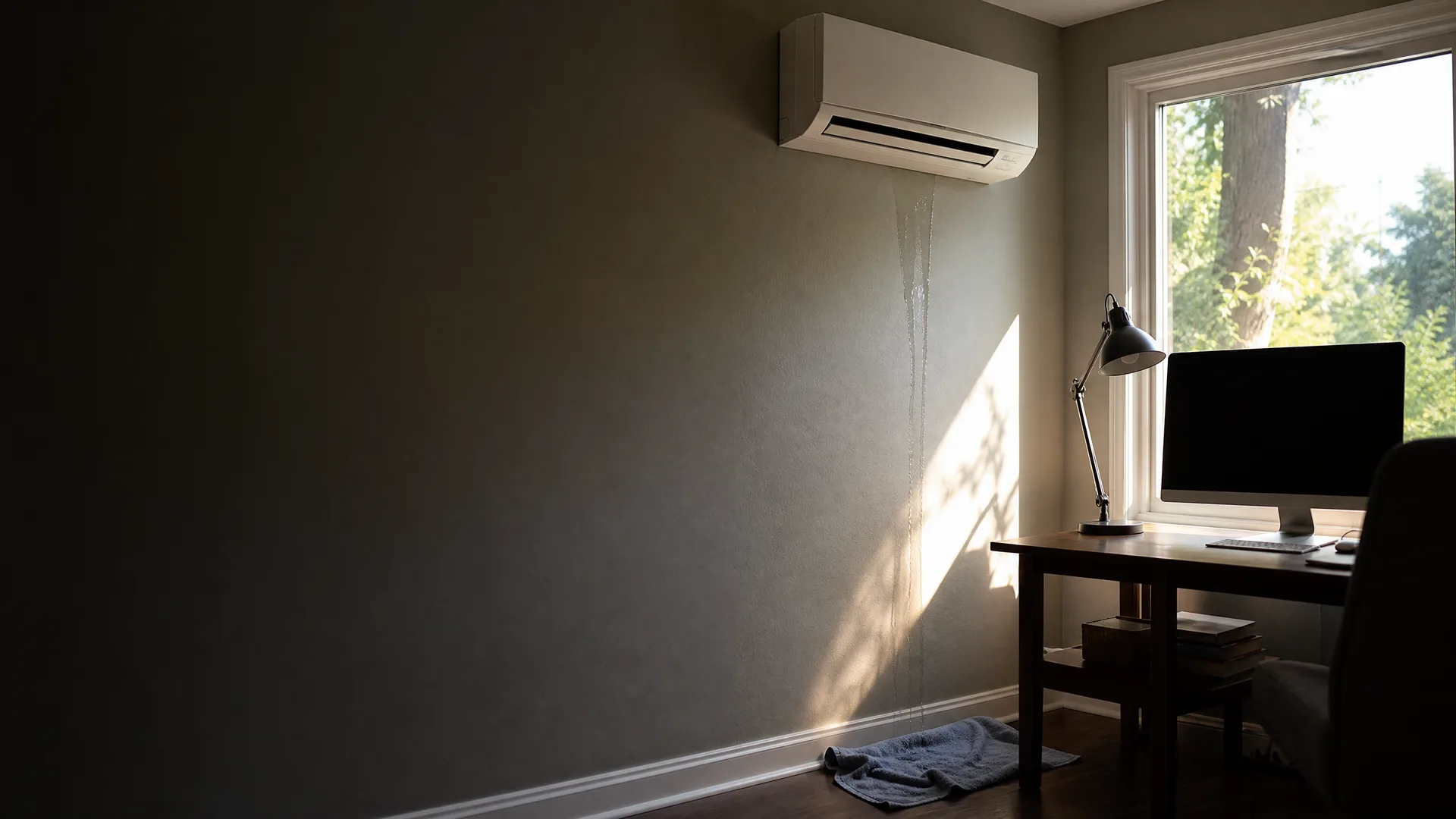
A wall-mounted mini-split air conditioner leaking water down a dim gray wall onto a towel on the floor, beside a window with a desk, lamp and monitor.

You're at your desk around two in the afternoon, the sun hitting that side of the house, and you notice the paper by the wall has gone soft. Then you see it: a wet streak running down the drywall right under the indoor unit, and a towel someone left there is already soaked through. The mini split is still blowing, but the air feels weak. You wipe the wall down and it's damp again in an hour. You know this unit, you know it's never done this before, and you want someone who actually works on these systems in New York summers to look at it before the wall underneath gets worse.

The right pro for this job

Your request goes to one pro, not a list of companies.

Sending the form costs nothing.

When Airflow Is the Real Problem

  • A dirty filter cuts airflow across the coil, so the coil runs colder and ice forms instead of just condensation.
  • Blower wheels caked with dust can slow air movement enough to freeze the coil even with a clean filter.
  • A failing or dirty blower motor loses speed over time, starving the coil of the air it needs to stay above freezing.
  • Running the unit below 60 degrees outside, if it's not rated for low-ambient cooling, can freeze the coil on its own.
  • A stuck or miscalibrated thermostat sensor can keep the compressor running long after the space is already cold enough.
  • Blocked return vents or furniture pushed against the indoor unit starve it of air the same way a dirty filter does.

Refrigerant gets blamed first, but airflow causes a lot of these freeze-ups too, and it's usually easier to find. The indoor coil needs a steady pass of room air moving across it to stay above freezing. Anything that slows that air down enough, and the coil starts icing even with a full refrigerant charge. The filter is the first place to check because it sits right in that airflow path, and a few months of dust can choke it down more than people expect. Behind the filter is the blower wheel, and that one's easy to miss. Dust cakes onto the fins over time, and once it builds up enough, the wheel moves less air per spin even though the motor sounds normal. If the motor itself is wearing out, you get the same result from a different cause, a slower spin that quietly starves the coil. None of this requires anything be wrong with the refrigerant side at all. Outside, running the unit on a cold day matters too. Mini splits built for low-ambient cooling handle that fine, but one that isn't rated for it can ice up the coil just from running when it's cold out. And sometimes the problem is in the room, not the machine. A sensor reading wrong, or a couch pushed up against the indoor unit, blocks the return air the same way a dirty filter does. Any technician checking a frozen unit works through these before touching the refrigerant.

A man with graying curly hair and a dark green sweater sits on a gray sofa in a sunlit living room, looking off to the side, with a framed picture, shelving, an armchair and a window with sheer curtains behind him.
A middle-aged man with graying hair and a short beard sits on a blue sofa in a living room, looking toward a window, with a bookshelf, lamp and framed picture in the background.
A gray-haired man in a dark blue sweater sits on a light gray sofa in a sunlit living room, looking off to the side, with a potted plant, shelving unit, and large glass doors behind him.
A gray-haired man in a dark sweater sits on a light gray sofa in a living room, looking toward a sunlit window with trees outside.

Keep running the frozen unit and let it thaw on its own schedule, and you're looking at a repair that costs more the longer the coil stays iced, since refrigerant lines and the compressor take the hit too.

Shut it off now and get someone qualified to find out why it froze in the first place. A tech who works on mini splits all summer in New York can usually spot a low charge or a blocked coil fast, and fixing the cause means it won't just freeze again next week.

A dusty beige wall-mounted mini-split air conditioner indoor unit installed high on a plain light-colored wall below the ceiling.
Before you get your mini split repair
A white wall-mounted mini-split air conditioner near the ceiling of a room with light gray walls, white crown molding, and a beige curtain at the left edge.
After you get your mini split repair

Running it on your own

You can turn the unit off, let the ice melt, change the filter and run it again. Sometimes that clears a one-time freeze, especially if the filter was the only problem. But if the coil froze because of a low charge, a bad blower motor, or a stuck valve, it will ice up again the next time it runs long enough to get cold. You won't know which one you're dealing with just by looking at it, and running it again before the real cause is fixed risks pushing liquid refrigerant back into the compressor.


Having it looked at

A contractor licensed to work on mini splits in New York can check refrigerant pressure, test the blower motor, and look at the coil itself to find out why it froze. Someone local who services this equipment every summer knows which of these failures shows up most and can check for it directly instead of guessing. You'd be matched with one contractor for your situation, not several companies calling, and that contractor reaches out to you to look at what's actually going on before anything runs again.

A woman with shoulder-length graying brown hair, wearing a beige cardigan over a white top, sits in a light upholstered armchair and looks off to the side, with a curtained window, bookshelf, and lamp shade behind her.
A woman with dark hair in a bun holds a sleeping child wrapped in a knitted beige blanket on a sofa, with a lit lamp and a window behind them.
A white wall-mounted mini-split air conditioner on a beige interior wall, with a curtained window on the left and wood flooring with a light rug below.

Running clean

This is what a mini split should look like doing its job. Air moves across the coil, the coil stays above freezing, and the only moisture you see is what drains out through the condensate line, not what collects on the casing.

A white wall-mounted mini-split air conditioner indoor unit installed near the ceiling on a plain light-colored wall, with its horizontal outlet vent and louvers visible.

Running iced

Dust has built up on the casing and vents here, and that same dust is likely packed into the filter and the coil behind it. That buildup is enough to choke airflow and bring the coil down to freezing, even if nothing else is wrong with the unit.

Power costs 26.39 cents per kilowatt-hour statewide

At that rate, every hour a frozen mini split runs the blower without actually cooling your house is an hour you paid full price for nothing. Once the coil ices over, it can't move heat, so the compressor keeps drawing power while your rooms stay warm.

EIA-861 2025 statewide residential average

A white wall-mounted mini-split air conditioner on a beige interior wall, next to a window with sheer white curtains and green foliage outside.
This is a mini split that's getting what it needs: clean coil, clear airflow, nothing fighting it.
A dusty, discolored wall-mounted mini-split air conditioner indoor unit on a plain white wall, with its horizontal louvers and vent grille visible.
Caked dust like this chokes airflow across the coil until it runs cold enough to freeze.
A single-story house with light gray horizontal siding, dark shingled gable roofs, and white-trimmed windows, with an air conditioning unit beside a recessed entry and a partly dry lawn in front under a clear blue sky.

Average summer humidity across New York homes puts the dew point at 62°F in June, July and August, according to regional weather data. That's heavy, sticky air for a mini split to pull moisture out of. The harder it works to wring that moisture from the air, the more condensation forms on the coil, and if airflow is already weak from a dirty filter or a low charge, that moisture turns to ice instead of draining away. In a drier climate the same weak airflow might just mean worse cooling. Here, it's often what tips a struggling unit into a frozen one.

NASA POWER T2MDEW county cells weighted by homes

A frozen mini split comes down to one of a few things: a dirty filter, a weak blower, a low charge, or a thermostat keeping it running when it should rest. Once you shut it off and let the coil thaw, the cause has to get found before you run it again, or the ice comes back. That's work for someone who opens up mini splits like this all summer and knows which of those four to check first. You'll be matched with one licensed contractor working near you in New York, not a handful of companies competing for the callback, so the person who shows up already has a sense of what tends to fail on these units and why. Your unit should be moving air across a clean, cold coil and draining what it pulls from that thick summer air, nothing freezing on the casing, nothing dripping where it shouldn't. That's the fix, and that's where this ends up once someone finds the actual cause instead of just thawing the ice and hoping.

A white wall-mounted mini-split indoor unit on a light gray wall above a beige sectional sofa with a patterned cushion, beside a framed abstract artwork and a curtained window.

Matched to your mini split job

Find a local pro

The pro who reaches out is licensed in New York.

You're not committing to anything by asking.