Left alone, working fine
A bare condenser like this one handles snow and ice without help. The coil sheds water and the case is built for weather. Outdoor units sit uncovered all winter in New York yards and start up fine every spring.

Winter is coming and the unit outside is about to sit idle for months. A lot of homeowners cover it the way they'd cover a grill, figuring it keeps snow and ice off and makes the thing last longer. It seems like the responsible move for anyone who wants to keep the house and everything in it in good shape.
A full cover traps moisture against the unit instead of keeping it out. That moisture sits there through a New York winter and can rust the coil and the cabinet from the inside, which is worse than anything snow would do sitting on top. Covers also give mice and other small animals a dry, sheltered place to nest, and they'll chew on wiring once they're in. If you want to protect it, cover only the top, or use a cover that still lets air move through the sides. The unit itself is built to sit outside in snow and freezing temperatures all winter without any cover at all.
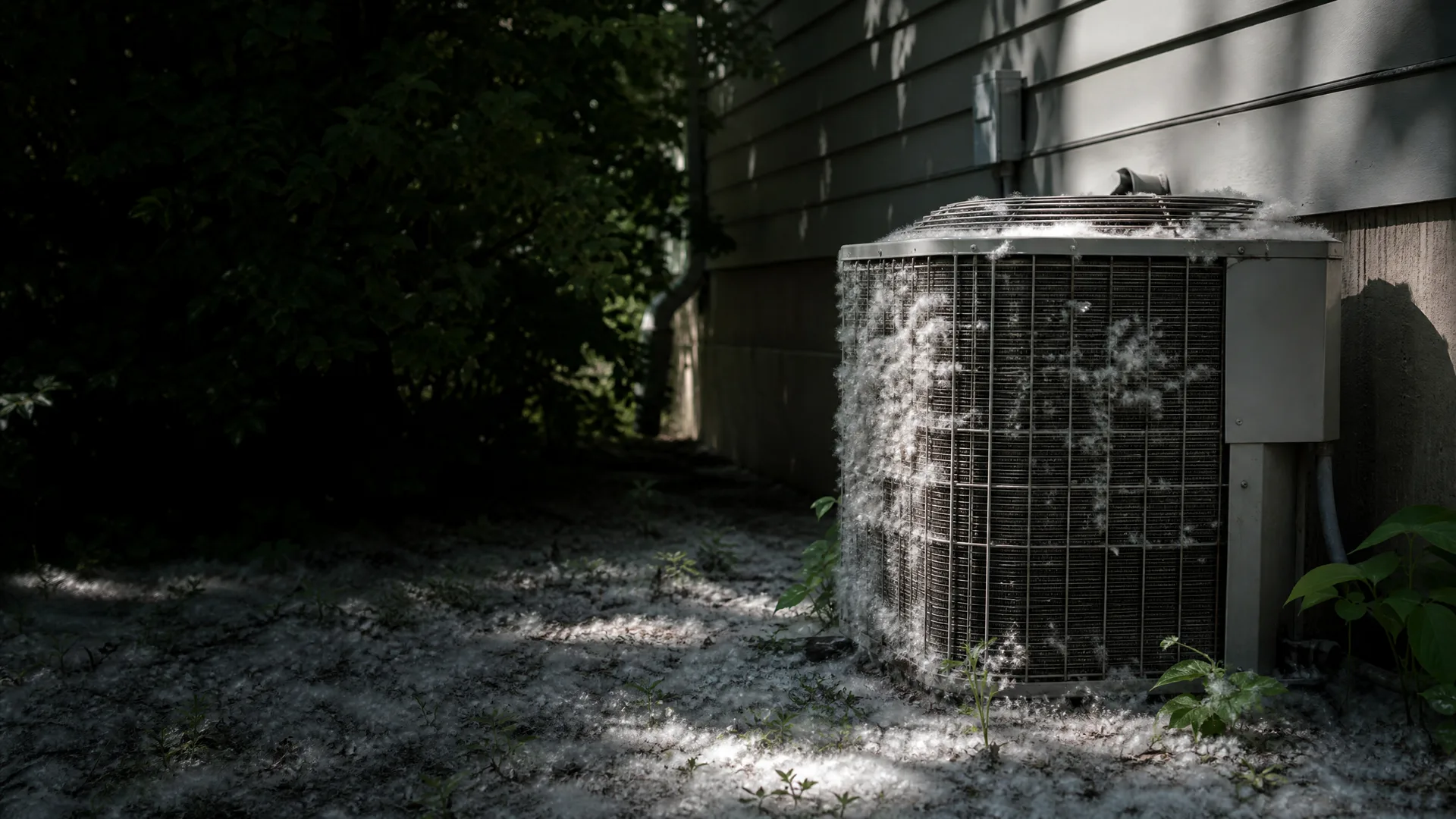
You're out checking the yard in late May, the first really warm week, and you notice the condenser hasn't been touched since fall. The fins are packed white with cottonwood fluff, the stuff that's been drifting off the trees for days and catching on every screen door in the neighborhood. You crouch down and see it's matted in there pretty good, not just resting on top. You think about the cover that sat on this thing all winter, how it was supposed to keep it clean for this exact moment, and here you are picking fluff out of the fins by hand before you can even turn the system on for the summer.
Walk out and look at the unit before you pull the cover off. If it's a full wrap that sealed down to the ground, check underneath for anything damp or a smell that wasn't there in the fall. A cover that kept the coil bone dry all winter can also keep moisture in if any got under it, and that sits against the metal while you're not looking. Check for chewed fabric or a gap at the bottom. Mice get into anything that offers shelter from the cold, and the unit's housing is an easy place to nest. A chewed wire or a blocked line set inside turns into a repair before the first hot day of a New York summer even gets here.

A bare condenser like this one handles snow and ice without help. The coil sheds water and the case is built for weather. Outdoor units sit uncovered all winter in New York yards and start up fine every spring.

This one's picked up a season of leaves and grime, but that's a maintenance issue, not a cover issue. A cover wouldn't have stopped the dirt from settling before winter. A contractor can clean the coil and check it over before summer.

A condenser doesn't shut off completely for the winter. The fan can kick on during a January thaw if something inside calls for it, or a contractor might run the system briefly during a checkup to see how it responds. If a cover is sealed down tight when that happens, the fan has nowhere to pull air from and the unit labors against its own cover. Mice look for the same thing you're trying to keep out, a dry space out of the wind, and a snug cover over a condenser is exactly that.
If you're not sure whether yours needs anything at all, or what shape it's in after last summer, that's a reasonable thing to have someone look at. A contractor matched to your address can tell you what your specific unit needs going into winter, based on its age and condition, not a general rule. You'd send in a few details once and they'd follow up directly.





By now you've seen why a cover usually causes more trouble than it prevents. But every unit is different, and yours has its own history, its own spot in the yard, maybe a tree overhead that drops more than most. Figuring out whether your condenser needs a cover, a different spot, or just a once-over before spring isn't something you have to work out alone from a page like this. A contractor who services systems in your area can look at the actual unit, not a general description of one, and tell you what it needs heading into winter and what it doesn't. That's a faster answer than guessing from fin condition and old frost marks come April. With power costs what they are here and most homes already running gas heat all winter, a short visit now settles the question instead of leaving it open until the first hot week of summer, when you need the thing to just work.
The case around your condenser is galvanized or coated steel, made to sit outside through rain and snow without rusting through. Manufacturers test these units for winters harder than anything New York sends, so the cabinet is already doing the job a cover claims to do. The trouble starts when someone covers just the top, over the fan opening. That traps moisture against the coil underneath instead of keeping it off, and a coil that stays damp all winter corrodes faster than one left open to the air. A full wrap down to the ground brings a different problem. It makes a dry, enclosed space that mice and other small animals look for once the weather turns, and once one gets in, it can chew through wiring or build a nest against the coil. None of this protects anything that actually needs protecting. The refrigerant lines running through the unit stay full year round, cover or not, and they're sealed against weather by design, not by a tarp. The fan can still kick on during a January thaw, or a contractor might run the system briefly during a winter checkup, and a cover just gets in the way when that happens. The unit was built to be left alone out there. Covering it adds a risk that wasn't there before, without taking one away.
At 26.39 cents per kilowatt-hour, running your air conditioner here already costs more than it does almost anywhere else. A cover doesn't change that rate, but trapping moisture under one can lead to coil damage or a stuck fan motor, and a repair like that raises what you pay to cool the house next summer.
EIA-861 2025 statewide residential average
A bare condenser is built for a New York winter, snow, ice and all. A cover is more likely to trap the moisture that causes the damage you were trying to prevent. If yours has a full wrap on it right now, that's worth checking before spring, and if you're not sure what shape the coil or fan is in after sitting all winter, that's worth checking too. A contractor can look it over, confirm nothing is rusted or seized, and get it running clean before the first hot week asks more of it than it can give. Once you send the request, that part is off your plate. You're not the one tracking down who's available or waiting on hold to get someone out there. The match happens, and the contractor reaches out to you. All you did was ask the question. The answer, and what happens next, isn't something you have to manage on your own anymore.





Send the form, and lining up the air conditioner tune-up stops being yours to chase.
You only hire the pro if you want to.