
What a heat pump tune-up covers in New York

Tune-up, service, or cleaningHeat PumpNew York
Step 1 of 2

What ZIP code is the job in?

What does a heat pump tune-up actually include in New York?

Your heat pump works harder in New York than the spec sheet suggests, pulling heat out of cold winter air and dumping it outside when summer gets sticky. You want to know what you're actually paying for when a tech comes out, not a vague promise that it'll "run better" afterward. A tune-up should mean a specific list of checks, not a quick look and an invoice.

A full check of both the outdoor and indoor units, since your heat pump runs year round

A heat pump tune-up covers the refrigerant charge, the electrical connections, the condenser coil outside, and the air handler or indoor coil, plus the thermostat settings and the defrost cycle that keeps the outdoor unit from icing up in winter. Because your system switches between heating and cooling instead of sitting idle half the year, a tech checks both sides every visit, not just one. The refrigerant level matters more here than on a furnace setup, since a low charge shows up as weak heat in January and weak cooling in August. With electricity rates in New York running high, a heat pump that's out of tune costs you more every month it runs, which is most of them.

A gray outdoor condenser unit on a concrete pad beside a house with horizontal lap siding, with a metal disconnect box and refrigerant lines on the wall, river rock and mulch to the sides, and a green shrub at right.

Running clean

This is a heat pump that's been looked after. The coil fins are open, the pad is clear, and air moves through the grille the way it's supposed to. It can pull heat from cold air in January and shed it in a sticky July without straining to do either.


A dirty outdoor air conditioner condenser unit with debris on its coil grille, sitting on a concrete pad beside a light-colored horizontal siding wall, with bare dirt ground in front and a shrub at right.

Choked with debris

Dirt, leaves, and plant matter have packed into this unit's fins over time. Airflow is restricted on both sides of the cycle, so the system draws more power to move less air. In New York, where electricity costs more than most places, that difference shows up on the bill.

Tuned Up vs. Left Alone

Tuned up every year

  • The outdoor coil gets cleaned, so the unit doesn't lose capacity on the first hot week of the year.
  • Refrigerant charge gets checked against the manufacturer's spec, which matters for a heat pump since it runs both directions.
  • The reversing valve gets tested, because that's the part that fails quietly and leaves you heating in July or cooling in January.
  • Electrical connections get tightened, which matters more here since brownouts and power spikes aren't rare.
  • The defrost cycle gets checked before winter, so the outdoor unit doesn't ice over on the cold nights you actually need it.

Skipped a year or two

  • A dirty outdoor coil makes the compressor work harder, and on New York power rates that shows up fast on the bill.
  • A reversing valve that's starting to stick often isn't caught until it fails on the coldest or stickiest day of the year.
  • Low refrigerant goes unnoticed longer, since the system still runs, just weaker, pulling less heat from cold air and less heat out of the house in summer.
  • A frozen outdoor coil in winter can mean no heat at all, and most homes here are set up to lean on gas as backup, not the heat pump.
  • Small electrical wear goes unchecked, and that's often what turns into a no-start call during a heat wave or cold snap.
A gray outdoor condenser unit on a concrete pad beside a house with gray lap siding, connected by conduit and refrigerant lines to a wall-mounted disconnect box, with a green shrub and mulch bed at left.

Clear pad, clean coil

The coil fins are open and the pad is clear of debris. Air moves through the grille without resistance, so the unit pulls heat from cold air in January and sheds it in July without straining to make up for lost capacity.

An outdoor air conditioning or heat pump condenser unit on a concrete pad beside a house with horizontal vinyl siding, a gray electrical disconnect box and conduit on the wall, and a concrete walkway in the foreground.

Dirt and age showing

Grime has built up across the coil and the cabinet shows its age. A unit in this shape has to run longer to move the same amount of heat, and in winter that extra runtime shows up on a power bill that's already high in New York.

An outdoor air conditioning condenser unit on a concrete pad beside a house with horizontal siding and a concrete foundation, with refrigerant lines running to a wall-mounted disconnect box and shrubs at left.
Before you get your heat pump maintenance
A gray outdoor air conditioner or heat pump unit on a concrete pad beside a house with horizontal lap siding, with conduit and refrigerant lines running up the wall and green shrubs and mulch at left.
After you get your heat pump maintenance

Matched to your heat pump job

A heat pump in New York doesn't get an off season. It's pulling heat out of January air, then turning around in July to push heat out of a house that needs the relief. Skip a year of upkeep and the first place it shows is the electric bill, since power here already costs more than in most of the country and a dirty coil or a weak charge makes the unit run longer to do the same job. By the time you notice warm air where cold used to come out, or a winter that never quite gets the house up to temperature, the unit has probably been working against itself for months. Finding a contractor who actually knows heat pumps, not just furnaces and standard AC, takes longer than it should when you're searching on your own. Hand that part off and get back to the rest of your day.

An outdoor heat pump unit on a concrete pad beside a house corner, with a small electrical box and conduit on the wall, gravel border, grass, and a plain light-colored wall filling the right side.

The reversing valve switches twice a year

A furnace only ever does one thing. A heat pump's reversing valve has to shift the refrigerant flow when winter turns to summer and back again when summer turns to winter. A tune-up checks that it switches fully both ways. A valve that sticks partway can leave the system heating when you asked for cooling, and that's a service call that didn't need to happen.

A grey outdoor heat pump unit on a concrete pad beside a white stucco wall and dark siding with a downpipe, with gravel and grass in the foreground.

Static pressure tells on the ductwork

A technician checking static pressure is reading how hard the blower has to push air through your ducts and filter. High pressure means something downstream is restricting flow, often a dirty filter, sometimes the ductwork itself. A heat pump moving air against too much resistance uses more electricity to deliver the same heat or cooling, and in New York that difference shows up fast on a bill.

A woman in a long cream cardigan and jeans stands at an open wooden front door of a gray shingled house with stone-based porch columns, with a second person visible inside, and potted flowers and shrubs beside the entry.

What a skipped tune-up costs you by name

Most houses in New York heat with gas, so the heat pump sitting outside isn't the only thing keeping the house warm. That makes it easy to let a year slide. But it's still running the air conditioning come July, and a coil that didn't get cleaned last fall is a coil working against itself the first muggy week of summer. You'll notice it as a house that takes longer to cool, or a unit that runs longer to get there, and with power priced the way it is here, that difference shows up on the bill before anything else tells you.

Finding a contractor who actually knows heat pumps isn't the same as finding someone who services furnaces. Once you send the form, that search is off your plate. You get matched with someone who works on heat pumps specifically, suited to what your system needs, and they reach out to you from there.

Interior corner with sheer white curtains at a window, a brown upholstered sofa in the foreground, and a wooden multi-drawer cabinet holding a round ceramic vase with leafy branches.
Single-story house with cream vinyl siding, gray shingled gable roof, small front porch with gray door, shuttered windows, and an outdoor AC unit, fronted by a partly dry lawn under a clear blue sky.

A summer dew point averaging 62°F means the air sitting on your coil is already carrying a lot of moisture before your heat pump does anything with it. That's from NOAA climate normals for New York. At that dew point, your system is pulling moisture out of the air on top of cooling it, which is more work on the coil than the temperature alone suggests. A coil that's dirty or low on charge falls behind faster in air this heavy, and you'll notice it as a house that feels damp even when the thermostat says it hit the set temperature.

NASA POWER T2MDEW county cells weighted by homes

A smiling man with dark curly hair in a dark green henley shirt sits on a light sofa in a living room with large windows, a lamp, shelving, a stone fireplace, and a bowl of popcorn in the foreground.
A smiling man in a dark long-sleeved henley shirt sits on a beige sofa in a living room, with a bowl of popcorn and a remote on the table in the foreground and shelves, a lamp, and a doorway behind him.
A smiling man with graying hair and stubble in a blue henley shirt sits on a gray sofa with cushions in a living room, with a bowl of popcorn on a wooden table in the foreground.
A smiling man in a dark green long-sleeve shirt reclines on a sofa in a dimly lit living room, with a bowl of popcorn on a side table in the foreground and a bookshelf, lamp, and houseplant behind him.
  1. The outdoor coil and fins get washed free of dirt and debris.

  2. The refrigerant charge gets measured against the manufacturer's spec.

  3. Electrical connections and capacitors get checked under load.

  4. The reversing valve gets cycled to confirm it switches fully.

A woman with dark hair in a bun reclines on a gray sofa with her eyes closed and a slight smile, wrapped in a cream knit sweater and blanket, with an open book resting in the foreground and a lit lamp in the dim room behind.
A smiling bearded man in a dark crewneck sweater sits at a dinner table with a lit candle, glasses of wine and water, and plates of food in the foreground, with a lamp, framed art and a potted plant behind him.

Power costs 26.39 cents per kilowatt-hour statewide

At 26.39 cents a kilowatt-hour, a heat pump losing capacity to a dirty coil or a low charge costs you more here than almost anywhere else. A unit that has to run longer to make up for that loss shows it on the bill before it shows anywhere else.

EIA-861 2025 statewide residential average

A heat pump tune-up in New York comes down to a handful of checks that matter because this machine runs both directions: the coil gets washed, the charge gets measured against spec, the reversing valve gets cycled, and the electrical gets checked under load. Skip it and the first sign is usually the bill, since power here runs 26.39 cents a kilowatt-hour and a unit losing capacity has to run longer to do the same job. You don't have to track down who does this kind of work or figure out if they're any good. Send the form and a contractor who handles heat pump maintenance in New York gets in touch, and from there it's off your plate. You already know what your system is up against here, winter air that needs heat pulled out of it and summer air thick enough to feel. Now you know what keeping it running right actually involves.

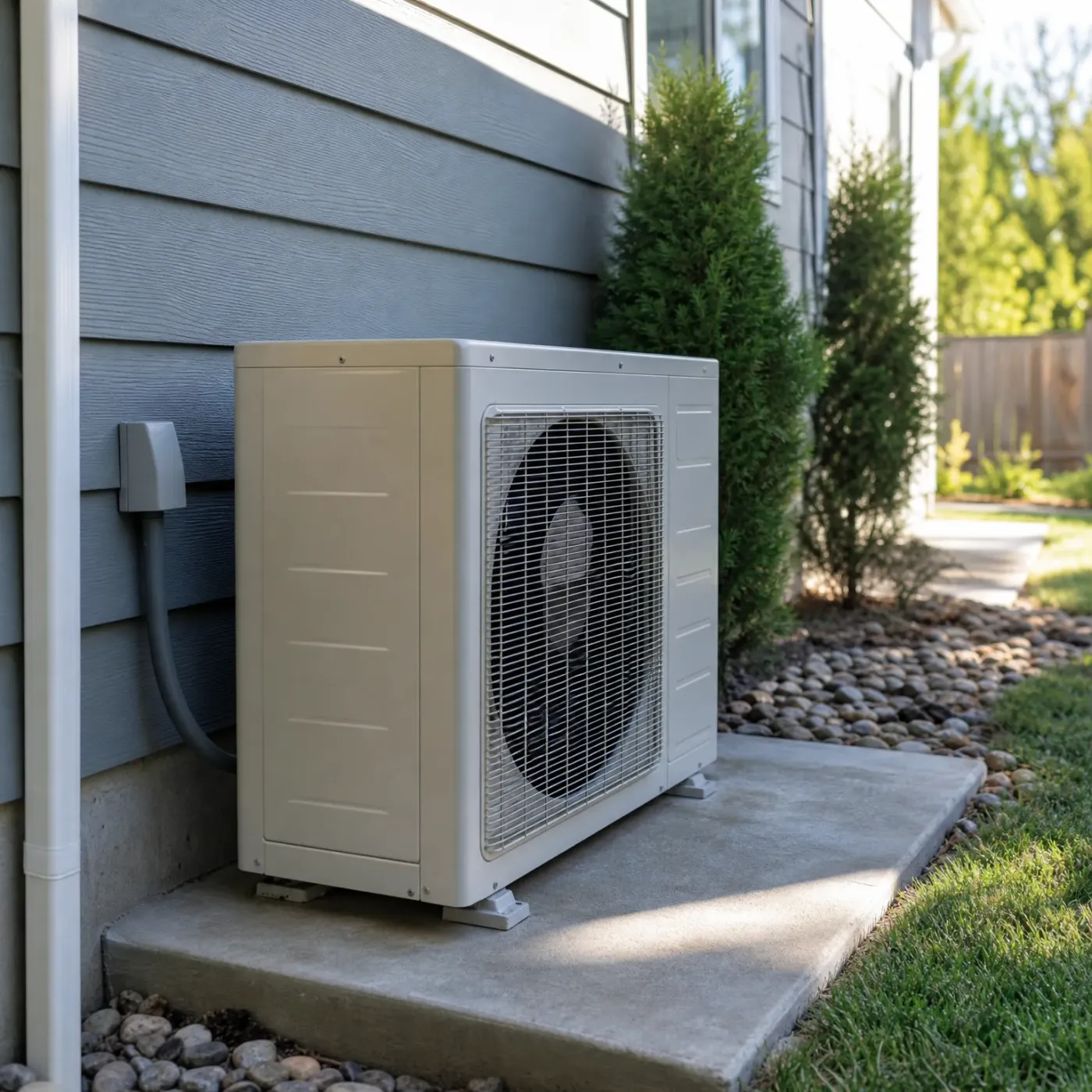
A beige outdoor heat pump or air conditioner condenser unit on a concrete pad beside a gray horizontal-siding house, with a disconnect box and conduit on the wall, shrubs, river rock and lawn nearby.

A heat pump pro near you

Get a local pro

Send the form and the heat pump tune-up stops being something to remember.

There's no charge for the request.