Two jobs, one system
Your heat pump carries the house in both January and July. Skipping a check before one season still leaves it to handle the other unprepared.

A heat pump tune-up is a yearly check on the one system that both heats and cools your home, usually done in spring or fall before the next hard push of weather. A technician checks refrigerant charge, cleans the outdoor coil, tests the defrost cycle, and checks electrical connections. In Yonkers, winters are cold enough that your heat pump has to shift into defrost often, melting the frost that builds up on the outdoor unit, and a system that hasn't been serviced tends to ice over more and struggle to switch back. Summers here get sticky, and a dirty coil makes the unit work harder to pull moisture and heat out of the air. Catching a weak capacitor or a low charge before the next season starts means the system runs the way it's supposed to instead of straining through it, and it means fewer surprises when you need heat or cooling most.


Refrigerant charge comes first. A technician reads pressures and temperatures at the service valves, because even a little low on charge costs you capacity both when the system heats and when it cools. The reversing valve gets run both ways, since a valve that sticks is why a heat pump sometimes blows cold air on a January morning instead of warm. The defrost board and its sensor get tested as a pair. The board only triggers defrost when the sensor confirms the outdoor coil has actually gotten cold, and if that signal is off, the coil can ice over or the system can defrost when it doesn't need to. Contactors and capacitors get tested under load rather than at rest, because a capacitor can look fine sitting idle and still fail the moment the compressor pulls full current. Inside, the coil and blower wheel get checked for dirt, since a coated coil forces the system to run longer to move the same heat through the house. Condensate drains get cleared too. A clogged drain backs water up and can trip a safety switch that shuts the whole system down.




Your heat pump carries the house in both January and July. Skipping a check before one season still leaves it to handle the other unprepared.
A technician who services heat pumps around Yonkers all year has seen how the cold and the power rates here wear on this equipment.
Winter nights average 24°F
Overnight lows averaging 24°F mean your heat pump works hardest right when you need the house warm.
Heat runs October through May
Eight months of heat a year, October through May, is more run time than most homes ask of one system.
Cooling runs June through August
Three months of cooling, June through August, still puts real hours on the same coil and compressor.
NOAA nClimDiv 1991-2020

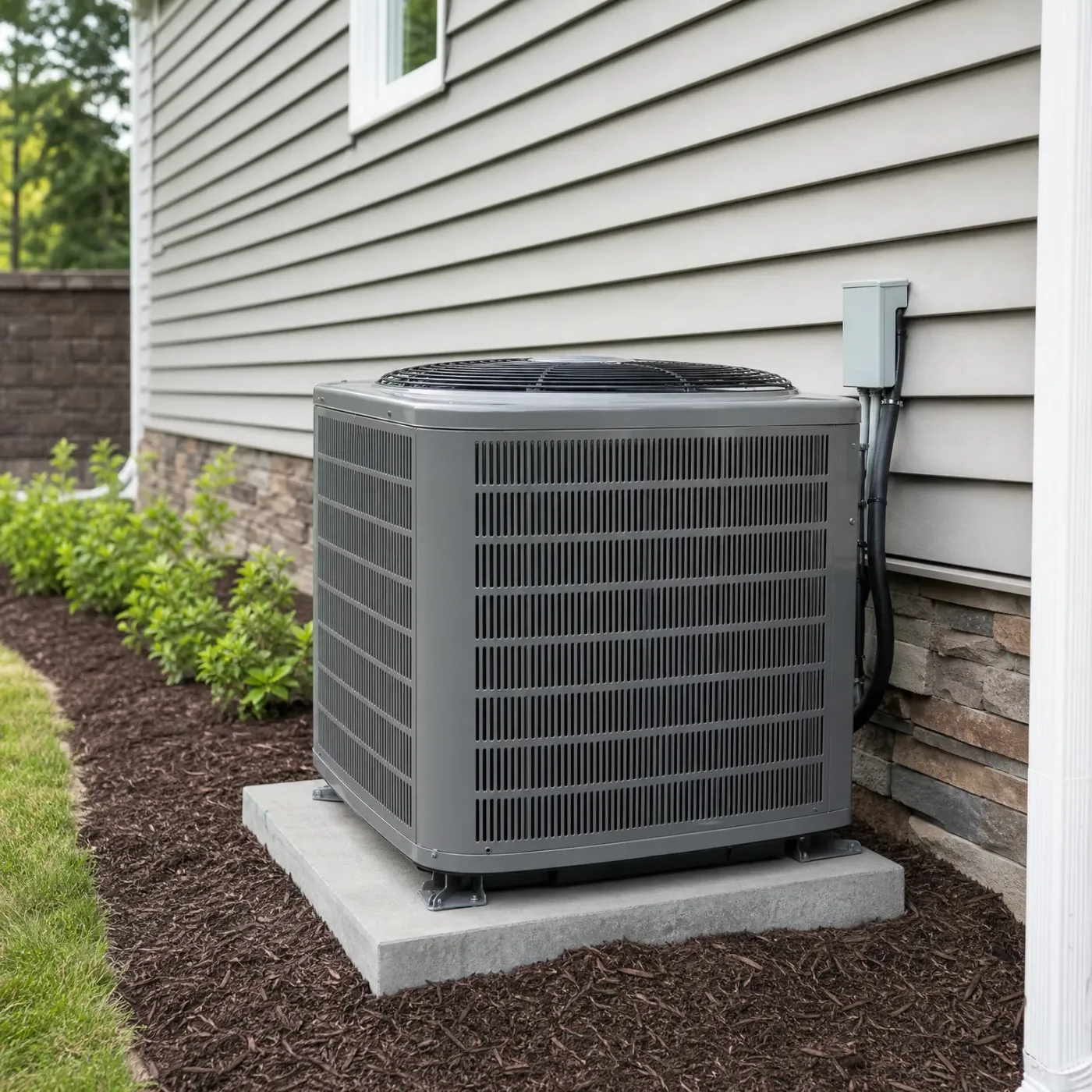
This unit sits clear of the siding with its lines and conduit routed clean to the disconnect. Nothing is blocking the fins, so air moves through the coil the way it was designed to. A system kept like this holds its charge and defrosts on schedule.

The fins on this one are caked with dirt and weather. Air can't pass through a coil like this the way it needs to, so the system runs longer to move the same amount of heat. Left alone, it costs the compressor more wear every month it runs this way.

This unit sits on its pad with the shrub well clear and the disconnect box mounted neat on the wall above it. Air passes through the fins without resistance, so the coil can absorb heat in winter and shed it in summer the way it's built to.

The siding here shows what weather does to a unit left unchecked season after season. A conduit run and cabinet exposed to the elements without a look-over means a technician hasn't confirmed the connections or coil are still doing their job.


A licensed pro who works in Westchester County gets your request.
One request and finding someone for the tune-up is handled.
There's no charge for the request.
Listen to it on the next mild day. A short cycle that clicks on and off every few minutes instead of running a steady stretch means something is making it work harder than it should. A hiss or a coat of frost on the outdoor unit that doesn't melt off between cycles points to the defrost cycle not doing its job. Warm air that feels lukewarm rather than hot at the vents, or a system that runs long but never quite gets the house to temperature, both cost you on the electric bill every month it goes unchecked. Left alone through a Yonkers winter, a small problem like a weak capacitor or a low charge tends to turn into a system that quits on the coldest night of the year, when a compressor can also end up damaged for good.
Technician checks thermostat settings and recent run history first
Outdoor coil and fins get cleaned of debris and dust
Refrigerant pressure and temperature get measured at the service valves
Reversing valve gets tested switching between heating and cooling
You've probably noticed the outdoor unit shut off for a few minutes on a cold day, maybe with steam coming off it, then kick back on. You're not sure if that's normal or a sign something's wrong. With Westchester winters pushing nights into the low 20s, you want to know the system is handling frost on the coil the way it's supposed to, not just struggling through it.
Your heat pump pulls heat out of outdoor air even when it's cold, and that process leaves moisture on the outdoor coil. Below freezing, that moisture turns to frost. Left alone, frost builds into ice and blocks airflow through the coil, so the system can't pull in enough heat to warm the house. The defrost cycle reverses the system for a few minutes, warming the outdoor coil to melt that ice, then switches back to heating. A technician checks that it triggers on the right schedule and shuts off once the coil is clear. One that runs too long or not at all usually points to a bad sensor or a reversing valve that's starting to stick, worth catching before the next cold snap.


At 24.45 cents per kilowatt-hour, every degree your heat pump has to make up costs you more here than in most of the country. A unit that's lost charge or has a dirty coil pulls extra power to hold the same temperature, and you pay that difference all winter and all summer.
EIA-861 2025
A heat pump tune-up is one appointment that checks the whole system, the refrigerant charge, the outdoor coil, the defrost cycle, the electrical connections, so nothing is left to fail when you need heat in January or cooling in July. That's the plain answer. What the rest of this came down to is timing and who does the work.
Get it done in spring or fall, ahead of the season that's about to lean on the system. Westchester winters push a heat pump hard, and summers here aren't easy on it either. A unit that holds its charge and defrosts on schedule simply costs less to run, and at 24.45 cents per kilowatt-hour, that difference shows up on the bill every month it's ignored.
The contractor matters as much as the timing. Submit a request through this page and you're matched with one licensed contractor local to Yonkers, not a handful of companies bidding for your attention. Someone who works on heat pumps in this area all year has seen which parts tend to go first here, the capacitor that weakens, the valve that starts to stick, and knows to check them before they become the reason your house is cold on the worst night of the year.
That's the shape of it. A yearly check, timed to the season ahead, done by someone who already knows this climate and this equipment. Nothing about a heat pump tune-up is complicated once you see what it's actually for.





The pro who gets in touch is licensed in New York and works in Westchester County.
You only hire the pro if you want to.