How to keep your AC running in a New York heat wave
Skip calling around to set up an air conditioner tune-up.
A heat wave in New York puts real strain on an air conditioner that already works hard all summer. When the temperature sits in the 90s for days straight, a unit that's low on refrigerant or running a weak capacitor doesn't just struggle, it can shut down entirely, usually at the worst possible time.
Maintenance before or during a stretch of heat is what keeps the system running instead of failing. A technician checks the refrigerant charge, the capacitor, the condenser coil, and the airflow through the ducts, the kind of inspection that catches a problem while it's still minor. With electricity costing what it does here, a system working harder than it needs to shows up directly on the bill.
Finding someone to do that work is its own task. Most homeowners start by searching for AC companies nearby, then calling a handful to ask if they even have an opening during a heat wave, when every other phone in the neighborhood is ringing too. Each call means describing the unit, its age, what it's doing or not doing, then waiting on a quote, then doing it again with the next company to see if the number holds up.
Submitting a request here skips that part. It goes to one licensed contractor local to your part of New York, someone who services this kind of equipment every summer and knows what tends to give out first when the heat doesn't let up. You're not fielding calls from five different companies or repeating the same explanation each time. You explain the situation once, to the person who will actually look at your unit.
From there, it's a matter of getting on the schedule and letting someone who knows this equipment take a look before the next heat wave tests it again.
What should I do to keep my AC running during a New York heat wave?
A heat wave in New York puts real strain on an air conditioner that already works hard all summer. When the temperature sits in the 90s for days straight, a unit that's low on refrigerant or running a weak capacitor doesn't just struggle, it can shut down entirely, usually at the worst possible time. Most homeowners want to know what to check before that happens and what actually makes a difference once the heat sets in.
Get the system serviced before the heat hits, and give it room to breathe while it runs
A unit that's clean and properly charged going into a stretch of 90-degree days can keep up with it. One that's already low on refrigerant or coated in dust on the coil is working harder for less cooling, and a heat wave is what pushes that difference into a breakdown. Clear anything blocking the outdoor unit, grass, leaves, a fence line, so it has airflow on all sides. Keep the filter clean so the system isn't fighting itself to move air through the house. With power rates what they are in New York, a system running at full efficiency also costs less to keep going during the days it's working hardest.
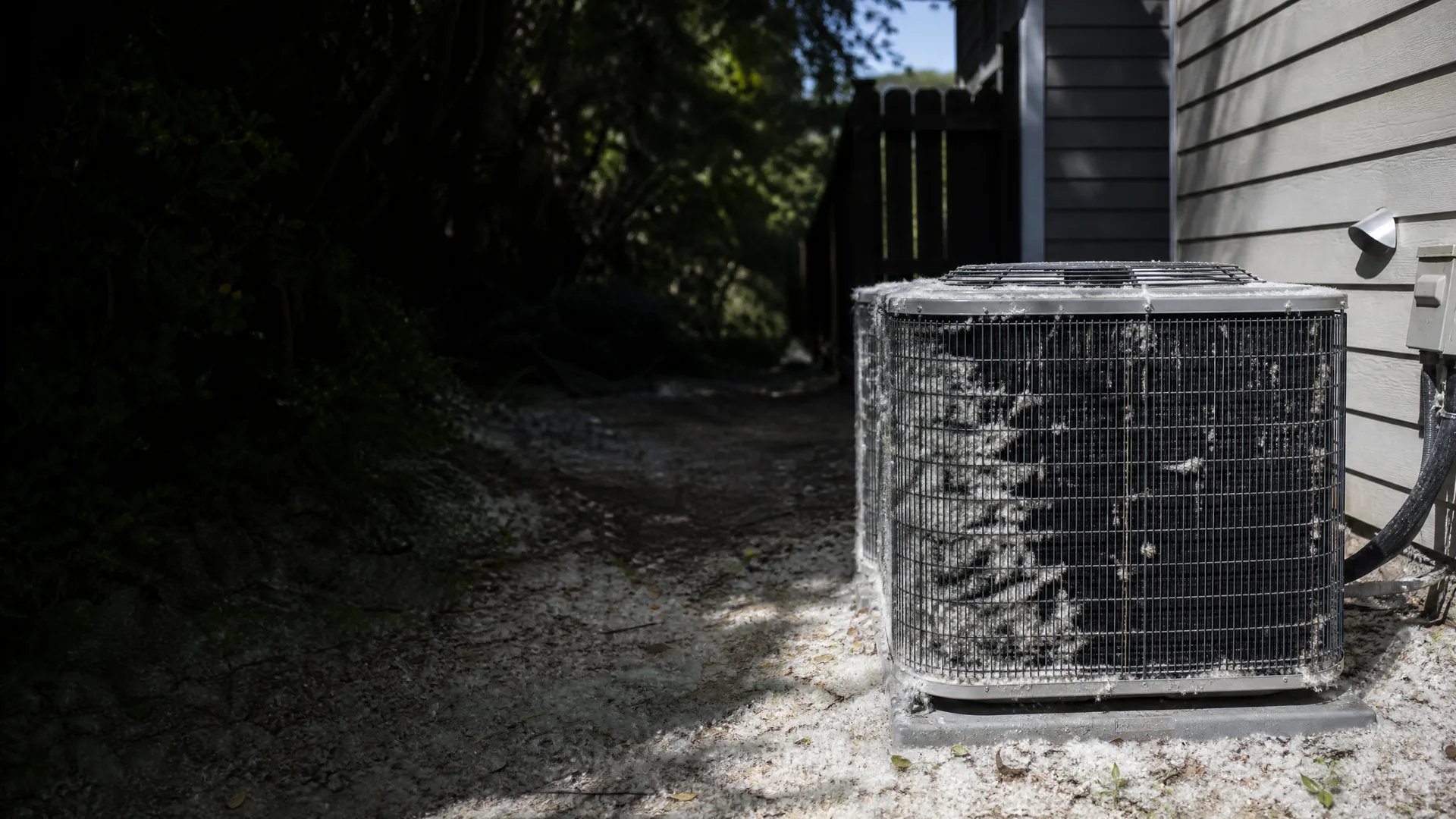
You walk out to the side yard to grab the hose and notice it, that fine white fluff caught in the condenser fins, drifting off the cottonwood trees down the block. It's late spring, warm already, and the unit is running steady in the background like it has been for weeks. You crouch down and see the fluff packed in tight along the coil, the kind of thing you'd miss if you weren't looking. The air coming off the top feels weaker than it should. You make a note to deal with it before the real heat sets in, because this is the part of the season nobody thinks to check until the house stops cooling right.
Finding someone to look at the unit before the next heat wave usually means searching around, calling a few companies, explaining the same thing about the noise or the warm air three separate times, then sitting with quotes trying to guess which one is being straight with you. That's the part that eats the afternoon. A request here goes to one licensed contractor working in your area, someone who services AC units in New York all summer and has a good idea what a few days in the 90s does to a system that's already been running since May. No juggling calls from five different companies trying to win the job. Once a heat wave is forecast, the unit either holds up or it doesn't, and by then you want someone who already knows the equipment, not a list of names to start working through. Getting that lined up now is worth more than finding it out mid-July.
Why a dirty condenser fails first
The condenser coil outside is what dumps the heat your AC pulls out of the house. When the fins are packed with cottonwood fluff, cut grass, or just dust, the coil can't shed that heat as fast as the system produces it. The unit ends up working against itself, running longer to move the same amount of heat, and the head pressure in the system climbs. On a 95 degree day that extra pressure is what trips the high-pressure switch or burns out a compressor that was otherwise fine. A coil cleaning during a maintenance visit is a mechanical fix for a mechanical problem, not a guess.
The capacitor failing has a pattern
A run capacitor holds a charge that keeps the compressor and fan motor turning once they start. Capacitors lose that capacity gradually with heat and age, and the strain of nonstop summer running speeds that along. A unit that starts fine in June can have a capacitor too weak to hold the motor by August, and it tends to go right when you need it most, during the hottest stretch, because that's when the motor is drawing hardest against it. Testing the capacitor's output against its rating is part of what a maintenance check covers, before it fails on a 95 degree afternoon instead of during a routine visit.
Clean coil, clear path
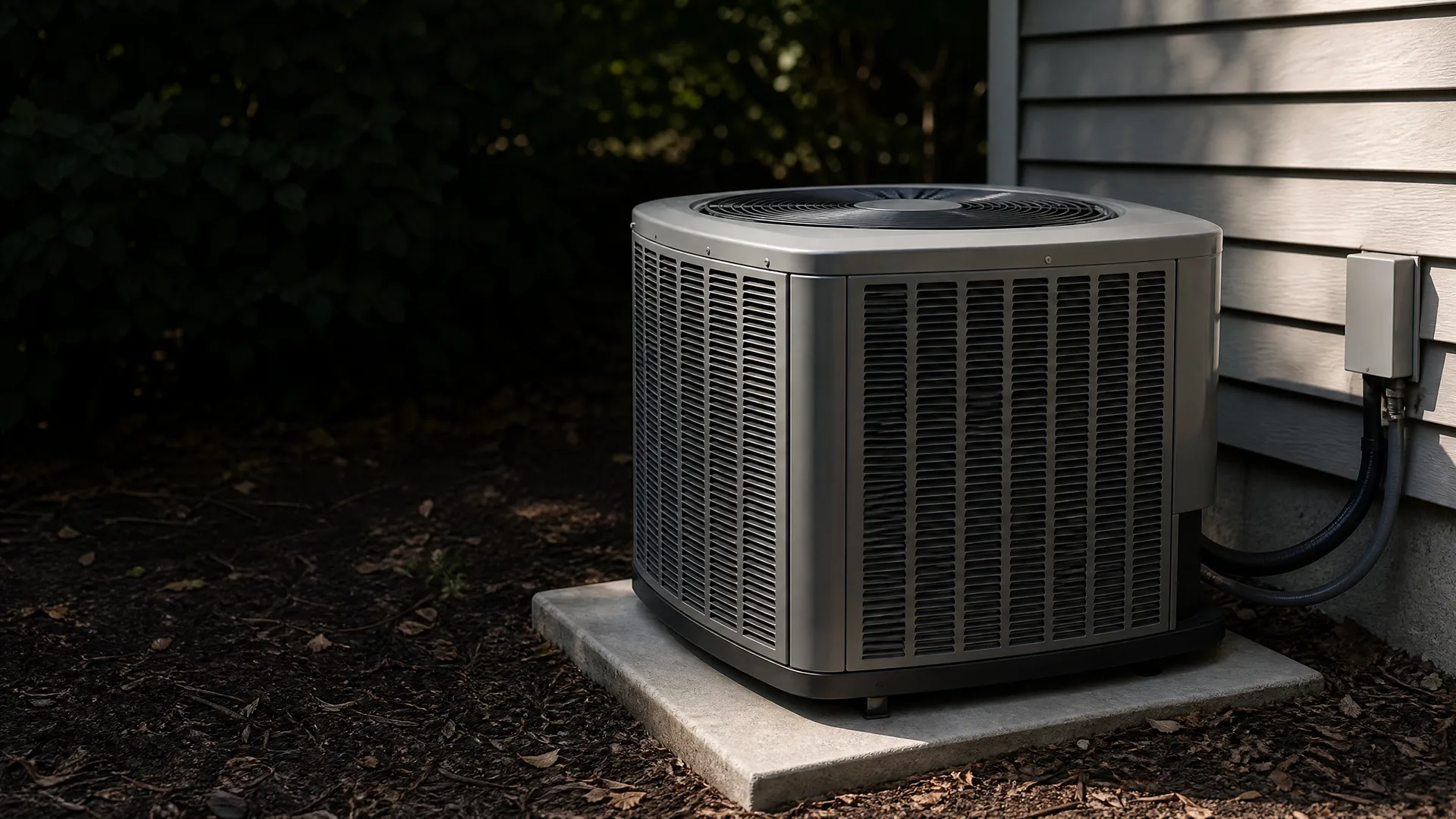
This unit sits next to gray lap siding, coil fins open and clean, lines running straight into the wall. Air moves through it without a fight. On a 95 degree day it can still dump heat outside as fast as it pulls it from the house.
Rust and dirt doing damage
This one has rust across the fan shroud and dirt packed into the fins. That buildup makes the compressor work harder to push heat out, and a compressor under that kind of strain in a heat wave is the one that trips off or fails outright.
Running clean
This condenser sits on its pad with the grille clear and the lines running straight to the disconnect. Air passes through the fins without resistance, so the system pulls heat out of the house and dumps it outside as fast as it builds. It can hold its own through a stretch of 90s.
Choked with buildup
Same setup, but the grille is packed with grit and the mulch and shrub nearby keep feeding it more. Airflow through the fins drops, so the coil can't shed heat as fast as the house produces it. Add a heat wave on top of that and the unit is working against itself.
Power costs 26.39 cents per kilowatt-hour statewide
At 26.39 cents per kilowatt-hour, every hour your AC struggles to push heat out through a dirty coil or a weak capacitor shows up bigger on the bill. A unit running clean during a heat wave holds its temperature with less electricity, not just less wear.
EIA-861 2025 statewide residential average
Before you get your air conditioner maintenanceAfter you get your air conditioner maintenance
A summer dew point averaging 62°F across New York, per NOAA climate data, means the air itself is holding a lot of moisture before your AC ever turns on. Your system has to pull that moisture out before the house feels dry, and that's on top of lowering the temperature. On a muggy night you'll notice the unit running longer stretches instead of cycling off, because wringing out that humidity takes real time. A coil caked with dust or a low refrigerant charge slows that process down further, so the air inside stays sticky even while the thermostat says you've hit your number.
NASA POWER T2MDEW county cells weighted by homes
A unit that's ready before the heat sits in
The answer underneath all of it is simple. A clean coil, a sound capacitor, and the right refrigerant charge are what let your AC keep up when New York sits in the 90s for days. Maintenance catches the parts that would otherwise fail right when you need the system most, and it keeps the unit from working harder than it has to on a grid where every kilowatt-hour already costs more than most of the country pays.
Getting there without the usual runaround is its own kind of relief. Instead of calling around and describing the same noise or the same warm air to three different companies, then sitting with a stack of quotes trying to tell them apart, you get matched with one licensed contractor local to New York, someone who services this equipment all summer and knows what tends to give out first in this kind of heat. No other calls coming in behind it. Just a straight path to someone who can look at your system before the next heat wave gets here.