




A two-story red brick house with black shutters and a dark roof sits on a mown lawn behind a long dry-stacked stone wall, framed by large deciduous trees under an overcast sky.

Mini Split Installation in Watertown, NY

Tell us about the job

Takes about a minute. No obligation.

New system or replacementMini-splitJefferson County, NY
Step 1 of 2

What ZIP code is the job in?

Utility gas heats more homes in Jefferson County than anything else, at 39.0 percent. Electricity comes next at 23.4 percent, then propane and oil behind that. A mini split does not replace any of these. It runs on its own electric circuit and works alongside whatever already heats the house. Homes on oil or propane often add one in a room that is hard to keep comfortable off the main system. Homes on electric baseboard sometimes use one to cover a space with both heat and cooling from a single unit.

9 months
September through May, your system heats
2 months
July through August, it cools
13°F
the average winter night it heats against
78°F
the average summer afternoon it cools against
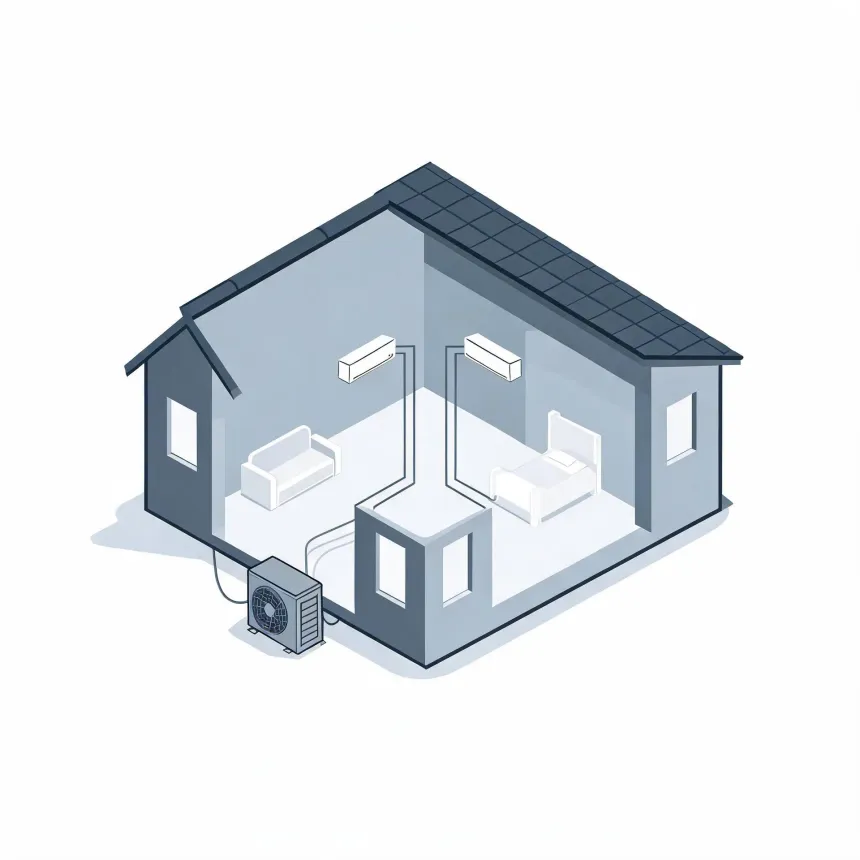
Isometric cutaway illustration of a small house showing two wall-mounted indoor air conditioning units connected by lines to a single outdoor condenser unit beside the building, with a sofa in one room and a bed in another.
Your system heats September through May and cools July through August.

NOAA nClimDiv, 1991–2020 normals

A standard mini split handles a room here without needing a bigger unit or a higher-tier model.

Sizing it right matters more than upgrading it, since New York's 24.43 cents per kilowatt-hour makes an oversized unit cost more to run every month.

Cooling works two months a year here, so a basic mini split has an easy job

Cooling runs July through August
Summer afternoons average 78°F
123 damaging wind events from 2015 to 2024

With a job this light, pick the mini split on fit and reliability, not the highest SEER2 number on the shelf. A standard unit sized right for the room will keep up through July and August without trouble. The afternoon high here only averages 78 degrees, so you don't need a bigger compressor or a premium tier to stay comfortable. What matters more is a model your installer knows well and can service easily for years, since what shortens a mini split's life is usually age and missed maintenance, not two mild months of summer. Put the money toward correct sizing and a clean installation instead.

Get it in before July, not during it

June is the last quiet month before cooling starts here. Get the mini split installed then, and it's running and ready when July shows up, instead of competing with every other homeowner calling in the middle of the first hot week.

Find a contractor
A white outdoor air conditioner condenser unit mounted on metal wall brackets against gray horizontal siding, with a blue sky and white clouds behind it.

An older house still has to work with new equipment

Half the homes in Jefferson County were built in 1972 or earlier. A house that age was built for whatever heated it then, not for a mini split's indoor and outdoor units and the line set connecting them. That line set has to pass through a wall, and where it comes out and where the outdoor unit sits both take planning that a newer, open-concept house might not need. None of this rules out an older home. It just means the installer is fitting new equipment into a house that was not built with it in mind.

The old unit doesn't have to come out first

If a mini split is going in alongside an existing furnace or boiler, that system stays right where it is. There's no reason to pull a working furnace just because a mini split now covers part of the load. Most homeowners keep the old system as backup and as the main heat source for the rest of the house.
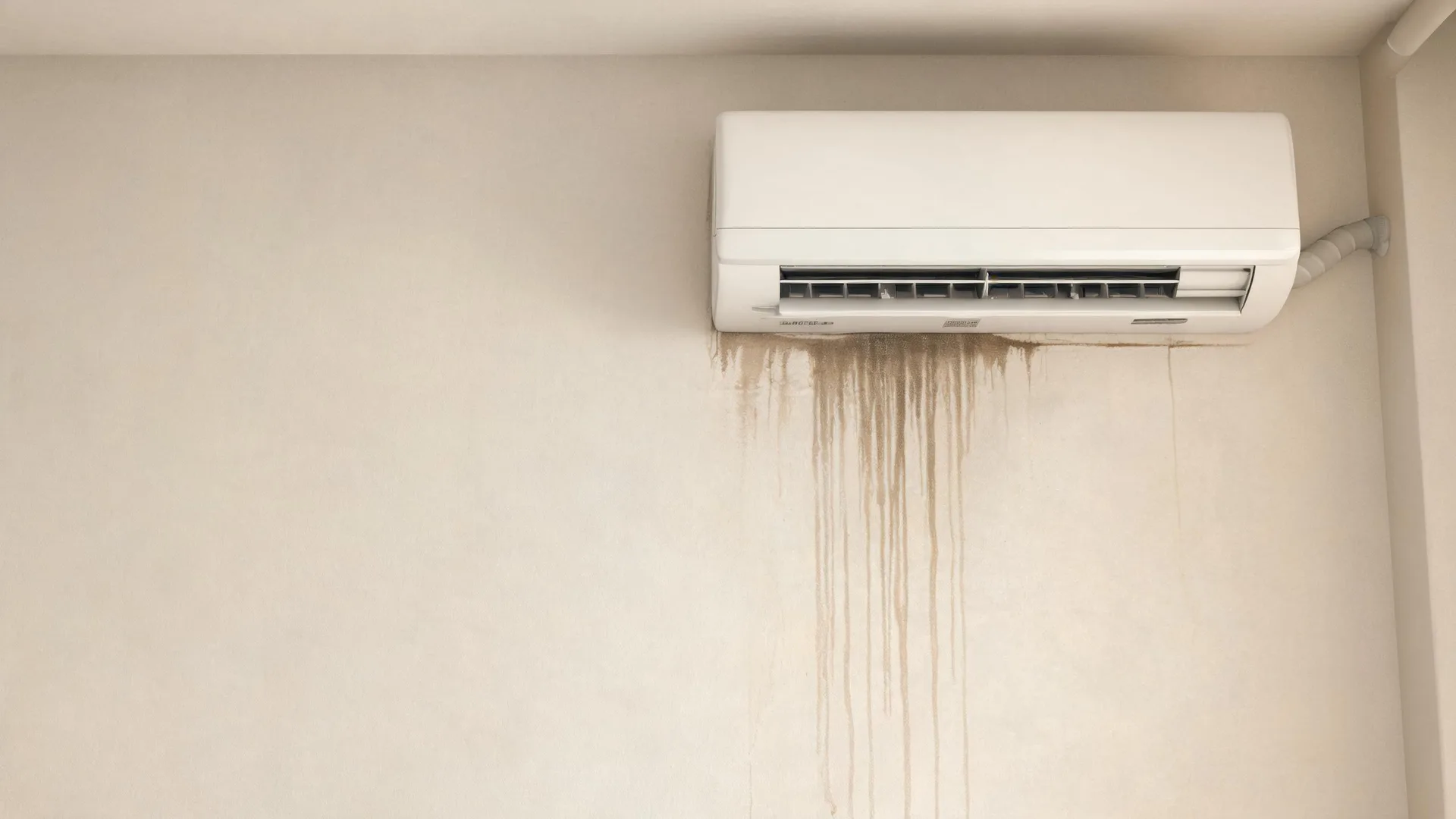
Replacing an old mini split is a different job

When the work is swapping out a mini split that's already there, the indoor and outdoor units come down, but the line set and the wall opening often get reused if they're still in good shape. An installer checks the old line set for damage before running new refrigerant through it. If it checks out, that part of the job goes faster than starting from scratch.

Several things move the price of a mini split job more than the unit itself. The length of the line set between indoor and outdoor units is one. A short, straight run costs less to install than one that has to snake through walls or across a long exterior wall to reach where the outdoor unit can sit. The number of indoor heads matters too, since each one needs its own line set and its own spot on a wall or ceiling, and a multi-zone system needs an outdoor unit sized to run all of them. Electrical work can add to it as well, if the panel doesn't have room for a new dedicated circuit and needs an upgrade first. None of this is about the brand or the SEER2 rating. It's about how much the house asks of the installer before the unit ever turns on.

Installation starts with the outdoor unit and the line set path, since everything else depends on where those go. The installer mounts the indoor head on an interior wall, usually high up where air can move across the room, then drills a single hole through to the outside for the line set, the drain line and the electrical whip. Outside, the compressor sits on a pad or wall brackets, close enough to the house to keep the line set short. Once the lines are run and connected, the system gets evacuated with a vacuum pump to pull out moisture and air before any refrigerant moves through it. That step matters more than people expect. Skip it and the system can run fine for a while, then lose efficiency or damage the compressor months later. After that, it's a pressure test, a charge check, and running the unit through both heat and cooling before the installer leaves.