
Can a mini split cool a whole New York home

A white wall-mounted mini-split air conditioner indoor unit with a horizontal louvered vent, shown against a plain light gray background.
Hand it off

Can a mini split cool my whole New York house?

You've got a mini split, maybe one you added to a room that never felt right, and now you're wondering if it could do the whole job. With summers here turning sticky and power costing what it does in New York, running one small unit feels better than cranking a whole system. But you want to know if that's realistic before you plan your summer around it, or your winter heat around gas.

It depends on how many you install, not on the one you have

A single mini split head cools the room it's in and maybe the one next to it, with the door open. It wasn't sized for your whole house, and no amount of fan speed changes that. A multi-zone system, with one outdoor unit feeding several indoor heads, is what actually covers a whole home, and each room gets its own head sized to that room. In a New York summer, that matters more than people expect. Humidity sits heavy from room to room, and a single unit trying to cool air it was never sized for will run constantly and still leave other rooms warm. Whole-house coverage comes from the number of zones and how they're placed, not from the equipment alone.

A white wall-mounted mini-split air conditioner installed high on a beige interior wall near the ceiling, with a sheer curtain and window at the left edge.

One unit, sized right

A single mini split can carry a whole floor if it's sized and placed for that job. The head goes where air moves freely through the space, and the capacity matches the square footage and the windows it's up against. Done this way, it keeps up on the muggiest days without straining.


A white wall-mounted mini-split air conditioner indoor unit with visible dust and discoloration, installed near the ceiling on a plain beige wall.

One unit, asked to do too much

A mini split bought for one room doesn't stretch to cover the house. It runs constantly trying to reach rooms down the hall, and you'll see it in the dust and grime building up around the vent. Closed doors and long hallways beat it before the heat does.

Is your mini split keeping up with your house

You know already if it's working. One room stays cool while the rest of the house holds onto the heat, and by afternoon the upstairs feels closed up even with the unit running. The system cycles on and off more than it should, or it runs steady and never quite catches up. You might notice the electric bill climbing without the house getting any more comfortable for it. If the unit was sized for one room and you're asking it to cover more than that, it will run harder without getting you there, and that strain on the compressor is what shortens its life.

A man with greying hair in a dark green sweater sits on a light sofa in a sunlit living room, looking off to the side, with a large window, table lamp, framed art and white built-in shelves behind him.
A gray-haired man in a dark navy sweater sits on a light sofa in a living room, looking toward a sunlit window with a houseplant and wooden cabinet behind him.
A gray-haired man in a dark green ribbed sweater sits on a light sofa in a living room, looking toward a sunlit curtained window with a potted plant and lamp nearby.
A middle-aged man with gray hair and a beard, wearing a dark green sweater, sits on a light sofa in a sunlit living room with large windows, a potted plant, and a dining area in the background.

Power costs 26.39 cents per kilowatt-hour statewide

At that rate, every degree you squeeze out of your mini split instead of a window unit or baseboard heat matters more here than almost anywhere else. A system sized and placed right earns back the difference on your bill, while one working too hard to cover rooms it was never built for just runs up the cost.

EIA-861 2025 statewide residential average

What sizing actually means here

Sizing a mini split isn't picking the biggest unit in the catalog. A contractor works out the heat load for each room or zone, which depends on square footage, ceiling height, window area, and which way the room faces. A unit too large cools the air fast and shuts off before it pulls the humidity out, so the room feels cold and damp at once. One too small runs flat out all afternoon and still loses ground to a July heat wave. The right size cycles on and off at a steady pace and holds the room where you set it.

Where multi-zone systems fit in

A single outdoor condenser can run several indoor heads at once, each with its own thermostat, which is how one system covers more than one room without oversizing any single head. That setup matters in a house with rooms that face different directions or get different sun through the day, since a bedroom on the north side and a living room with afternoon sun don't lose heat the same way. Zoning lets each space get only what it needs instead of one thermostat guessing for the whole floor. Getting the layout right takes someone who's mapped this kind of system before.

A dusty white wall-mounted mini-split air conditioner unit installed near the ceiling on a plain light-colored interior wall, with a small recessed ceiling fixture at upper left.
Before you get your mini split installation
A white wall-mounted mini-split air conditioner installed high on a beige interior wall below crown molding, with a sheer white curtain on a dark rod at the left edge.
After you get your mini split installation

Send one request and you're done looking

One installer gets your project, so there's no bidding war over it.

Sending the form costs nothing.

A two-story house with beige siding, a covered front porch and dark shingled roof, set behind a mown lawn with a wet concrete walkway leading from the street curb, flanked by large green trees and shrubs.

A 62°F dew point is what New York summers average out to, measured across June, July and August. That's thick air, the kind where a quick walk outside leaves your shirt sticking to you. A mini split doesn't just drop the temperature in that air, it has to wring the moisture out of it too, and that's the harder job. Sized right, it keeps pulling that moisture down steadily, so a room feels dry and even rather than cold but damp. Sized wrong, or placed where the air can't move through the space, it cools the thermostat's corner while the rest of the room stays heavy. You'll feel that difference on the muggiest afternoons before you ever see it on a bill.

NASA POWER T2MDEW county cells weighted by homes

A gray-haired woman in a white top and gray cardigan sits in an upholstered armchair indoors, looking toward a window with a green potted plant, with a bookshelf behind her.
A woman with her hair in a bun sits wrapped in a gray knit blanket on a couch, eyes closed, with a young boy asleep against her shoulder, beside a lit table lamp in a dim room.

A mini split doesn't heat or cool a house the way a furnace or central AC does, pushing air through ducts to every room. Each indoor head is its own unit. It pulls air across a coil, drops its temperature and humidity, and blows it back into the room it's mounted in. The blower speeds up or slows down depending on how close the room is to the set temperature, and the outdoor compressor follows the same logic, ramping up on a hot afternoon and easing off once the load drops. That's what inverter driven means. The thermostat is built into the head, so it only knows the temperature where it's sitting, not what's happening down the hall. One head can hold its own room steady for hours and still leave a closed door's worth of warm air on the other side untouched. A multi-zone setup splits one compressor's output across several heads, but each room on that system still needs its own head doing the work. There's no central duct moving air between them.

How a mini split actually cools

  • A mini split's indoor head runs its blower on low, medium, or high depending on how far the room is from its target temperature.
  • The outdoor compressor is inverter driven, so it ramps output up and down instead of switching fully on and off like a window unit.
  • Refrigerant lines run from the outdoor unit to each indoor head, and each head's coil removes heat and humidity from only the air passing through it.
  • A single-zone system cools the room its head sits in well, but the hallway door or stairwell between zones limits how far that air travels.
  • Multi-zone systems split one outdoor compressor's capacity across several indoor heads, so each room still needs its own head to cool on purpose.
  • The thermostat sensor sits inside the indoor head itself, so it reads the temperature right where it's mounted, not the room's far corner.
A white wall-mounted mini-split indoor unit on a light gray interior wall, with a white curtain on a black rod at left and a leafy plant in the lower left corner.
A mini split that's sized right holds the room steady without straining, even when the air outside is thick.
A wall-mounted white mini-split air conditioner indoor unit with visible dust and grime around its outlet vent, installed near the ceiling on a plain light-colored wall.
A dirty mini split loses capacity fast, and the grime on these vents means it's moving less air than it should.

One Zone or More Than One

One zone covers it

  • A single floor with an open layout, like a combined kitchen and living room, often loses little to a wall or two between the head and the far corner.
  • Ductless heads move a lot of air for their size, so a room that's open to the hallway or stairs can draw cooling from a unit it doesn't sit in.
  • If your gas furnace already heats the house evenly, a mini split sized for the main living space can be the summer answer without touching the rest.
  • A contractor who's worked this housing stock knows which layouts let one head do the work and which ones leave a back bedroom hot by July.
  • You'll still want the unit sized to the square footage and windows of the space it's actually covering, not guessed at.

You need more than one

  • Separate floors, a finished basement, or bedrooms down a hallway behind closed doors usually need their own head to stay even.
  • A house with rooms facing different directions heats unevenly through the day, and one unit can't chase the sun around the building.
  • Multi-zone systems run several indoor heads off one outdoor compressor, so you're not installing a separate condenser for each room.
  • If your place already has electric baseboard in some rooms, replacing that load with additional zones can bring down what you're paying to run it.
  • A local contractor can walk the rooms with you and tell you where a second or third head actually earns its keep, instead of adding one everywhere.
A white wall-mounted mini-split indoor unit high on a beige interior wall, with a potted olive-like tree at right and an armchair and window visible through a doorway at left.

Clean coil, full output

This head is clear at the vents and the casing is clean, so it moves the air it's rated for. Set against the room like this, it pulls the capacity a contractor calculated right out into the space it's meant to cover.

A wall-mounted mini-split air conditioner indoor unit with visible dust and staining, installed on a beige interior wall below white crown molding.

Buildup cuts it down

Dust packed into the vents and across the casing blocks airflow before it leaves the unit. A contractor checking a system like this looks at the coil first, since grime this heavy usually means it's been losing capacity for a while.

A mini split can cool your whole New York house when it's sized and placed for that job, and that's a question a contractor answers by looking at your rooms, not by guessing. The ones who do this work here see the same layouts and the same failures every summer, a zone that was never sized for the square footage it's covering, a head mounted where it can't move air into the next room. That's local knowledge, not a sales pitch, and it's why getting one licensed contractor who knows this equipment matters more than getting five quotes. You'll hear from one contractor, not a handful of companies competing for your number, and the one you hear from works in New York and sees this problem across the summer. Send the request and that search becomes someone else's job instead of yours.

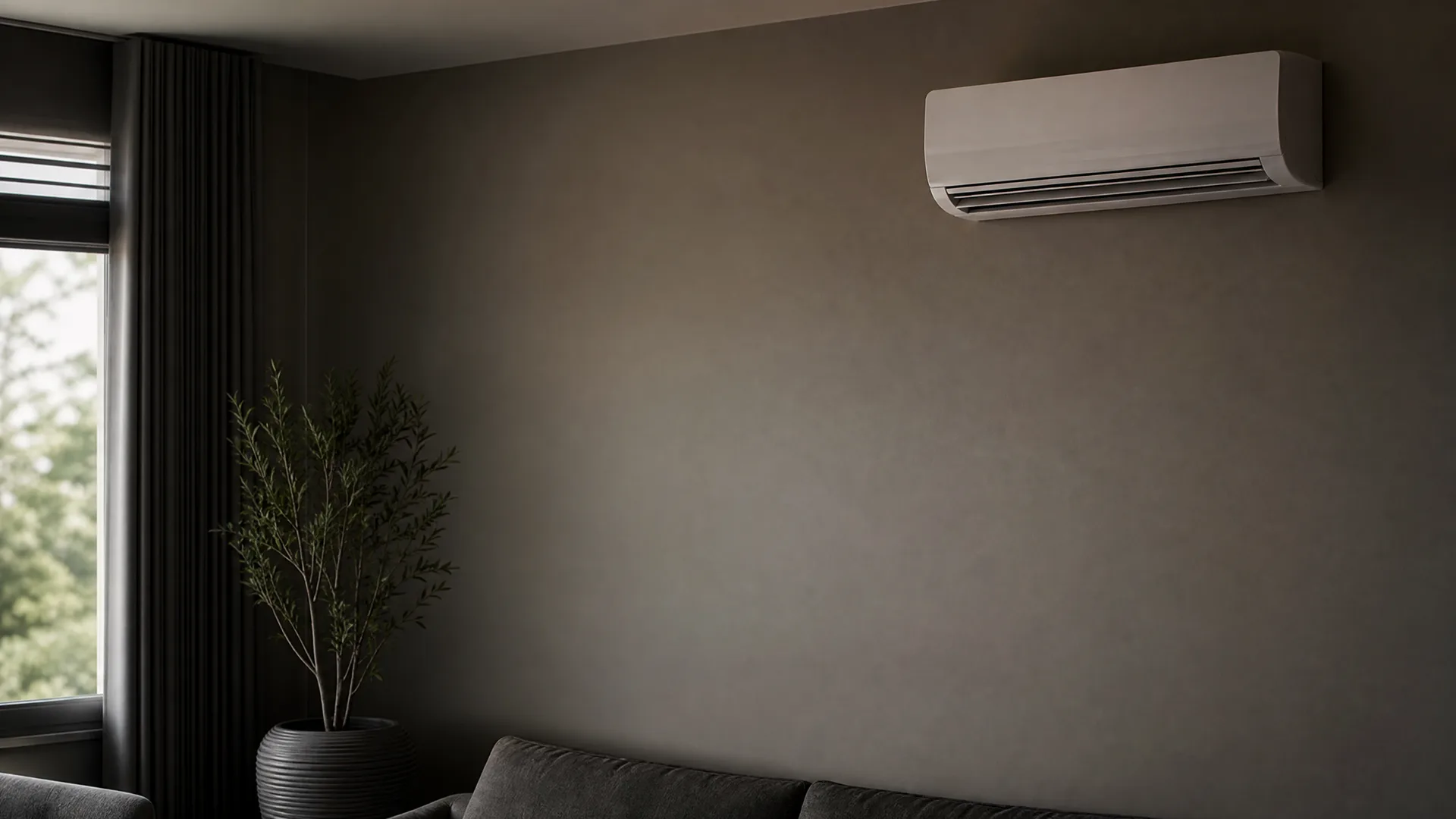
A white wall-mounted mini-split air conditioner high on a dim gray interior wall, with a potted thin-leaved plant, dark curtains and a window at left and a dark sofa at bottom.

Finding a pro stops being your job

Only one pro gets your request, so you hear from one company.

New system or replacementMini-splitNew York
Step 1 of 2

What ZIP code is the job in?