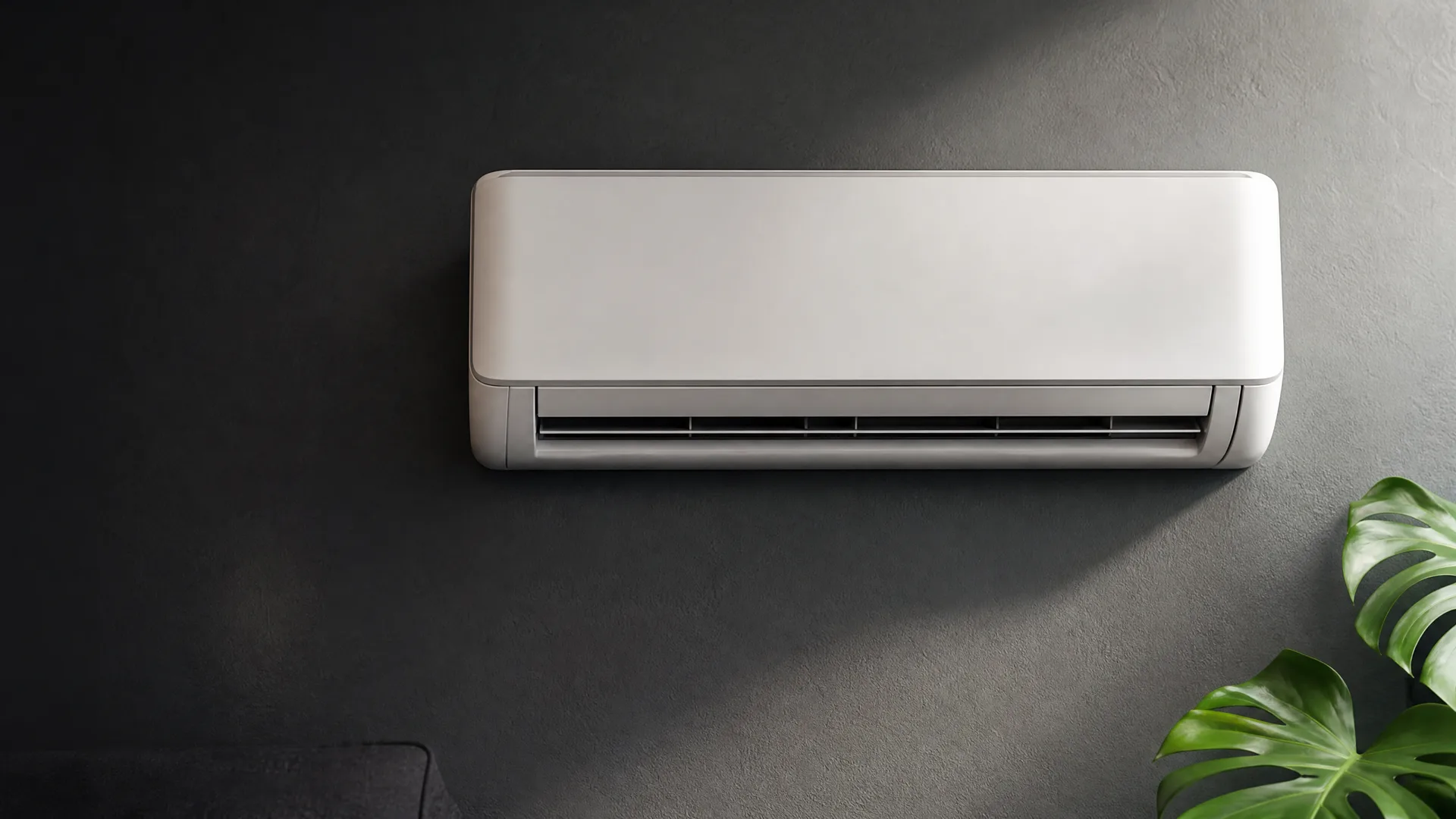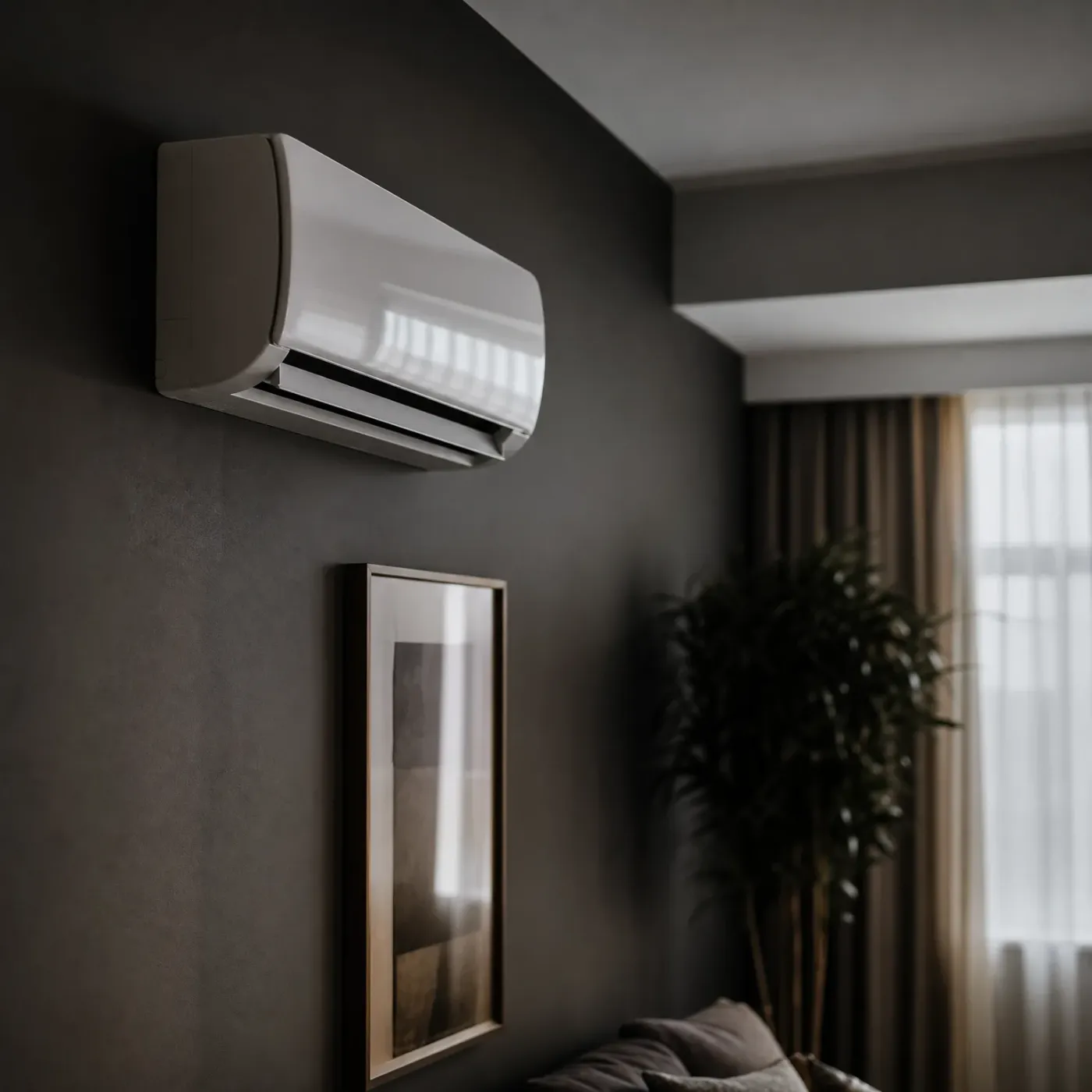







A white wall-mounted mini-split air conditioner on a dark gray interior wall above a framed picture, with a potted plant and curtained window to the right.

Get matched with a mini split pro in Erie County

Is a mini split worth it in Buffalo, NY

A mini split has to earn its keep against gas heat and a power bill that's already high here. That's a fair question with Buffalo winters to think about. This page gets into what a mini split actually does for a home in Erie County, in the cold months and the warm ones, and what it takes to get one installed by someone who knows the area.

Get a local pro

A mini split is worth it in Buffalo for the shoulder months and for summer cooling, but it will not replace your gas furnace on the coldest days. Most mini splits lose capacity as the temperature drops, and once it's down near zero they're working hard just to keep up, so the gas furnace still carries January and February. Where a mini split earns its cost is October, November, March and April, when gas heat would otherwise run for a mild stretch of weather, and all summer, when it cools without the ductwork a central system needs. Pairing one with the furnace you already have, rather than replacing it, is how most homes here come out ahead. Run the numbers on your own setup, your house, your furnace, your rates, before deciding what size and how many rooms make sense.

What does a mini split actually have to work with here?

  • Cooling runs July through August

    Two months of cooling is a light load. A mini split can carry all of it on its own and still leave your gas furnace alone for most of the year.

  • Heat runs October through May

    Eight months of heat is the real test. That's a long stretch for any mini split to carry alone, which is why it's paired with the furnace rather than replacing it.

  • Power here costs 20.36 cents per kilowatt-hour

    At 20.36 cents per kilowatt-hour, every hour a mini split runs instead of resistance heat or an old window unit is worth more here than in most places.

NOAA nClimDiv 1991-2020 · EIA-861 2025

An older man with gray hair and a beard stands in a doorway of a home, wearing a dark coat dusted with snow, with a lit fireplace and lamp visible in the blurred room behind him.
A bearded older man in a dark snow-dusted coat and scarf stands just inside a home's front door, with a lamp-lit room and snowy window visible behind him.
An older man with gray hair and a beard wearing a dark snow-dusted coat stands in a home entryway, with a lamp-lit living room and a wooden staircase behind him.
An older man with gray hair, a dark coat and scarf dusted with snow stands in a warmly lit entryway with an open wooden door, a table lamp, framed pictures, and a plant in a vase.
A woman stands smiling in the open front doorway of a single-story brick house while a man in a dark cap and long-sleeved shirt, seen from behind out of focus, faces her from the walkway.

What this looks like in your house

Picture the unit mounted on a wall in the room you use most, maybe the living room or the main bedroom. That room gets even heat and even cooling straight from the head, while your furnace and ducts handle the rest of the house the way they always have. On a January morning the mini split will still run, but it leans on your furnace more as the temperature drops, and down near zero your furnace is doing most of the work regardless of what the mini split is rated for. In July that same unit can carry the room on its own, since two months of cooling is a light load for it.

Where this shows up is the gas bill and the power bill. Less furnace runtime in the shoulder months means less gas burned, and that's worth something with power priced the way it is in Erie County. Finding the right size for the room, and a contractor who installs it so it actually performs that way, is the part that takes the calling around and the comparing of quotes. Getting matched with one who already knows what a Buffalo winter asks of this equipment skips that part.

A large weathered ceramic vase and a shallow wooden bowl sit on a rustic wooden table beside a window with linen curtains, with a blurred sofa with cushions and a hanging fabric panel in the background.
A white wall-mounted mini-split air conditioner installed high on a beige interior wall below crown molding, with a window and light curtain on a black rod at right.

Running clean

A mini split that's kept up draws air through a clean coil and blows it out even, no streaking on the wall below it. If yours looks like this, it's doing the job it was installed for, through a Buffalo summer and into the shoulder months.


A wall-mounted mini-split air conditioner indoor unit with a dusty off-white casing and dark lower vent, installed high on a plain light-colored wall below a ceiling molding.

Running dirty

Dust and discoloration on the casing usually means the filter behind it hasn't been washed in a while. A clogged filter makes the unit work harder to move the same air, and in Erie County's humidity that grime holds moisture against the coil.

A dusty, stained wall-mounted mini-split air conditioner indoor unit near the ceiling on a plain beige wall, with visible lint buildup at its intake grille.
Before you get your mini split installation
A white wall-mounted mini-split air conditioner installed high on a beige interior wall near the ceiling, with a white-framed window at the left edge.
After you get your mini split installation

The head on your wall is only half the system. Outside, a compressor and a reversing valve do the real work, and that valve is what lets the unit switch between pulling heat in from cold air and pushing heat out in the summer. There's no ductwork involved, so the heat or cool air it makes goes straight into the room instead of traveling through sheet metal first. In January, the colder it gets outside, the less heat there is for the refrigerant to grab, so the compressor runs longer and puts out less. That's the limit you're working against on a hard Buffalo night. Because the compressor is inverter-driven, it speeds up and slows down rather than cutting on and off, so the room it serves holds a steadier temperature than you'd get from an older system. That head also has its own sensor, so it can run that one room warmer or cooler than the rest of the house without touching your furnace. None of that holds up if the filter's clogged or the outdoor coil's dirty. The compressor just works harder to do the same job, and you'll see it on the power bill before you feel it in the room.

How a mini split actually works

  • A mini split has no ducts, so the head on your wall sends air straight into the room instead of losing heat through sheet metal runs.
  • The outdoor unit holds a compressor and a reversing valve, and that valve is what lets the same system pull heat from outside air in January and move heat outside in July.
  • Below freezing, the refrigerant has to pull what little heat it can from outdoor air, so the compressor runs longer and the output on the coldest days drops.
  • An inverter-driven compressor changes speed instead of switching on and off, which is why a mini split can hold a room at a steady temperature without the on-off cycling older systems show.
  • The indoor head has its own thermostat and sensor, so the room it's mounted in can run warmer or cooler than the rest of the house on purpose.
  • A clogged filter or a dirty outdoor coil makes the compressor work harder for the same heat or cooling, which shows up as a higher power bill before it shows up as a weak room.
A white wall-mounted mini-split air conditioner indoor unit on a light gray wall above a white baseboard and wood-look floor.
A mini split running clean sends air straight off the head without haze building on the wall underneath it.
A white wall-mounted mini-split air conditioner indoor unit installed near a textured ceiling on a plain beige wall, with visible dust and discoloration on its casing and vent.
Dust packed into the housing like this means the coil behind it is choked too, and the room stops getting the heat or cooling it should.

Is your mini split actually earning its keep?

You already have the unit on the wall, so the question now is what it's doing for you day to day. In the shoulder months, is that room staying comfortable without the furnace kicking on at all? In summer, is it keeping up on the warm days without running constantly? If you're noticing the room it serves runs cold in January and the furnace seems to carry more of the load than you expected, that's normal for a mini split once temperatures drop toward zero. What's worth paying attention to is a drop in performance that shows up well before deep winter, warm air that isn't warm anymore, or the outdoor unit icing over and staying that way. Left alone, that usually means less of the house is getting the comfort you're paying the power bill for.

A woman wrapped in a thick textured blanket sits on a sofa with an open book on her lap, beside a lit lamp and bookshelf, with a frost-patterned window behind her.
A woman in a cream knit sweater sits in an armchair with her eyes closed and head tilted back, beside an open window showing orange and yellow foliage, with a mug on a small round table and a bookshelf behind her.
Living room with a wall-mounted mini-split air conditioner near the ceiling, a large framed abstract painting, a gray sofa with a dark cushion, a ceramic table lamp on a wood sideboard, and a window showing green trees.

Find a mini split installation pro in Erie County

Skip the round of in-home estimates for a new mini split.

Your new mini split project goes to an installer who works in Erie County.

Match me with a pro

Sending the form costs nothing.

How does a mini split actually pull heat out of cold outside air?

It sounds backward that a unit sitting outside in a Buffalo winter can pull any heat out of that air at all. You've seen the outdoor unit running on a day that's well below freezing and wondered what it's actually doing out there, especially since the trade knowledge section above already mentioned a reversing valve without explaining what that valve does when the temperature drops.

It runs the refrigerant cycle backward, the same way in reverse

Refrigerant inside the outdoor unit is colder than the outside air, even on a cold day, because it's been through a valve that drops its pressure. Cold refrigerant sitting in cold air still picks up heat, the same way a cold glass of water pulls warmth from a room. The compressor then squeezes that refrigerant, which raises its temperature well above room temperature, and sends it inside to the head on your wall. The reversing valve is what lets this happen in either direction. Flip it one way and the system is pulling heat from your room and dumping it outside, which is cooling. Flip it the other way and it's pulling heat from outside and releasing it in your room, which is heating. Same parts, same refrigerant, opposite direction.

A white wall-mounted mini-split air conditioner installed near the ceiling on a beige interior wall, with a window and bamboo blind at the left edge showing green foliage outside.

Clean and running right

This is a mini split doing its job. Air comes off the head evenly, no streaking on the wall, no noise that makes you notice it. The bamboo blind and beige walls stay just as clean as the unit. This is what you're paying the power bill for.

A wall-mounted mini-split air conditioner indoor unit with discolored casing and dusty vents, installed near the ceiling on a plain light-colored wall.

Caked with dust

Dust and grime have built up across the front panel, the vents, the louvers. Air has to push through that buildup to get into the room, so the house feels less even and the unit works harder for it. A coil behind a panel like this needs more than a wipe-down.

Cooling runs July through August

Two months of July and August heat is a short stretch for your mini split to cover. It can hold that room at an even temperature on its own the whole time, cycling less than it would carrying a longer summer, and leaving the rest of the year to the work it does alongside your furnace.

NOAA nClimDiv 1991-2020

Where this leaves you

  • A mini split in Buffalo earns its keep in the shoulder months and through summer, carrying that room on its own.
  • Once winter settles in near zero, your gas furnace is still doing the real work, and that split is not replacing it.
  • The two of them split the job by season, not by room, so neither one is carrying weight it was not built for.
  • Skipping the search for a licensed installer, the back and forth calls, and comparing quotes on your own is what changes once you're matched with someone who knows this equipment.
  • Where you land after reading this is simple: the mini split pays off here, just not as your only source of heat.

A mini split in Buffalo is worth having. It carries the room it's in through summer without help, and it takes the edge off the shoulder months so your furnace stays off longer than it would otherwise. That's real, and it shows up on the gas side of your bill. What it does not do is replace the furnace once the cold settles in for real. Near zero, a mini split is working hard for less heat than it gives you in October, and the furnace is the one keeping the house livable. Neither machine is failing at its job in that split. The mini split was never built to carry a Buffalo January alone, and the furnace was never meant to handle July. Each one is doing the part of the year it's suited for, and that's the arrangement that actually works here.

Getting to that point without a mini split already in place usually means finding a licensed installer who knows this equipment, calling around to see who's available, explaining the same details about your house more than once, and sitting with a stack of quotes trying to tell them apart. Getting matched with an installer who already does this work in Erie County skips that part. The equipment side stays the same, the sizing, the placement, the install itself, but the search for who does it is the piece that's gone.

A white wall-mounted mini-split air conditioner on a dark grey textured wall, with a monstera plant leaf at the lower right corner.

The right pro for this job

New system or replacementMini-splitErie County, NY
Step 1 of 2

What ZIP code is the job in?