Send the form and stop researching installers for the new mini split.
Old houses in New York usually mean no ductwork, or ducts that only reach half the rooms. A mini split gets around that. It runs on its own lines to the wall or ceiling unit, so you're not cutting into plaster to extend a system that was never built for central air in the first place.
It also fits how this state actually runs its homes. Most places here heat with gas already, so a mini split isn't replacing your furnace. It's handling the part gas doesn't do well, which is summer, when it gets sticky and a window unit just can't keep up in an old house with bad airflow.
Power here costs more than almost anywhere else in the country, and that's where the install itself matters. A mini split put in wrong, undersized for the room or set up with bad line placement, runs constantly and it shows up on the bill. Put in right, sized to the room and the way an old house holds or loses heat, it runs the way it's supposed to.
That's the kind of work that calls for someone who installs these in houses like yours regularly, not occasionally. Someone local, licensed, who's dealt with old wiring, old wall framing, and whatever surprises come with a house that's been standing a long time.
Once you send the request, that part isn't yours to sort out anymore. You're matched with one contractor, not a handful of companies competing for your attention, so your phone isn't the one ringing all afternoon. Just the one call, from someone who already knows the kind of house they're walking into.
Is a mini split good for an old house in New York?
You've got a mini split, or you're sizing one up for your old New York house, and you want to know if that was the right call for a place like this before you commit further.
Yes, a mini split suits an old New York home
A mini split works well in an old New York house because it does two jobs that your house needs done separately. It cools the rooms that get sticky from June through September, and it does that without asking you to tear open plaster for ductwork. Most homes here already heat with gas, so the mini split's job is usually cooling plus backup heat for the rooms farthest from the furnace, not replacing the furnace outright. Since power here costs more than in most of the country, how the unit is sized and placed matters more than it would somewhere with cheaper electricity. A unit sized to the room, not guessed at, keeps it from running harder than it needs to.
1
A tech checks your wall or ceiling space for the indoor unit
2
A small hole gets drilled through the exterior wall for the lines
3
Refrigerant lines, wiring and a drain run through that hole
4
The outdoor compressor gets mounted on a pad or bracket outside
Does your old place actually need this
Check the rooms that never cool down right. A bedroom over the garage, a sunroom added on later, an upstairs that stays warm long after the first floor cools off. If you're running window units in those rooms every summer, or a fan that just moves the air around, that's the gap a mini split closes. Gas heat handles the rest of the house fine, but it wasn't built to cool, and old ductwork, where it exists at all, often can't get enough air to those spots. Leave it alone and you're paying for window units, patching plaster where they sit, and still sweating through August in that one room.
No ducts to lose heat along
A gas furnace sends heat through ducts first, and in an old house those ducts leak into the attic or the walls before the air ever reaches the room. A mini split skips that step. The air goes straight from the indoor unit into the room, so nothing is lost on the way there. For a room that's always run colder than the rest of the house, that difference is the whole point.
What the rating actually measures
A mini split's efficiency rating tells you how much cooling or heat you get for the power it draws, not how big a room it can handle. That matters in New York, where power costs more than most of the country. A unit sized right for the room it's serving will run less to hold the temperature than one that's undersized and working hard to catch up, and the rating is what tells a tech which unit that is.
Power costs 26.39 cents per kilowatt-hour statewide
At that rate, every kilowatt your mini split pulls costs more here than almost anywhere else. A unit sized right for the room earns that back, but an oversized one, or one left running on a weak setup, shows up fast on your bill.
EIA-861 2025 statewide residential average
A window unit cools the room it sits in and nothing else, and it's loud enough that most people shut it off at night even in August.
A mini split runs quiet enough to sleep next to and covers the room properly, which matters more once you're the one paying for every kilowatt it uses.
One installer gets your project, so there's no bidding war over it.
You only hire the pro if you want to.
Running the way it should
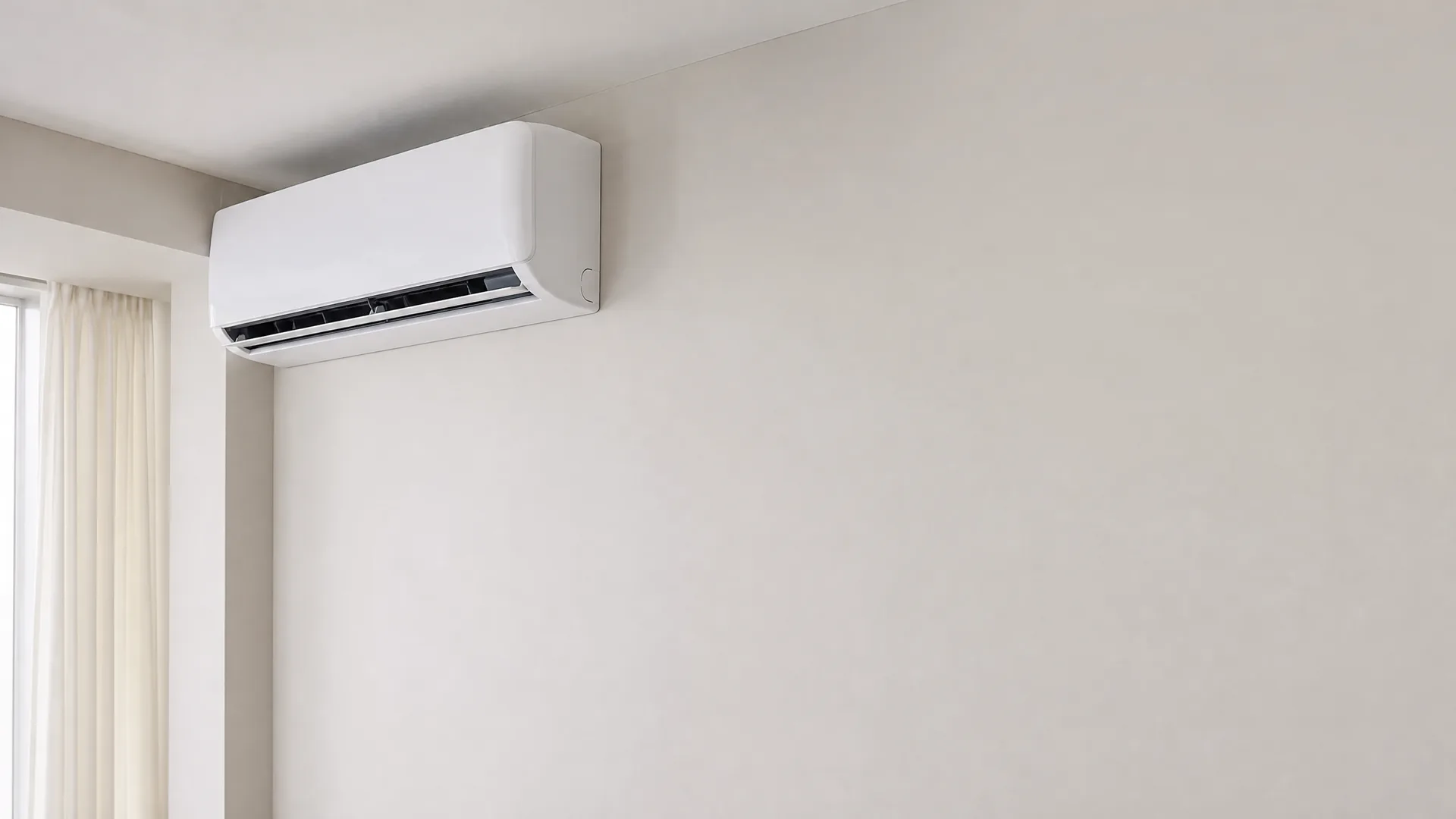
A mini split mounted high on the wall like this is quiet and out of the way, and the room around it cools evenly without a window unit blocking the light. This is what a properly sized, well-installed system looks like years in.
Signs of neglect
Dust across the top and dark residue around the vents mean the filter hasn't been cleaned and the coil behind it is likely dirty too. Left alone, it pulls harder to do the same job, and on New York power rates that shows up fast.
Gas Furnace Alone or Add a Mini Split
Keep the gas furnace alone
Gas heats faster when it's near zero outside, since a furnace burns fuel instead of pulling heat from cold outdoor air.
If your ducts already reach every room, the furnace is already doing the job a mini split would be asked to do in winter.
You're not opening a wall or finding space for an outdoor compressor, so there's nothing new to maintain or plan around.
A furnace tied to ductwork still leaves the usual weak rooms weak, the sunroom, the room over the garage, whatever the ducts don't reach well.
Gas handles the coldest stretch of a New York winter without the drop in output a mini split can see on its hardest days.
Add a mini split
It covers the specific room the furnace and ducts never got right, without touching the gas system at all.
Summers here get sticky, and the mini split brings quiet, even cooling to a room where a window unit used to run loud all night.
It can supplement the furnace on the milder days in fall and spring, so the furnace isn't doing all the work alone.
Power here is expensive, so a mini split only pays off in a room that's sized correctly and set up well.
It runs on its own wiring and lines, so there's no duct work to open up in a house that wasn't built for it.
A tech who installs these every season in New York homes knows which rooms tend to need one and which don't.
A dew point near 62°F is what makes a New York summer feel heavier than the temperature alone lets on. That's a muggy sit-outside-and-sweat kind of air, and it's the air your mini split is actually working against, not just the heat. A mini split pulls moisture out of the air as it cools, more steadily than a window unit does, so a room can feel dry and comfortable even on a day when the number on the thermostat doesn't look that high. If a room still feels damp or clammy after it's reached the set temperature, that's usually a sign the unit isn't sized right for the space, not that the weather won over it. Source: NOAA climate data.
NASA POWER T2MDEW county cells weighted by homes
A mini split that's sized and installed right runs near silent and holds the room steady without you thinking about it.
Dust caked on the casing and louvers stuck open usually means the filter's been skipped and the room isn't cooling like it should.
Running clean
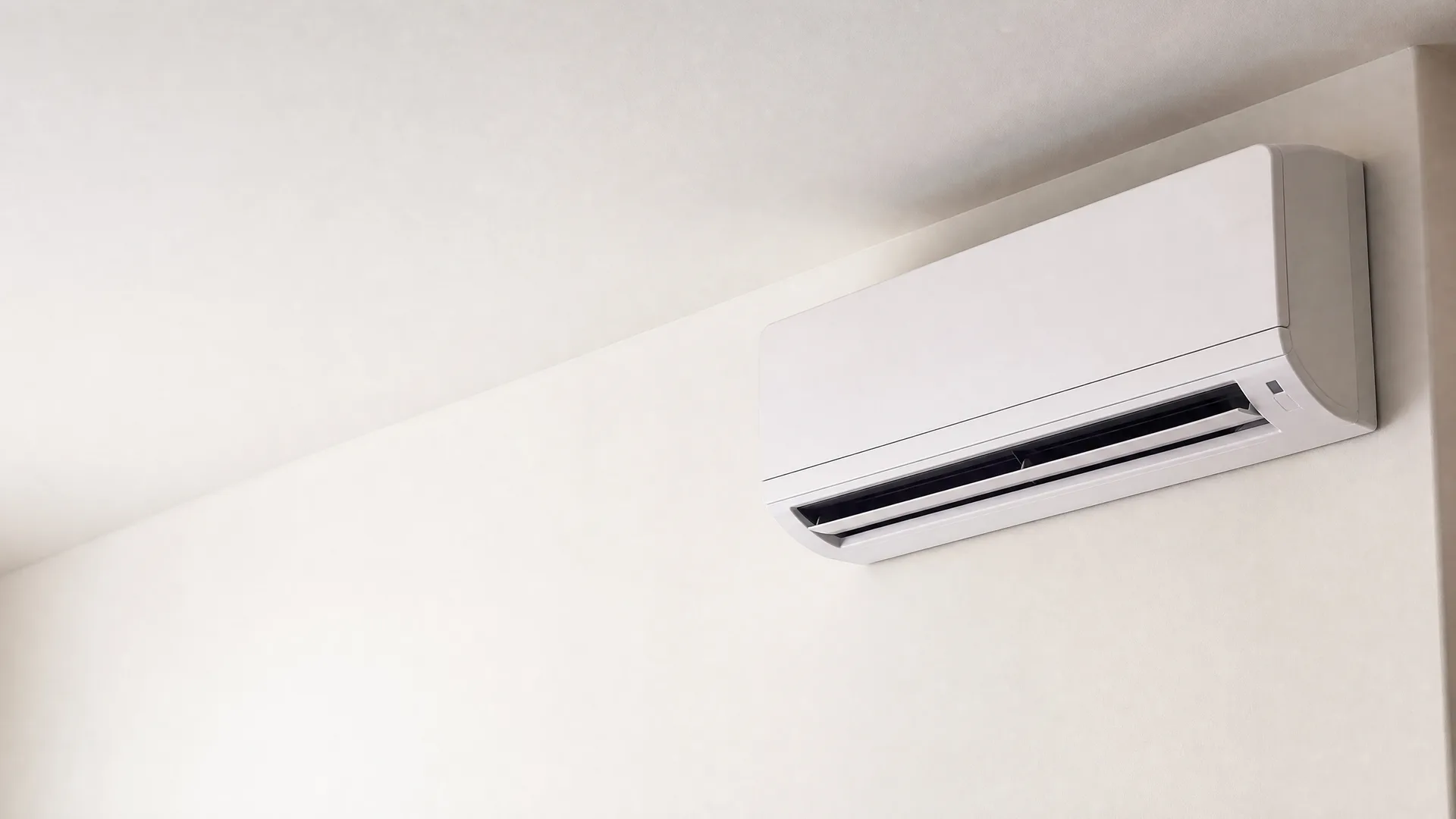
This is what a mini split looks like when it's kept up. The casing stays white, the louvers move freely, and the room holds a steady temperature without the unit straining to get there. A filter that gets rinsed a few times a season is most of what keeps it this way.
Overdue for a look
That dust on the casing points to a filter that hasn't been pulled in a while. Airflow drops as it cakes up, so the unit runs longer to do the same job, and in a market where every kilowatt costs more, that shows up on the bill before it shows up as a breakdown.
A mini split works in an old New York home because it skips the parts of the house that give old houses trouble, the ducts that were never there and the plaster nobody wants opened up. Whether it works well in yours comes down to sizing and a clean install, and that's the part worth getting right the first time, especially at what power costs here. The contractor who takes this job is local and licensed, someone who installs these in houses built the same way as yours and knows where an install can go wrong on a wall like yours, a line run like yours. You'll hear from one contractor, not a handful of companies competing for the job, so you can ask what you need to ask and get a straight answer about your house.