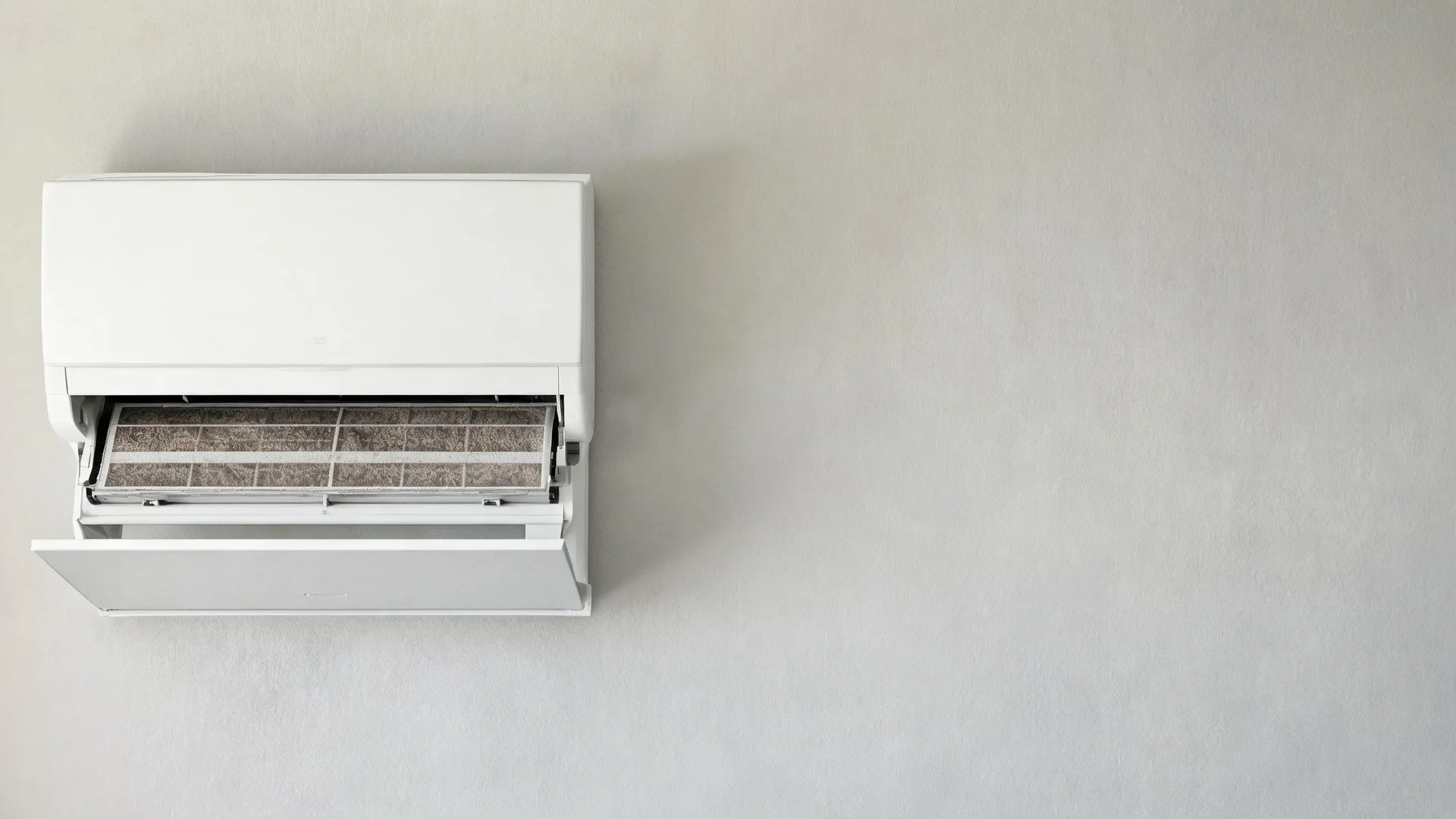
Gas still heats most homes here
Utility gas heats 47.8% of occupied homes in Rensselaer County, more than any other fuel. Fuel oil accounts for another 20.8%, and electricity and propane split most of the rest.
Takes about a minute. No obligation.
Utility gas heats 47.8% of occupied homes in Rensselaer County, more than any other fuel. Fuel oil accounts for another 20.8%, and electricity and propane split most of the rest.
In a home with gas or oil heat, a mini split usually goes in to cover a room the main system struggles with, or to add cooling where there isn't any. It runs alongside your furnace or boiler rather than taking its place.
NOAA nClimDiv, 1991–2020 normals
Half the homes in Rensselaer County were built in 1962 or earlier.
An older home can't be sized by guesswork, so the installer needs to measure the room before picking a unit.



Rensselaer County is zone 5A, a cool climate where heating does more of the work than cooling. Any mini split installed here falls under the same federal rule as other split-system heat pumps. Units made from 2023 onward have to hit at least 14.3 SEER2 for cooling and 7.5 HSPF2 for heating. There's no separate, lower bar for ductless systems. That rules out older or stripped-down models that fall short of those numbers. A mini split that clears the federal minimum can also qualify for a federal tax credit, worth checking before you settle on a unit.
Cooling here runs from July through August. Put the installation in June and it's running before the first hot day, not in the middle of one.
Find a contractorTwo months of cooling a year is a light workload for any system. Troy sees afternoons around 79°F in June, July and August, nowhere near the kind of heat that pushes a compressor hard. Most of what a mini split does here is heating, since Rensselaer County is a cool climate where that's the bigger job. A unit running under that kind of load holds up well for a long time, as long as it's sized to the room and not left to run with a dirty filter or a blocked outdoor unit. When something does go wrong on a system like this, age or upkeep is the more likely reason, not the weather asking too much of it.
SEER2 is the cooling rating, HSPF2 is the heating rating. A mini split carries both numbers because it does both jobs, and a unit can be strong at one and merely adequate at the other. Since heating is the bigger job in a cool climate, the heating rating is worth checking as closely as the cooling one.
A higher SEER2 or HSPF2 number means the compressor uses less energy to deliver the same heating or cooling. It doesn't say anything about whether the unit is the right size for the room it's going in. An oversized unit with a high rating still cycles on and off too fast and wears out sooner, so the rating and the sizing are separate questions that both need answering.
Once you've got the ratings sorted, the next question is what's actually driving around the room. Ask whether the system is single-zone or multi-zone, meaning one indoor head or several running off one outdoor unit. Ask how the installer arrived at the size, since a unit picked by square footage alone is a guess, not a calculation. Ask what happens if the outdoor unit ever needs replacing, whether the indoor head is tied to that one model or can pair with another. Ask about the warranty on the compressor specifically, not just the system as a whole, since that's the part most likely to fail and the most expensive to replace. And ask who services the brand locally, because a unit nobody nearby knows how to repair is a problem waiting to happen.
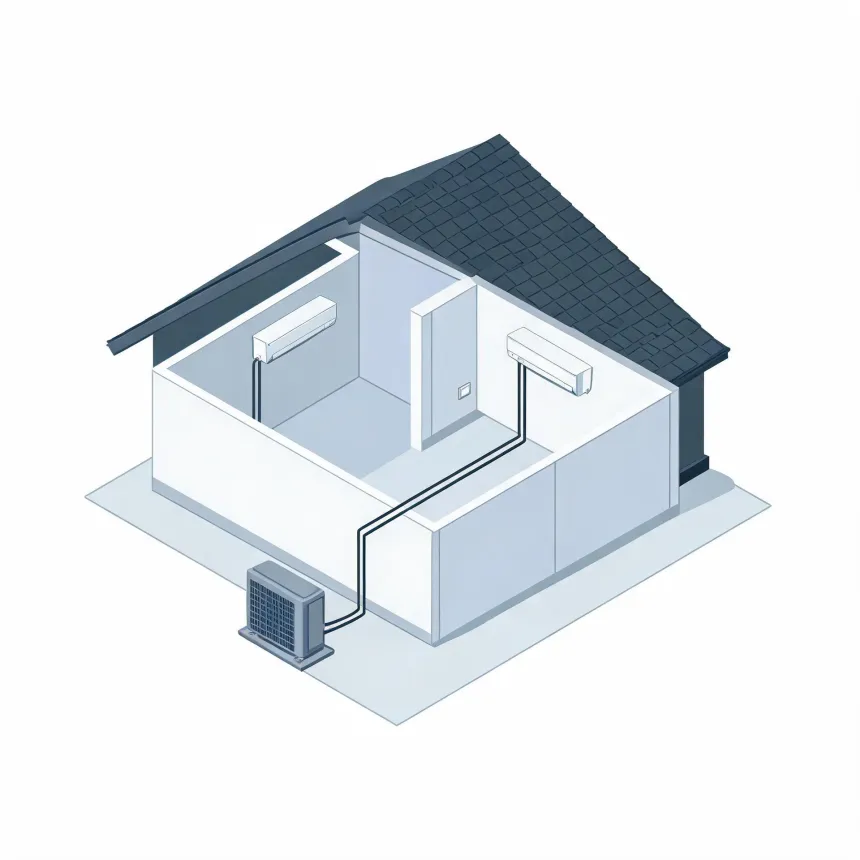
Installation starts with the outdoor unit and the indoor head going up on opposite sides of a wall, connected by a small conduit carrying the refrigerant lines, a drain line, and electrical wiring. The installer drills one hole through the wall for that conduit, sets the indoor head on a mounting plate, and places the outdoor unit on a pad or bracket outside. Once the lines run between them, the system gets evacuated with a vacuum pump to pull out air and moisture before the refrigerant is released into the lines. That vacuum step matters more than people expect, since trapped air or moisture left in the lines can damage the compressor down the road. After that, the installer checks refrigerant pressure, tests the thermostat or remote, and confirms the condensate drain actually carries water away instead of pooling near the indoor unit. A multi-zone job takes longer than a single head, since each indoor unit needs its own line set run back to the shared outdoor unit.