





A two-story red brick house with black shutters and a dark roof stands behind a wide mown lawn, framed by large leafy trees, with a dry-stacked stone wall across the foreground.

Mini Split Installation in Syracuse, NY

Tell us about the job

Takes about a minute. No obligation.

New system or replacementMini-splitOnondaga County, NY
Step 1 of 2

What ZIP code is the job in?

Gas furnaces heat most homes in Onondaga County, close to seven in ten. A mini split works differently. It runs on electricity and handles heating and cooling from one outdoor unit, so it fits homes that want central air where no ductwork exists, or a detached garage, sunroom or addition the furnace doesn't reach. Some homeowners pair a mini split with the existing gas furnace, using it for shoulder season or for one room that never gets warm, and let the furnace carry the coldest months. Either way, the sizing depends on the space it's covering and how it's insulated, not on what the rest of the house runs on.

8 months
October through May, your system heats
2 months
July through August, it cools
18°F
the average winter night it heats against
79°F
the average summer afternoon it cools against
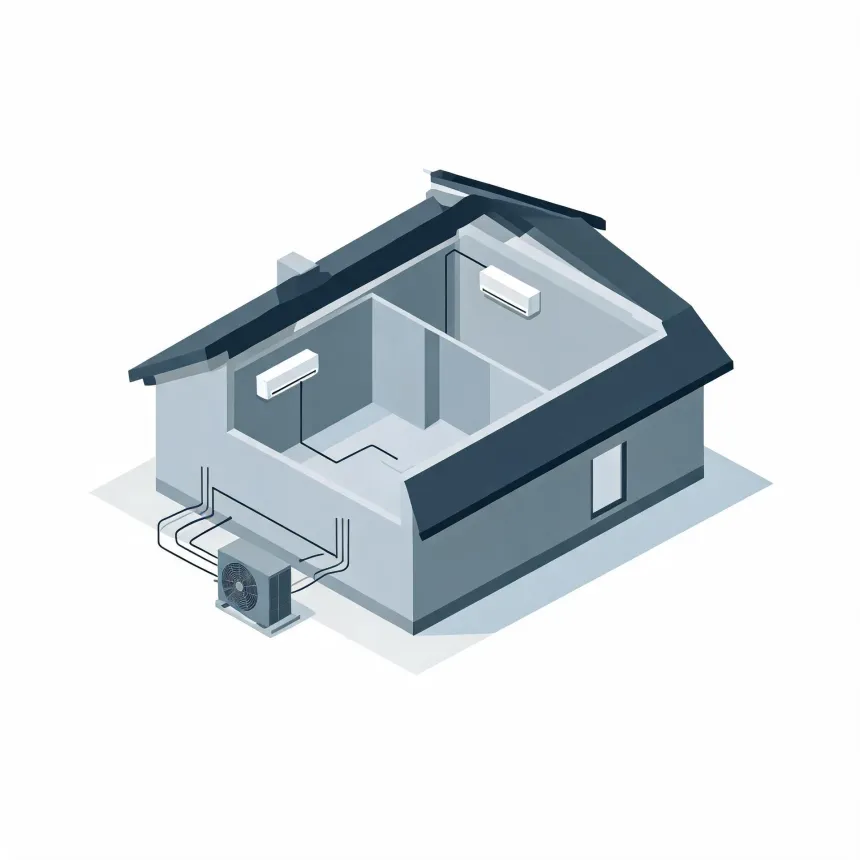
Isometric illustration of a cutaway house showing two wall-mounted indoor air conditioning units connected by line sets to an outdoor condenser unit on the ground outside.
Your system heats October through May and cools July through August.

NOAA nClimDiv, 1991–2020 normals

A standard mini split, sized right for the room it's heating or cooling, does the job in Syracuse.

No reason to pay for extra capacity this house doesn't need.

Two months of cooling a year means the mini split barely has to work

Cooling runs July through August
Summer afternoons average 79°F
186 damaging wind events from 2015 to 2024
Pick the mini split sized for the room, not the one with more capacityRight sized for the room, a standard mini split covers it, no need to pay for more capacity than this house uses

Cooling in Onondaga County runs July through August, so June is the month to get a mini split installed, not July. Installation takes some time on a contractor's schedule, and summer is when every AC and mini split company in Syracuse gets busiest. Book it in June and you get your pick of install dates before the heat sets in. Wait until a July heat wave and you're stuck without cooling while you wait for an opening. The unit itself doesn't care what month it goes in, but your schedule does, and so does theirs.

Every mini split installed here has to clear 14.3 SEER2 and 7.5 HSPF2

Syracuse falls in climate zone 5A, where heating carries the bigger load. Any mini split installed here, split system or otherwise, has to meet 14.3 SEER2 for cooling and 7.5 HSPF2 for heating if it's manufactured from 2023 on. That's the floor, not a tier contractors sell above. A federal tax credit is available on qualifying equipment, worth checking against before you settle on a unit.

Find a contractor
A white mini-split air conditioner outdoor condenser unit mounted on metal brackets against a beige stucco exterior wall, with a blue sky and scattered clouds in the background.

The old unit doesn't need to last another season

If this is replacing window units or an old through-wall system, those units get hauled away once the new lines run. If this is going in alongside the furnace, nothing about the furnace changes. It still heats the way it always did, and the mini split just takes over the room or the season it's assigned to. The only wear worth watching on the old equipment is whatever prompted the replacement in the first place, a compressor on its way out or a unit that can't keep up anymore. That doesn't improve on its own, and it doesn't need to. Once the mini split is in, the old unit's job is done.

Too big short cycles, and that wears the compressor

An oversized mini split cools the room fast, shuts off, then starts again a few minutes later. It never runs long enough to pull moisture out of the air, so the room feels cool but damp. All that starting and stopping is harder on the compressor than one long steady run would be.
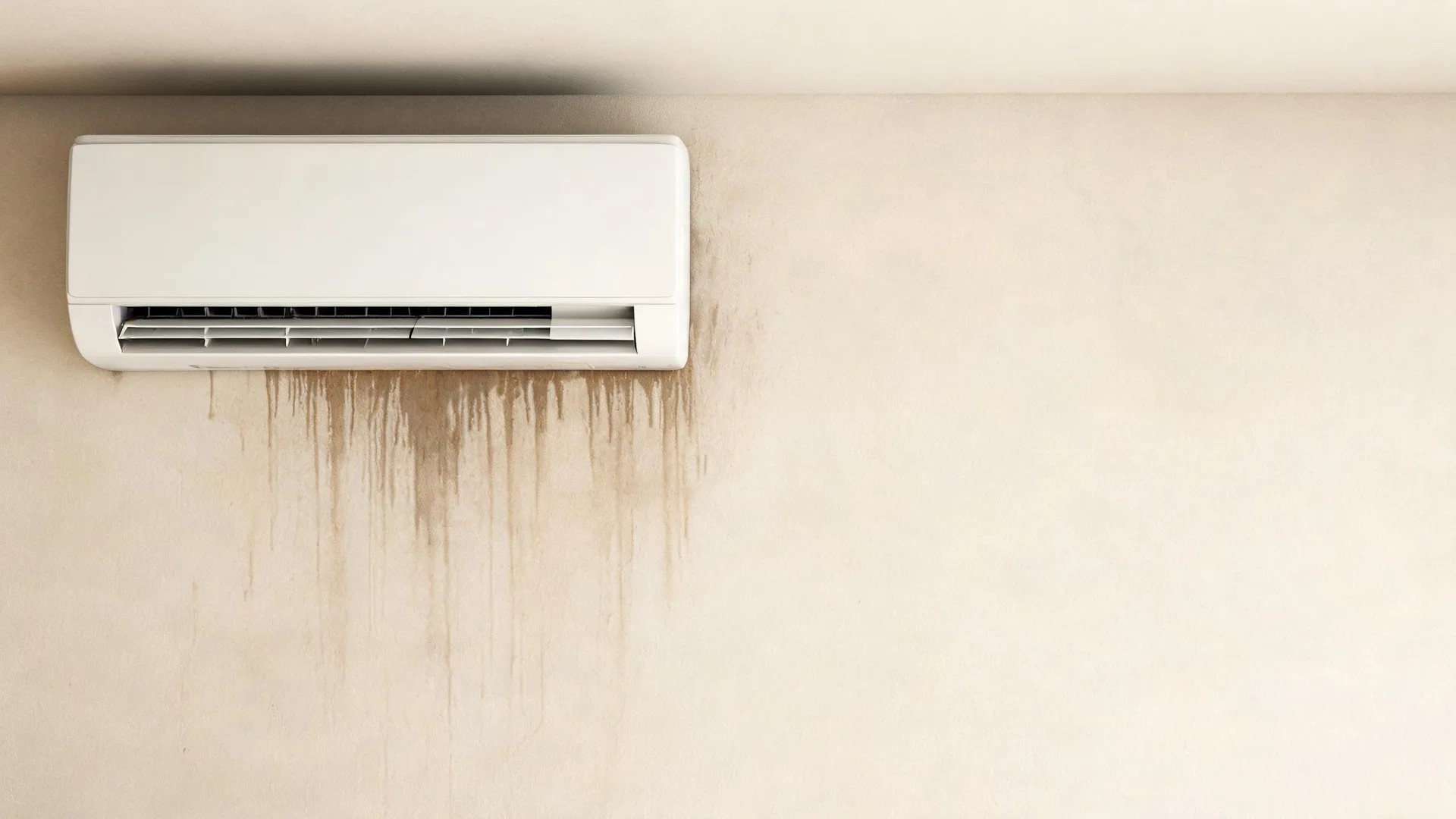
The load calculation looks at the room, not a chart

A contractor sizing a mini split measures the square footage, checks the insulation, counts the windows and which way they face, and factors in the ceiling height. A room with a wall of west-facing glass needs different capacity than one without, even at the same size. That's the actual job, not picking the next size up to be safe.

Ask what the unit sounds like at full speed, not just at idle. The outdoor compressor and the indoor air handler both have a sound rating, and that number only tells you the quiet end. Ask how many indoor heads the outdoor unit can run and whether adding a second room later means a new outdoor unit or just a new line set to this one. Ask who services it. Mini splits need the indoor coil and filter cleaned on a schedule, and not every contractor who installs them carries the parts for every brand. Ask about the warranty terms too. Most manufacturers void the compressor warranty if the person who installed it isn't certified on that brand, which matters more than anything printed on the spec sheet.

Installation starts outside, not in. The outdoor compressor needs a spot with clearance on all sides and a path for the line set to reach indoors, so a contractor walks the exterior before touching a tool. Indoors, mounting the air handler means finding a stretch of wall with a clear shot through to outside, since the refrigerant lines, the drain line and the electrical whip all run through one hole drilled for that purpose. That line set gets cut to length, connected at both ends, then pressure tested before anything is charged with refrigerant. A vacuum pump pulls moisture and air out of the lines first, because either one left behind ruins the system's efficiency and can damage the compressor over time. Once the lines hold vacuum, the refrigerant valve opens, the unit powers on, and the contractor checks airflow at the head and temperature split before calling it done.