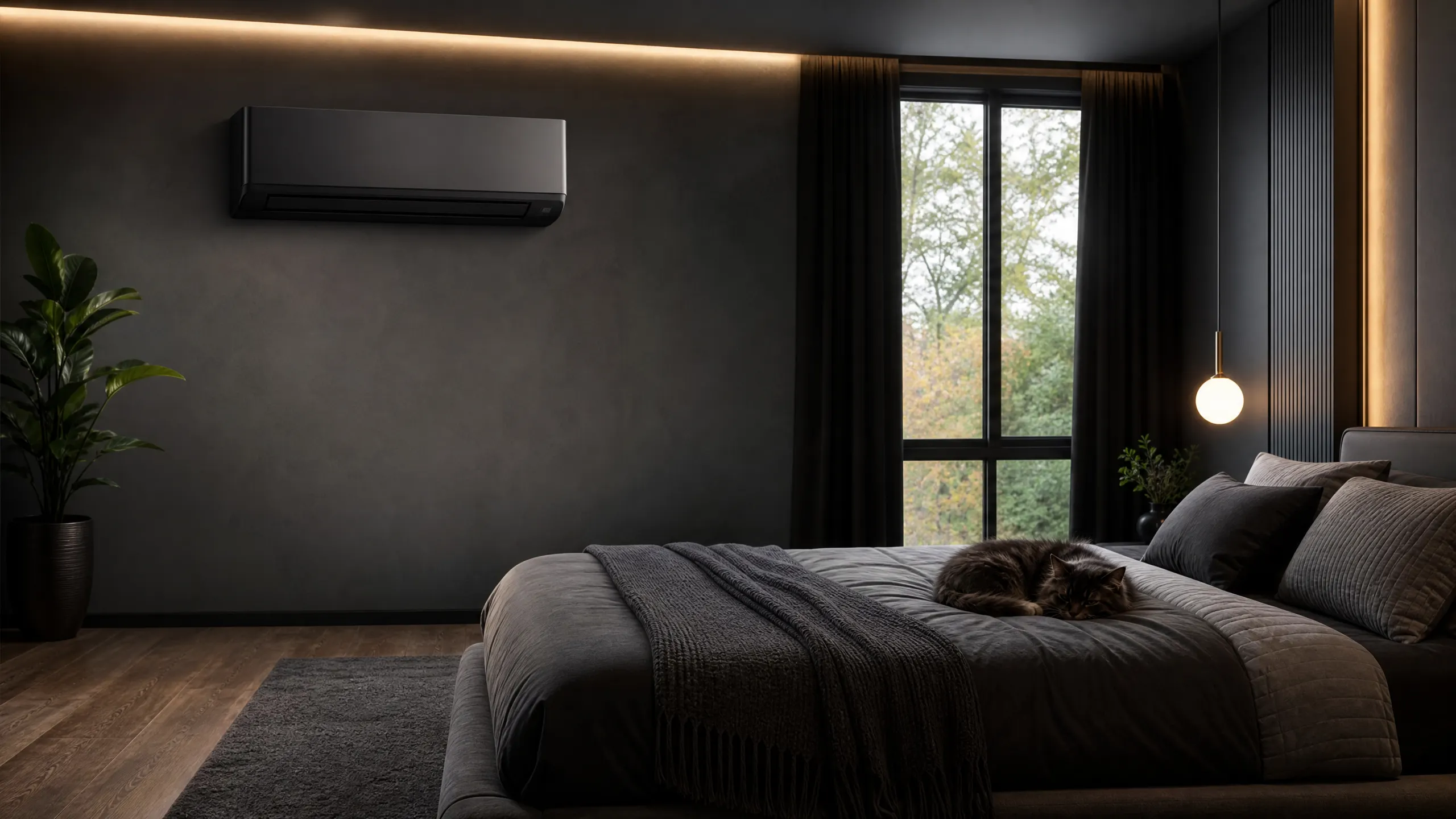





A dark modern bedroom with grey bedding, a wall-mounted air conditioning unit, and a cat resting on the bed.

Mini Split Installation in Staten Island, NY

Tell us about the job

Takes about a minute. No obligation.

New system or replacementMini-splitRichmond County, NY
Step 1 of 2

What ZIP code is the job in?

Electricity here runs 36.97 cents per kilowatt-hour on average, well above most of the country. A mini split moves heat instead of burning fuel to make it, so it gets more out of every kilowatt-hour than a baseboard heater or a window unit ever will. That difference matters more in Richmond County than almost anywhere else, because the same unit of cooling or heating costs more to produce here. Summer air sits heavy too, with dew points averaging 63°F across June, July and August, so the system is working against real moisture, not just heat. A unit that handles that load well keeps the gap between a comfortable home and a high bill as small as it can be.

7 months
October through April, your system heats
4 months
June through September, it cools
28°F
the average winter night it heats against
84°F
the average summer afternoon it cools against
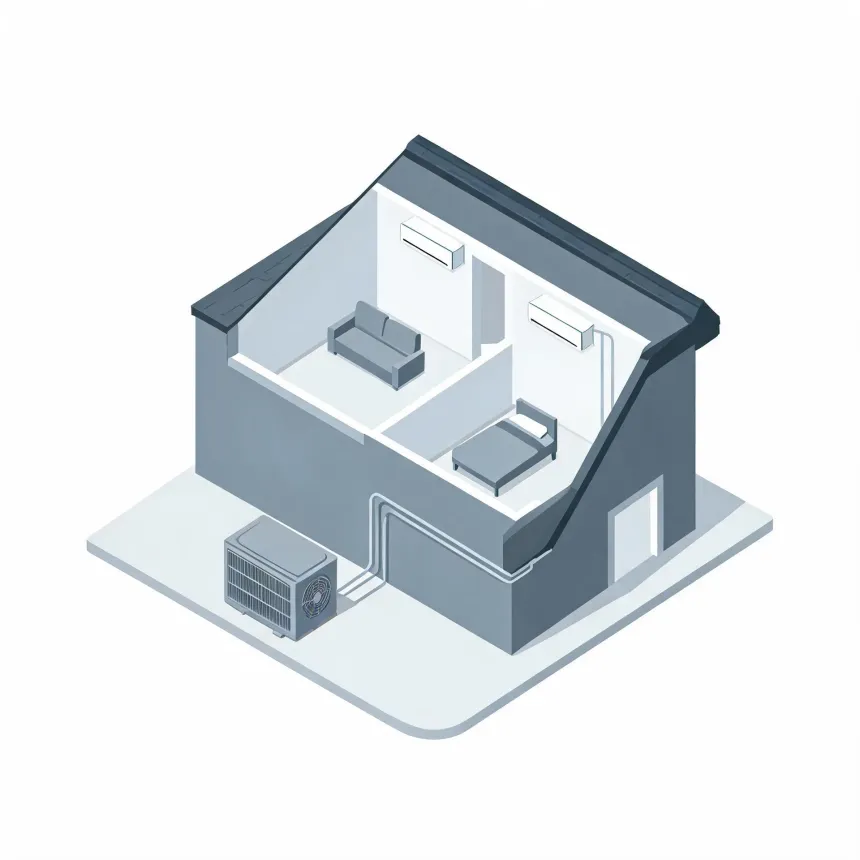
Isometric cutaway illustration of a two-room house showing two wall-mounted indoor air conditioning units connected by line sets to an outdoor condenser unit on the ground outside.
Your system heats October through April and cools June through September.

NOAA nClimDiv, 1991–2020 normals

Gas heats 85.1 percent of homes in Richmond County.

A mini split adds cooling, and often backup heat, without touching the gas furnace already doing the main job.

Cooling starts in June. Get it installed before May runs out.

Cooling runs June through September
Climate zone 4A
Power here costs 36.97 cents per kilowatt-hour

Richmond County falls under zone 4A in the 2021 energy code, a mixed climate that asks real work of both the furnace and the AC. That rating sets a floor for what can be installed here. Any ductless system manufactured from January 1, 2023 onward has to clear 14.3 Btu of cooling for every watt-hour it draws, and 7.5 Btu of heat for every watt-hour on the heating side. Those are the split-system heat pump minimums, and a mini split counts as a split system under that standard. The federal government backs that baseline with a tax credit for qualifying equipment, so the unit that meets the code is often the one that qualifies for money back.

Picking the right unit is what keeps this affordable to run

Power here costs more than almost anywhere else, and a mini split only pays that off if the one installed actually meets the efficiency numbers the code sets. Ask what SEER2 and HSPF2 ratings come with the unit before deciding. That rating is also what the federal tax credit checks for, so getting it right can mean money back too.

Find a contractor
A man in a cap, work shirt and tan pants, seen from behind, carries a canvas tool bag up concrete steps toward a dark green front door, with a potted shrub to the right.
A white mini-split air conditioner outdoor condenser unit mounted on metal brackets against a beige stucco exterior wall, with a blue sky and scattered clouds in the background.

The rating on the box is the best this unit will ever do

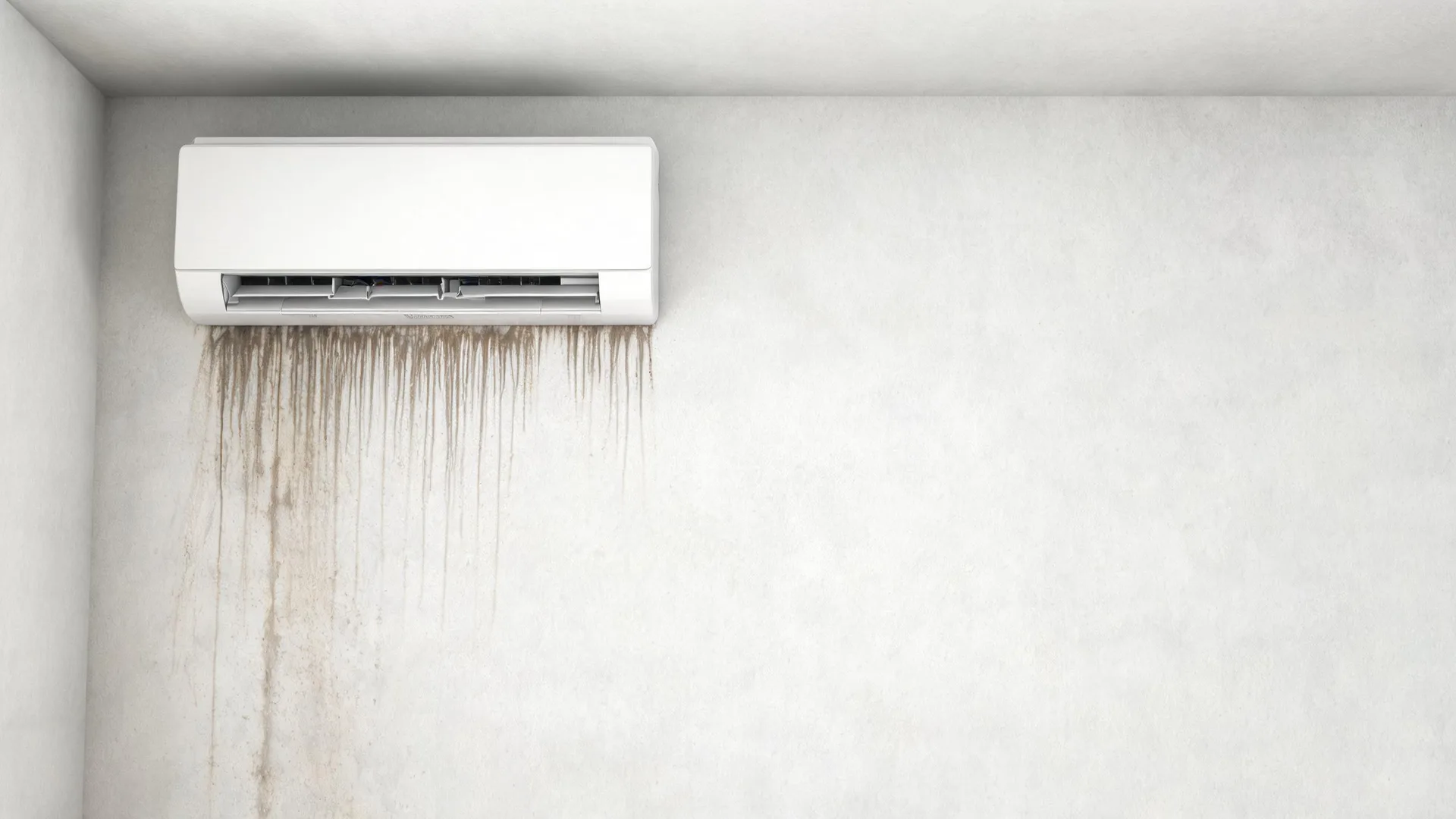
That SEER2 and HSPF2 rating on the label is measured new, in a lab, with clean coils and a full charge. From the day it's installed, the unit starts working toward a lower number. Dust on the indoor coil blocks airflow. A dirty outdoor coil makes the system work harder to dump heat outside. A slow refrigerant leak drops capacity long before it's low enough to trigger a fault code. None of that shows up on the label, but all of it shows up on the meter. A mini split that gets its filters cleaned and its coils kept clear holds close to its rated efficiency for years. One that doesn't can lose a meaningful chunk of that rating well before anything actually breaks.

Where the unit goes decides half the job

The indoor head needs a clear path to the outdoor unit for the refrigerant lines, a power circuit, and a spot on the wall that lets air reach the whole room. A straight, short line set is a simpler run than one that has to climb a wall, cross an attic, or snake around framing. The outdoor unit needs its own clearance too, away from fences and walls, set where it can pull air freely and drain condensate without pooling. Every added foot of line set, every extra elbow, every wall it has to pass through adds to what the installer has to do.
The number of zones changes the system, not just the labor

A single indoor head tied to one outdoor unit is a different system than three or four heads running off one shared outdoor unit. Multi-zone systems need an outdoor unit sized and matched to handle every indoor head at once, plus a line set run to each one. Each additional zone means another spot to mount, another hole through the wall, another branch in the refrigerant lines. Comparing a one-zone quote to a multi-zone quote is comparing two different jobs, not the same job at a different price.

Ask what happens if the indoor head and outdoor unit don't come from the same product line. Mixing a head from one manufacturer with a condenser from another can void the warranty even if the fittings technically connect. Ask how the installer sizes the system, too. A unit sized off square footage alone, without accounting for windows, ceiling height, and how many walls separate rooms, tends to run wrong for the space, either short-cycling because it's oversized or running constantly because it's too small. A load calculation done room by room catches that before the equipment is bought, not after it's hanging on the wall. Ask what warranty covers the compressor versus what covers labor, because those are often different lengths and only one of them is free if something fails. And ask who commissions the system after install, since a mini split that isn't charged and tested to spec will never hit the numbers on its own label, no matter how good that label looks.

Install day starts with a check of what was quoted against what's actually on the wall. The installer confirms where the line set will run, cuts the hole through the wall for the conduit, and sets the mounting plate for the indoor head level and secure. Outside, the condenser goes on a pad or brackets, set away from anything that blocks airflow. Running the line set means connecting refrigerant lines, a power whip, and a condensate drain between the two units, then wrapping and sealing the wall penetration so weather can't get in. Once everything's connected, the system gets evacuated with a vacuum pump to pull out moisture and air before any refrigerant moves, because trapped air or moisture in the lines ruins efficiency and can damage the compressor. Only after that does the installer charge the system, test it under power, and check that it's actually hitting the temperatures it's supposed to.