Electricity here runs 24.43 cents per kilowatt-hour
New York homes paid that rate on average in 2024. A mini split pulling less power to hit the same room temperature keeps that rate from turning into a high bill.

Takes about a minute. No obligation.
New York homes paid that rate on average in 2024. A mini split pulling less power to hit the same room temperature keeps that rate from turning into a high bill.
A higher SEER2 or HSPF2 number means less power drawn for the same heating or cooling. At New York's rate, that difference between two units shows up on every bill, not just the sticker.
NOAA nClimDiv, 1991–2020 normals
The price of a mini split job comes down to how many zones you're running and how far the line sets have to travel.
A single head close to the outdoor unit costs less to install than a multi-zone setup with long line runs through finished walls.



Utility gas heats 73.8% of homes in Queens County, more than every other fuel combined. Most of the furnaces a mini split would sit alongside are gas furnaces, not electric ones. That matters because the two systems can split the job. The furnace keeps running on the coldest nights, and the mini split takes over for cooling and the months in between when a full furnace cycle is more than the house needs. If your home runs on oil instead, a mini split can cut down on how often that system has to fire.
Queens sits in climate zone 4A, which asks real work of both heating and cooling. Any mini split installed here has to meet the federal minimum for that job. That's 14.3 SEER2 for cooling, 7.5 HSPF2 for heating. That rules out the low end of the market on its own. A federal tax credit is available on qualifying equipment, worth asking about when you compare units.
Find a contractorA mini split runs longer than a furnace or a central air conditioner ever did. It's not cycling on for a burst of heat and shutting off. It holds a room at temperature by running steady at low output, which means the compressor sees more total hours over a year than a system that only kicks on a few times a day. That's by design, and the equipment is built for it. What it means for you is the outdoor unit needs clear airflow around it year round, not just in summer, and the filters need checking more often than you'd check them on a furnace, since air is moving across them most days. Ask what the warranty covers on the compressor specifically, since that's the part doing the most work over time, and ask how often the manufacturer wants the coils cleaned. A system that runs this many hours a year shows neglect faster than one that rests most of the day.
If a furnace or boiler is already doing the heavy lifting on cold nights, a mini split installation can leave it in place. The crew runs new refrigerant lines and sets the outdoor unit and indoor heads without touching the existing ductwork or gas line. Nothing about adding a mini split requires tearing out what's already heating the house.
Pulling out an old window unit or a prior ductless system means disconnecting its line set and patching where the old indoor head was mounted. The outdoor pad or bracket from the old unit usually can't be reused, since mounting points and clearances differ between models. Removal and disposal of the old equipment is worth asking about as its own line item, separate from the new installation.
Sizing a mini split isn't about matching the biggest unit to the square footage of the room. One that's too big cools the room fast and shuts off before it's pulled the moisture out of the air, so the room ends up cold and damp instead of comfortable. One that's too small runs flat out and still can't catch up on the hottest or coldest days. Getting it right takes a room-by-room load calculation, the kind that looks at window area, insulation, ceiling height and which way a room faces, not a rule of thumb based on floor space alone. Each indoor head gets matched to what that specific room needs, and the outdoor unit gets sized to carry all of them running at once. Skip that step and the equipment can be the right brand and still be the wrong fit for the house.
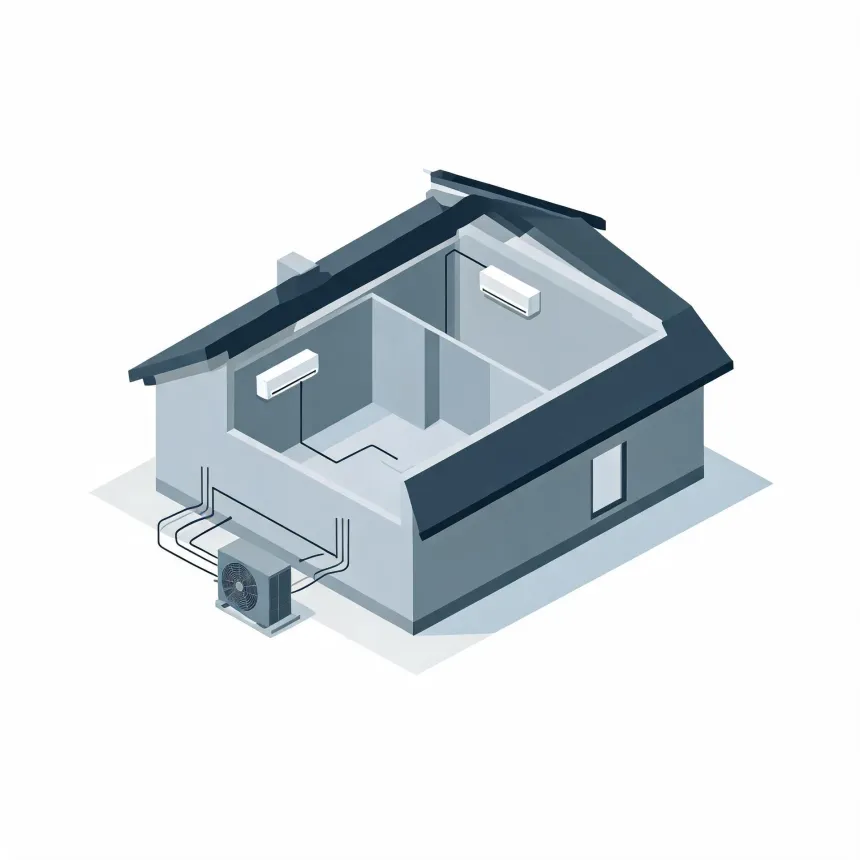
Installation day starts outside, not in. The crew figures out where the outdoor unit sits before anything else, since it needs clearance on all sides for airflow and a line set path back to each indoor head. Mounting the indoor units comes next, usually high on a wall or in the ceiling, in the spot that gives the best coverage of the room without blowing air straight onto a couch or bed. Then the line set goes in, the copper tubing carrying refrigerant between outdoor and indoor units, run through a small hole drilled in the wall and routed as directly as the layout allows. Once everything's connected, the lines get pressure tested and then pulled down to a vacuum to clear out moisture and air before refrigerant ever enters the system. That vacuum step matters more than it looks like it should. Any moisture left in the lines turns into acid once the system runs, and that shortens the life of the compressor. The last part is commissioning, where refrigerant charge gets checked against what the manufacturer specifies and each head gets tested on heat and cool before the crew leaves.