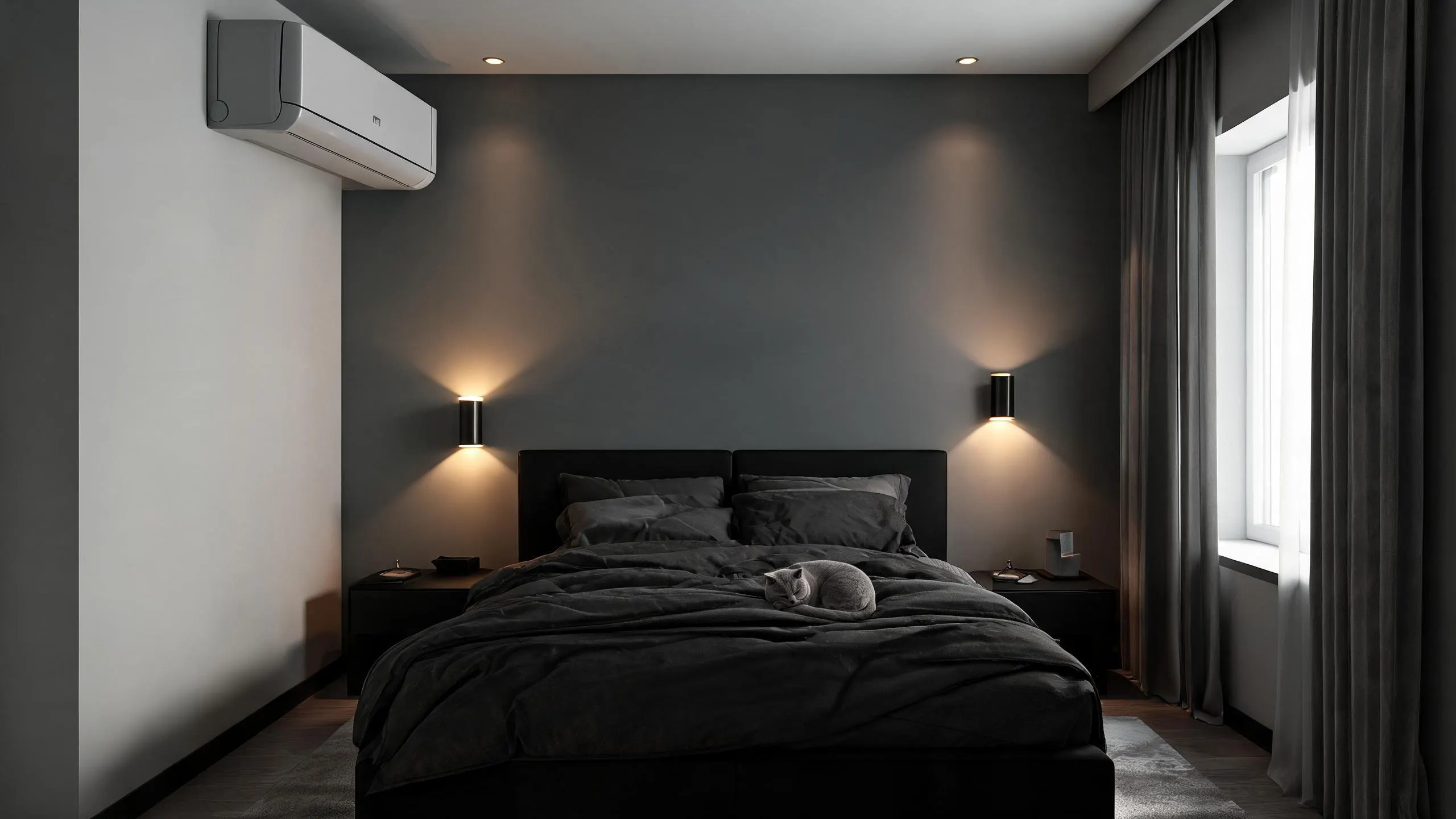





A minimalist bedroom with dark grey walls, a large bed with charcoal bedding, a sleeping cat, two warm-toned wall sconces, and a wall-mounted air conditioning unit.

Mini Split Installation in Poughkeepsie, NY

Tell us about the job

Takes about a minute. No obligation.

New system or replacementMini-splitDutchess County, NY
Step 1 of 2

What ZIP code is the job in?

Dutchess County saw 341 damaging wind events between 2015 and 2024, along with 19 hail events and 5 tornadoes. Add 28 winter storms with heavy snow and ice, and that outdoor condenser is sitting through a lot of weather over its lifespan. Across New York, 11% of households lost power for 24 hours or more in 2024. A mini-split won't run through that, for heat or for hot water if you're pairing it with a heat pump water heater. None of this means your home has had trouble before. It means the odds here are higher than in most counties, and that's worth knowing before the outdoor unit goes in.

8 months
October through May, your system heats
3 months
June through August, it cools
20°F
the average winter night it heats against
81°F
the average summer afternoon it cools against
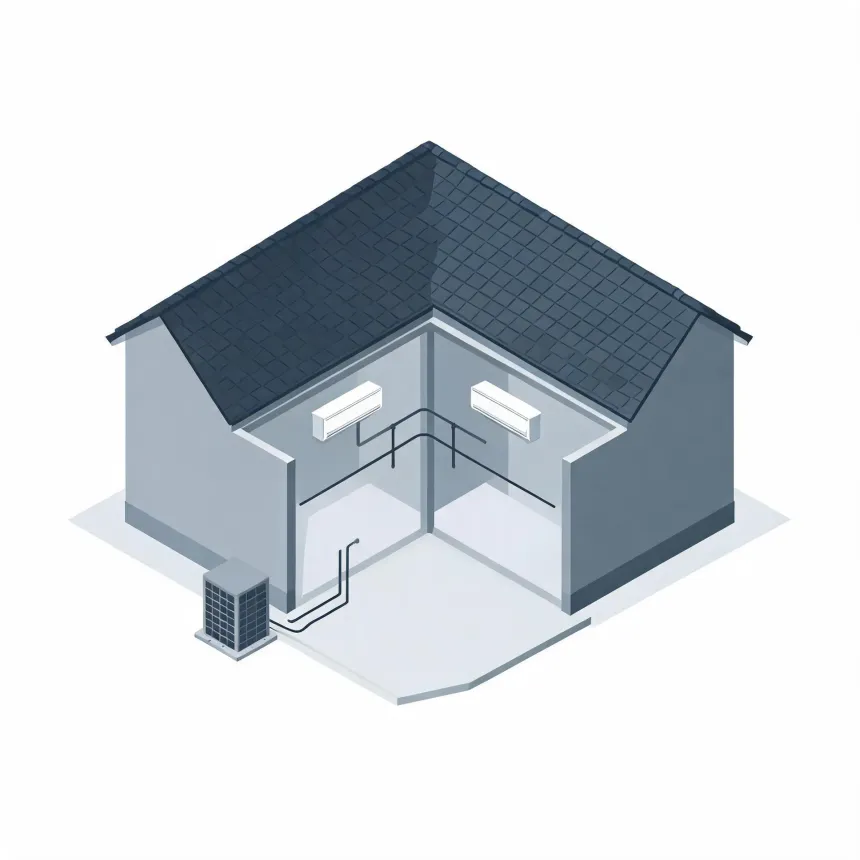
Isometric illustration of a cutaway gray house with a dark shingled roof, showing two wall-mounted indoor air conditioning units connected by piping to an outdoor condenser unit on the ground outside.
Your system heats October through May and cools June through August.

NOAA nClimDiv, 1991–2020 normals

Cooling here runs June through August.

Get the install done in May, and you're not stuck waiting on a crew during the first hot week.

Half these houses were built before anyone thought about mini splits

Half the homes here were built by 1971
Climate zone 5A
Power here costs 27.74 cents per kilowatt-hour
Here, oil heats more homes than anything else44.1% of homes in Dutchess County heat with oil, more than gas and electric combined

Electricity in Dutchess County runs about 27.74 cents per kilowatt-hour, well above most of the country. That number hits different depending on how the system runs. A mini-split that's sized right and installed clean will hold its output without working harder than it needs to. One that's undersized, or has a line set put in wrong, draws more every hour it runs to make up the difference. At that rate per kilowatt-hour, the gap between a system running the way it should and one that isn't shows up on the bill fast. It's not about buying the most efficient unit on the shelf. It's about the installation holding up to what the spec sheet promised.

Plan the install around the outages, not just the heat

The outdoor unit going in should sit where wind and falling ice won't reach it, with clear ground around it. Ask about a battery backup or a circuit setup that keeps at least part of the system running when the power drops. Get that settled at install, and a storm that knocks out the block doesn't have to mean a cold house or a cold shower.

Find a contractor
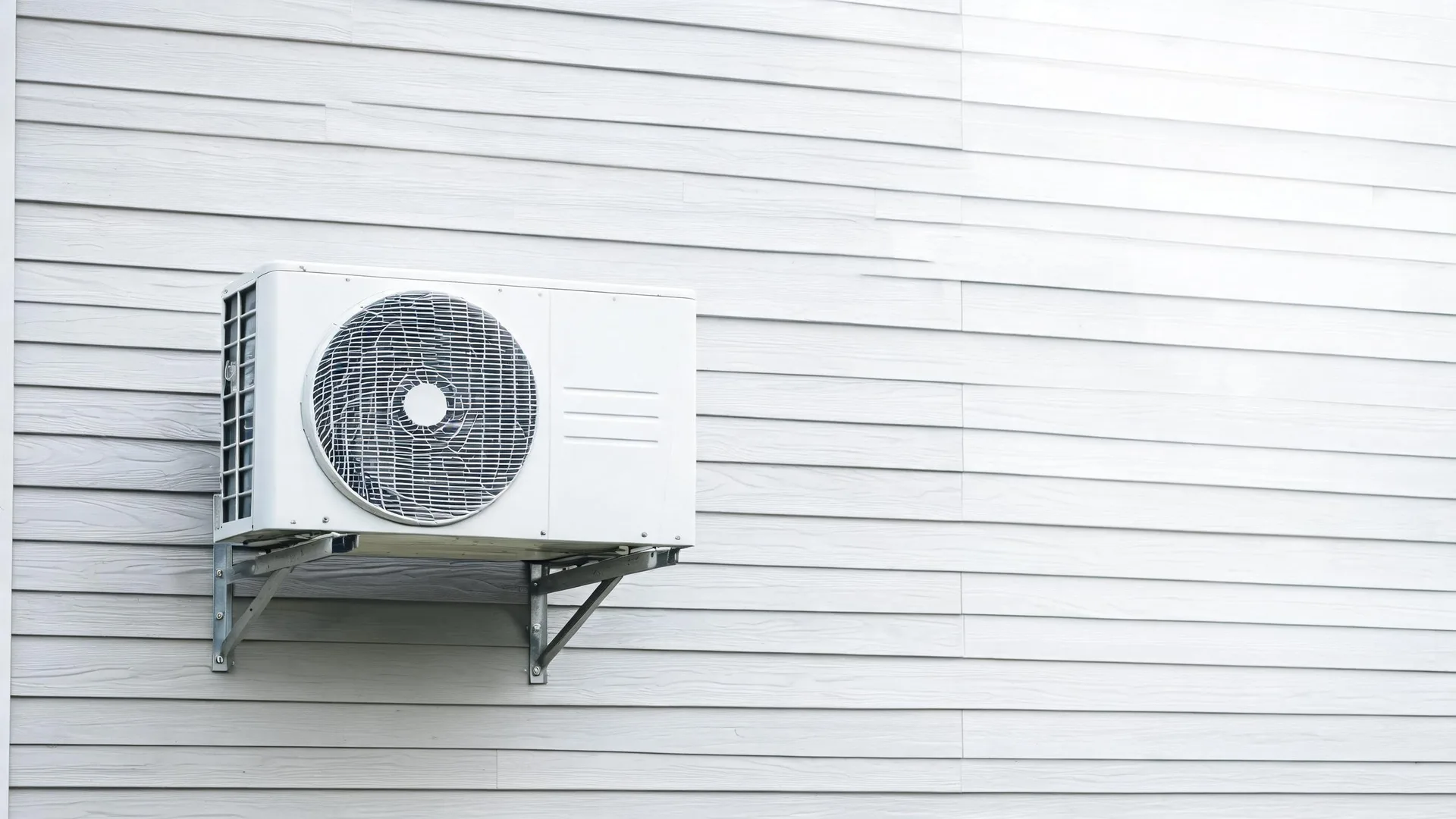
A white outdoor air conditioner condenser unit mounted on metal wall brackets against gray horizontal siding, with a blue sky and white clouds behind it.

This runs for years. The house has been standing a lot longer.

A mini-split installed today should run for years in a house that's already standing. If yours is one of the half built in 1971 or earlier, the install crew needs to see what it's connecting to before they run a line set or mount a condenser. Where the electrical panel is, what it can carry, how far the indoor units sit from where the outdoor unit can go. None of that is a mark against an older home. It just means the plan gets made around the house you have, not a house built with this system in mind.

The number on the label is a ratio, not a guarantee

That efficiency rating compares the heat a unit moves against the power it draws, measured under set lab conditions. It tells you what the equipment is capable of. It doesn't tell you what it will actually deliver in a specific house, because duct losses don't apply here but line set length, refrigerant charge, and how clean the installation is all still do.
A high rating only holds if the install matches it

Two identical units with the same rating can run very differently once they're mounted. A line set that's too long, a charge that's off, or an indoor unit placed where it short-cycles will all pull the real output below what the label promised. The rating is the ceiling the equipment can reach, not the floor it's guaranteed to hit.

A mini-split's price comes down to what the crew has to do to get refrigerant from the outdoor unit to the indoor heads, cleanly and at the right charge. A short, straight line set run costs less labor than one that has to go up an exterior wall, through a chase, or around framing to reach where the indoor unit needs to sit. Every indoor head adds its own line run, its own mounting work, and its own spot on the outdoor unit's capacity, so a multi-zone system costs more than swapping in one head for one room. The electrical side matters too. If the panel has room for a new dedicated circuit, that's a simple add. If it doesn't, the panel work itself becomes part of the job before the mini-split is even in the wall. None of this is padding. It's the difference between a system that holds its charge and runs quiet for years, and one that was forced into a house that wasn't laid out for it.

Dutchess County falls under zone 5A in the 2021 energy code, a cool zone where heating is the bigger job over the year. Any split system heat pump sold here, mini-splits included, has to meet the federal minimum: at least 14.3 Btu moved per watt-hour over summer, at least 7.5 over winter. That's not a target a contractor aims for. It's the floor a unit has to clear before it can be sold new. A system meeting that floor and installed right can also qualify for a federal tax credit, worth looking into before you settle on equipment. The standard doesn't carve out a separate rule for ductless systems, so a mini-split is held to the same number as any other heat pump going into a house here.