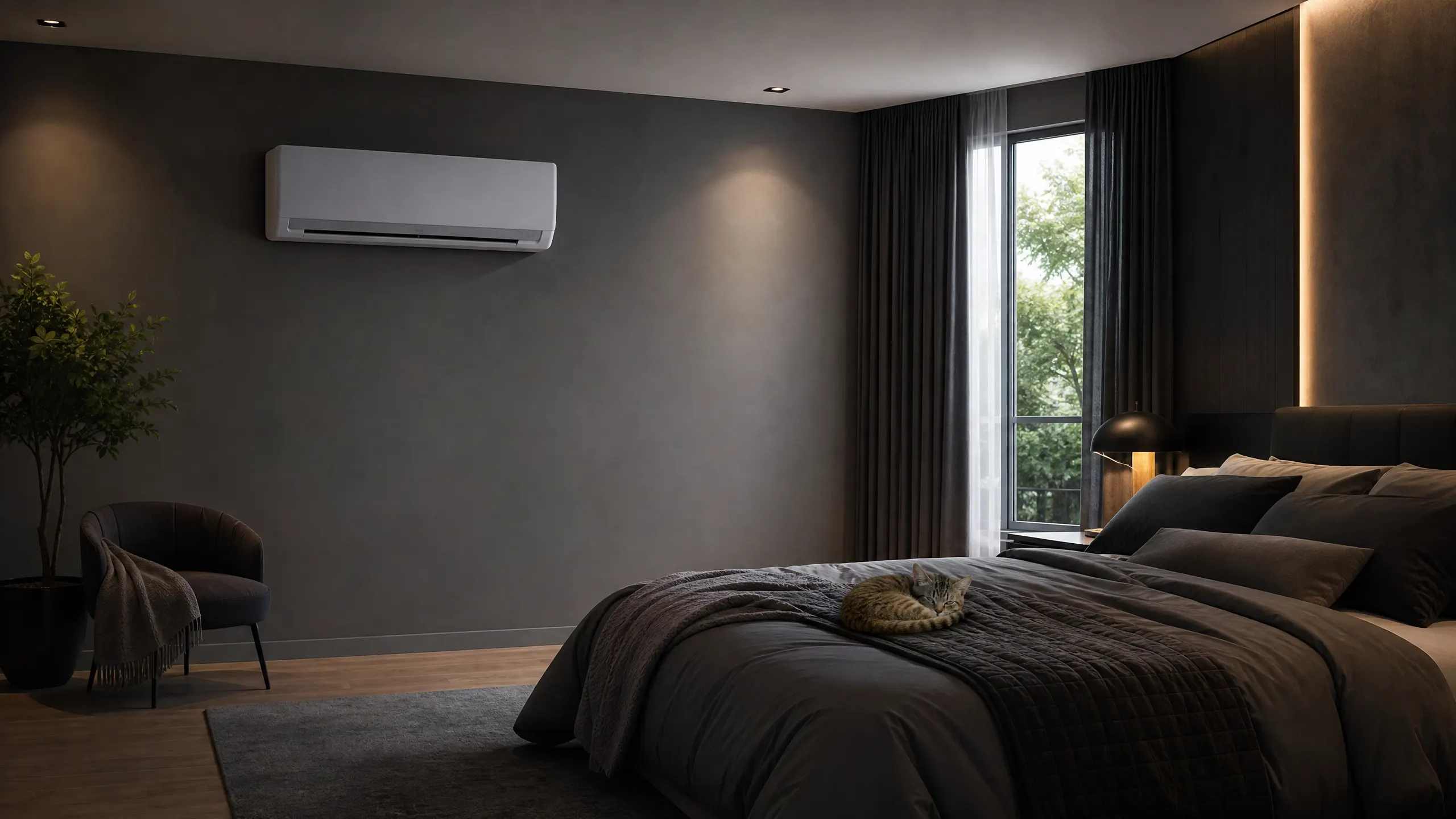




A tabby cat sleeps on a large bed in a dark, modern bedroom equipped with a wall-mounted air-conditioning unit.

Mini Split Installation in Newark, NY

Tell us about the job

Takes about a minute. No obligation.

New system or replacementMini-splitWayne County, NY
Step 1 of 2

What ZIP code is the job in?

Gas heats a little more than half the homes in Wayne County, with electric baseboard or heat pump setups a distant second and propane and oil filling in the rest. A mini split works alongside any of these or on its own, since it doesn't run on ductwork the way a gas furnace does. In a home that heats with gas, a mini split usually takes over one room or zone, like a sunroom or a finished space over the garage, rather than replacing the furnace outright. That makes it a smaller, standalone decision rather than a full swap of the main system.

8 months
October through May, your system heats
2 months
July through August, it cools
20°F
the average winter night it heats against
79°F
the average summer afternoon it cools against
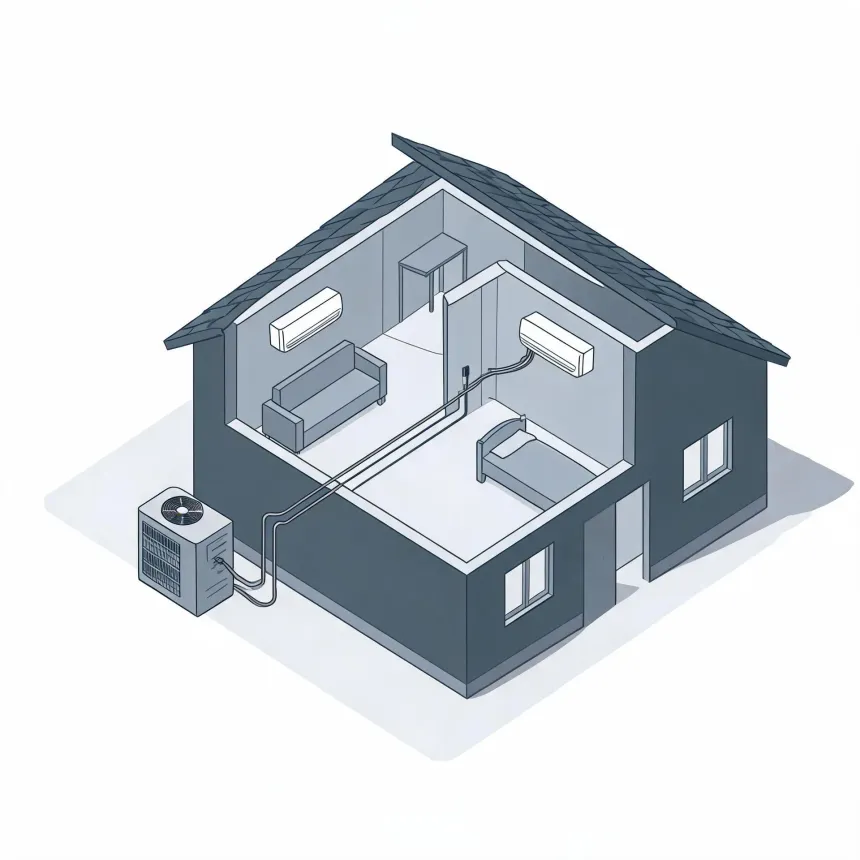
Isometric cutaway illustration of a small house showing two wall-mounted indoor air conditioning units connected by line sets to an outdoor condenser unit beside the exterior wall, with a sofa in one room and a bed in another.
Your system heats October through May and cools July through August.

NOAA nClimDiv, 1991–2020 normals

Cooling in Wayne County runs July through August.

June is the month to get a mini split installed, before the first hot week puts it to work.

Half the homes here were built by 1968, and a mini split has to fit the house that's already standing

Half the homes here were built by 1968
Cooling runs July through August
Summer afternoons average 79°F

Wayne County falls under zone 5A in the energy code, a cool zone where heating counts for more than cooling. Any mini split installed here has to meet the federal minimum for a split-system heat pump, the same floor a ducted heat pump has to clear. There's no separate, lower bar for ductless units just because they skip the ductwork. That minimum applies to units built on or after January 1, 2023. A qualifying heat pump can also put you in range for the federal tax credit, worth looking into before you settle on a model.

A standard mini split is the right fit for Newark

A correctly sized mini split at the standard efficiency rating covers a room or zone here without any local wrinkle pushing you toward a bigger unit or a pricier one. At 24.43 cents per kilowatthour, the size you actually need is the one worth paying to run.

Find a contractor
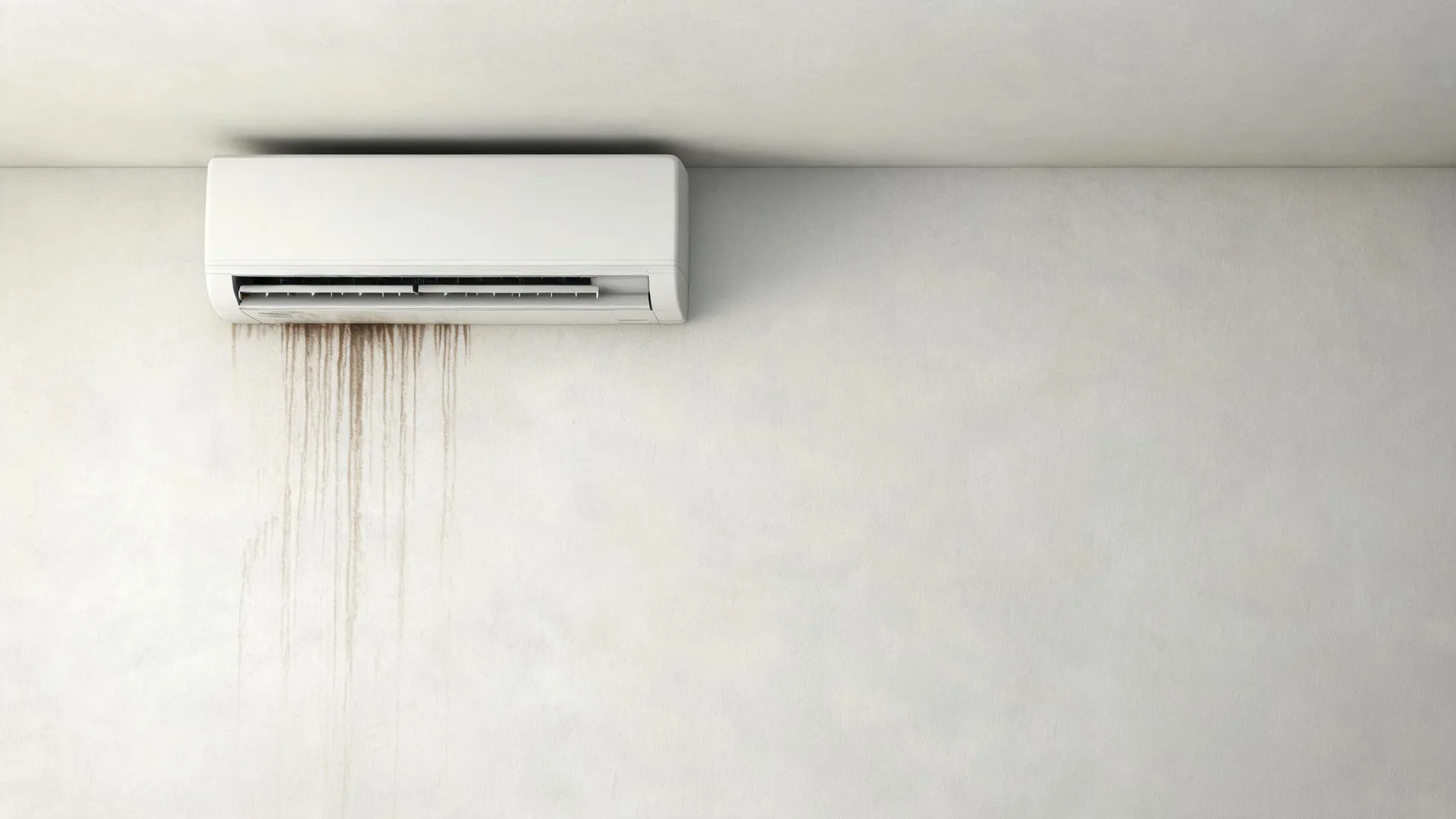
A beige split-system air conditioner outdoor condenser unit mounted on metal wall brackets atop a stucco wall.

Two months of real work a year

Two months of cooling, July and August, with afternoon highs averaging 79. That's a light load for any mini split to carry. The heating side asks more of it, since Wayne County sits in a cool zone where heating is the bigger job over the year, but even there the unit isn't fighting extreme cold the way one would further north. What wears a system down is running hard for long stretches, and nothing here does that. A mini split installed correctly should spend most of its life well under strain, which means a problem showing up down the road is more likely a sign of age or something that was never set right, not a system that got pushed past what it could handle.

How many zones you're running

Each indoor head needs its own line set and its own spot on the outdoor unit. One zone is a straightforward job. Add a second or third room and you're adding line sets, more wall penetrations, and an outdoor unit built to handle multiple heads, which costs more than one sized for a single room.
What the outdoor unit has to reach

The outdoor unit can't sit just anywhere. It needs clearance on the sides and above it, a path for the line set back to the indoor head, and a surface or mounting bracket that holds it level and off the ground. A straightforward wall or a short run gets the job done quickly. A long line set, a tricky wall to get through, or an awkward mounting spot all add time before the system runs its first cycle.

If you're getting quotes, ask what the outdoor unit's rated capacity is at low outdoor temperatures, not just its nameplate number. Every heat pump loses some capacity as it gets colder out, but how much it loses depends on the compressor inside it, and that's where systems split into different tiers. Ask whether the compressor is single-stage or variable-speed. A single-stage unit runs at one output, full blast or off, which means more cycling and less steady comfort. A variable-speed compressor adjusts its output to match what the room actually needs, which tends to hold temperature more evenly and put less wear on the system over time. Ask too what the warranty covers on the compressor specifically, since that's the part most likely to be the expensive fix if something goes wrong. And ask who's doing the vacuum and leak check on installation day, because a system can have the right compressor and still fail early if the lines weren't pulled down properly before the refrigerant went in.

Installation day starts with mounting the indoor head, usually high on an interior wall, level and with enough clearance to pull air across the coil. From there a hole gets drilled through the wall for the line set, the pair of copper lines that carry refrigerant between the indoor head and the outdoor unit, along with the condensate drain and the electrical connections. Those lines get run to the outdoor unit, flared or brazed at each connection, since a bad flare is where a system loses its charge months later. Once everything's connected, the line gets pulled down to a vacuum before any refrigerant moves, which clears out air and moisture that don't belong in the system. Only after that vacuum holds does the tech open the valves and let refrigerant into the lines. The last step is running the system through both a cooling and a heating cycle to check that the head is actually pulling the temperature down or up and that nothing is leaking at the joints.