





A dark, minimalist bedroom featuring a sleeping cat on a grey-quilted bed, a wall-mounted air-conditioning unit, warm cove ceiling lighting, and a pendant lamp illuminating the bedside table.

Mini Split Installation in Monticello, NY

Tell us about the job

Takes about a minute. No obligation.

New system or replacementMini-splitSullivan County, NY
Step 1 of 2

What ZIP code is the job in?

Almost half the homes in Sullivan County heat with fuel oil or kerosene, more than any other fuel. Another 18% run on bottled or LP gas, and only 4.1% have utility gas. That split matters for a mini split, because it works alongside whatever you already have rather than replacing it outright. Most owners here add one to cool rooms an oil furnace never reaches well, or to take the load off during the months an oil boiler would otherwise run constantly. If your home runs on oil or propane, a mini split gives you a second way to heat or cool specific rooms without touching the main system.

9 months
September through May, your system heats
2 months
July through August, it cools
18°F
the average winter night it heats against
78°F
the average summer afternoon it cools against
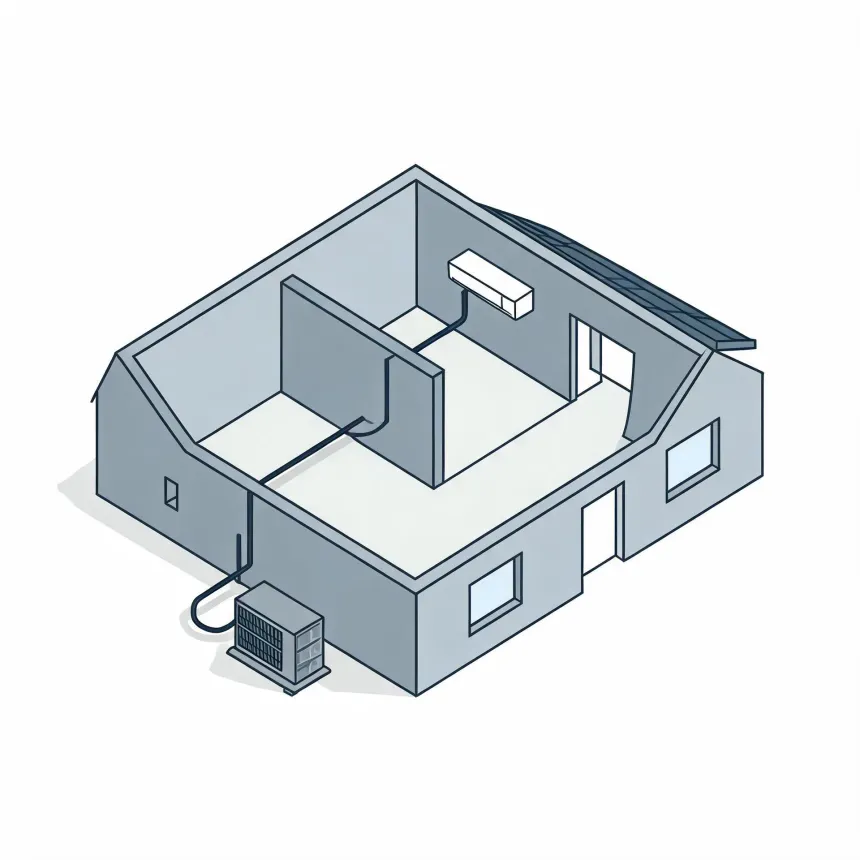
Isometric line illustration of a cutaway house showing an interior wall-mounted air conditioning unit connected by a line to an outdoor condenser beside the exterior wall.
Your system heats September through May and cools July through August.

NOAA nClimDiv, 1991–2020 normals

Electricity in New York runs 24.43 cents per kilowatt-hour, among the higher rates in the country.

A mini split sized right for the room keeps that cost in line, since an oversized one cycles on and off and wastes power doing it.

Weather here is normal for a mini split. Size it for the room, not the storm.

185 severe weather events from 2015 to 2024
11% of homes statewide lost power a day or more in 2024
149 damaging wind events from 2015 to 2024

Cooling here only runs from July through August, so there's no rush once summer hits. June is a better month to get a mini split installed. The crew isn't working around a heat wave, and you're not sitting without cooling while parts get ordered or a unit gets mounted. It also means the system is tested and running before the two months you actually need it. Wait until July and you're scheduling around everyone else who waited too.

A mini split here won't work hard. Pick one that's reliable, not top-tier.

Two months of cooling a year is light duty for a mini split. July and August average 78°F in the afternoon here, not the kind of heat that pushes a system to its limit. Winters are long and cold, but that load falls mostly on your oil or propane heat, with the mini split handling specific rooms. A well-installed mid-range unit will hold up fine under that kind of use. Put the money into a correct install instead of chasing the highest efficiency number on the shelf.

Find a contractor
A man in a gray work shirt and tan pants carries a canvas tool bag up wooden porch steps toward a dark green front door, with a potted shrub to the right.
A white outdoor air conditioner condenser unit mounted on metal wall brackets against gray horizontal siding, with a blue sky and white clouds behind it.

Sized to the room, not the nameplate

Sizing a mini split starts with the room, not the old equipment hanging on the wall. A tech works out how much heat that room gains or loses, looking at square footage, window count, which way the room faces, how it's insulated. That number tells them what size head to put in, not a guess based on what's always been there. Go too small and the unit runs flat out and never catches up on a hot afternoon. Go too big and it cools the room fast, shuts off, then starts again a few minutes later. That short cycling is worse than it sounds. A unit that shuts off quickly never runs long enough to pull humidity out of the air, so the room feels cool and still damp at the same time. A properly sized unit runs longer, steadier stretches, holds the temperature where you set it, and takes the moisture out along the way. That steady running is also easier on the compressor than starting and stopping all day.

How many rooms, how many heads

A mini split system can run one indoor head or several off a single outdoor compressor. Each extra head needs its own line set, its own mounting job, and its own run of refrigerant line back to the compressor. A single zone cooling one room is a straightforward job. Covering several rooms off one outdoor unit costs more not because the equipment is fancier, but because there's that much more installing to do.
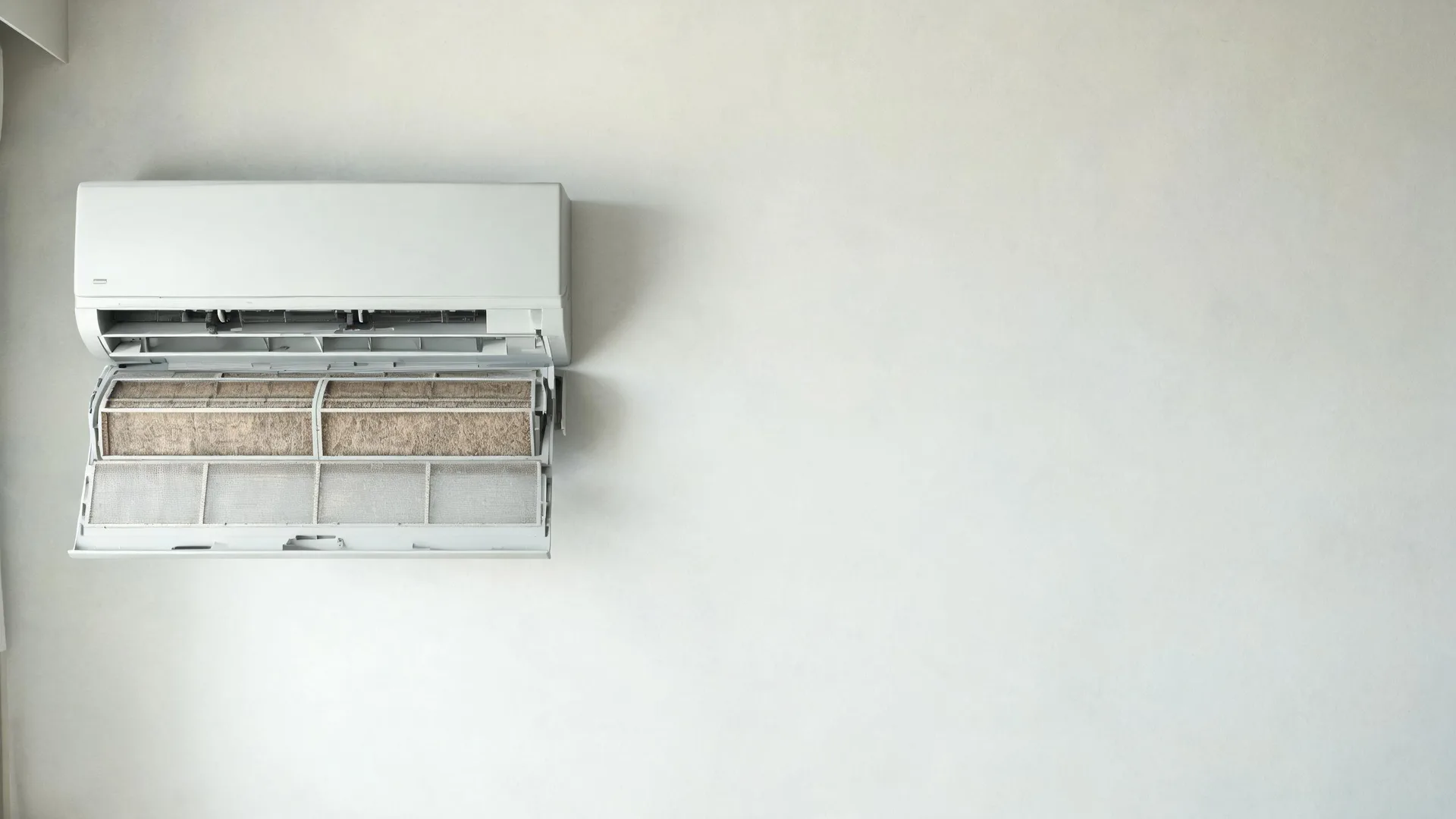
What it takes to get the line outside

Every indoor head needs a path to the outdoor unit. A hole through the wall, a line set carrying refrigerant, a way to drain condensation. If that path is short and the wall is easy to get through, the job goes fast. If the line has to run up through a chimney chase, across an attic, or along an exterior wall before it can turn the corner to the compressor, that means more line set, more mounting brackets, more time on the ladder. The equipment is the same either way. The path is what changes.

The number on the label is a ratio. It tells you how much heating or cooling the unit delivers against the power it draws. A higher rating gets more out of every bit of electricity. But that number comes from a lab test under set conditions, not your living room, and it only tells you what the equipment can do, not what it will do. A unit sized wrong for the room runs worse than the label promises no matter how high the rating is, cycling on and off instead of holding steady. A line set that's too long, a head mounted in a bad spot, or a refrigerant charge that's off all pull real performance below what the label says. Chasing the top rating on the shelf doesn't fix any of that.

Installation starts outside, with the outdoor compressor. It needs a spot with room for air to move around it, set on a pad or brackets, away from where snow piles up or water drains. From there the crew runs the line set, the refrigerant lines and the condensate drain and power wire bundled together, through a wall to each indoor head. That wall penetration gets sealed once the lines are through it. Each indoor head gets mounted on the wall or ceiling, leveled, and connected to its line set before anything gets tested. Once everything's connected, the system gets evacuated with a vacuum pump to pull out air and moisture before the refrigerant charge goes in. Run it with moisture still in the lines and you're looking at corrosion and a shortened life for the compressor. Last comes the test, checking that each head is cooling and heating, that the condensate drains where it should, and that the refrigerant charge is correct for the length of line actually run.