




A tabby cat sleeps curled up on a dark grey bed in a modern bedroom equipped with a wall-mounted air conditioning unit.

Mini Split Installation in Elmira, NY

Tell us about the job

Takes about a minute. No obligation.

New system or replacementMini-splitChemung County, NY
Step 1 of 2

What ZIP code is the job in?

Gas furnaces heat about 7 in 10 homes in Chemung County. A mini split works differently. It runs on electricity and does not need any ductwork to move heat around. That makes it a fit for additions, garages, or rooms a gas furnace never reached in the first place. It also means it can run alongside the furnace you already have instead of replacing it, taking over the rooms that run hot or cold on their own.

8 months
October through May, your system heats
2 months
July through August, it cools
18°F
the average winter night it heats against
79°F
the average summer afternoon it cools against
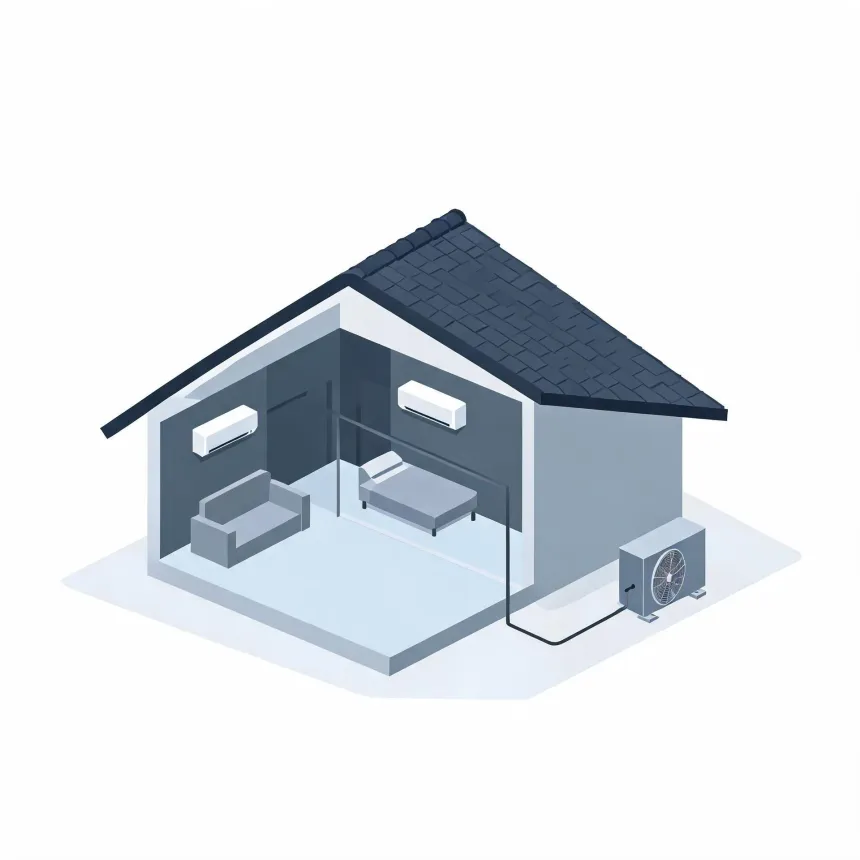
Isometric illustration of a cutaway house showing two wall-mounted indoor air conditioning units connected by a line to an outdoor condenser unit beside the building, with a sofa and bed inside.
Your system heats October through May and cools July through August.

NOAA nClimDiv, 1991–2020 normals

Cooling runs about two months a year here, July and August, with afternoon highs around 79°F.

A mini split in Elmira doesn't need to be the biggest or most efficient model on the lot to keep up.

Half the homes here were built by 1955, and a mini split has to work with the house that's there

Half the homes here were built by 1955
Climate zone 5A
Power costs 24.43 cents a kWh statewide

A standard size and efficiency rating is enough to heat and cool a room here. Electricity in New York runs 24.43 cents per kilowatthour, higher than a lot of the country, and that's the number that matters more than the model you pick off the lot. A bigger or higher-SEER2 unit than the room calls for just costs more up front without paying you back in comfort. The contractor sizing the install will look at the room itself, not the weather outside, since nothing about Elmira's climate pushes you toward extra capacity or a premium model.

Install before July, not during it

Cooling in Elmira starts in July and runs about two months, through August. June is the month to get a mini split in, while you can still take time on the decision instead of making it on the first hot day.

Find a contractor
A man in a cap, gray long-sleeve shirt and tan work pants carries a canvas tool bag up concrete steps toward a dark green paneled front door, with a potted shrub to the right.
A beige split-system air conditioner outdoor condenser unit mounted on metal wall brackets atop a stucco wall.

Two months a year, and the rest of the year off

Two months of real work a year is not much for any system to carry. Outside of July and August, this unit is sitting well under what it could do, which is a different kind of year than a furnace running from fall into spring. That matters when something does go wrong. A compressor or a board that's failed after a handful of light summers almost always points to age, a bad part, or install work, not a unit that got run into the ground. Worth fixing stays worth fixing for a long time here.

The old system usually stays put

If a mini split is going in alongside a furnace, there's nothing to remove. The furnace keeps heating the rooms it always has, and the new unit just takes over the ones it didn't reach. Nothing about adding one means tearing anything out.
Replacing a system is a different job

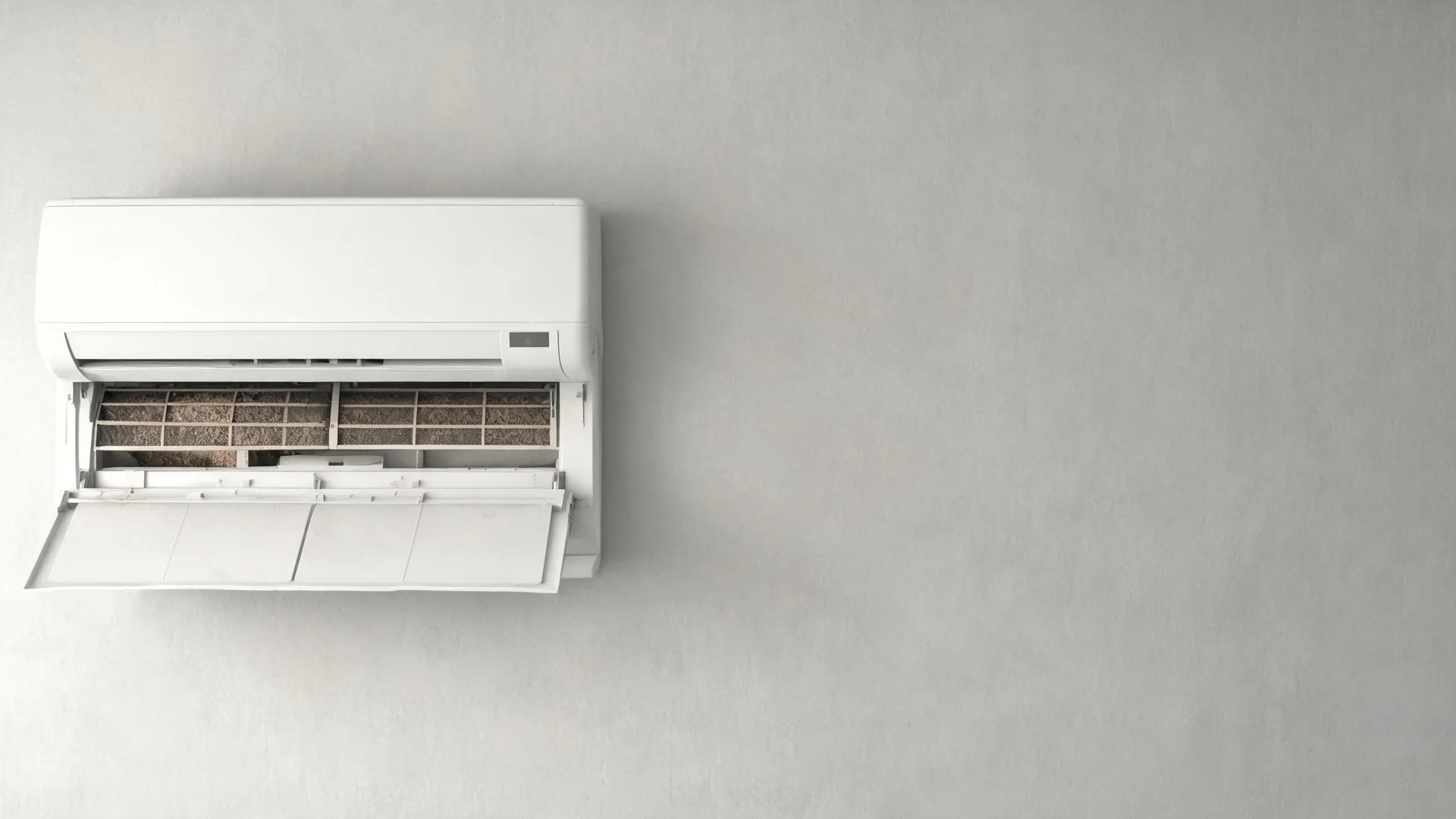
Swapping out an existing mini split or window units means dealing with old refrigerant lines and whatever is mounted on the wall or sitting outside. A contractor handles the disposal and the disconnect as part of the install, not as an extra step you have to arrange yourself.

What drives the cost on a mini split is everything between the unit and a finished install. Each indoor head needs its own line set and its own labor to mount and connect, so the number of zones matters more than the size of any one of them. Where the outdoor unit can sit and how far it is from the indoor heads changes how much line set and conduit the job takes. A wall that's easy to run a line through costs less to work with than one that isn't, and a contractor can only judge that in person. Some systems need a dedicated circuit, and whether the panel has room for one changes the scope before any mounting starts.

Installation starts outside, with the contractor deciding where the outdoor unit sits and running the line set from there to each indoor head. That line set carries refrigerant, so it has to be brazed and then pressure tested before anything gets charged. The indoor head mounts on a bracket, usually high on a wall, with a small hole drilled through to the outside for the line set and a drain for condensate. Once everything is connected, the system gets evacuated to pull moisture and air out of the lines before refrigerant goes in. Only after that does the contractor power it up and check that it's heating and cooling the way it should. A one zone job can wrap in a day. More zones or a harder path for the line set stretches it out.