






A weathered wooden picket fence runs along a grass strip in front of a row of similar gabled houses with dormer windows and dark shingled roofs, shaded by large leafy trees.

Mini Split Installation in Corning, NY

Tell us about the job

Takes about a minute. No obligation.

New system or replacementMini-splitSteuben County, NY
Step 1 of 2

What ZIP code is the job in?

Just over half of homes in Steuben County heat with utility gas, and most of what's left runs on electricity or propane. A mini split doesn't replace any of that. It adds a way to cool and heat one room, or a few, without touching the furnace or boiler already doing the main work. That's why so many of these installs happen in additions, finished basements, and rooms that never got ductwork in the first place. If your house is one of the gas or oil-heated homes here, the mini split just handles the space the main system struggles with.

9 months
September through May, your system heats
2 months
July through August, it cools
17°F
the average winter night it heats against
78°F
the average summer afternoon it cools against
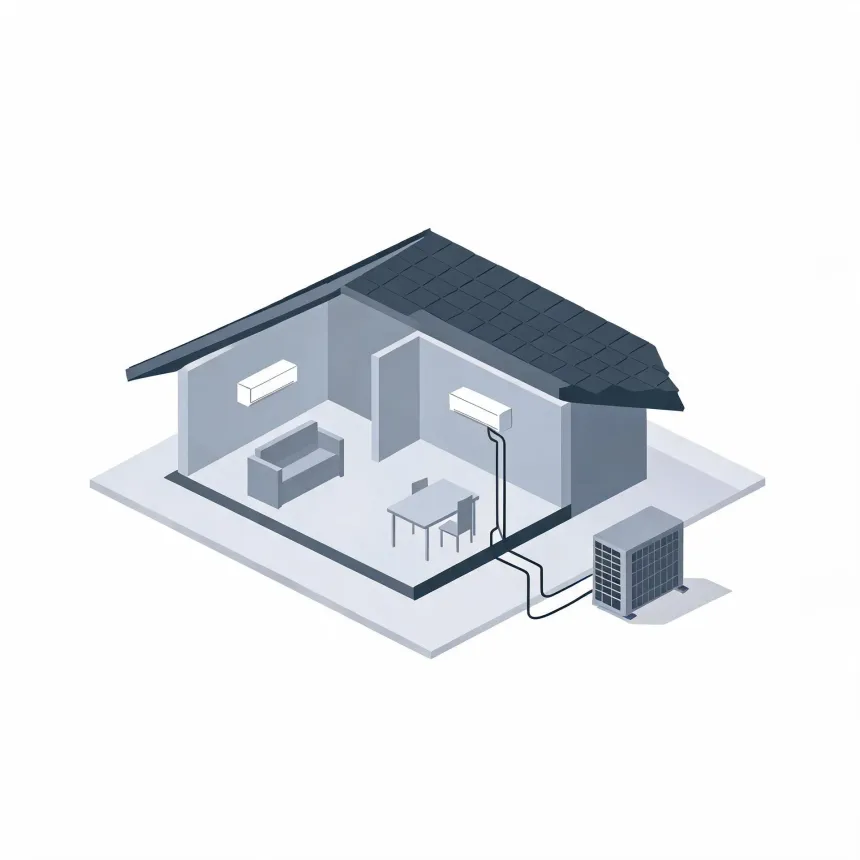
Isometric illustration of a cutaway house interior with sofa, table and chair, two wall-mounted indoor air conditioning units connected by lines to an outdoor condenser unit beside the building.
Your system heats September through May and cools July through August.

NOAA nClimDiv, 1991–2020 normals

Half the homes in Steuben County went up in 1963 or earlier.

A room added to a house that old rarely has ductwork running to it, which is exactly where a mini split goes instead.

Weather here doesn't change what size unit your room needs

198 severe weather events from 2015 to 2024
11% of homes statewide lost power a day or more in 2024
179 damaging wind events from 2015 to 2024
A standard mini split fits this room fineNew York runs 24.43 cents per kilowatt-hour, nothing about Corning changes the math

Cooling in Steuben County only runs July through August, about two months a year. That short window is exactly why installing before June matters. A mini split job means mounting the indoor unit, running the line set, and setting the outdoor condenser, and all of that goes faster when nobody's sweating through it. Get it done in spring and the system sits there ready when July hits. Wait until the first hot week and you're not the only one calling.

This room doesn't need the top-end unit to stay comfortable

Two months of cooling a year is not much to ask of a unit. Winters here are the long season, so the mini split's compressor spends most of its working life in milder weather, not straining against a 78 degree afternoon. That's a easier job than this kind of equipment gets in most places, and it's one more reason a straightforward system is the right call for this room.

Find a contractor
A man in a dark long-sleeve shirt and tan pants, seen from behind, carries a canvas tool bag up wooden porch steps toward a dark green front door of a shingled house.
A white outdoor air conditioner condenser unit mounted on metal wall brackets against gray horizontal siding, with a blue sky and white clouds behind it.

Built for this, not for more

Two months of real work a year adds up to not much over time. Put the money into a unit sized right for the room instead of one built to survive a harder climate than this. A mid-range mini split, installed correctly, will cover this job for years without needing the extra capacity or features a tougher market would call for.

Line set length changes the job

The indoor and outdoor units connect through a line set that carries refrigerant between them. A short, straight run costs less labor than one that has to snake through a wall cavity, around a corner, or up past another floor. Where the outdoor condenser can sit matters too. The farther it sits from the indoor head, the more line set and mounting the install takes.
One zone costs less than several

A single indoor head paired with one outdoor condenser is the simplest version of this job. Add another zone off the same outdoor unit and the install gets more involved. More line sets to run. More indoor heads to mount. More wiring to pull. Comparing quotes means comparing how many rooms each one actually covers, not just the number on the page.

When you're comparing quotes, ask what brand and line each contractor is actually installing, not just the price. Ask what warranty comes with it, and whether that warranty needs the installer to register it or holds up no matter who services the unit later. Ask how many systems that contractor installs in a typical year, because a crew that does this work constantly catches problems a crew that does it occasionally might miss. Ask whether the quote includes the load calculation or assumes a size. And ask what happens if the unit needs warranty service down the road, since some manufacturers only honor the warranty through certain dealers. A low number on a page doesn't tell you any of that.

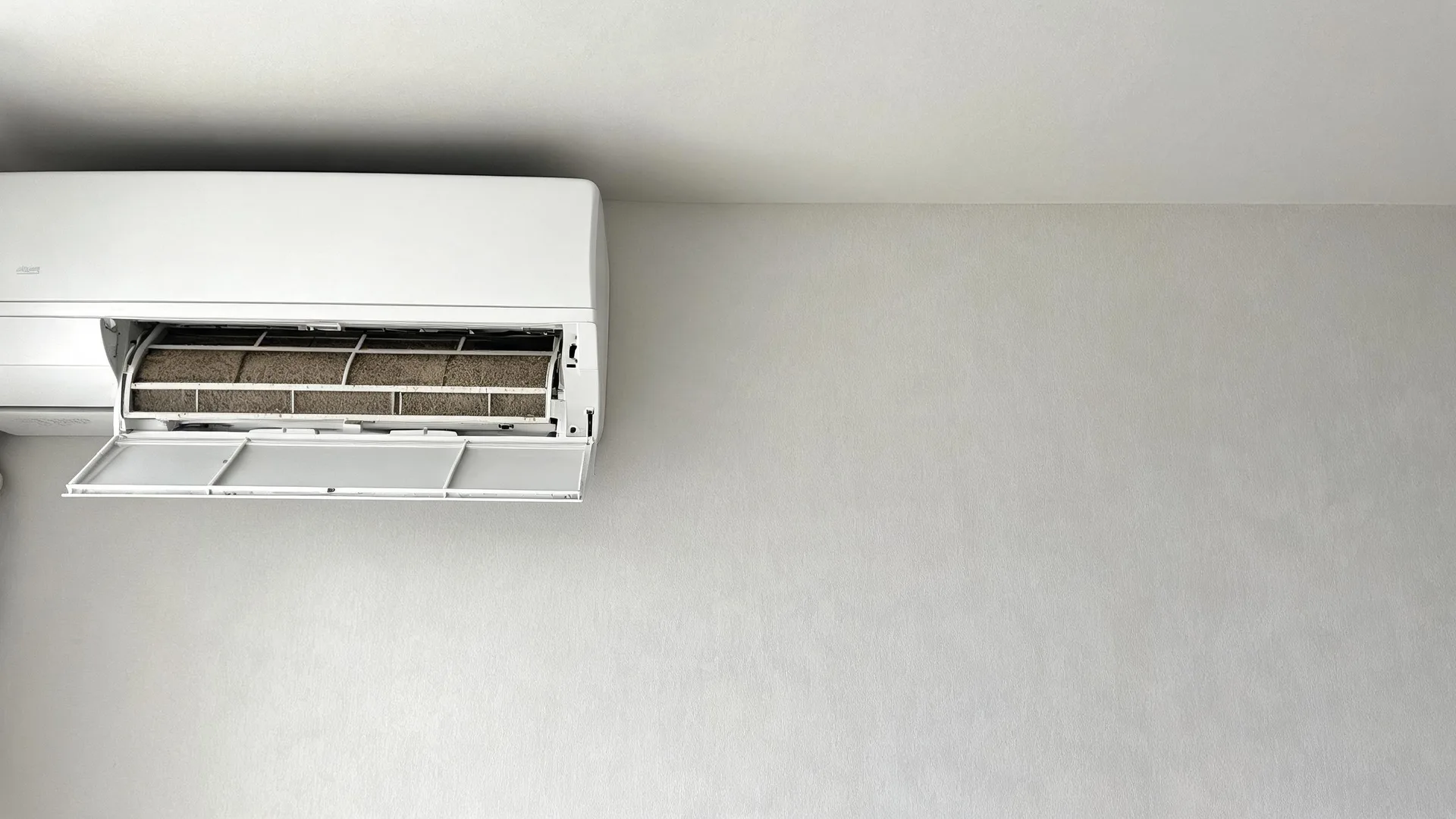
Install day starts outside and in at the same time. The outdoor condenser needs a flat pad, some clearance on all sides for airflow, and a spot where the line set can reach the indoor head without snaking too far. Inside, the mounting plate goes up first. Then the installer drills a single hole through the wall so the line set, the drain line, and the electrical wiring can all pass through together. The indoor head hangs on that plate once the lines are connected and run down to meet the outdoor unit. After that, the work you can't see matters most. The installer pulls a vacuum on the line set to clear out moisture and air before any refrigerant flows, because anything left behind will wreck the compressor over time. Once the system holds that vacuum, the lines get charged, the unit gets powered on, and the installer checks that it's actually pulling the temperature down the way it should.