




A gray tabby cat sleeps curled up on a dark gray bed in a dimly lit modern bedroom with warm ceiling cove lighting and a wall-mounted air conditioning unit.

Mini Split Installation in Binghamton, NY

Tell us about the job

Takes about a minute. No obligation.

New system or replacementMini-splitBroome County, NY
Step 1 of 2

What ZIP code is the job in?

Most houses in Broome County heat with utility gas, close to six in ten. A mini split adds something that system was never built to do. It cools in summer and it heats rooms a furnace doesn't reach well, like a converted attic or an addition. It doesn't replace the furnace. It runs alongside it, handling one zone on its own thermostat while the gas system covers the rest of the house. For a home already on gas heat, that split is usually simpler to plan for than switching the whole house to a new fuel.

9 months
September through May, your system heats
2 months
July through August, it cools
18°F
the average winter night it heats against
79°F
the average summer afternoon it cools against
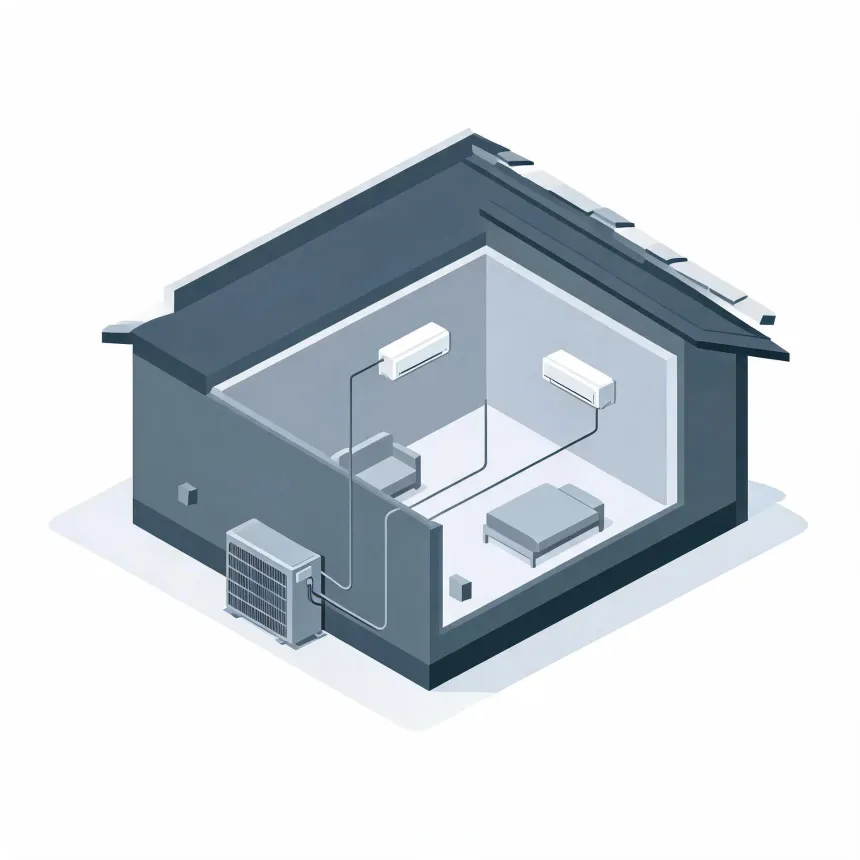
Isometric illustration of a cutaway house interior showing two wall-mounted indoor air conditioning units connected by line sets to an outdoor condenser unit beside the exterior wall.
Your system heats September through May and cools July through August.

NOAA nClimDiv, 1991–2020 normals

The number on the label tells you how much heat a mini split moves for the power it draws, not how strong it is.

A unit can warm a room just fine and still run up a higher bill doing it than a more efficient one would.

Two months of real work a year

Cooling runs July through August
Summer afternoons average 79°F
248 damaging wind events from 2015 to 2024
Built for Broome County weatherWind hit Broome County 248 times between 2015 and 2024, enough to knock out power and stop a furnace cold

Electricity in New York ran 24.43 cents per kilowatthour in 2024, well above what most of the country pays. That makes the efficiency rating on a mini split worth paying attention to, since every unit earns back its install cost through the power it doesn't use. A standard mid-efficiency model sized to the room it serves will do the job here without surprises. There's no reason tied to this area to pay more for a higher-tier unit or size up past what the space calls for. Get the size right for the room and the rest takes care of itself.

Put it in before July, not during it

Cooling starts in July here. June is what you have before that, and it's enough time to get a mini split installed and running before the first hot stretch instead of mid-July when the room is already uncomfortable.

Find a contractor
A white mini-split air conditioner outdoor condenser unit mounted on metal brackets against a beige stucco exterior wall, with a blue sky and scattered clouds in the background.

Light duty doesn't mean no upkeep

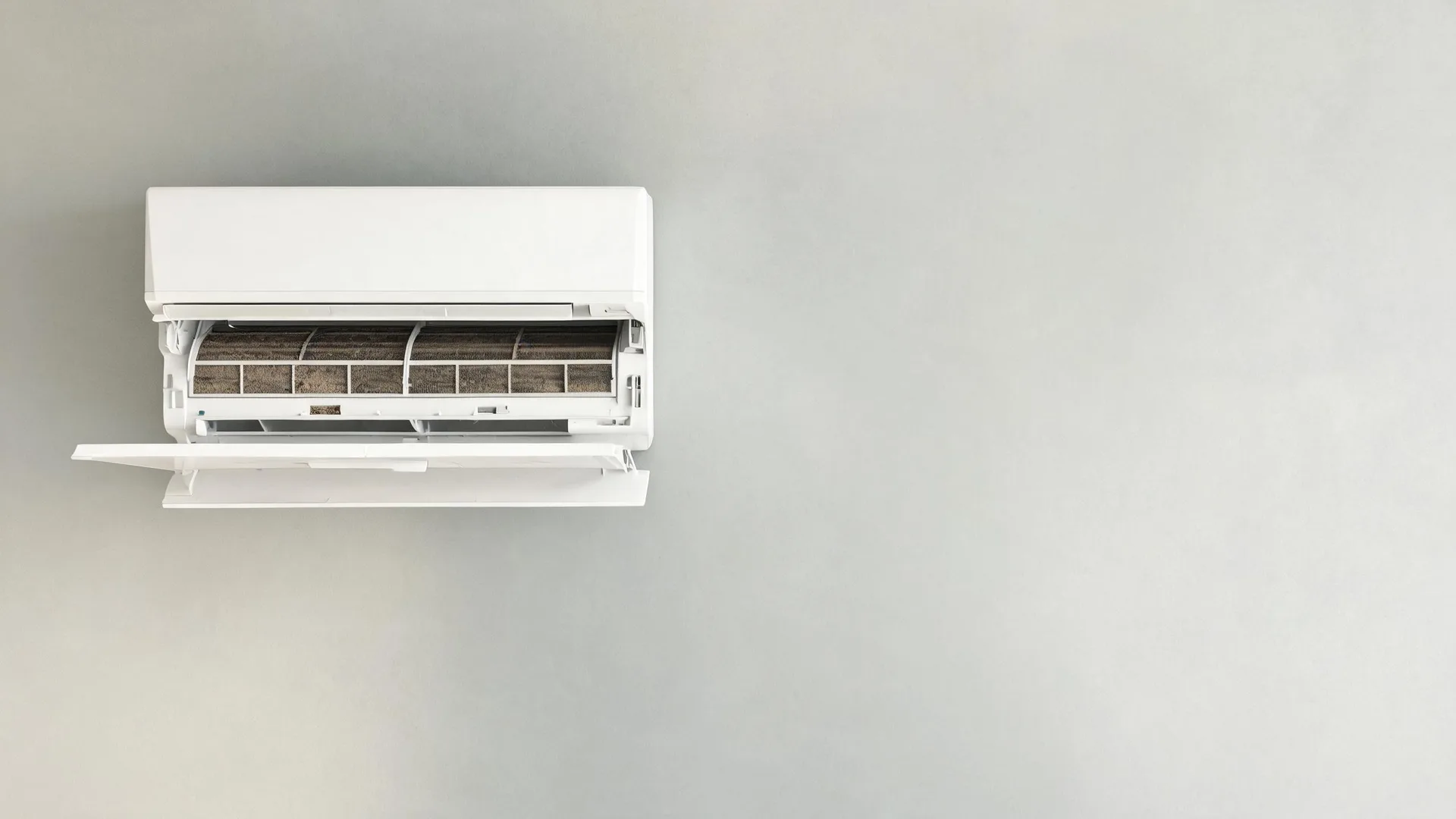
A mini split that only runs part of the year isn't coasting the rest of the time. The compressor sits through the cold months doing nothing, and that stillness can be harder on seals and connections than regular use would be. Dust settles on the indoor coil whether the unit runs or not, so the filter still needs a look even in the months it's off. The upside of light use is that the compressor and fan motor wear slowly. What actually shortens the life of this kind of system is dirt left to build up and refrigerant that drifts low without anyone noticing, not the hours on the clock. A unit that only works a couple months a year can last just as long as one that runs daily, provided someone checks it at the start of each season it's used.

The old system usually stays put

A mini split doesn't replace the furnace, so there's nothing to remove on that end. If this is the first mini split in the room, there's no old unit to deal with at all. If it's replacing an older mini split, that indoor head, the outdoor compressor and the line set connecting them come out as a group.
The refrigerant has to be handled, not just tossed

Old mini splits and window units hold refrigerant that can't go in the trash or get vented into the air. A contractor recovers it with a pump before the lines come apart, then the indoor and outdoor units get hauled off as scrap. That's a routine part of swapping out old equipment, not an extra step tacked on.

When you're comparing systems, ask what the unit is rated to do at the temperature extremes it'll actually see, not just at the midpoint. Every mini split loses some capacity as it gets colder outside, and the spec sheet should show output at low temperatures, not just at a mild setting. Ask how the contractor is sizing it for the room, since a unit sized by square footage alone can end up oversized, cycling on and off instead of running steady. Ask what the warranty covers on the compressor versus the labor, because those terms often differ and the shorter one is the one that matters. Ask who's doing the line set and electrical work, since a system is only as good as the installation behind it. The unit matters less than whether it's matched to the room and put in right.

Installation day starts with the line set, the pair of copper lines that run refrigerant between the outdoor compressor and the indoor head. A tech runs them through a small hole in the wall, usually behind where the indoor unit will hang, then mounts the indoor head on a bracket and sets the compressor outside on a pad or wall brackets. Once the lines are connected, the system gets evacuated with a vacuum pump to pull out air and moisture before any refrigerant moves through it. Skip that step and moisture sits in the lines, and it'll cause problems months later, not that day. The electrical hookup is its own piece of work, usually a dedicated circuit back to the panel. Once everything's connected, the tech charges the system, checks it for leaks, and runs it through both heating and cooling to confirm it holds temperature and the indoor head is reading the room right.