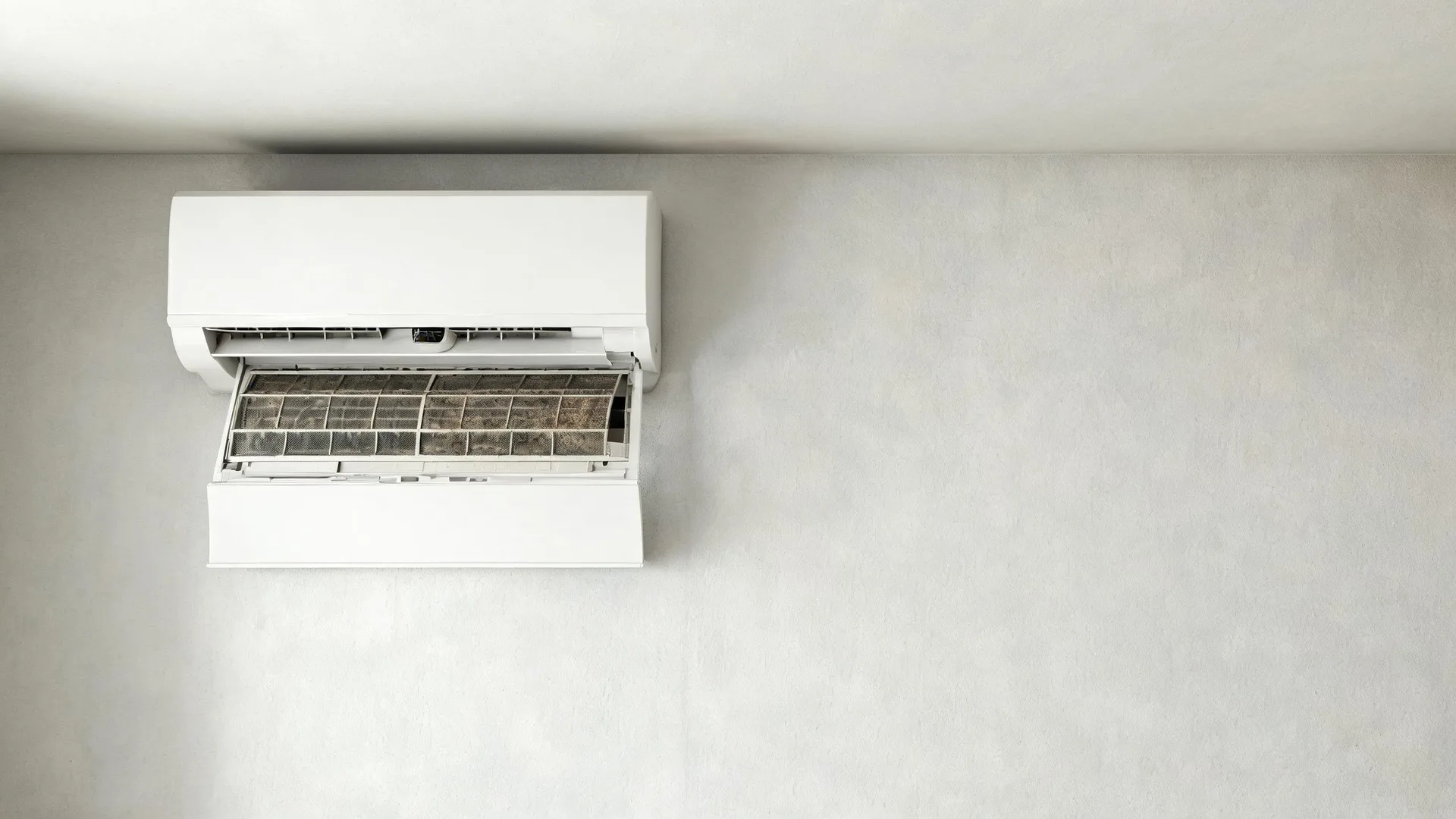
Gas heats most homes in Cayuga County
47.8% of occupied homes in Cayuga County use utility gas for heat, more than any other fuel. Electricity, propane and oil split most of the rest.

Takes about a minute. No obligation.
47.8% of occupied homes in Cayuga County use utility gas for heat, more than any other fuel. Electricity, propane and oil split most of the rest.
Most homeowners here pair a mini split with the furnace they already have, using it to cool rooms the ductwork doesn't reach well or to take the load off certain rooms. If your home runs on gas heat, that system stays in place.
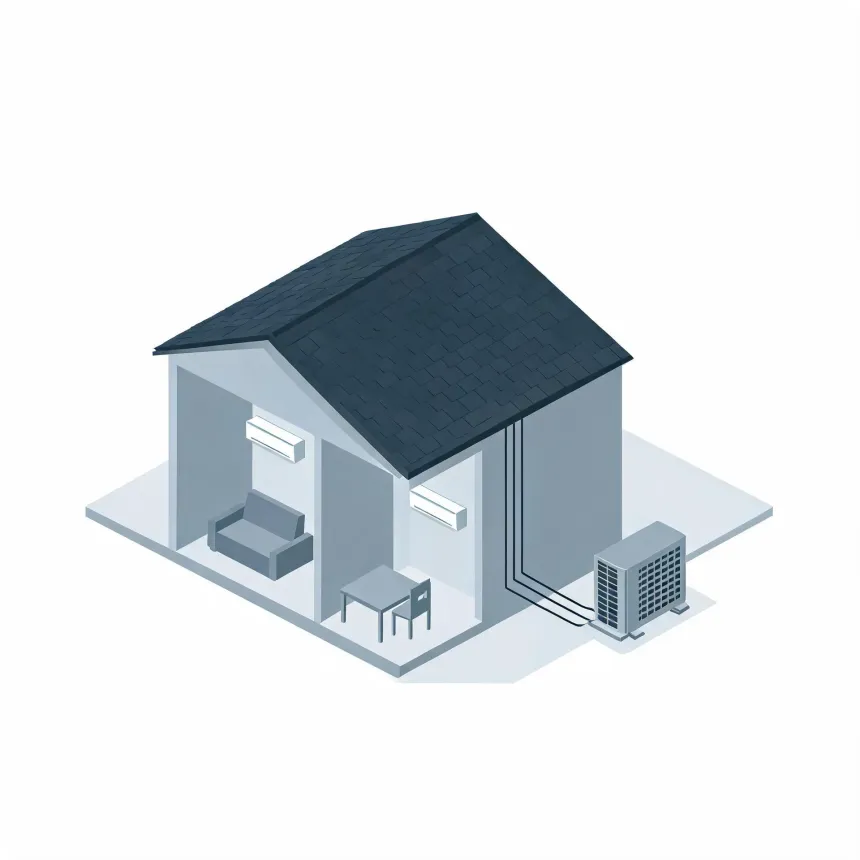
NOAA nClimDiv, 1991–2020 normals
Cayuga County runs air conditioning about two months a year, July and August, with afternoon highs averaging 78°F.
A mini split here isn't working against a long stretch of heat, so a solid mid-range unit holds up fine without paying for the top tier.



Electricity here runs 24.43 cents a kilowatt-hour, higher than a lot of the country pays. A mini split still comes out ahead of baseboard or a window unit on that same bill, since it moves heat instead of generating it, but the rate is one more reason an oversized unit costs you more than it should. That's the case for sizing the thing correctly rather than buying a bigger compressor on the idea that bigger means safer. A mid-range unit sized to the room will hold a steady, low output most of the time instead of running flat out, and at this rate, steady and low is what you want it doing.
A mini split installed here has to meet the same federal floor as any split-system heat pump. That means 14.3 SEER2 for cooling and 7.5 HSPF2 for heating. It's a baseline, not a top-tier spec, so a straightforward unit already clears it. A federal tax credit is available on qualifying equipment. Get a quote and see what fits your home.
Find a contractorThat SEER2 number on the label is a ratio, not a size. It tells you how much cooling you get out of the electricity you put in, nothing about how big a room it can handle. A higher number means the compressor is doing more with less power, usually because it can run at a lower speed and hold steady instead of switching on and off. Mini splits do this well since most of them modulate instead of running at one fixed speed, which is part of why their ratings tend to land well above what a furnace or an old central system ever needed to hit. The rating also doesn't tell you how long the thing lasts or how it will perform on the coldest or hottest day, since it's measured as an average, not a worst case. What matters more day to day is whether the unit was sized right for the space and installed with a clean line set and correct charge. A high rating on a system that's oversized for the room still runs inefficiently, cycling on and off instead of holding a steady, low output the way it was designed to.
When a mini split is going in to replace an old window air conditioner or electric baseboard heat, the old equipment gets disconnected and hauled off as part of the job. A window unit comes out of the frame, baseboard heaters get disconnected from their wiring. Neither one has a place in the room once the new system is in, so there's nothing left to maintain or work around.
A mini split that's adding cooling or supplementing heat in certain rooms doesn't touch the furnace or the ductwork feeding the rest of the house. The furnace keeps running the way it always has, on its own thermostat, doing what it's always done. The mini split is a separate system with its own controls, working alongside it rather than replacing any part of it.
Sizing a mini split is its own calculation, separate from whatever the furnace does. A contractor works out the heat loss and heat gain for the specific room or rooms it's covering, looking at square footage, window area, insulation and ceiling height. Too small and the unit runs flat out without reaching the temperature you set, struggling on the hottest and coldest days instead of handling them. Too large and it short cycles, hitting the setpoint fast and shutting off before it's pulled moisture out of the air or settled into a steady rhythm, so the room ends up cold and clammy instead of just comfortable. That's a different kind of failure than running constantly, but it wears on the compressor the same way, with more starts and stops over its life. A unit sized to the room, not just guessed from square footage alone, is what lets it modulate the way it's built to and hold a steady output instead of swinging between extremes.
Installation starts outside, not in. The outdoor unit needs a spot with clearance on all sides for airflow, close enough to the indoor head that the line set doesn't run excessively long. A contractor drills one hole through the wall for the line set, the condensate drain and the electrical whip, bundled together and sealed where they pass through. The indoor head mounts on a bracket, usually high on the wall, after checking that the spot has a clear path back to that hole and isn't above a door or a heat source that would throw off the sensor. Once both units are set, the line set gets connected, the system is pressure tested for leaks, then pulled into a vacuum to clear out moisture and air before the refrigerant valve opens. Only after it holds vacuum does the contractor charge the line and power it up to check that it's cooling and heating the way it should. None of that depends on the walls being opened up or ductwork run, which is why a mini split goes in faster than a full system change.