






Two white multi-story colonial houses with lit windows and black shutters photographed at night, fronted by a stone wall.

Heat Pump Repair in Utica, NY

Tell us about the job

Takes about a minute. No obligation.

RepairHeat PumpOneida County, NY
Step 1 of 2

What ZIP code is the job in?

Winters here run long and cold, with overnight lows averaging 15°F through December, January and February. That stretch makes a heat pump work hard, but it's not what breaks one. Most repairs trace back to the same causes you'd find anywhere. A failing capacitor. Low refrigerant. A frozen coil. A reversing valve that won't shift between heating and cooling. Utica's climate doesn't change what's likely wrong. It just means you want it fixed before the next cold snap, not after.

9 months
September through May, your system heats
2 months
July through August, it cools
15°F
the average winter night it heats against
78°F
the average summer afternoon it cools against
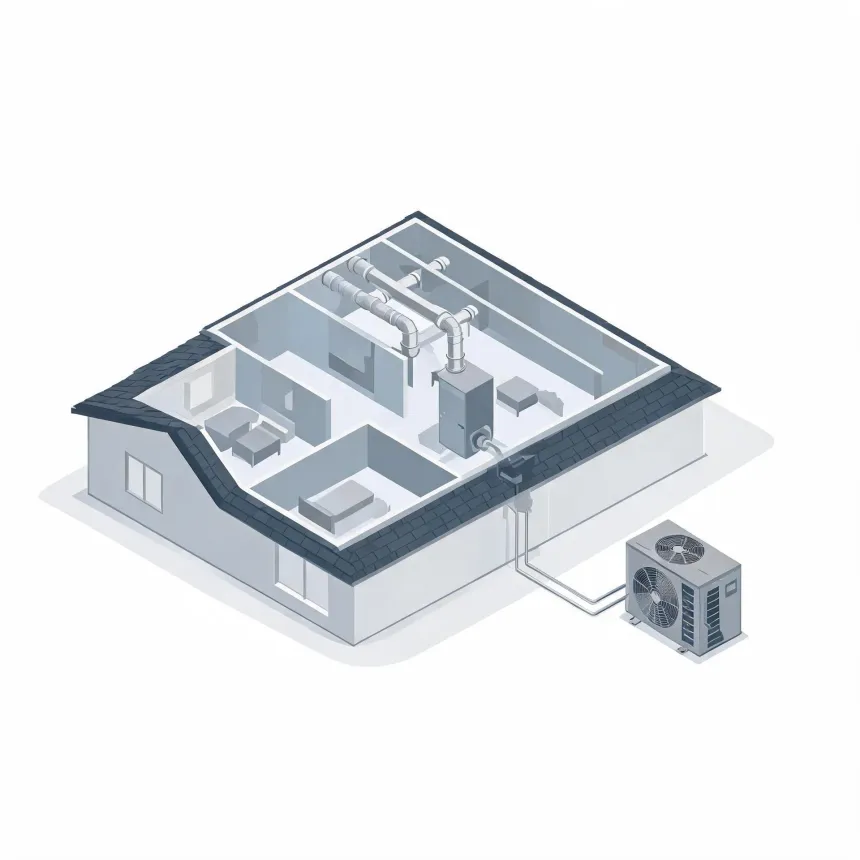
Isometric cutaway illustration of a single-story house showing interior rooms with ductwork, a furnace or air handler, and refrigerant lines running outside to a condenser unit on a pad.
Your system heats September through May and cools July through August.

NOAA nClimDiv, 1991–2020 normals

A heat pump that runs nonstop but never gets the house to temperature usually has a stuck reversing valve or a refrigerant leak.

Either one calls for a licensed contractor, not a thermostat adjustment.

Half the homes in Oneida County were built in 1958 or earlier

Half the homes here were built by 1958
195 damaging wind events from 2015 to 2024
23 hail events from 2015 to 2024
Oneida County weather, same as anywhere195 damaging wind events in Oneida County between 2015 and 2024, nothing unusual for a heat pump

New York runs 24.43 cents per kilowatthour, among the higher rates in the country. A heat pump losing its charge or struggling to defrost doesn't just heat poorly, it pulls more power trying to make up for it. That cost shows up on the next bill before it shows up as a breakdown. Worth getting looked at now rather than waiting for it to quit outright.

Ask how much life the unit has left before paying for the repair

If your heat pump came with the house, its age may not match the house's age at all, especially in a place where half the homes date to 1958 or earlier and the equipment has likely been replaced since. Before paying for the repair, ask the contractor how old the unit actually is and how much life it has left. That answer, not the house's age, is what should decide whether this repair is worth it.

Find a contractor
A man in a cap, dark T-shirt and work pants seen from behind, carrying a canvas tool bag as he climbs porch steps toward a dark green front door.
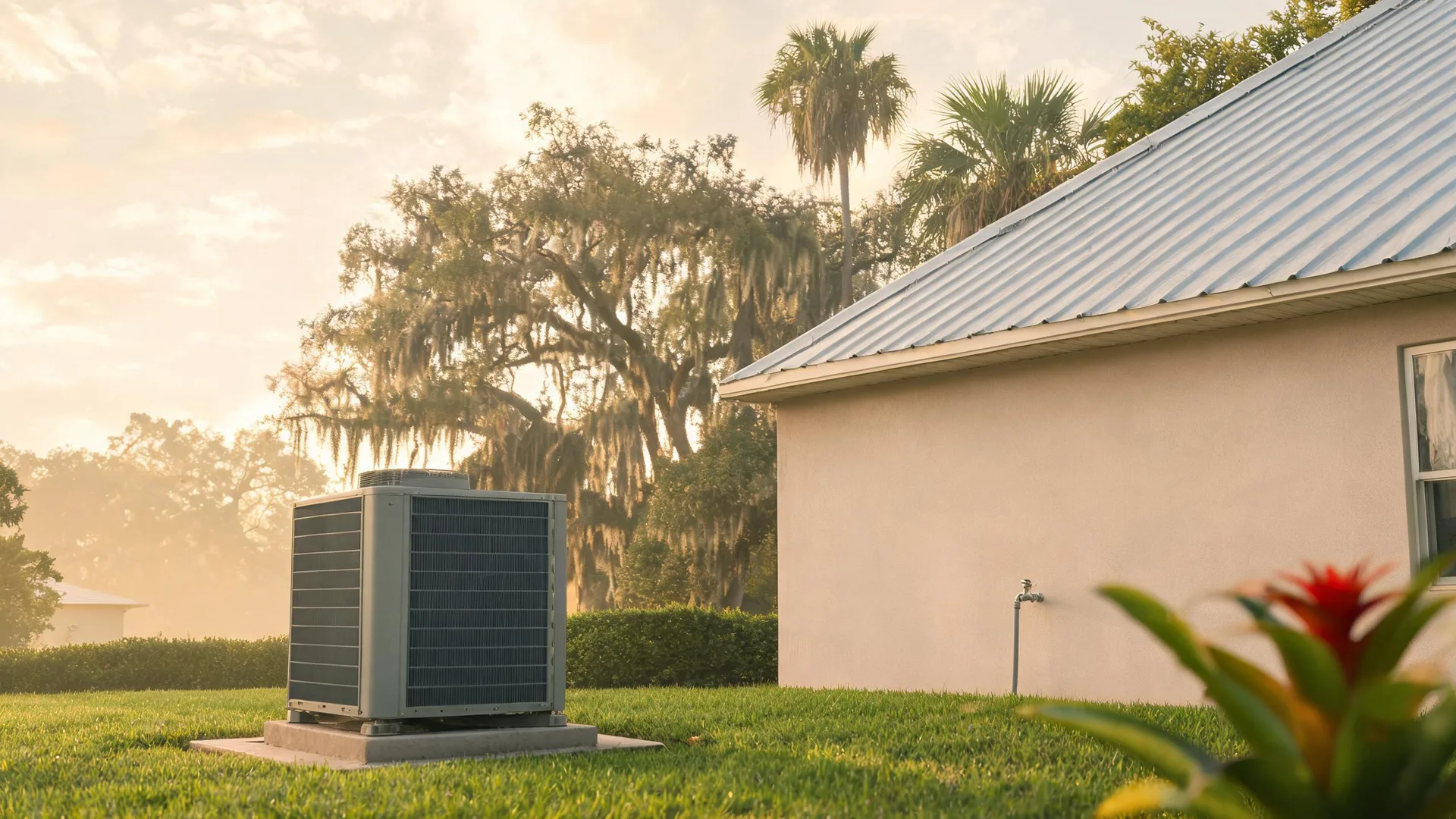
A gray heat pump outdoor unit mounted on a concrete pad next to the stone-accented exterior wall of a house.

Running sick doesn't make it better

A heat pump that's low on charge or icing up doesn't fail all at once. It keeps running, because the thermostat is still calling for heat and the unit will try to answer that call however it can. The compressor keeps pulling refrigerant through a system that doesn't have enough of it, or enough to spare for a proper defrost cycle. That makes the compressor run hotter than it should, for longer stretches, with less lubrication getting where it needs to go. A coil that's starting to ice over doesn't melt itself off when the system is struggling. More frost builds on top of it, blocking airflow further, and the unit pulls harder to compensate. Left alone, this is how a repair turns into a compressor replacement. Shutting it off doesn't fix the leak or the valve, but it stops the damage from compounding while a contractor gets out to look at it.

The capacitor goes first, usually

The run capacitor gives the compressor and the fan motors the jolt they need to start turning. It weakens over years of heat cycling until it can't do that anymore. The compressor hums and won't start, or the outdoor fan sits still while the unit tries to run. It's a small part and a straightforward swap, but ignoring the signs lets the compressor try to start without help, and that's what actually wears it out.
A dirty filter causes more damage than people expect

Airflow across the indoor coil keeps it from icing and keeps the compressor's return gas at the right temperature. A clogged filter starves that airflow. The coil frosts, the system reads a low suction pressure and runs longer trying to make up the difference, and the compressor ends up working against a problem that started as nothing more than a filter that needed changing.

A few things are worth checking before the call. Look at the outdoor unit and clear away anything blocking it, leaves, a stack of snow, a cover that got left on. Check the thermostat is actually set to heat and the temperature is set above room temperature, not just displaying the room temperature back at you. Look at the indoor filter and swap it if it's gray or clogged. Check the circuit breaker hasn't tripped. If the outdoor coil is caked in ice beyond a thin layer of frost, that's not something to chip off yourself, but it's worth noting for the contractor. None of this fixes a bad capacitor or a refrigerant leak, but it rules out the simple stuff first.

A diagnostic call starts outside, at the unit itself. The contractor hooks up gauges to check refrigerant pressure, because that number says whether the charge is correct, low, or overfilled, and each of those points somewhere different. They check the temperature of the air coming off the indoor coil against the air going into it. That comparison says whether the system is actually moving heat the way it should. Electrical readings come next, voltage to the compressor, amp draw on the fan motors, resistance across the capacitor. A reversing valve gets tested by watching whether the system actually switches between heating and cooling when it's told to, not just whether it hums. None of this takes guesswork. The readings either match what a healthy system should show or they don't, and where they don't is where the problem is.