
Heat pump not heating in Yonkers, NY

One request and the search for a pro is handled.

Send my request

Why is my heat pump not heating my house?

It is cold out, maybe close to freezing, and the air coming out of your vents feels barely warm or just like room temperature. You keep checking the thermostat and it says it's running, but the house isn't catching up. Before you call anyone, you want to know whether this is a quick fix, something about how heat pumps work in cold weather, or a sign the system actually needs a repair.

Your heat pump is likely stuck in defrost, low on refrigerant, or running on backup heat alone

A heat pump moves heat from the outside air into your house, and that gets harder the colder it gets outside. Below freezing, the outdoor coil can ice over, so the system switches into a defrost cycle and the air coming out of your vents feels cool for a few minutes at a time. That's normal. What isn't normal is air that stays cool for hours, or a house that keeps losing ground against a Westchester County winter. That usually points to low refrigerant, a stuck reversing valve, or a backup heat strip that isn't kicking in when it should. Any of those needs a licensed technician to find and fix, since the fault is inside the system, not something you can diagnose by ear or by checking the thermostat settings yourself.

A dark gray outdoor condenser unit on a concrete pad beside a house with beige horizontal siding, with a gray electrical disconnect box and conduit on the wall, mulch beds, a hosta plant, a shrub, and mowed lawn in front.

Running the way it should

Warm air at every vent, within a few degrees of what the thermostat is asking for. The outdoor unit cycles on and off instead of running nonstop, and frost on the coil clears itself between cycles. No ice building up, no short cycling, no cold spots in the house when it's in the 30s outside.

An outdoor air conditioning or heat pump condenser unit on a concrete pad beside a house with horizontal vinyl siding, a gray electrical disconnect box and conduit on the wall, and a concrete walkway in the foreground.

Struggling to keep up

The outdoor unit sits there dirty and caked, coils packed with debris it can't shed heat through. Ice builds up and stays instead of defrosting. Inside, the air from the vents feels lukewarm at best, the house loses ground overnight, and the unit runs longer each cycle just to fall further behind.

If the Heat Never Stops Or It's Running on Backup

Heat pump keeps running

  • The outdoor unit never shuts off, even when the thermostat has long since hit its setpoint.
  • Your electric bill climbs fast because the compressor is working nonstop instead of cycling normally.
  • Frost builds up on the outdoor coil and doesn't clear between cycles, which cuts airflow further.
  • The system is trying to make up for lost heat, so it runs longer and longer to hit the same temperature.
  • Left alone through a cold stretch, this usually ends with the compressor failing outright.

Backup heat takes over

  • Electric resistance strips or a gas furnace kick in and the house warms up, but your bill jumps that month.
  • You may hear the air handler get louder, or feel a different kind of heat coming from the vents, drier and hotter than the heat pump's.
  • Backup heat is meant for short cold snaps, not for carrying the whole house through a Westchester winter.
  • The heat pump itself is still not fixed, it's just not the one doing the work anymore.
  • Relying on backup heat for weeks at a time usually means the heat pump has a real fault that needs a look.
A dim bedroom with an unmade bed covered by a blue-gray blanket, a sheer curtain and bedside lamp beside a rain-streaked, condensation-covered window showing blurred trees and distant lights.

It's close to freezing outside, past eleven at night, and you're standing in the hallway in a sweatshirt because the living room thermostat still reads four degrees under what you set it to. The vents are blowing, you can feel that much with your hand against the grille, but the air has no warmth to it, just a dull draft. Out back the unit is running, you can hear the fan, and there's a crust of frost along the bottom of the coil that wasn't there this morning. You bump the thermostat up a notch anyway, out of habit, and go find another blanket for the bed instead of waiting up for the house to catch up.

What are you noticing around the house right now

You've probably got a hand over the vent more than once tonight, checking if that's really the best it does. The thermostat might say 68 and the room feels 62. Some rooms are colder than others, usually the ones farthest from the air handler. You may have noticed the outdoor unit running nonstop, or not running at all, or caked in ice along the coil. If you've got a backup heat strip or a furnace tied into the system, it might be the only thing keeping the house livable right now, and that costs more to run than the heat pump alone. Left alone on a cold night, pipes in outer rooms or an unheated basement are what start to worry people.

A gray outdoor condenser unit on a raised pad beside a house with horizontal lap siding, with refrigerant lines, conduit and an electrical disconnect box on the wall, and shrubs on a mulch bed to the left.

Clean and clear

The grille is open and free of dust, with nothing stacked against it and shrubs trimmed back. Refrigerant lines and the conduit run clean to the disconnect box. Air moves through it the way the unit was built to move it.

An outdoor air conditioning condenser unit on a concrete pad beside a house with horizontal siding and a concrete foundation, with refrigerant lines running to a wall-mounted disconnect box and shrubs at left.

Dirty and blocked

The grille is dark with dust and debris packed into the fins. A unit that looks like this can't pull in enough air to pull heat from it, even on a mild day. That strain shows up as weak heat and a system that won't stop running.

A smiling bearded man in a dark green henley shirt sits on a blue-gray couch in a living room, with a bowl of popcorn in the foreground and a houseplant and window behind him.
A smiling man in a dark sweatshirt reclines on a gray sofa in a living room, with a wooden bowl of popcorn on a table in the foreground and a dining area, shelving, and pendant lamp behind him.
A smiling man in a navy long-sleeve shirt reclines on a sofa in a living room, with a bowl of popcorn on a wooden coffee table and framed pictures on the wall behind him.
A smiling man in a dark green long-sleeved shirt sits on a gray sofa in a living room, with a bowl of popcorn in the foreground and windows and a potted plant behind him.
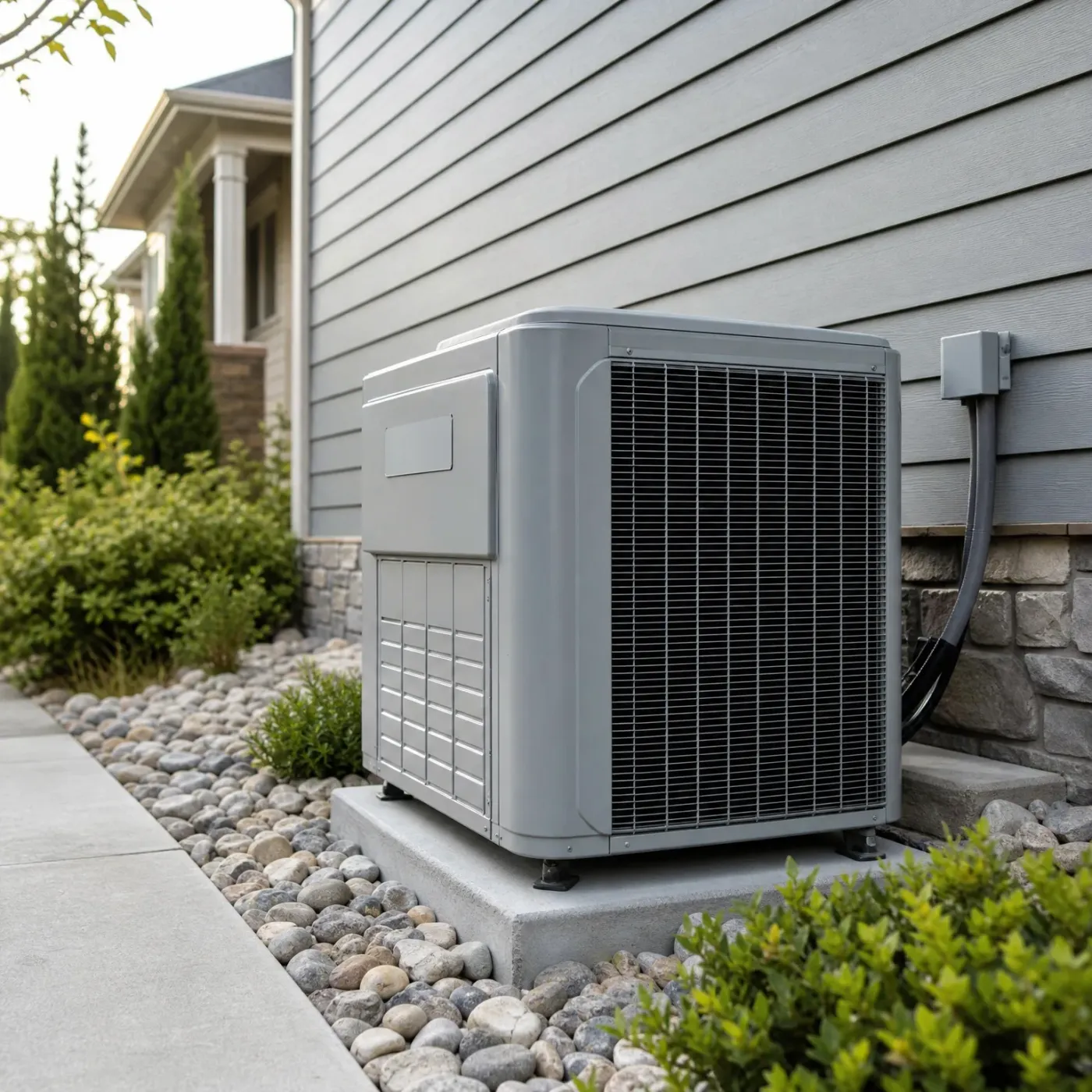
A gray outdoor heat pump unit on a concrete pad beside a house with light gray horizontal lap siding and a stone base, surrounded by river rock and shrubs next to a concrete walkway.

Finding a pro stops being your job

Explain the heat pump problem once instead of to every shop in Westchester County.

Send it once and finding someone is no longer on you.

Let a pro reach out

You're not committing to anything by asking.

How cold does it get, and how long does your heat pump have to work for

  • Winter nights average 24°F

    Overnight lows average 24°F through December, January and February here, well below where a heat pump struggles to keep up without backup heat.

  • Heat runs October through May

    Heat runs from October through May in Westchester County, eight months of relying on a system that has to work hardest exactly when it's coldest.

  • Cooling runs June through August

    Cooling only runs June through August, three months. The other nine depend on the same unit doing the harder job of heating.

NOAA nClimDiv 1991-2020

How a Heat Pump Actually Heats

  • A reversing valve switches the system between heating and cooling by changing which way refrigerant flows through the coils.
  • If that valve sticks partway, the unit can run but deliver air that's barely warmer than what's already in the room.
  • Below about 35 degrees, frost forms on the outdoor coil and the system has to pause and run a defrost cycle to clear it.
  • During defrost, the outdoor fan stops and the system briefly reverses, which can feel like the heat shutting off entirely.
  • A heat pump that short cycles between heating and defrost without ever catching up often points to a low refrigerant charge.
  • Backup electric strip heat is supposed to kick in during the coldest stretches, and if it doesn't, the house falls behind fast.

A heat pump doesn't make heat the way a furnace does. It moves it, pulling warmth out of the outdoor air even when that air is cold, and pushing it inside through the same coils and lines used for cooling in summer. A part called the reversing valve is what tells the system which direction to send the refrigerant, heating or cooling. It's a small part with a lot of hours on it, and when it starts to stick, the system can still run without actually switching modes right, which is why the air can come out lukewarm instead of warm.

Cold weather adds another layer. Once it's below about 35 degrees, frost starts forming on the outdoor coil, and the unit has to stop and run a defrost cycle to melt it off before it can keep working. That's normal. What's not normal is a system that seems to spend more time defrosting than heating, or one where the outdoor fan keeps stopping and the house never catches up. That pattern, along with weak airflow that never really warms up, usually traces back to refrigerant that's low, not a thermostat problem.

There's also a backup heat source built into most systems, electric strip heat, meant to carry the house through the coldest stretches when the heat pump alone can't keep pace. If that backup isn't kicking in when it should, the gap between what the thermostat asks for and what the house actually gets can grow fast.

A woman with dark hair in a bun and a dark knit sweater reclines on a couch with eyes closed, covered by a gray blanket with a closed book resting on it, beside a lit table lamp and a potted plant.
A smiling middle-aged man in a dark knit sweater sits at a dinner table with wine glasses, a lit candle and a bowl of food in the foreground, with another person's back at the right edge.

Below freezing, a heat pump leans harder on its backup heat strips to keep the house at temperature. If those strips have failed, the outdoor unit can run for hours and the air at the vent still won't climb past lukewarm.

That's why the thermostat shows it's running while the living room stays four degrees under setpoint. The compressor isn't the problem. The backup heat that's supposed to carry the load on the coldest nights isn't coming on at all.

Power here costs 24.45 cents per kilowatt-hour

At 24.45 cents per kilowatt-hour, every hour your heat pump leans on backup strip heat instead of the compressor shows up fast on your bill. When it's stuck running nonstop and still not warming the house, you're paying that rate for heat you aren't even getting.

EIA-861 2025

A closed silver laptop and a light ceramic mug of dark coffee on a wooden table, with a wooden chair at left, a gray wall, a window at right, and a counter with a potted plant and tiled backsplash in the background.

A heat pump that won't warm the house has a reason, and it's fixable

A reversing valve stuck in the wrong position, backup strips that burned out, a coil iced over and not defrosting. Whatever it is, it's a specific part doing something specific, and a licensed contractor can find it and fix it. Your house doesn't have to sit at four degrees under setpoint through a Westchester winter while you wait and hope it corrects itself.

What usually eats the time isn't the repair itself, it's everything before someone gets to your door. Searching for a contractor who works on heat pumps, calling a few, explaining what the thermostat's doing and what the vents feel like, then doing it again for the next one, waiting on callbacks that don't come. Send this one form and that part is done. You're not sorting through names tonight. You're just waiting for someone qualified to show up and look at the unit.

Living room interior with a light sofa holding a dark green cushion and a brown knit throw, a tall leafy plant by a black-framed window, a wooden coffee table with a round tray, and wooden shelves holding vases and books.
At dusk, a white clapboard house with black shutters and a dark front door is lit from within, with a wet stone walkway leading to the steps past low path lights, hydrangeas, and a clipped hedge beside a lawn.

Heat Pump Repair

Let someone else find the pro

RepairHeat PumpWestchester County, NY
Step 1 of 2

What ZIP code is the job in?

  • An olive-green upholstered armchair with a cream knit throw and pillow, beside a matching ottoman holding a mug on a wooden tray and a book, with a dark wood bookshelf, candles, a large leafy plant, and a patterned rug nearby.
    • A Westchester County pro who repairs heat pumps gets your request.
    • Get matched with a pro who fixes heat pumps in Westchester County.
  • Two stacked hardcover books, the top one green, sit on a round dark wood table beside a ceramic mug and a potted fern, with a leather armchair, green cushion and knitted throw behind near a curtained window.
    • Get the heat pump repair search off your mind today.
    • Once you send the form, finding a pro is off your list.
  • Living room interior with a stone fireplace and wooden mantel holding ceramic vases and a framed artwork, a round wood coffee table with a dark vase of greenery, a shallow bowl, books and a stone cup, and a beige sofa with gray pillows and a dark throw in the foreground.
    • Explain the job once and skip repeating it on every call.
    • Skip searching for a heat pump pro and answer a few questions instead.
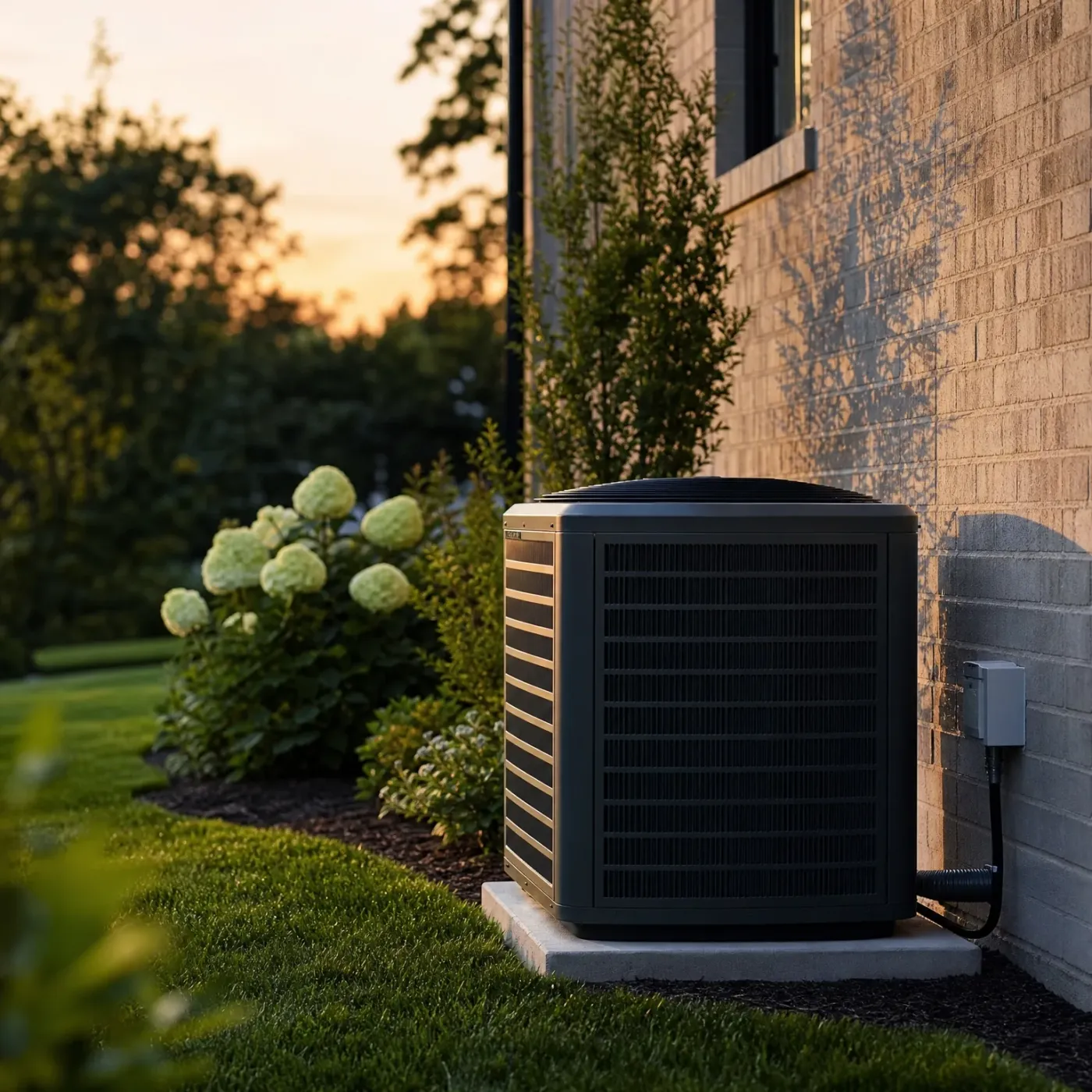
  • An outdoor air conditioning condenser unit on a concrete pad beside a brick house, with a wall-mounted disconnect box and conduit, lawn and flowering shrubs at left, and a sunset sky in the background.
    • A licensed pro who repairs heat pumps in Westchester County gets your request.
    • A licensed pro who works in Westchester County gets your request.