When to replace a heat pump in Hempstead, NY

Your new heat pump project goes to an installer who works in Nassau County.

Get matched

A heat pump in Hempstead is usually worth replacing once it's about 10 to 15 years old and starts struggling to keep the house warm when it's cold outside, or your power bills climb while the house still feels off. Cold winters here make a heat pump work hard, and once the compressor or the reversing valve starts to wear, it loses the ability to pull heat out of cold outdoor air efficiently. If it's icing up on the coil, short cycling, or running nonstop without bringing the house to temperature, that's the system telling you it's losing the fight. Repeated repairs by this point usually just delay the same outcome. If your heat pump is in that age range and showing any of these signs, replacing it now typically costs less over time than nursing along a unit that's already worked harder than it should have to.

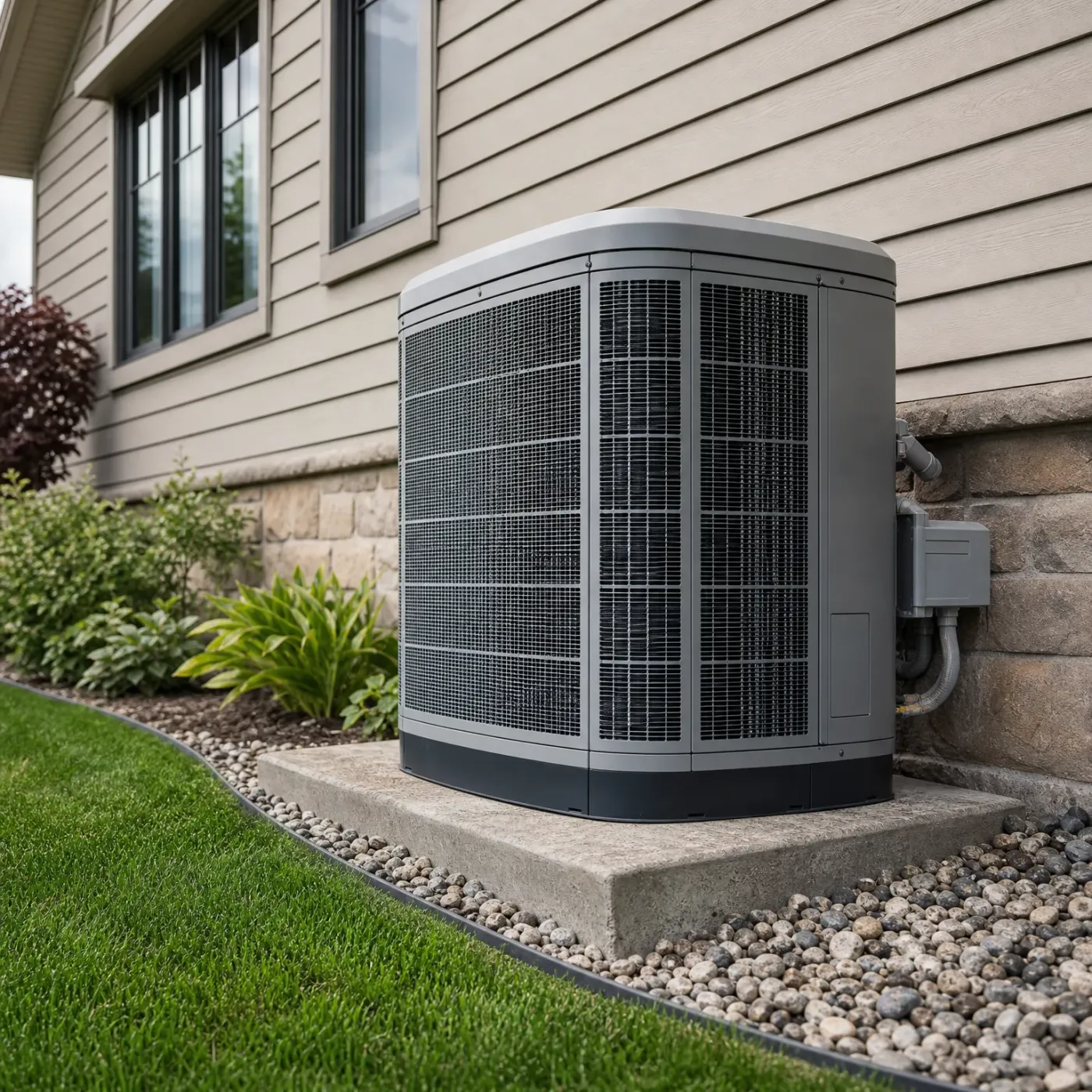
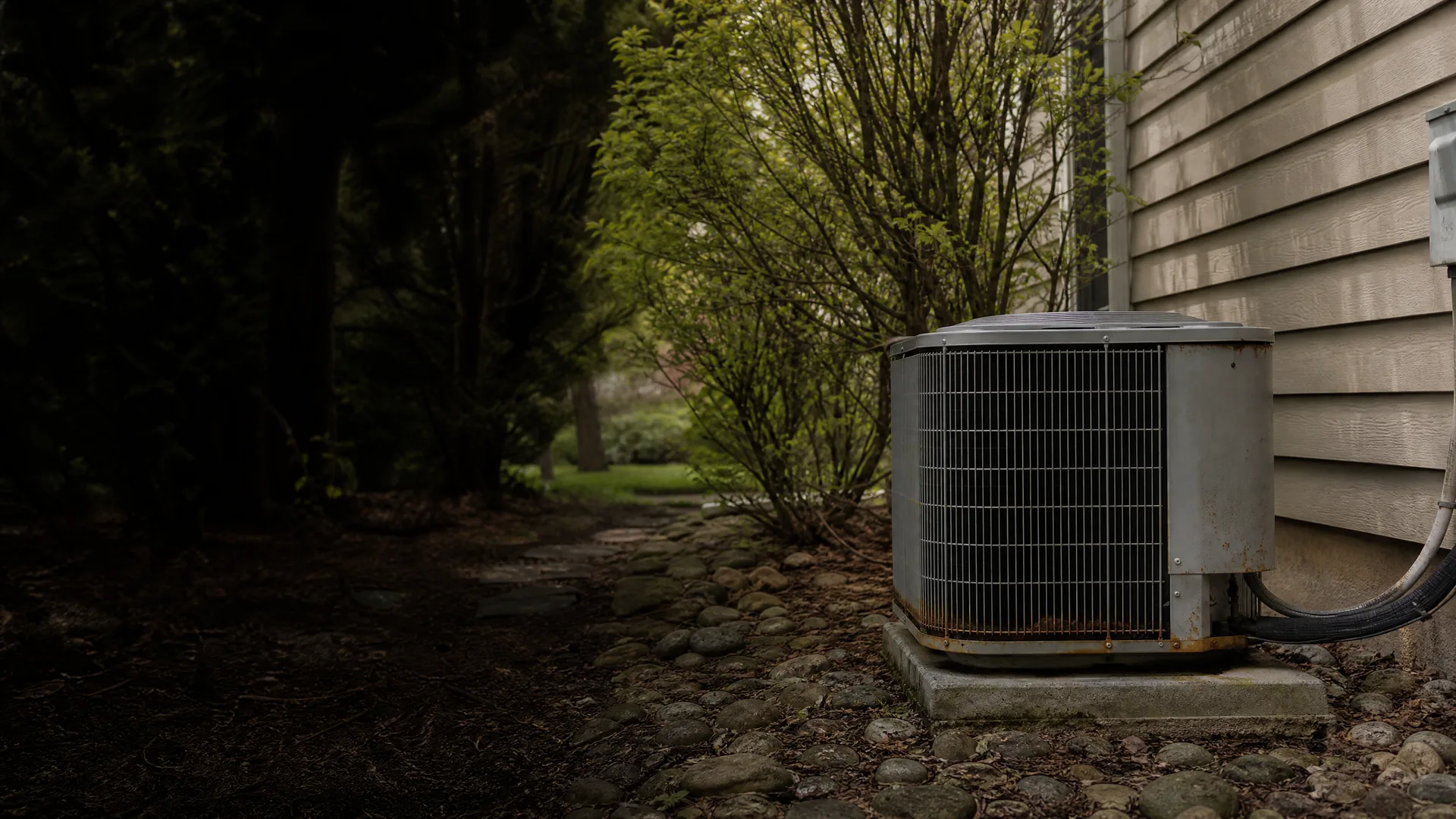
An outdoor air conditioning condenser unit on a concrete pad beside a house with horizontal lap siding, surrounded by rocks, shrubs and trees.

You're out in the side yard on one of the first mild days of spring, coiling the hose up before you need it, and you stop by the outdoor unit. Rust has worked its way along the base, past the paint and into the metal itself. You crouch down and press a thumb to it, half expecting it to flake. It's been running for years without much complaint, but lately it clicks on and runs longer than it used to, even on a day like this that isn't asking much of it. You think about the winter just gone, the rooms that never quite got warm, and the bill that came with it. You straighten up, leave the hose where it is, and go back inside to look up how old the thing actually is.

How cold does it have to get before your heat pump is working too hard?

  • Winter nights average 28°F

    Nights in Nassau County average 28°F in December, January and February, and a heat pump has to work harder as the air outside it gets colder.

  • Heat runs October through May

    Heat runs here from October through May, about eight months a year, so an aging heat pump gets little rest before the next cold stretch starts.

  • Cooling runs June through September

    Cooling runs June through September here, so the same heat pump is doing double duty, keeping the house livable nearly all year round.

NOAA nClimDiv 1991-2020

Repairing it one more time

A service call for a bad capacitor or a stuck reversing valve makes sense if the system is still under ten years old and has otherwise run fine. You pay for the part and the labor, the unit comes back on, and you get more winters and summers out of equipment you already know. This only holds if the repair is a single clear problem, not the third call this year. If the contractor is quoting a major part like a compressor, the math starts to favor replacing it instead.


Putting in a new system

Once a heat pump is past 10 to 15 years old, a new system stops being an expense you're avoiding and starts being one you can plan for. A new unit is sized and matched to your house instead of patched to keep running, and it won't lose ground on the first hard freeze of a Nassau County winter. You take on the install cost now, but you stop paying for emergency calls on a unit that's already told you, more than once, that it's done.

A gray-haired man in a dark coat with snow on the shoulders and collar stands smiling in a dimly lit entryway with a paneled front door, lamps, and a framed picture in an adjoining room.
A gray-haired, bearded man in a dark winter coat with snow on the shoulders stands in a doorway of a home interior with a lit lamp, framed pictures, a potted plant and a staircase behind him, and an evergreen wreath at the left edge.
An older man with gray hair and a beard, wearing a snow-dusted dark coat and knit scarf, stands smiling in a dimly lit house entry with a lit lamp, mirror, and a living room with snow visible through the window behind him.
A smiling gray-haired man in a dark wool coat with snow flecks stands in a dimly lit home entryway, with a lit table lamp, potted plant, framed pictures and a living room visible behind him.

Why cold snaps hit it hardest

A heat pump moves heat from the outside air into your house. When the air outside is near 28°F, there is less heat out there to move, so the system runs longer to deliver the same warmth inside. A compressor that's logged ten or more winters in Nassau County has spent a lot of hours working against that kind of cold. The parts inside wear from that strain the same way any motor wears from long runtime. Once a unit starts needing refrigerant added or a part replaced every year or two, that wear has usually caught up with it, and a new system won't carry that same fatigue into the next cold snap.

What efficiency rating actually tells you

Every heat pump carries a SEER2 and HSPF2 rating, which measures how much heat or cooling it delivers for the power it draws, not how big or strong the unit is. A heat pump from 15 years ago was built to an older, lower standard than what's sold today. With power costs in this area among the highest in the country, that gap between an old rating and a new one shows up on your bill every month, in both summer and winter. Replacing an aging unit with one built to current standards doesn't change how your house holds heat, but it does change how much power it takes to keep the house at the same temperature.

A woman with hair in a bun sits wrapped in a thick cream blanket in an armchair, an open book in front of her, beside a lit lamp and a frosted window.
An older woman with short gray hair in a cream knit sweater smiles while looking to the side, standing behind a wooden board holding a round loaf of bread, with a dark window and lamp-lit interior behind her.

Still under warranty

If the compressor or outdoor coil is covered, a repair costs you only the labor. That math favors fixing it, even for a system that's had a couple of breakdowns.

Find a heat pump pro

15 years old or more

At this age, parts are wearing together, not just one at a time. Replacing it now avoids paying to patch a system that's near the end anyway.

Find a heat pump pro
A weathered gray outdoor condenser unit sits on a concrete pad beside a house with horizontal siding, with refrigerant lines entering the wall at left and a mulched shrub bed at right.
Before you get your heat pump installation
A gray outdoor condenser unit on a concrete pad beside a house with gray lap siding, connected by conduit and refrigerant lines to a wall-mounted disconnect box, with a green shrub and mulch bed at left.
After you get your heat pump installation
A gray outdoor condenser unit on a concrete pad beside a house with horizontal lap siding and a stone foundation, with a lawn, shrubs and decorative gravel nearby.

Find a heat pump installation pro in Nassau County

A licensed pro who works in Nassau County gets your request.

Your request goes to a Nassau County pro who takes heat pump jobs.

Get a local pro

No charge to send it. You decide if you hire them.

Fix It or Replace It

Repair

  • A compressor or reversing valve replacement still costs less than a new system, which matters if the unit is under ten years old.
  • Parts stay easier to source on a newer unit, so a contractor isn't waiting on a special order while your house sits cold.
  • If only one component failed and the rest of the system tested fine, fixing that one part gets you back to normal without touching anything else.
  • You keep the refrigerant charge and ductwork you already have, so there's nothing new to size or balance.
  • A repair buys you another winter or two to plan and budget for replacement on your own timeline instead of being forced into it.
  • If the breakdown happened once and the unit had years of trouble-free running before it, that history says more than the single failure does.

Replace

  • A unit nearing 15 years old is likely working harder just to keep up with a January night near 28°F, and that strain tends to repeat.
  • Newer systems hold a higher efficiency rating, so the same cold snap pulls less off a power bill that's already among the highest in the country here.
  • Once the compressor and the coil are both aging, a repair fixes one problem while the other is already close behind it.
  • A system installed now gets sized and set up for how your house holds heat today, not for whatever it needed when the old one went in.
  • Replacing it ends the pattern of a service call every winter instead of paying for one and still wondering if it holds through February.
  • A failing unit that can't keep the house warm on the coldest nights has stopped doing its one job, no matter how cheap the next fix looks.
A gray outdoor air conditioner or heat pump unit on a concrete pad beside a house with horizontal lap siding, with conduit and refrigerant lines running up the wall and green shrubs and mulch at left.

Running the way it should

The unit sits level on its pad, lines running clean into the wall. No rust on the cabinet, no ice built up on the coil in winter. A heat pump like this holds its temperature without long run times, even on a cold night in Nassau County.

An outdoor air conditioning condenser unit sits on a concrete pad beside a white horizontal-siding house, with a gray electrical disconnect box and insulated refrigerant lines on the wall, mulch and green shrubs to the right, and a concrete slab in the foreground.

Showing its age

Weathering has dulled the cabinet and the conduit looks worn where it meets the house. An older unit like this often runs longer to hold the same temperature, and once the compressor or coil starts failing, the house stops keeping up on the coldest nights.

What actually fails first inside a heat pump that's wearing out?

You've heard the compressor is the heart of a heat pump, and you're wondering if that's really the part that goes first, or if something smaller and cheaper gives out before that and takes the system down with it. You want to know what a contractor actually sees when they open up a unit that's on its way out, not just the part everyone names.

The reversing valve and the contactor usually go before the compressor does

The reversing valve is what lets the system switch between heating and cooling, and it's the part that gets stuck most often on an older unit, usually leaving the system blowing cold air when it should be heating the house. The contactor, a small switch that sends power to the compressor, pits and burns from years of starting and stopping, until one day it doesn't close the circuit at all. Both are repairable on their own. The compressor is the part that's expensive to replace and often not worth replacing by itself, because once it fails, it's usually a sign the rest of the system has been running hard for years and is close behind it.

A gray outdoor condenser unit on a concrete pad beside a light-colored lap-sided house, with a wall-mounted disconnect box and conduit, dark mulch, and a green shrub to the right.
A clean grille and a level pad let the unit pull in air without a fight, even on a 28°F night.
A dirty outdoor air conditioner condenser unit with debris on its coil grille, sitting on a concrete pad beside a light-colored horizontal siding wall, with bare dirt ground in front and a shrub at right.
Fins packed with dirt and leaves choke the airflow, so the system runs longer and still falls behind.

Power here costs 25.49 cents per kilowatt-hour

At 25.49 cents per kilowatt-hour, every hour your heat pump labors through a cold night shows up on the bill. An aging unit that's lost efficiency draws out that struggle, so the same cold snap costs you more each year it runs.

EIA-861 2025

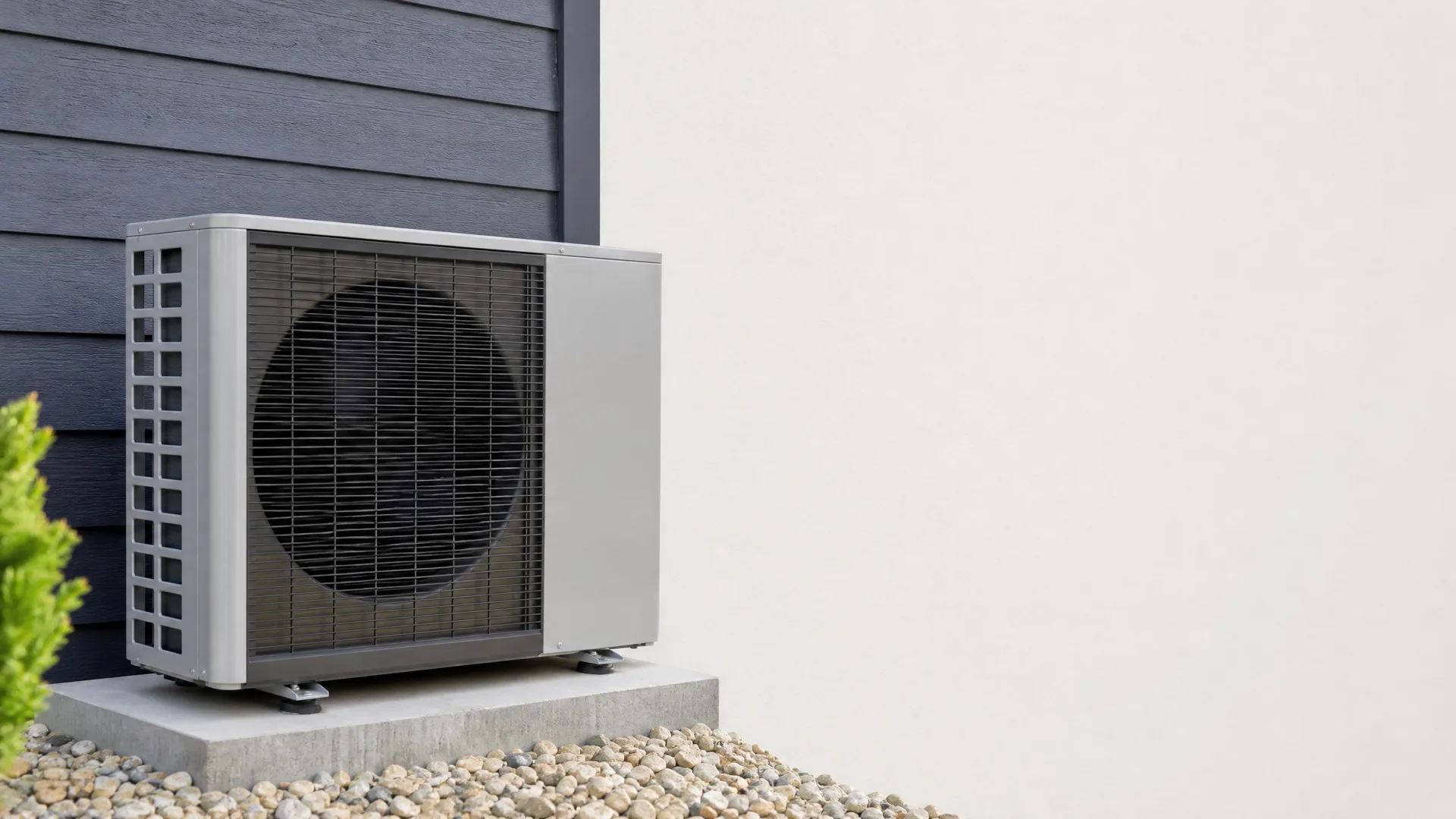
An outdoor air-source heat pump unit on a concrete pad beside a dark horizontal-board wall and a plain light-coloured wall, with gravel and a small green shrub in the foreground.

Keeping the system you have

If your heat pump is under ten years old and has only needed a repair here and there, staying with it makes sense. A contractor who services it already knows its history, so a call about a strange noise or a weak airflow problem isn't starting from zero. You keep the unit that's sized right for your house, and you avoid the work of coordinating a new install during a cold stretch.

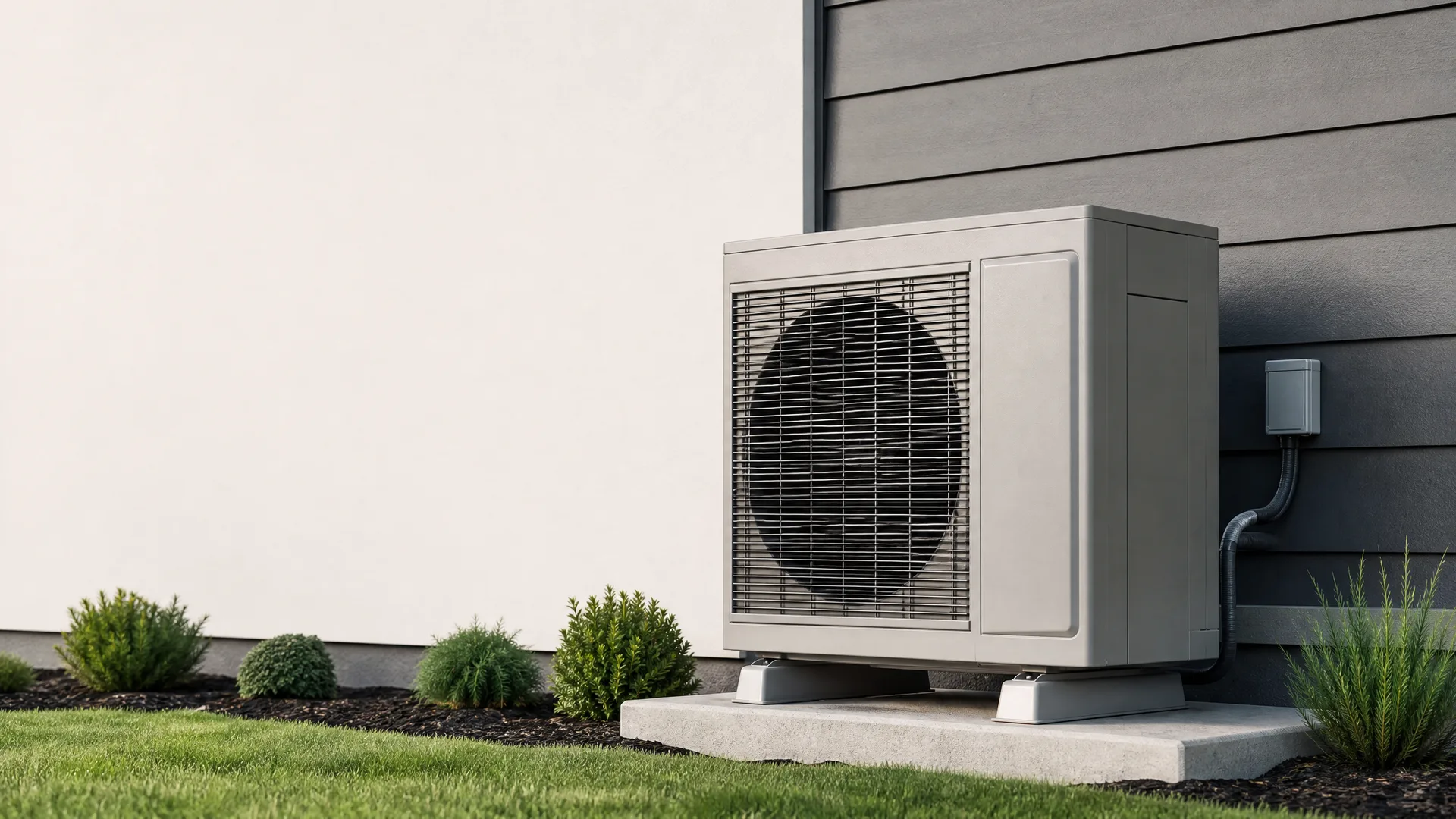
A light gray outdoor heat pump unit on a concrete pad beside a house with white stucco and dark horizontal siding, with a conduit running to a wall-mounted electrical box and small shrubs and lawn in front.

Moving to a new unit

Once a heat pump is past 15 years and the repairs keep coming, a new system changes what winter nights look like. A newer unit holds the house at temperature without the long run times that drive up your bill on a 28°F night. Installation takes planning, sizing the equipment to your house and scheduling the work, but it ends the pattern of paying for parts on a machine that keeps losing ground.

A woman stands in the open doorway of a white stucco house holding the dark door, facing a man in a black cap and shirt seen from behind in the blurred foreground, with a potted flowering plant beside the entry.

Where that leaves you

If your heat pump is under ten years old and has given you one bad part, not a pattern of them, a repair still makes sense. Past that age, especially once it's struggling on the cold nights Nassau County gets every winter, replacing it is the better call. Power here runs among the highest rates in the country, so a unit that's lost efficiency keeps costing you for every month it stays in the ground.

A local contractor who works on heat pumps all winter has seen what this age and this weather do to a system, and can tell you quickly whether yours is worth another repair or past it. You'll be matched with one contractor suited to your situation, not a handful competing for the job, and that contractor will reach out to you directly.

Interior corner of a living room with a sheer-curtained window, a light wood console table holding a vase of greenery and a shallow bowl, a woven basket on the lower shelf, and a blurred upholstered sofa and dark wood table in the foreground.
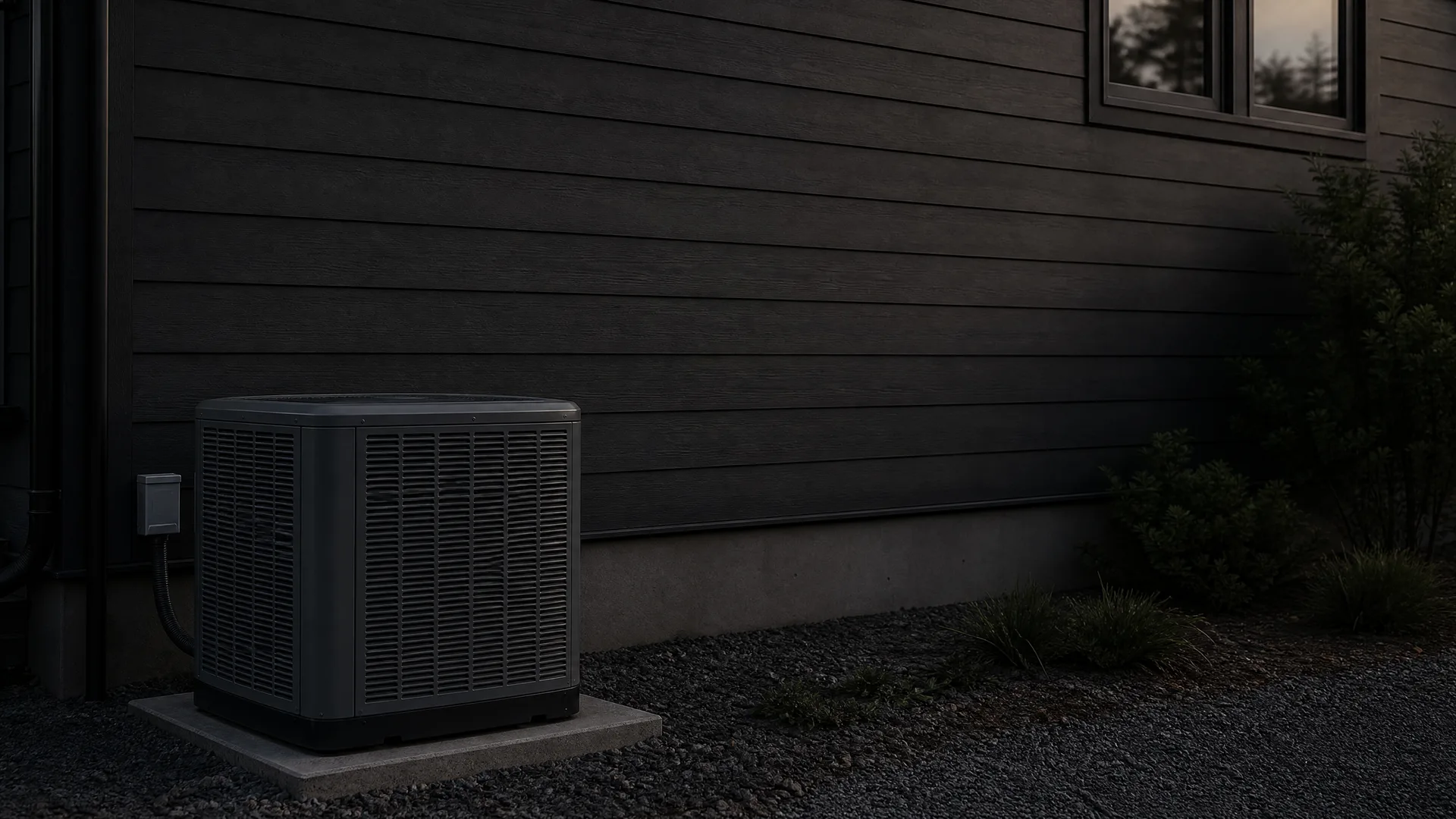
An outdoor condenser unit on a concrete pad beside a dark horizontal-lap-sided house, with gravel, shrubs and a small electrical disconnect box on the wall, in dim light.

The right pro for this job

The pro who gets in touch is licensed in New York and works in Nassau County.

New system or replacementHeat PumpNassau County, NY
Step 1 of 2

What ZIP code is the job in?