
Heat pump leaking water in Hempstead, NY
Why is my heat pump leaking water?
You went out to check the outdoor or indoor unit and found water where it shouldn't be. It's a little alarming, but it's also common, and most causes are straightforward to track down once you know what to look for. The question is whether it's something minor or a sign the system needs a technician before it gets worse.
Usually a clogged or disconnected condensate drain
A heat pump pulls moisture out of the air when it's cooling your home, and that water is supposed to leave through a condensate line into a drain. When that line gets clogged with algae or dirt, or the pan underneath it cracks or rusts, the water backs up and comes out somewhere you can see it. A dirty air filter can cause the same thing by freezing the indoor coil, which then thaws and overflows the pan. With humid summers in Nassau County, the system runs long hours pulling moisture, so a clogged line shows up as a steady drip or a puddle a lot faster than it would somewhere drier.




Is this leak actually something to worry about?
Water pooling under the indoor air handler, usually near a closet or utility room, is the one to pay attention to. You might notice a damp spot on the floor, a musty smell, or water stains spreading across the ceiling below if the unit sits in an attic or upper floor. A drain pan that keeps overflowing means that water is going somewhere, and over weeks that can mean warped flooring, stained drywall, or mold growth in spaces you can't see. Water around the outdoor unit after a defrost cycle in winter is normal and nothing to chase. The difference is location: outside, let it go; inside, get it looked at before the damage spreads past the floor.
How the indoor unit drains
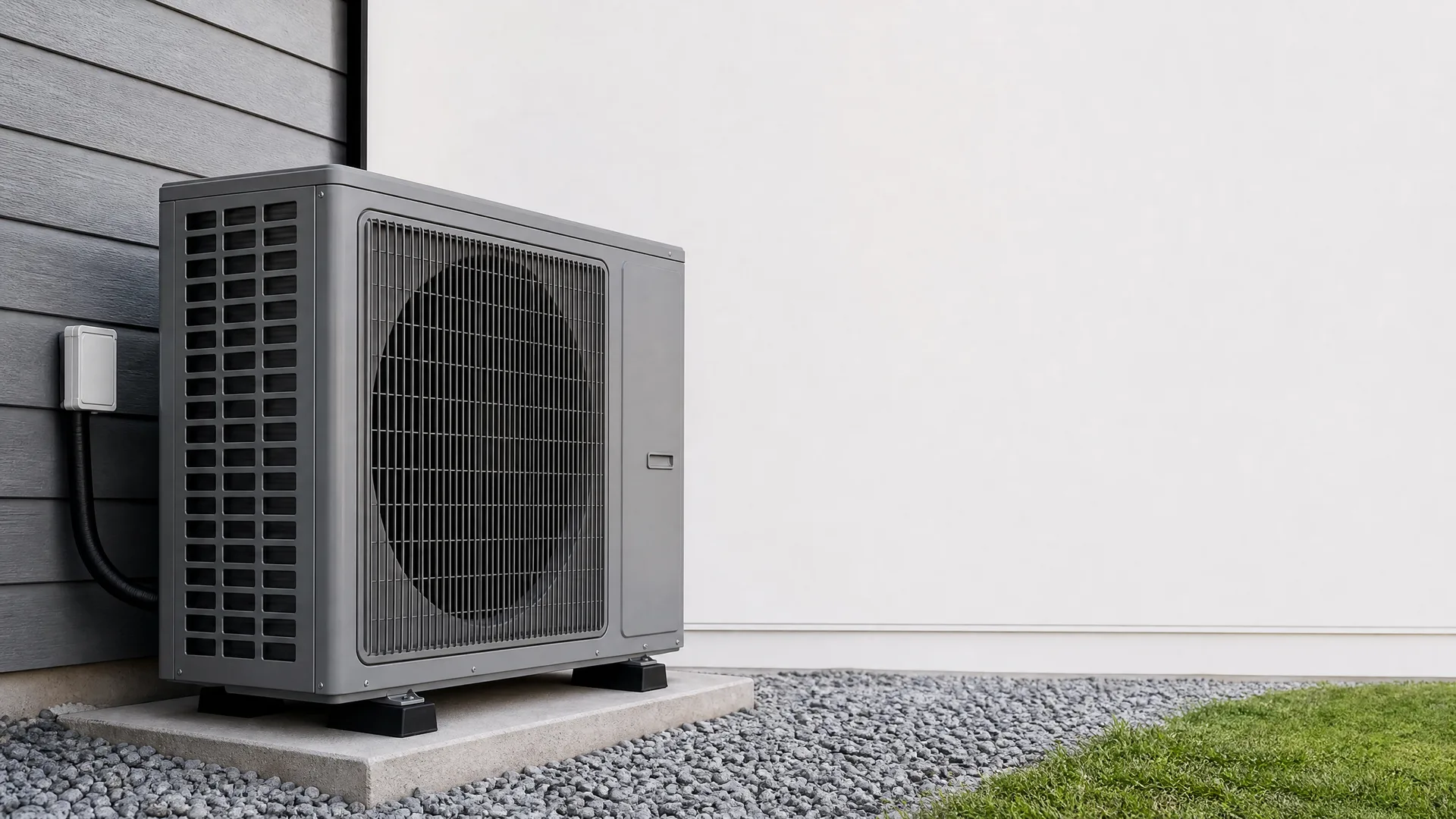
A heat pump pulls moisture out of the air every time it runs in cooling mode, and that water has to go somewhere. It drips into a drain pan under the indoor coil, then down a PVC line to a floor drain or outside. The line is narrow, and over a season it collects algae, dust, and lint from the air. Once that buildup blocks the pipe, water backs up into the pan and spills over the side instead of draining away.
Why the outdoor unit drips too
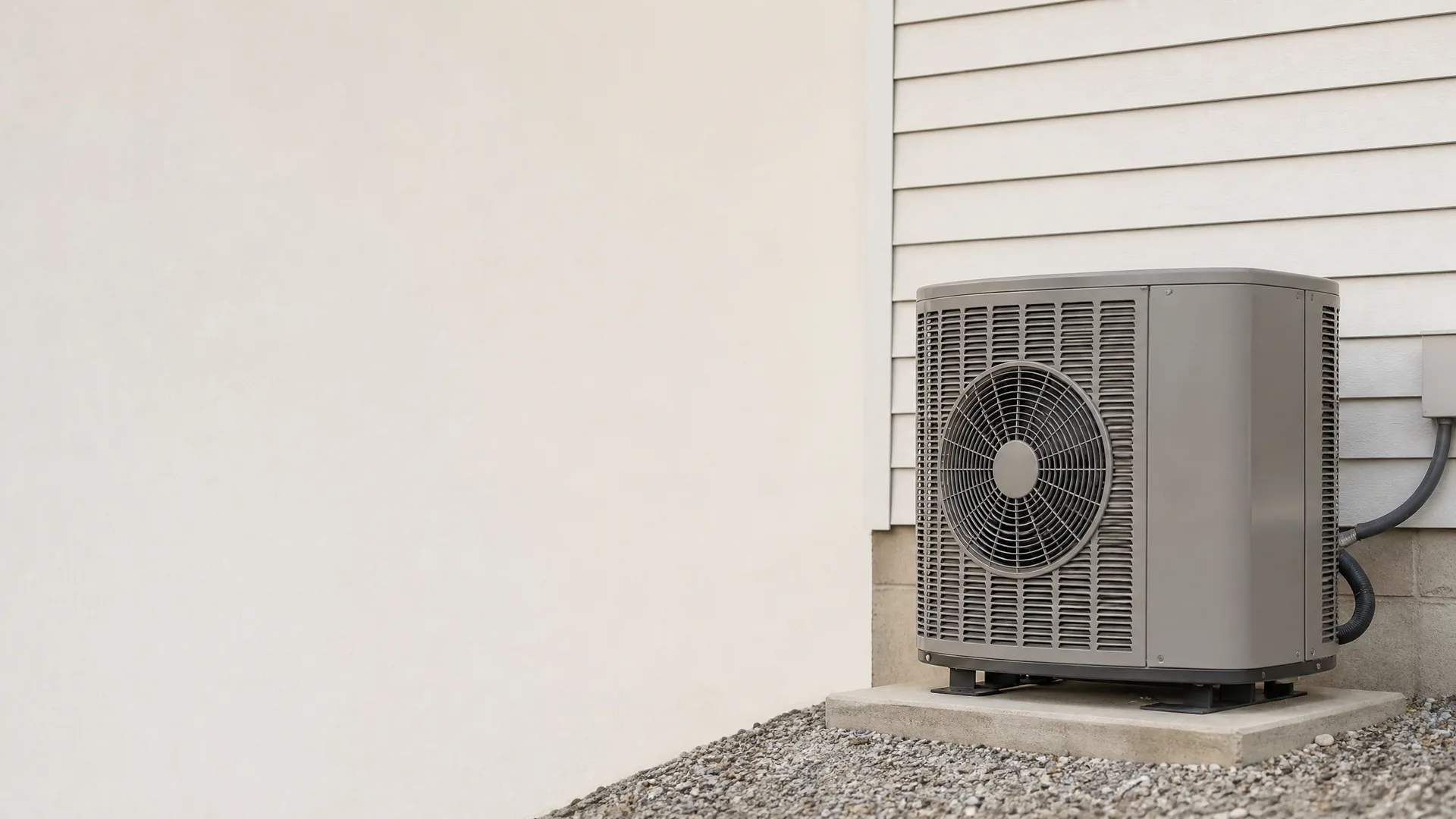
Water near the outdoor unit is usually not a problem at all. In winter, a heat pump defrosts itself on a cycle, melting any frost that builds up on the coil, and that water runs off the bottom of the unit onto the ground. You'll see it most after a cold snap. It only becomes worth a call if the ground freezes and that runoff turns to ice around the base, which can affect airflow around the coil.
Power here costs 25.49 cents per kilowatt-hour
A clogged drain line doesn't just mean a mess on the floor. If the fix turns into a part swapped out or the coil run longer to make up for it, that's pulling power at 25.49 cents per kilowatt-hour, among the highest rates in the country. Getting the leak sorted quickly keeps it from costing you twice.
EIA-861 2025
Indoor leak versus outdoor unit water
Water around the indoor air handler means something is wrong and needs looking at: a clogged drain line, a full pan, or a frozen coil that's thawing out. Any of these can soak a closet floor or ceiling below it if it keeps going. Water around the outdoor unit is usually nothing. In winter, a heat pump runs a defrost cycle to clear frost off the outdoor coil, and that frost melts and drips onto the pad or the ground around it. You'll see this more on cold, damp days when the unit is cycling between heating and defrost. If the ground around the outdoor unit stays wet for hours after it stops running, or you see ice building up instead of melting off, that's worth having checked too.
What to check before calling anyone
Look at the drain line first. It usually runs from the indoor unit to a floor drain, a utility sink, or outside through the wall near the unit. If you can see where it ends, check whether water is actually coming out of it when the system runs, or whether it's dry while water shows up somewhere else. A wet or sagging ceiling tile under an attic air handler, a tripped float switch that shut the system off on its own, or a pan that's visibly overflowing are all signs the clog or crack is inside, not something you can clear with a shop vac from the outside end. Shutting the system off at the thermostat stops more water from collecting while you sort out what you're looking at.
How many months is your heat pump draining condensate here?
Winter nights average 28°F
Winter nights average 28°F: cold enough that a heat pump can ice over, and a frozen coil dripping as it thaws is a common cause of indoor water.
Heat runs October through May
Heat runs October through May: that's eight months where the drain line and pan barely get a break between uses.
Cooling runs June through September
Cooling runs June through September: four straight months of condensate draining steadily, which is enough time for a clog to build and back up.
NOAA nClimDiv 1991-2020

It's past eleven on an August night and the bedroom is still warm. You're lying on top of damp sheets because the air coming out of the vent doesn't feel right anymore, thinner somehow, and the window's fogged along the bottom edge like it does when the house can't keep up with the air outside. You get up to check the thermostat and your foot lands in something wet on the closet floor by the air handler. The carpet near the vent is soaked a few inches out, and there's a smell starting, faint but there. You stand there a second, barefoot, deciding whether this can wait until morning.
Done looking for a heat pump pro

A licensed pro who works in Nassau County gets your request.
You only hire the pro if you want to.
What's Actually Happening Inside
- Warm refrigerant runs through the reversing valve and outdoor coil, and that valve is what switches a heat pump between heating and cooling.
- In defrost mode the system briefly runs backward to melt ice off the outdoor coil, sending hot gas outside instead of in.
- That meltwater has to drain off the outdoor unit's base pan, and a cracked or blocked pan sends it where it shouldn't go.
- A dirty air filter slows airflow across the indoor coil, and a coil that gets too cold ices up and drips when it thaws.
- The condensate pump, if the system has one, lifts drain water uphill to a drain line, and a failed float switch lets that water back up.
- A drain line pitched wrong or crimped during installation won't carry water to the drain no matter how clean it is.
A heat pump is built to move heat, not just make cold or hot air, and that's why it works differently from a plain AC. The reversing valve is the part that makes this possible. It redirects refrigerant flow so the same outdoor unit that cools your house in July can pull heat from the outside air in January, even when it's 28 degrees out. When ice builds up on the outdoor coil during winter, the system switches into defrost mode for a few minutes, running in reverse to send warm gas outside and melt that ice. That's normal. The water from the melt is supposed to run off the unit's base pan and onto the ground. If that pan has cracked, or if debris has blocked where the water's supposed to exit, it ends up pooling somewhere you'll notice, or running down the side of the unit. Inside the house, the cause is usually airflow. A dirty filter chokes off air moving across the indoor coil, and a coil that can't get enough airflow runs too cold and ices over, then drips as it thaws. If the system has a condensate pump to lift drain water up and out, a failed float switch inside it means that water has nowhere to go but back into the house. None of this works if the drain line itself was pitched wrong or got crimped when it was installed, since water doesn't care how clean the line is if it's not sloped to drain.



Moisture in the air condenses on the cold indoor coil
Condensate drips down into the drain pan below it
Water flows from the pan into the PVC drain line
The line carries water to a floor drain or outside
Fix It Yourself or Call It In
Clearing the drain line yourself
- A wet/dry vac held to the outside end of the PVC pipe can pull a soft clog of algae or sludge free in a few minutes.
- Pouring a cup of distilled vinegar down the indoor access port a few times a year keeps algae from building up again.
- You can see right away whether it worked: the pan stops filling and water starts moving out the pipe outside.
- This only works if the clog is soft buildup, not a crushed section of pipe or a break under the slab.
- If the coil is frozen, clearing the line does nothing until the ice is gone, and running the system iced up can crack the pan.
Having it diagnosed
- A technician who works on this equipment every season knows whether the water is from a clog, a cracked pan, or a coil that's icing over before you even describe the symptoms in detail.
- They can check the refrigerant charge and the reversing valve, since a system that won't defrost properly will keep icing the coil no matter how often you clear the drain.
- A cracked drain pan or a pinched line hidden behind the unit isn't something a vacuum or vinegar fixes, and it keeps leaking until it's replaced or resealed.
- One licensed, local contractor handling the call means you're not fielding quotes from several companies while water keeps dripping.
- If the leak has already reached a ceiling or wall below the closet, that needs a look before the damage spreads further.


Water where it shouldn't be almost always traces back to the drain line, the pan, or a frozen coil thawing out, and all three are things a technician who works on these systems every day can find fast. Leave it alone and a small clog turns into a cracked pan or a stained ceiling below the closet. Nassau County asks a lot of a heat pump, cold winters, muggy summers, eight months or more of steady running, and that kind of use is exactly what wears a drain line or a pan down over time. You don't need to know which one it is before you ask for help. You just need someone local who's seen this exact problem on this exact equipment before, and can get the water stopped and the cause fixed before it costs you more than a repair bill.


It's off your list after this
A heat pump leak almost always comes down to the drain line, the pan, or a coil that froze and is thawing out. None of those need guesswork, but they do need someone who can get to the line or the coil and see which one it is. A local contractor who services this equipment all year, in both the heat and the humidity here, knows where these units usually fail first. Send the request and one contractor takes it from there, so you're not fielding calls from several companies while water keeps finding its way to your floor.
A licensed pro who repairs heat pumps in Nassau County gets your request.
Asking costs nothing, and the choice to hire stays yours.