
AC leaking water inside in Brooklyn, NY
Why is my AC leaking water inside my house?
Water showing up around your indoor unit or dripping from the ceiling below a vent is unsettling, especially when the AC still seems to be cooling fine. It usually means water that's supposed to drain outside is going somewhere it shouldn't. With how much the system runs through a Brooklyn summer, this is one of the more common calls for indoor leaks, and it's worth sorting out before it stains a ceiling or warps a floor.
A clogged condensate drain line is the most common cause
Your AC pulls moisture out of the air as it cools your home, and that water is supposed to run out through a condensate drain line to the outside. Algae and dust build up inside that line over a long cooling season and block it, so the water backs up into the drain pan and overflows indoors instead. A dirty air filter can cause the same problem from a different angle: it restricts airflow across the coil, the coil freezes, and when it thaws it can dump more water than the pan is built to handle. Either way, the leak means water isn't draining where it should, not that the unit is broken outright.
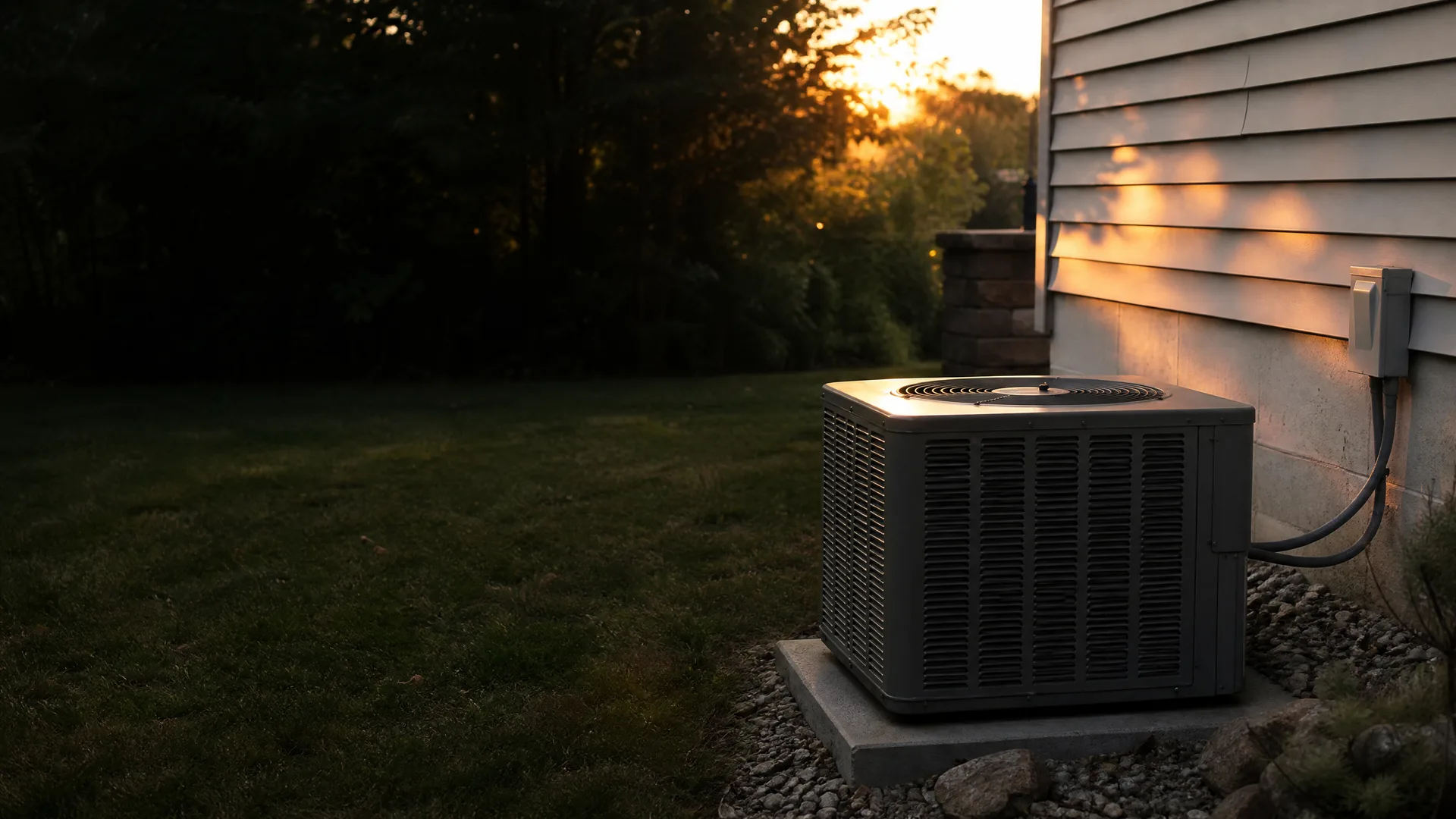
You're out back around seven, grass still warm, watering the tomatoes before it gets too dark. The condenser sits against the fence, and it takes you a second to place what's off. No hum. No fan spinning behind the grille. You crouch down and look, and the blades are just still, catching the last gold light. Inside, you remember now, there was a damp patch on the ceiling near the hallway vent this afternoon. You figured it was the AC working hard in the August heat. Standing here, watching a fan that won't turn, it clicks that the two might be the same problem.
Clogged Line or Frozen Coil
Clogged Drain Line
- Algae and dust build up inside the drain line over a summer and block it, so condensate backs up and spills out at the pan or the vent itself.
- Water usually shows up slow at first, a stain on the ceiling or a damp spot on the floor near the unit, before it turns into an active drip.
- A contractor can clear the line and flush it, and in a lot of cases that's the whole repair.
- If the line was never sloped right or runs too far before it empties, it can clog again even after a clean flush.
- This is the more common reason for indoor leaks in attached units and doesn't usually point to anything wrong with the refrigerant side.
Frozen Coil Thawing
- Low refrigerant or airflow blocked by a dirty filter lets the evaporator coil frost over, and when it melts, that water goes everywhere but the drain pan.
- You'll often notice the AC blowing warm or weak air for a while before the leak ever shows up.
- A contractor needs to find why it froze, whether that's a leak in the line, a bad blower, or a filter that hasn't been changed, not just thaw it out and move on.
- If this keeps happening, it points to a repair that wasn't fully fixed the first time or a system that's been low on charge for a while.
- This one tends to mean more than a quick fix, since the cause is upstream of where the water actually shows up.

A dew point of 65°F is where the air turns sticky instead of just warm, and Kings County sits at that average all through June, July and August, per NOAA. Your AC isn't just cooling the house at that point, it's wringing a lot more water out of the air to do it, and that water has to leave through the condensate line and pan. Run that for three months straight and the line is carrying more than it would in a drier place. That's the kind of load that turns a small algae clog into an overflowing pan. Instead of searching around for an AC repair company, calling a few, and going through the same explanation on each call, you can describe the leak once to a local contractor who already knows what Brooklyn summers do to a drain line.
NASA POWER T2MDEW
No calling every shop in Kings County

A licensed pro who works in Kings County gets your request.
Asking costs nothing, and the choice to hire stays yours.
Where that water is supposed to go
A condensate line runs from the drain pan under your indoor coil out to a drain, usually a floor drain, a utility sink, or straight outside through PVC pipe near the foundation. A properly working system can pull several gallons of water out of the air on a humid day, and all of it is supposed to leave through that one line. There's no second path for it. If the line is clear and sloped the right way, gravity does the rest and you never see or think about it. Once it's blocked or cracked, the water has nowhere to go but back into the pan, over the edge, and down into your ceiling or floor.
Why a clogged line fails quietly
The clog usually isn't sudden. Algae and dust build up along the inside walls of the line over weeks, narrowing it a little at a time, so the drain still works until it doesn't. That's why the leak often starts after the unit has been running fine for days or weeks straight, not on day one of summer. A line that drains outside near ground level can also get blocked from the outside, by dirt, leaves, or a kinked section of pipe. Either way, the coil keeps making condensate at the same rate, and once the path out is closed, the only direction left for that water is in.
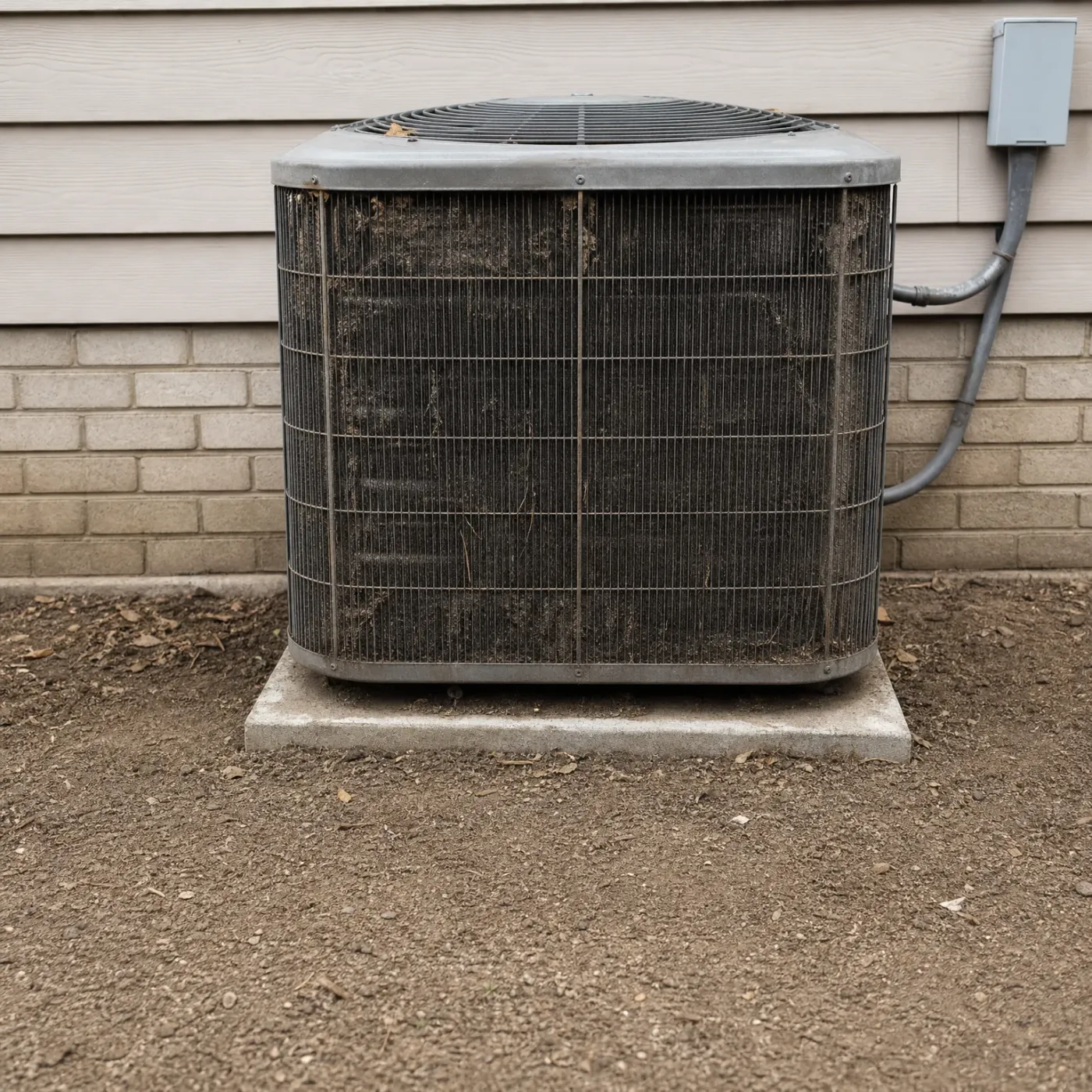
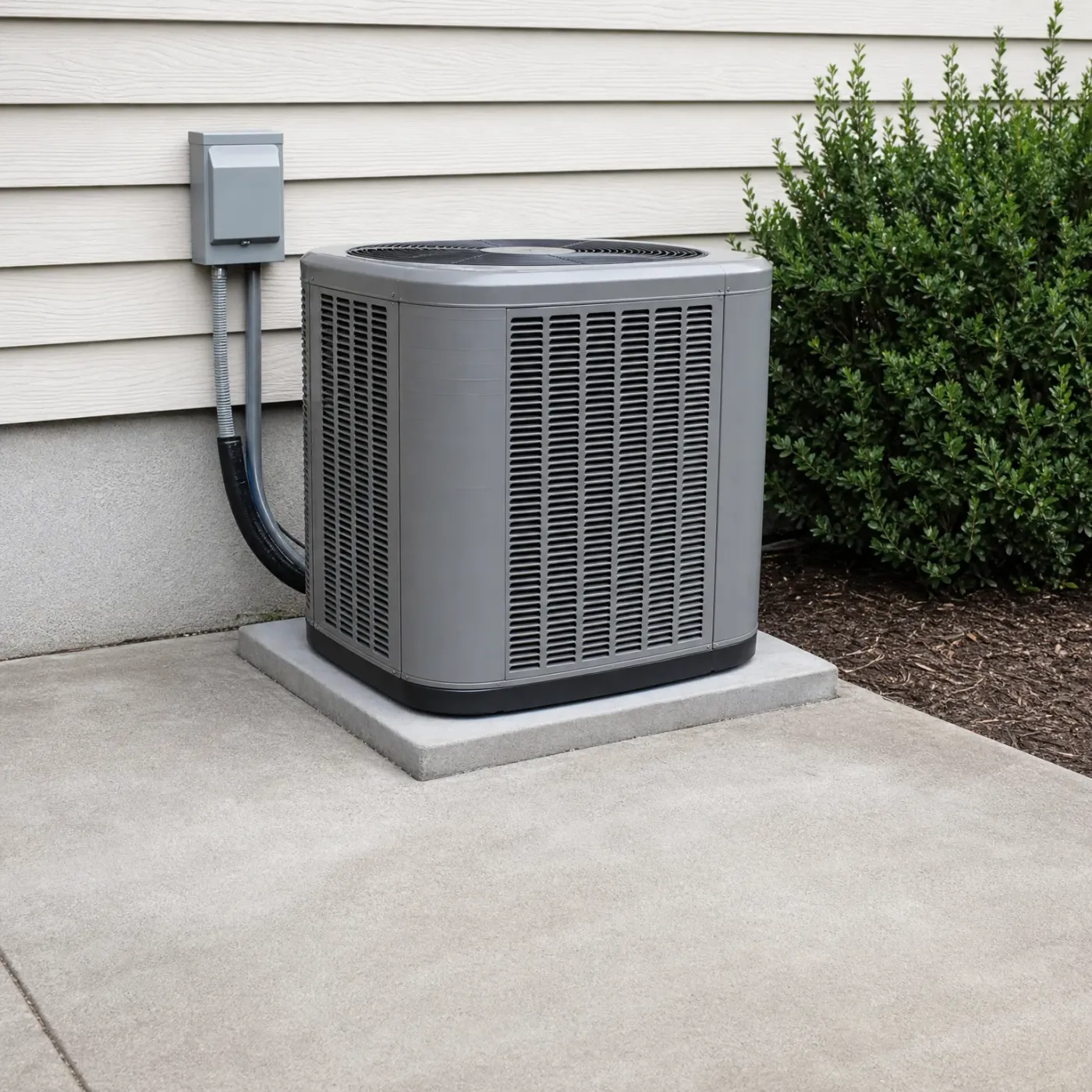
Your indoor unit is built to handle condensate, not fight it. The evaporator coil pulls moisture out of the air, and that water drips into a pan below it, then runs out through a drain line, the same way a sink drains. Every leak starts with that path getting broken somewhere. The pan itself can crack or rust through after years of sitting wet. The line can clog with the same algae that builds up in any slow drain, or it can be pitched wrong so gravity never does its job. There's supposed to be a backup too, a float switch that cuts the system off before the pan overflows, but that only works if it's wired in and working. A dirty filter changes the picture entirely, since it chokes airflow across the coil until ice forms, and ice doesn't show up as water until it melts. Low refrigerant does something similar from a different angle, dropping the coil below freezing during the day so the water shows up hours later, overnight, nowhere near where you'd expect it.
What's Actually Happening Inside
- The drain pan sits right under the evaporator coil, and a crack or rust hole there lets water drip straight down instead of reaching the drain line.
- A clogged or frozen drain line forces condensate to back up through the overflow hole, which is why water often shows up even when the main line looks clear.
- Float switches are supposed to shut the system off when the pan fills, so a leak paired with the AC still running usually means that switch failed or was never wired in.
- A dirty air filter restricts airflow across the coil, which can cause the coil to ice over and then dump a rush of water once it thaws.
- Low refrigerant drops coil temperature below freezing, so the coil ices up during the day and melts overnight, leaving water nowhere near the drain.
- A drain line pitched wrong or kinked under the house keeps condensate from draining by gravity the way it is designed to.
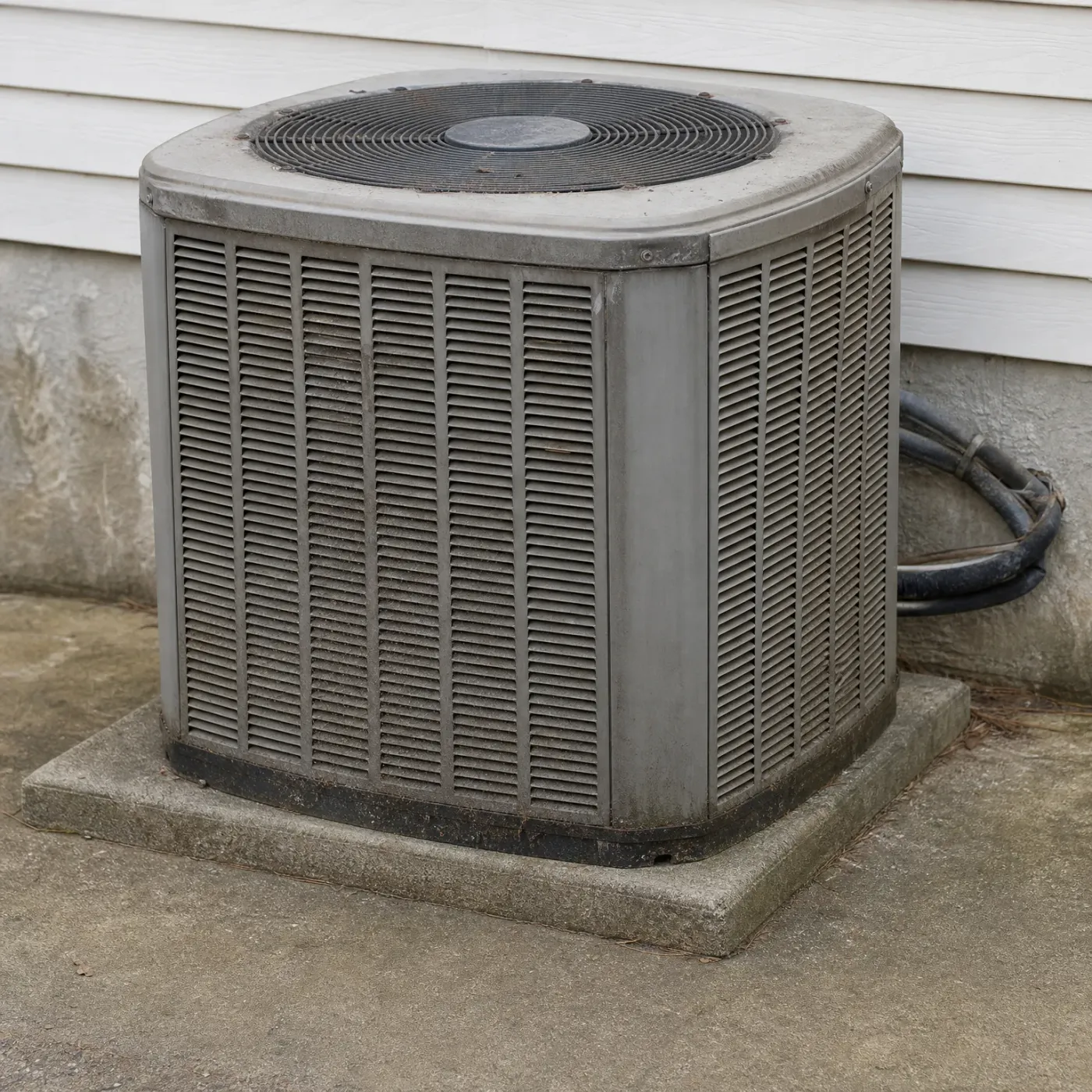
Water inside around your AC almost always traces back to the condensate line or the pan under the coil, and both are things a tech can find in a short visit once the panel's off. A clogged line gets flushed, a cracked pan gets replaced, a frozen coil gets diagnosed back to whatever's starving the airflow. The part that actually drags things out for most people isn't the repair, it's finding someone who'll show up and knows what they're looking at. A contractor working Kings County through another muggy summer has seen this same drip a hundred times, on the same kind of systems sitting in the same kind of basements and closets, and knows which of the two or three usual causes to check first. You'll hear from one licensed local contractor, not a handful of companies competing for the job, so there's no vetting five quotes or explaining the same leak over and over to different people on the phone.





Skip the calls to every shop
A licensed pro who repairs air conditioners in Kings County gets your request.
No fee to send it, and nothing to sign.