






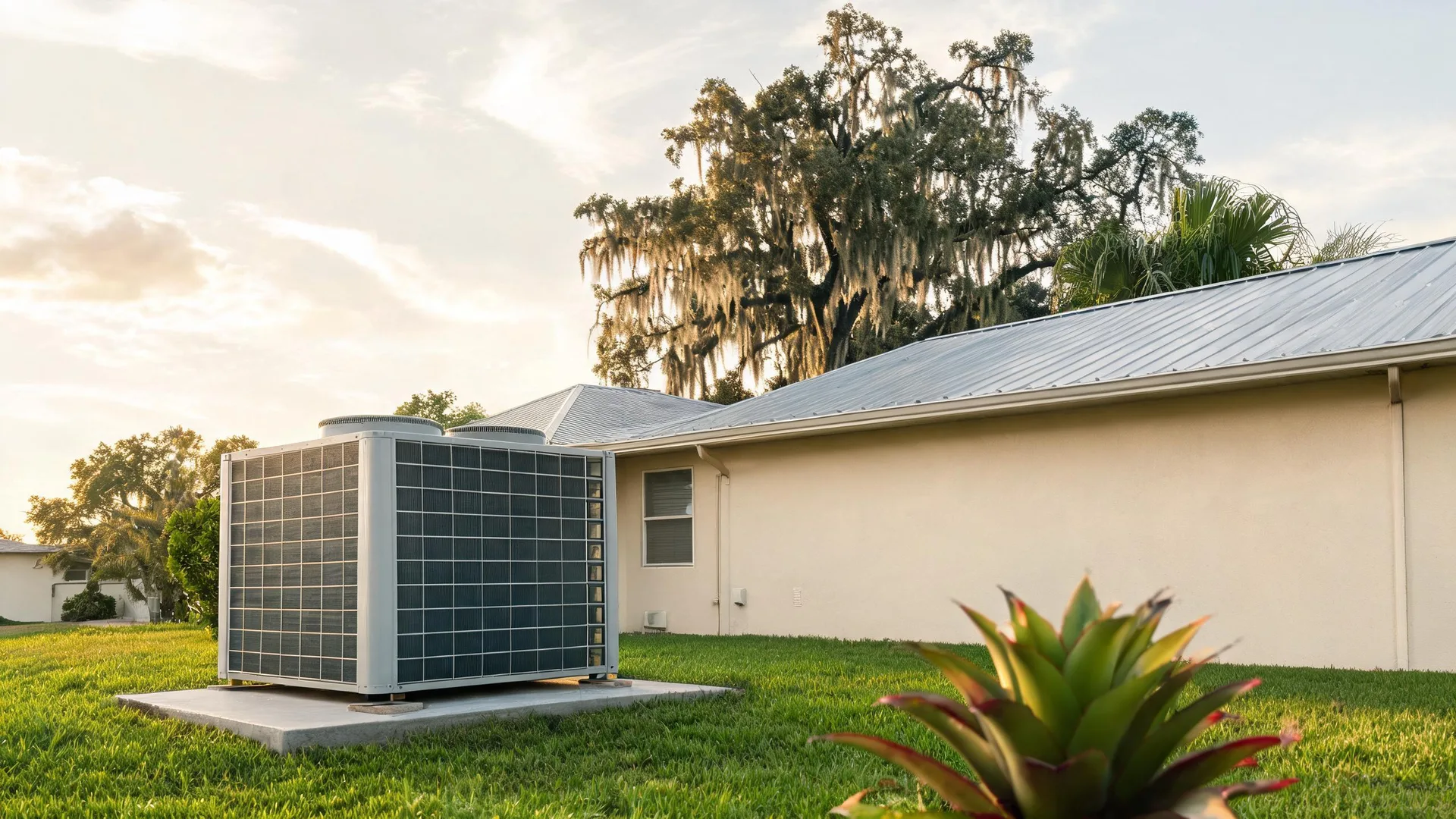
A grey air-source heat pump outdoor unit mounted on a concrete pad next to a modern white-rendered residential house.

Heat Pump Repair in Schenectady, NY

Tell us about the job

Takes about a minute. No obligation.

RepairHeat PumpSchenectady County, NY
Step 1 of 2

What ZIP code is the job in?

A heat pump in Schenectady County earns its keep most of the year, cooling through July and August, then heating from October clear through May. That switch each direction is when trouble tends to show up. The unit that ran fine on a mild September day gets asked to work harder once October turns cold, and a weak part that was coasting finally gets tested. Same thing in reverse come July, after months of sitting idle for cooling. If yours is acting up right at the start of one of these stretches, that timing is not a coincidence. It is usually worth having someone find the actual cause rather than just getting it limping again, since whatever failed once under load will likely fail again.

8 months
October through May, your system heats
2 months
July through August, it cools
17°F
the average winter night it heats against
79°F
the average summer afternoon it cools against
Isometric grayscale illustration of a cutaway house showing interior rooms, ductwork and an indoor air handler connected by lines to an outdoor condenser unit on the ground outside.
Your system heats October through May and cools July through August.

NOAA nClimDiv, 1991–2020 normals

An outdoor coil or a reversing valve can be repaired on its own, more than once if it has to be.

A compressor failing is a different conversation, since that's the heart of the system and replacing it rarely makes sense next to a new unit.

At 24.43 cents a kilowatt-hour, a heat pump running wrong costs you all winter

Power costs 24.43 cents a kWh statewide
188 damaging wind events from 2015 to 2024
10 hail events from 2015 to 2024
Nothing unusual about Schenectady winters eitherOvernight lows here average 17°F in December, January and February. A heat pump is built to handle that every year.

Half the homes in Schenectady County were built in 1956 or earlier. If your heat pump came with a house that old, it may not be the system that came with it at all. Someone may have already replaced it once. But if it is original, or even just the second one through, it is carrying a lot of years on top of whatever is going wrong right now. A compressor or coil failure on a unit that old is worth looking at differently than the same failure on a five-year-old system. The question is not just what broke. It is how much life is left to protect before you spend money fixing it.

Know what you're repairing before you pay for it

If your heat pump is old enough to have come with the house, get an honest answer on its age and what's left in it before paying for a compressor or coil repair.

Find a contractor
A gray heat pump outdoor unit mounted on a concrete pad next to a residential house with lap siding and stone accents.

What to check before anyone touches the unit

Before anyone comes out, check the thermostat is actually set to heat or cool, not just on, and the setpoint is past room temperature. Go outside and look at the outdoor unit. If the coil is caked in ice, that's worth a photo. A fan that isn't spinning at all is a different problem than a fan spinning with no air coming out the vents inside. Pull the filter and hold it up to a light. If you can't see through it, air isn't moving the way it should, and that alone can make a heat pump struggle or ice over. Check the breaker panel for anything tripped, both for the indoor air handler and the outdoor unit, since they're usually on separate circuits. If there's a condensate line with a float switch, some systems shut down on purpose when that line backs up, so a wet pan or a tripped switch there explains a lot. None of this tells you what's actually broken inside the unit, but it rules out the handful of things that aren't a repair at all, and it tells the tech what to expect before the ladder comes out.

Ice does more damage the longer it sits

A coil that starts icing over is losing its ability to pull in heat, so the unit runs longer trying to make up for it. That extra runtime feeds more moisture onto an already cold coil, and the ice builds on itself. Left alone, it can block airflow completely and put strain on the compressor trying to push refrigerant through a coil that can't do its job.
A compressor can be damaged by the very problem it's trying to run through

If a compressor is working against a low charge or a bad reversing valve, it's pulling harder than it should on every cycle. A compressor is built to run under a certain load, not fight its own system to do it. Keep it running that way and a problem that started somewhere else ends up killing the compressor too.

A heat pump that needs repair rarely hides it. Air coming out of the vents feels barely warm or barely cool, when it used to have some force behind it. You notice it running longer than it used to, cycling on and off more through the day, or not shutting off at all. Sometimes there's a new sound, a clicking at startup, a hum with no fan turning, a rattle from the outdoor unit. Sometimes there's ice where ice shouldn't be, coating the outdoor coil even on a day that isn't that cold. Sometimes the system stops answering the thermostat right, blowing heat when you asked for cooling, or not responding at all. Any one of these is worth a call on its own. A few of them together usually means something has been wrong for a while and only now got bad enough to notice.

A diagnostic visit starts outside, at the outdoor unit, before anything gets opened up. A tech will check the refrigerant pressure on both the low and high side, since that reading alone shows whether the charge is right, whether the reversing valve is switching the way it should, or whether the compressor is struggling against something it shouldn't have to. Inside, they'll check the temperature of the air coming off the coil against the air going into it, which shows whether the system is actually moving heat the way it's supposed to. They'll run the thermostat through both heat and cool and watch whether the reversing valve actually throws when it's told to, since a valve that's stuck or slow to switch can look like several other problems at once. Electrical gets checked too, the capacitor that gets the compressor and fan motors started, the contactor that feeds them power, since a weak capacitor often shows no symptom at all until the day it just doesn't start. None of this takes guessing. Each reading either matches what a healthy system should show or it doesn't, and that's what points to the actual part at fault instead of just the symptom that got the call made.