





A row of white Colonial-style houses with glowing windows photographed at dusk along a road bordered by a stone wall.

Heat Pump Repair in Poughkeepsie, NY

Tell us about the job

Takes about a minute. No obligation.

RepairHeat PumpDutchess County, NY
Step 1 of 2

What ZIP code is the job in?

Heat pumps in Poughkeepsie work year round, cooling from June through August and switching over to heat from October through May. That is eight months of carrying the whole house on heat alone. Most breakdowns happen in the first cold snap of October or the first hot stretch of June, when the system finally has to work hard and a weak part gives out under the load. If yours is struggling now, right as the season turns, that timing is the clue. A contractor can trace it to the part that could not keep up rather than just patching the symptom.

8 months
October through May, your system heats
3 months
June through August, it cools
20°F
the average winter night it heats against
81°F
the average summer afternoon it cools against
Isometric illustration of a cutaway single-story house showing interior ductwork, an indoor air handler and simple furniture, connected by lines to an outdoor condenser unit beside the building.
Your system heats October through May and cools June through August.

NOAA nClimDiv, 1991–2020 normals

Poughkeepsie winters average 20°F overnight, nothing extreme for a heat pump built to heat through December, January and February.

So when a heat pump struggles here, look for the part that failed, not the weather that supposedly beat it.

Half the homes in Dutchess County were built in 1971 or earlier, and a heat pump that old is worth asking about

Half the homes here were built by 1971
Climate zone 5A
Power costs 24.43 cents a kWh statewide

New York runs 24.43 cents per kilowatthour, among the higher rates in the country. A heat pump pulling that much power all year is not cheap to run even when it's healthy. One that's short cycling, or leaning on its backup heat strips more than it should, burns through that rate faster than you'd expect. You won't get an exact number without a contractor looking at the unit, but a system working harder than it needs to shows up on the bill before it shows up as a breakdown. Worth having someone check now rather than waiting for it to quit.

Most heat pump problems here come down to one worn part

Dutchess County sees its share of storms, wind and winter weather, but none of that is unusual for this area, and none of it is why a heat pump fails. Most of the time the cause is a part that finally gave out under a normal New York winter. Get it looked at and you'll know which one.

Find a contractor
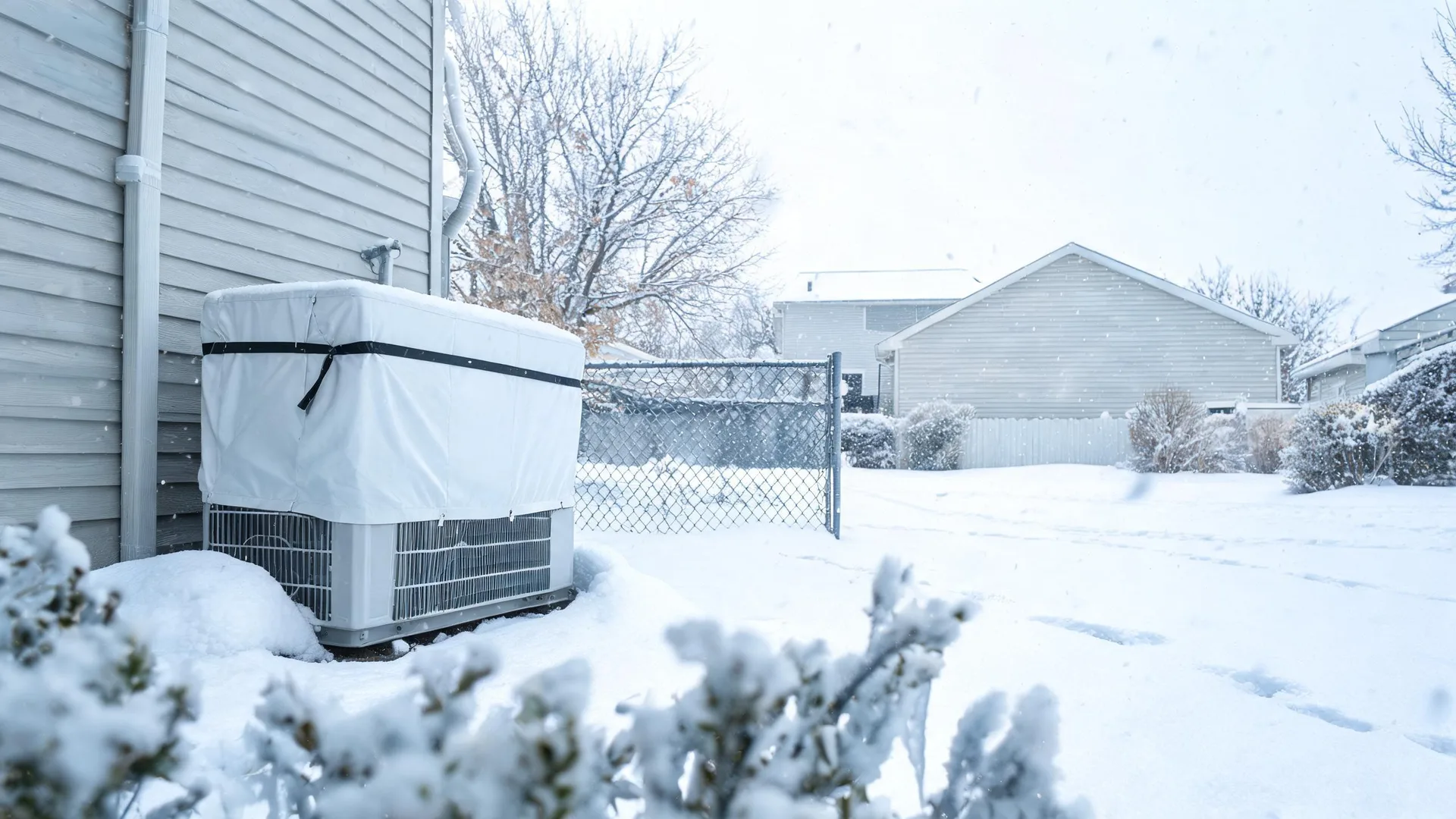
A residential heat pump outdoor unit mounted on a concrete pad next to a house with gray vinyl siding.

Ask the age before you pay for the fix

If this heat pump came with the house, ask the contractor its age before paying for the repair. Half the homes in Dutchess County were built in 1971 or earlier, so a unit from the original install could be decades past a normal heat pump's working life. A repair on a system that old may just be money spent ahead of a replacement. Have the contractor give you the age along with the diagnosis, then decide if the fix is worth it.

It's running but not keeping up

The heat pump turns on, air comes out of the vents, but the house never quite reaches the set temperature. That usually points to a refrigerant charge that's low, a reversing valve not fully switching over, or a compressor losing strength. The system isn't dead, it's working harder for less heat or cooling, and that gap tends to widen rather than fix itself.
Listen for what changed

A heat pump that suddenly clicks, buzzes, or cycles on and off every few minutes is telling you a part failed, not that it's cold outside. Short cycling points to a bad sensor or a compressor protecting itself from a fault. A new rattle or grinding noise usually means a motor bearing or a loose part inside the cabinet. Either way, it's worth having someone trace the noise before it takes out something bigger.

A heat pump that's struggling still has to move heat, so every part downstream of the weak one works harder to make up for it. A low refrigerant charge forces the compressor to run longer to hit the same temperature, and that extra runtime is what burns it out early. A failing capacitor makes the compressor draw harder on startup each time it cycles, and each hard start wears the windings a little more. Ignore a stuck reversing valve and the backup heat strips end up carrying the load instead, which was never their job and isn't built to last that way. None of these fix themselves by running longer. They just move the wear further down the line until something stops working altogether.

A heat pump is really a compressor with support parts built around it, and that split is what decides whether a repair makes sense. The compressor is the expensive part, the one that actually moves heat in or out of the house. Everything else, the capacitor, the contactor, the fan motor, the sensors, exists to keep the compressor running and gets replaced on its own all the time without touching it. If one of those support parts failed, the fix is usually straightforward and the unit goes back to normal. If the compressor itself is struggling, listen for it straining on startup or running without ever catching up to the thermostat. That's a different conversation, because a compressor swap costs close to what a new system would. Ask the contractor straight out which kind of failure this is. A worn support part on a sound compressor is worth fixing. A failing compressor on an old unit is the system telling you it's done.