A row of illuminated white colonial houses along a road photographed at dusk.

Heat Pump Repair in Oneida, NY

Tell us about the job

Takes about a minute. No obligation.

RepairHeat PumpMadison County, NY
Step 1 of 2

What ZIP code is the job in?

The tech checks the system before touching it

A tech will run the heat pump in both modes, check the refrigerant pressures, and look at the air coming out of the vents before opening anything up. They want to see the problem happen, not just hear about it. If the outdoor unit is frosted over, or the air is blowing but not warm, that tells them where to look next. Only after that does the repair plan get decided.


What they find changes what happens next

A failing capacitor or a stuck reversing valve can often be swapped out the same visit. A refrigerant leak means finding where it's escaping before anything gets added back. If the compressor itself is the problem, that's a bigger conversation about whether repair still makes sense for the unit. The diagnosis tells you which of these you're dealing with before any work starts.

9 months
September through May, your system heats
2 months
July through August, it cools
16°F
the average winter night it heats against
77°F
the average summer afternoon it cools against
Isometric illustration of a cutaway single-family house showing interior ductwork and an air handler, with an outdoor condenser unit connected by lines along the exterior wall.
Your system heats September through May and cools July through August.

NOAA nClimDiv, 1991–2020 normals

Oneida winters sit in zone 6A, with overnight lows averaging 16°F through December, January and February.

A heat pump here works hard most winter nights, and when it struggles it's usually a part worn out from that steady work, not something tied to the weather itself.

Half the homes in Madison County were built by 1964. A heat pump that's never been replaced is old enough to be near the end of its life.

Half the homes here were built by 1964
87 damaging wind events from 2015 to 2024
13 hail events from 2015 to 2024
Power here isn't cheapNew York homes paid 24.43 cents per kilowatt-hour in 2024, so a heat pump running wrong costs you more here than most places.

Before any repair gets scheduled, it's worth finding out how old the heat pump actually is, not just the house. A unit that came with the home can be pushing past the point where repair makes sense. Ask the tech for the age straight off the data plate along with the diagnosis. If it's an old unit and the repair is a big one, that's the moment to ask whether you're paying to fix something that'll need replacing soon anyway. A newer unit with the same problem is a different conversation entirely.

A heat pump running wrong costs more here every month it waits

At 24.43 cents a kilowatt-hour, a heat pump that's icing up or short cycling is burning power without doing its job. Get a tech out to find the real cause before another month of bills passes.

Find a contractor
A man in a dark jacket, tan work pants and cap, seen from behind, carries a canvas tool bag up concrete steps toward a dark green front door beside a potted shrub.
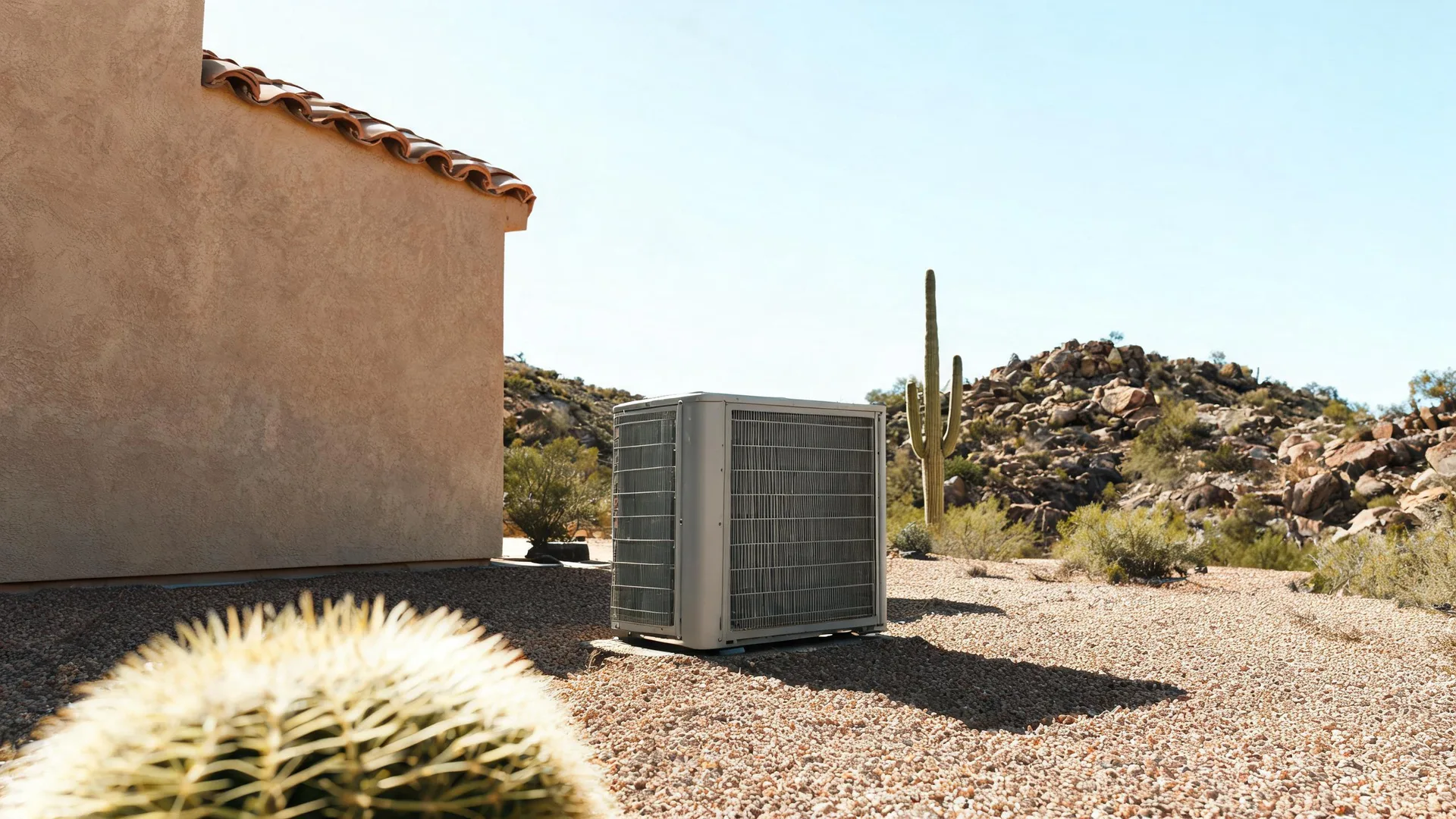
A gray heat pump outdoor unit mounted on a concrete pad next to a residential house with lap siding and stone accents.

The longer it runs wrong, the more it takes with it

A heat pump that's struggling doesn't fail cleanly. It fails in slow motion, and running it through that just adds damage on top of the original problem. Frost on the outdoor coil is the clearest case. Some frost in defrost cycles is normal, but a coil that stays iced over means the system can't pull heat from the air anymore, so it runs longer to do less, and the compressor pushes against a coil that can't do its job. A refrigerant leak follows the same pattern. Low charge makes the compressor work harder to move what's left, and a compressor that runs hot for weeks wears in ways you can't undo. Even something as small as a failing capacitor causes the motor it's supposed to start cleanly to strain on every cycle instead. None of this gets better by giving it time. The part that's struggling now is the part that quits later, usually at the worst moment, and usually having taken something else down with it.

What you can check before the tech arrives

Look at the outdoor unit first. See if it's frosted or iced over, and check that nothing is blocking it like leaves or snow piled against the coil. Inside, check that every vent is open and unblocked by furniture or rugs. Check the thermostat is set to the mode you expect and the batteries aren't dead. Check your breaker panel for a tripped breaker before assuming the unit itself has failed.

What to leave alone

Don't take any panels off the outdoor unit or touch the refrigerant lines. Don't chip ice off the coil by hand, it can damage the fins underneath. If the system is making a grinding or screeching noise, shut it off rather than let it keep running until the tech gets there. A breaker that trips once might be a fluke, but one that trips again right after you reset it means something's actually wrong, and it's time to stop testing it yourself.

A heat pump usually tells you something's wrong before it quits outright. Warm air mode blowing cool air, or the system running constantly without ever reaching the set temperature, both point to it losing ground somewhere. Short cycling, where it kicks on and off in quick bursts instead of running a full cycle, strains the compressor every time it restarts. A hissing sound near the lines can mean refrigerant escaping, while a grinding or screeching noise usually means a motor bearing or fan wheel is failing. Ice building up on the outdoor coil that doesn't clear during the defrost cycle means the system can't shed it fast enough to keep working right. Any of these is worth a call before the unit stops working altogether.

Age isn't the only thing that decides this. A heat pump with a cracked heat exchanger or a failed compressor is often done, no matter how new it is, because either repair tends to cost close to a full system. Everything else sits on a sliding scale. A reversing valve, a capacitor, a contactor, these get replaced on their own all the time without touching the rest of the unit. The real question is whether the broken part is one piece doing one job, or the part the whole system depends on. Ask the tech which one you're looking at before you decide anything.