A row of similar single-story light-colored houses with gray gabled roofs behind a white picket fence and a mown lawn, with large deciduous trees behind them.

Heat Pump Repair in Olean, NY

Tell us about the job

Takes about a minute. No obligation.

RepairHeat PumpCattaraugus County, NY
Step 1 of 2

What ZIP code is the job in?

August is when a weak heat pump gets found out

Heat in Olean starts up in September, and whatever didn't get fixed last season shows itself fast once the unit is running every day. A worn part that limped along in May won't make it through the first cold stretch.

Get it looked at before the switch-over

A heat pump that's been sitting through the summer can hide a problem until it's asked to heat again. Having it checked in August means a contractor finds the issue on their schedule, not during the first cold week when everyone else is calling too.

9 months
September through May, your system heats
1 months
July through July, it cools
17°F
the average winter night it heats against
77°F
the average summer afternoon it cools against
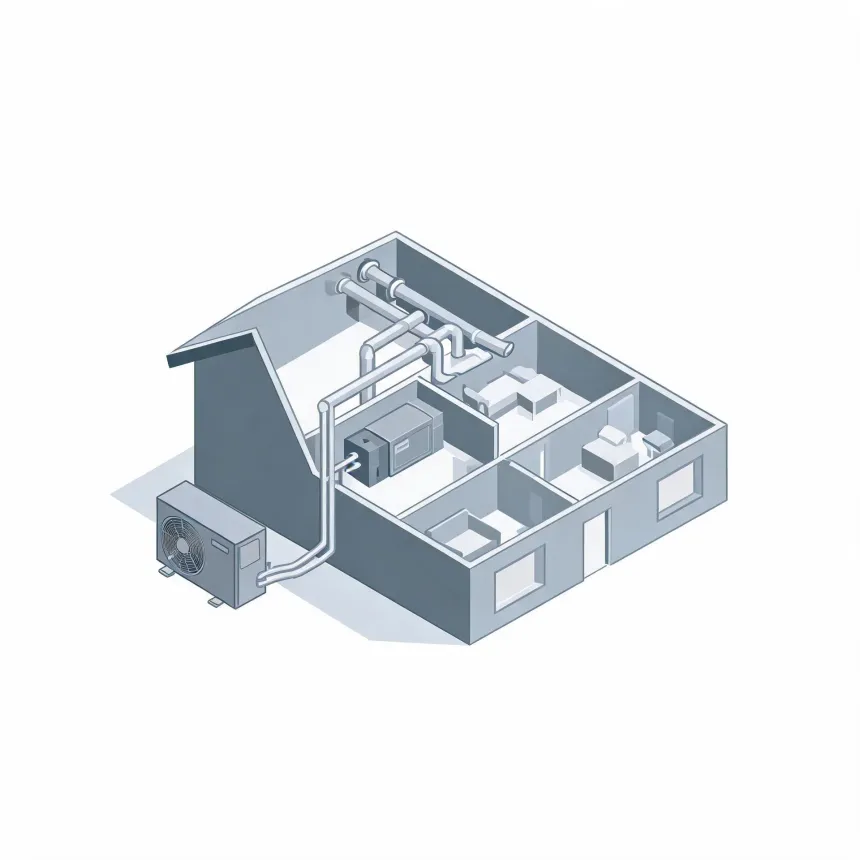
Isometric grayscale illustration of a cutaway house showing interior rooms, ducted air handler and duct runs, connected by pipes to an outdoor condenser unit beside the building.
Your system heats September through May and cools July through July.

NOAA nClimDiv, 1991–2020 normals

Winters here are the real work. Cattaraugus County averages 17°F on winter nights, and heating carries the load all season.

Summers ask less of a heat pump, so most failures trace back to one worn part, not years of strain.

Olean sees its share of wind and winter storms, same as the rest of the county

247 severe weather events from 2015 to 2024
11% of homes statewide lost power a day or more in 2024
219 damaging wind events from 2015 to 2024
Electricity here runs 24.43 cents a kilowatthourA heat pump running on a bad part burns through that every day it sits unfixed.

Half the homes in Cattaraugus County were built in 1960 or earlier. If your heat pump came with the house, it could be as old as the house itself, or close to it. Older systems don't fail because of anything the homeowner did. Parts wear out, refrigerant lines corrode, compressors log enough hours and just give out. A repair can still be the right call. But at some point a repair is just a payment toward a system on its way out anyway. Worth asking whoever looks at it how much life is actually left before you spend on a big fix.

Most heat pump problems here are worth fixing

One worn part is usually the whole story here, not a system worn down by years of hard running. That makes a repair worth doing in most cases. Get it looked at and fixed instead of replaced on guesswork.

Find a contractor
A man in a cap, gray shirt and brown work pants walks up steps toward a dark green front door, carrying a canvas tool bag beside a potted shrub.
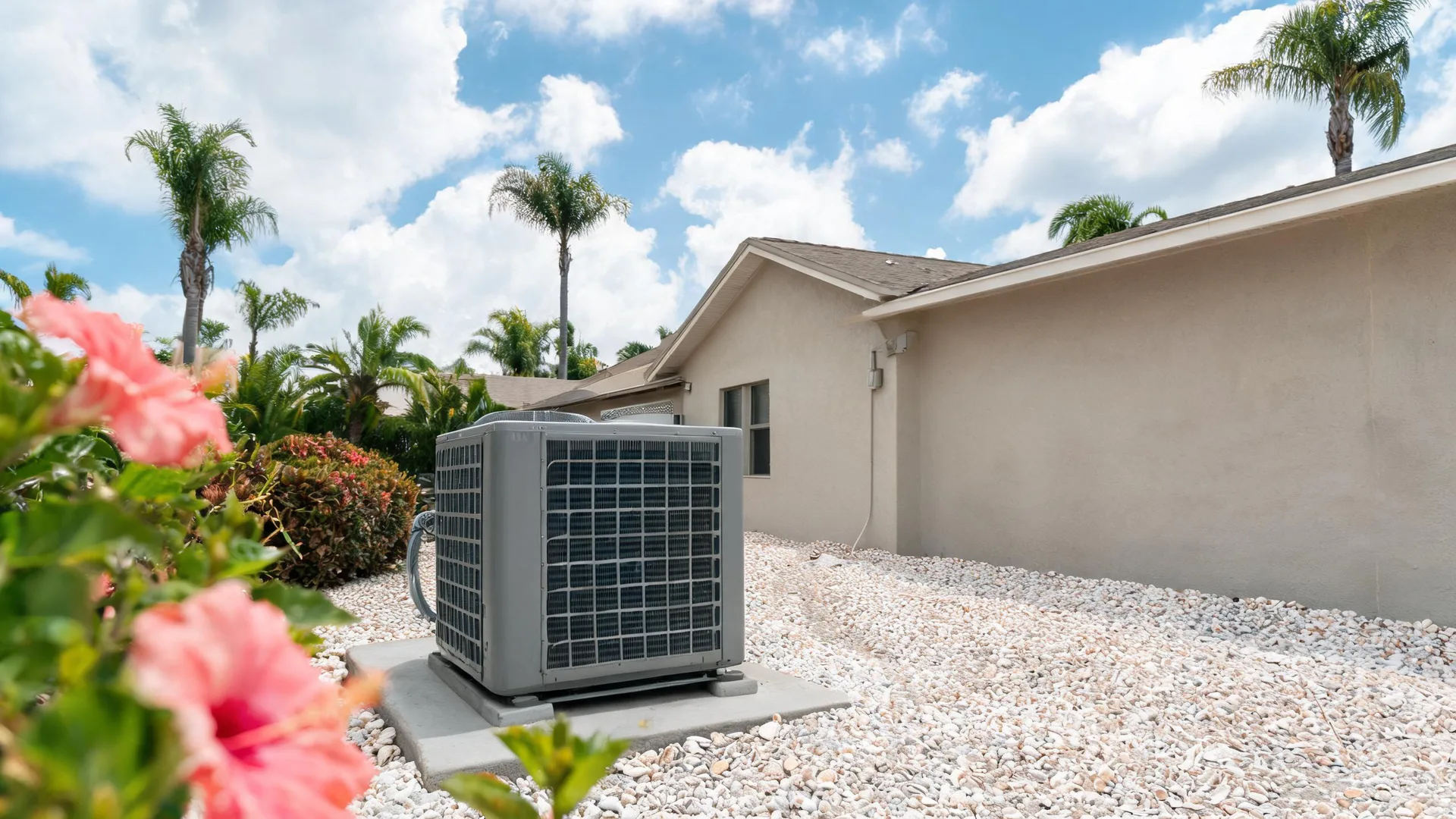
A gray air-source heat pump mounted on a concrete pad next to a house with gray vinyl siding, surrounded by gravel and flanked by green shrubs and white hydrangea flowers.

Find out what year it is before you fix it

Ask for the age of the unit before you ask what's wrong with it. A contractor can read the data plate and tell you the year it was made. That number, next to whatever part has failed, is what tells you if this repair is worth doing.

What you can check yourself

Look at the outdoor unit first. A thin frost layer is normal in winter, but if it's caked in ice or the fan isn't turning, that's worth noting before anyone comes out. Clear away anything blocking airflow around it, leaves, snow piled against the side. Inside, pull the filter and hold it up to light. If you can't see through it, swap it or clean it. Check the thermostat is set to heat and the batteries aren't dead. Walk around and listen for the indoor blower. If it's running but no warm air is coming from the vents, that's useful to mention when you call.

What to leave alone

Don't open the outdoor unit's cabinet or touch anything inside it. Don't try to add refrigerant or guess at a charge issue, that takes gauges and training to do safely. If a breaker trips and trips again after you reset it, leave it off rather than keep resetting it. That's a sign something is actually wrong, not a fluke to push past. Anything touching the refrigerant lines, the compressor, or the electrical connections belongs to someone licensed to handle it.

A heat pump in trouble rarely just quits. It tells you first. Air coming from the vents that's cool instead of warm, or barely moving at all, usually means it's working but not working right. Ice building up on the outdoor unit faster than the defrost cycle can clear it is another sign, especially if that ice is thick instead of a thin coating. Listen for anything new. A clicking that keeps repeating instead of starting the unit, a hum with no fan movement, a rattle that wasn't there before. Short cycling, where it kicks on and off every few minutes instead of running a normal stretch, puts wear on the compressor every time it happens. If the system is running constantly but the house still isn't getting warm, it's losing the fight against whatever's wrong with it. None of these mean the unit is done. They mean something specific has failed, and it's worth finding out what before it takes something else down with it.

A diagnostic visit starts outside, at the unit itself, before any panel comes off. A contractor will run it in whatever mode it's struggling in and watch what it actually does, not just what it's supposed to do. Gauges go on the lines to check refrigerant pressure. Too little or too much both point to different problems, and the number tells which one. Electrical readings come next. The capacitor, the contactor, the wiring at the connections, each gets checked to see it carries the current it should. Temperature is measured too, comparing air going in against air coming out, which says a lot about whether the system is actually moving heat or just moving air. None of this is guesswork. Each reading rules something out or points at exactly what failed, so the fix that follows is for the actual problem and not a swapped part that happened to be convenient.