






White colonial houses with lit windows and dark shutters line a tree-lined street at dusk, bordered by dry-stacked stone walls.

Heat Pump Repair in Massena, NY

Tell us about the job

Takes about a minute. No obligation.

RepairHeat PumpSt. Lawrence County, NY
Step 1 of 2

What ZIP code is the job in?

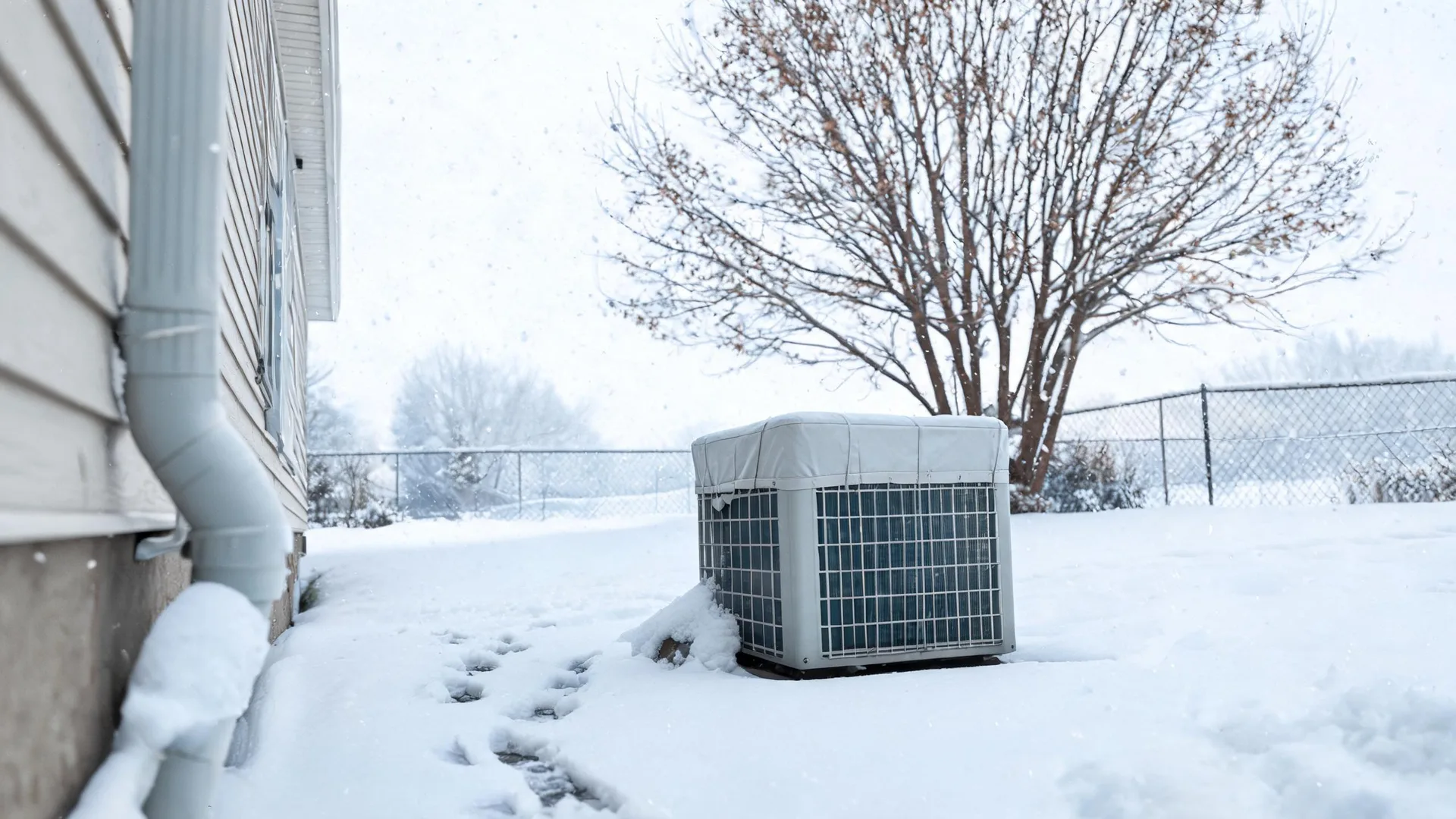
Before you call anyone, check a few things yourself. Look at the outdoor unit and see if ice has built up on the coil. Some frost in defrost mode is normal, but a thick solid sheet is not. Check that nothing is blocking the outdoor unit, no leaves, no snow piled against it, no cover left on from last season. Go inside and look at the thermostat setting, and make sure it's actually calling for heat and not sitting in a mode that's confusing the system. Pull the filter and hold it up to a light. If you can't see light through it, that's airflow the system isn't getting, and it'll struggle no matter what else is right. None of this fixes a bad compressor or a low refrigerant charge, but it rules out the simple stuff first.

9 months
September through May, your system heats
2 months
July through August, it cools
11°F
the average winter night it heats against
77°F
the average summer afternoon it cools against
Isometric cutaway illustration of a small house showing interior rooms with furniture, an indoor air handler with ductwork, and lines running to an outdoor condenser unit beside the building.
Your system heats September through May and cools July through August.

NOAA nClimDiv, 1991–2020 normals

Heat here runs September through May, nine months on this system.

August is when a weak part finally gets found, right before that first cold stretch asks more of it.

Half the homes in St. Lawrence County were built in 1964 or earlier

Half the homes here were built by 1964
136 damaging wind events from 2015 to 2024
13 hail events from 2015 to 2024

A heat pump that's struggling doesn't just run, it runs constantly, trying to hit a setpoint it can't reach. Electricity in New York ran 24.43 cents per kilowatt-hour in 2024, among the higher rates in the country. Heat here runs most of the year, so a system that's cycling wrong adds up fast at that price. A low charge or a failing compressor makes the unit work harder for less heat, and you pay for every extra minute it runs. Fixing the actual cause stops that waste.

Nothing about Massena is hard on a heat pump. This is likely a normal repair.

St. Lawrence County has had its share of wind and winter storms, same as most places this far north. None of that wears on a heat pump differently than anywhere else it runs. So when one starts acting up here, it's usually just a part that failed, the kind any heat pump can lose, not something the county did to it. That points to a repair, not a replacement.

Find a contractor
A man in a cap, dark jacket and brown work pants climbs porch steps toward a dark green front door, carrying a waxed canvas tool bag, with a potted shrub to the right.
A gray heat pump outdoor unit mounted on a concrete pad next to a residential house with lap siding and stone accents.

What a diagnostic visit actually checks

A tech starts outside, checking refrigerant pressures and the temperature split across the outdoor coil. Low charge shows up fast that way, and so does a compressor that's working but weak. Inside, they'll check the air handler the same way, looking at temperature rise across the indoor coil and listening to what the blower is doing. A lot of heat pump trouble is electrical rather than mechanical, so the contactor, the capacitor and the defrost board all get a look. The reversing valve gets tested too, since a valve stuck in one position will heat fine but never switch to defrost, or the other way around. None of this takes guessing. Each reading either matches what a healthy system should show or it doesn't, and that's what points to the actual part at fault.

A weak compressor only gets weaker

A compressor that's struggling still has to run every time the thermostat calls for heat. Each cycle under strain adds wear a healthy compressor wouldn't see, and a compressor on its way out that keeps working toward full load can fail completely instead of needing a simpler repair.
Ice feeds on itself

A heat pump that can't finish a proper defrost cycle leaves a little more ice behind each time. More ice blocks more airflow across the coil, which makes the next defrost even less effective. Left alone, that cycle ends with a coil so iced over the system can't pull any heat from outside air at all.

A heat pump in trouble gives itself away in how it sounds and how it runs, not just whether it heats. Listen for a clicking at the outdoor unit that doesn't turn into a running compressor, or a hard clunk when it shifts into defrost. Warm air from the vents one day and cool, barely-there air the next usually means it's stuck favoring cooling mode or struggling to reverse at all. Short cycling, where it kicks on and off every few minutes instead of running a full stretch, points to a control board or a sensor giving it bad information. If the system runs constantly and the house still won't hold its temperature, that's not the thermostat being greedy, that's the unit losing the fight. Any of these is worth a look before the part that's struggling now fails outright.

Age matters more than any single symptom here. A heat pump early in its life is almost always worth repairing, since one bad capacitor or a failed board doesn't mean the rest of the system is going. An older unit has had years for the compressor and coils to wear, and a repair bill on one of those is often just the first of several, each one chasing a system that's failing in more places than one. A tech can tell you which situation you're in by how the rest of the unit is holding up, not just the part that quit. If the compressor itself is what's failing, that's usually the line past which repair stops making sense, since it's the most expensive part in the system and the hardest to justify replacing on its own. Short of that, most failures are worth fixing.