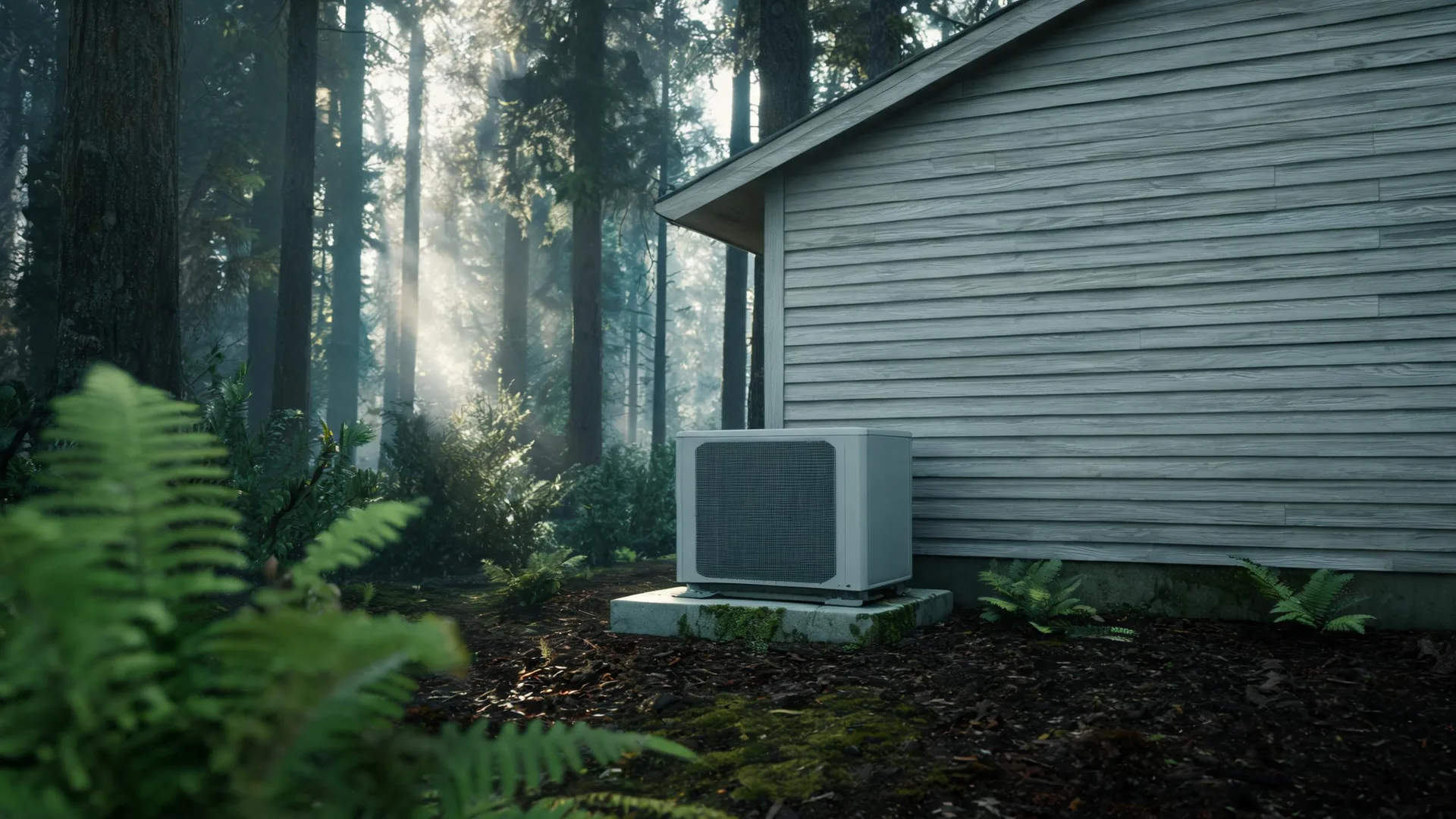
A grey residential air-conditioning condenser unit mounted on a concrete pad beside a house, photographed at sunset.

Heat Pump Repair in Manhattan, NY

Tell us about the job

Takes about a minute. No obligation.

RepairHeat PumpNew York County, NY
Step 1 of 2

What ZIP code is the job in?

September is when a weak heat pump shows itself

Heat in Manhattan starts in October, and the first real cold snap is when a tired component finally gets asked for full output. If your heat pump struggled last winter, the same weak part is still in there.


Get it looked at before the load hits it

A heat pump that's limping along in mild weather can fail outright once it has to run hard and long. Calling now, before October, means a contractor can diagnose it on their schedule instead of yours.

7 months
October through April, your system heats
4 months
June through September, it cools
28°F
the average winter night it heats against
84°F
the average summer afternoon it cools against
Isometric cutaway illustration of a house showing attic ductwork, an indoor air handler, furnished rooms, and an outdoor condenser unit connected by lines along the exterior wall.
Your system heats October through April and cools June through September.

NOAA nClimDiv, 1991–2020 normals

Manhattan winters sit around 28°F on average overnight, not far below zero.

A heat pump here isn't fighting extreme cold every day, so when one breaks down the cause is usually a specific worn part, not a system beaten down by the climate.

At 24.43 cents a kilowatt-hour, a heat pump running wrong costs you all month

Power costs 24.43 cents a kWh statewide
14 winter storms from 2015 to 2024
Winter nights average 28°F
Half this borough was built before your heat pump's timeHalf the homes in Manhattan were built in 1951 or earlier.

A weak heat pump doesn't use less power, it uses more. A system low on charge or stuck running its backup heat will run longer to make the same warmth, and every one of those extra hours is billed at 24.43 cents a kilowatt-hour. That's the New York rate, not the national one, so a problem that would cost you a little elsewhere costs you more here. The fix doesn't change. Get the actual part named and replaced, and the system goes back to running the way it's supposed to.

If your heat pump came with the house, ask about its age before you pay for a repair

A contractor can tell you how much life is left in it before you put money into fixing what's there.

Find a contractor
A man seen from behind in a dark work shirt and tan pants carries a worn canvas tool bag up concrete steps toward a dark green paneled front door, with a potted shrub at left.
A gray outdoor HVAC unit mounted on a concrete pad beside a house with gray lap siding and a stone foundation.

What you can rule out yourself

Before you call, check the thermostat first. Make sure it's set to heat, not cool, and that the set point is actually above room temperature. Next, look at the outdoor unit. If the coil is caked in ice or buried under anything, that alone can stop a heat pump cold. A thin layer of frost that clears on its own during defrost cycles is normal. A solid block of ice is not. Check the air filter. A clogged filter starves the system of airflow and can make it run constantly without ever catching up. Walk around the house and feel the vents. If some rooms get warm air and others don't, that points to a duct or damper issue rather than the unit itself. Check the circuit breaker, too. Heat pumps trip breakers when a component is drawing too hard, and a breaker that trips again right after you reset it means something inside needs a real diagnosis, not a reset.

A technician starts outside, not inside

Most of what fails on a heat pump is in the outdoor unit. A contractor checks refrigerant pressure with gauges. They check the reversing valve, the part that switches the system between heat and cool. They check the defrost control board too. Inside, they check the air handler and the coil for ice or restricted airflow. None of this is guesswork. The readings either match what a healthy system should show or they don't.

Most calls end with one part named, not a list of maybes

A heat pump only has a few things that actually cause trouble. A failed reversing valve. A weak run capacitor. A low refrigerant charge from a slow leak. A defrost sensor that's stopped telling the board to cycle. A contractor who's done the checks will tell you which one it is, not a range of possibilities. If they can't narrow it down after testing, that's unusual, and worth asking about directly.

A heat pump that needs repair rarely hides it. The first sign is usually air coming out of the vents that doesn't feel like enough, or feels barely warm when it should feel hot. Short cycling is another one, the system kicking on and off every few minutes instead of running a steady stretch. Listen for it too. A clicking that continues after startup, a hard clunk when it switches between heat and cool, or a buzzing from the outdoor unit are not sounds a healthy system makes. Ice on the outdoor coil that doesn't clear during the defrost cycle means something isn't switching the way it should. If the system runs constantly and the house still doesn't get warm, don't wait on that one.

A heat pump doesn't fail all at once. It loses a little capacity, then a little more, and most people adjust without noticing until the day it can't keep up at all. The question worth asking before you spend money on a repair is whether this part is wearing out on its own or whether it's the latest in a string of failures. A compressor is the one part that changes the math. If a contractor tells you the compressor is failing, that's usually the point where repair stops making sense, because everything else in the system is built around it. A bad capacitor or a stuck reversing valve is a different conversation. Those fail on their own, they get replaced, and the rest of the system keeps going like nothing happened.