





Two white colonial houses with lit windows and black shutters photographed at dusk along a tree-lined residential street.

Heat Pump Repair in Kiryas Joel, NY

Tell us about the job

Takes about a minute. No obligation.

RepairHeat PumpOrange County, NY
Step 1 of 2

What ZIP code is the job in?

A heat pump in Kiryas Joel works nearly year round, cooling from June through August and heating October through May. That split is what wears on parts. September is when homes switch over from cooling to heat, and a weak part that got through summer can give out once the system has to reverse and run heat strings or defrost cycles again. Same with May, right before cooling starts. If your heat pump is acting up at the start of either season, that is not a coincidence. It is usually the first real load finding whatever was already marginal.

8 months
October through May, your system heats
3 months
June through August, it cools
21°F
the average winter night it heats against
81°F
the average summer afternoon it cools against
Isometric cutaway illustration of a small house showing interior ductwork and an air handler connected by lines to an outdoor condenser unit on a pad beside the building.
Your system heats October through May and cools June through August.

NOAA nClimDiv, 1991–2020 normals

A failing part rarely fails cleanly. It draws more current, runs hotter, or makes the compressor work past what it's rated for.

Leave a heat pump running on a bad capacitor or a stuck reversing valve long enough and it can take the compressor down with it.

Half these homes were built by 1975. That's not what breaks a heat pump.

Half the homes here were built by 1975
155 damaging wind events from 2015 to 2024
9 hail events from 2015 to 2024

Orange County had 155 damaging wind events over the past ten years and 20 winter storms. A heat pump sits through that fine when it's working right. What actually stops it is a capacitor, a contactor, a defrost sensor, something that was already wearing out before the weather ever tested it. Losing power matters more than wind or snow does. A heat pump that sits off for hours in cold weather can come back needing more than a reset, especially if it was already due for one.

A heat pump running wrong costs you every month it's not fixed

Electricity here runs 24.43 cents per kilowatt-hour, well above most of the country, and this heat pump already runs nearly year round. A unit cycling wrong or running longer than it should adds to that bill every day it stays that way. Getting the worn part fixed stops that.

Find a contractor
A white mini-split heat pump outdoor unit mounted on a concrete pad beside a gray-sided house, surrounded by gravel and green shrubs.

What years of running tell you, and what they don't

Age matters less than history with a heat pump. A unit that has had its filter changed and its coils cleaned on schedule is still working with the same parts it started with, give or take the one that already failed. A unit that sat neglected is carrying hidden wear on parts nobody has looked at. That history tells you more than the number on the nameplate. The compressor is the part worth asking about, since replacing it costs close to what a new system runs, and a contractor can tell you what shape it is in from the amp draw and the pressures. If the compressor is sound and what failed is a capacitor, a contactor, or a sensor, that is a repair, not a reason to replace a system that still has years in it.

Check the thermostat and the breaker first

Make sure the thermostat is set to heat or cool as needed and the temperature is actually set past room temperature. Check the breaker for the outdoor unit and the air handler. A tripped breaker or a thermostat bumped into the wrong mode accounts for more no-heat and no-cool calls than anything inside the machine.
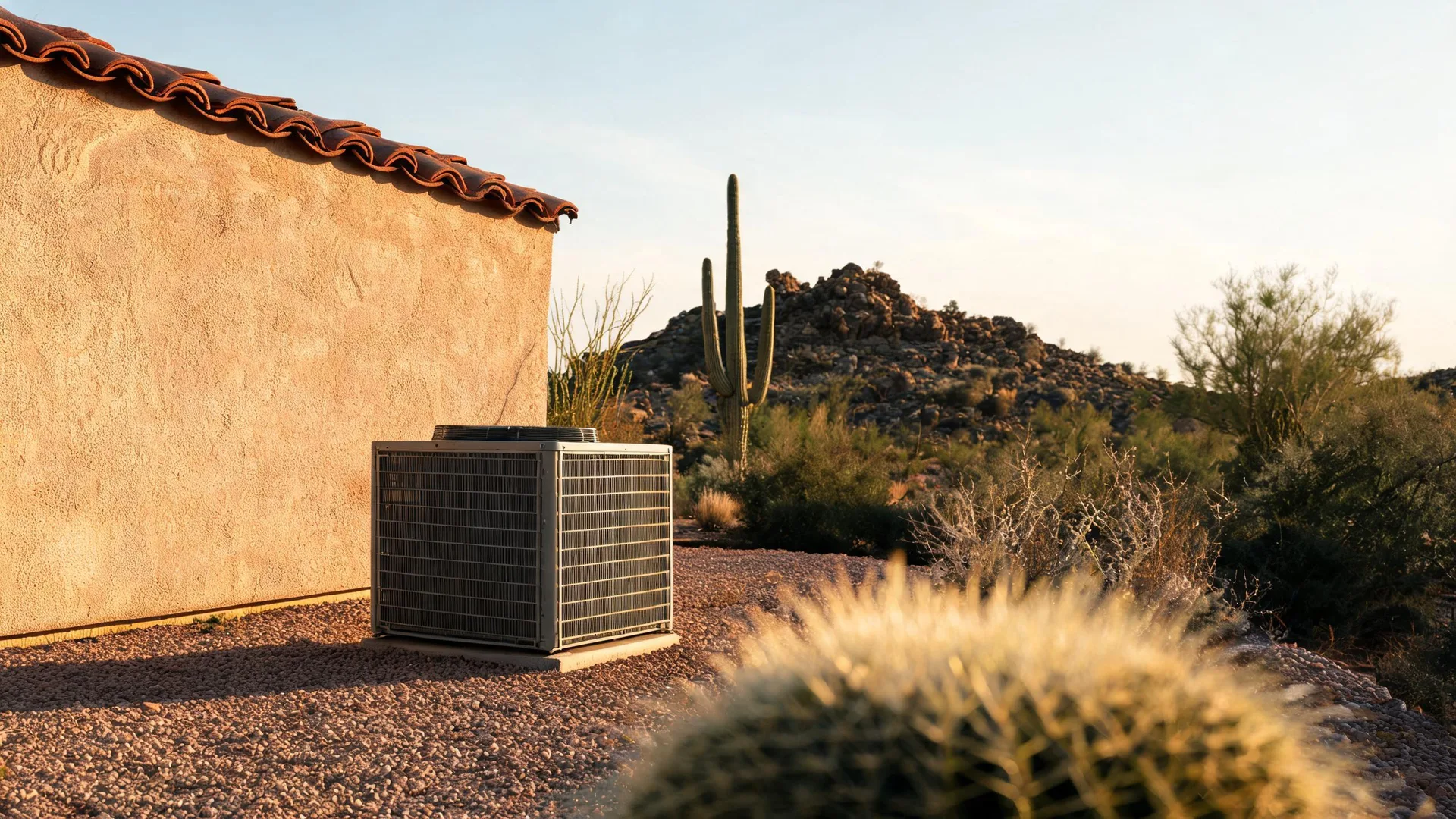
Look at the outdoor unit and the filter, then stop

Walk outside and see if the fan is spinning and if ice is covering the coil in a way that doesn't clear on its own after a while. Check the filter and swap it if it's dirty. Past that, don't pull panels or touch wiring. A heat pump that's frozen solid, tripping breakers repeatedly, or blowing cold air when it should be heating needs a contractor, not more troubleshooting.

Short cycling is one of the clearest signs. The unit kicks on, runs briefly, then shuts off before the space ever feels different. That points to a failing capacitor or a thermostat sensor reading the room wrong. Warm air from the vents when it's set to heat is another. If the system is stuck in defrost and never switches back to normal heating, or if you hear it try to reverse and it doesn't, the reversing valve is a likely cause. Hissing, buzzing, or a hard metallic clunk when the unit starts up are not sounds to wait out. A heat pump that runs constantly without ever satisfying the thermostat is working against something, whether that's a refrigerant leak or a failing sensor, and it won't fix itself by running longer.

A diagnostic visit starts with the thermostat and the readings at the unit, not with guesswork. A contractor will check the refrigerant pressures, the temperature split between the air going in and the air coming out, and the amp draw on the compressor and fan motors. That tells them whether the system is low on charge, whether the compressor is pulling harder than it should, or whether a part is drawing no power at all because it already failed. They'll pull the cover off the outdoor unit and look at the capacitor, the contactor, and the defrost control board, since those are what usually give out first. If the coil had ice on it, they'll want to see whether the defrost cycle is triggering and ending the way it should, or whether the reversing valve is stuck partway. Most of this gets answered in one visit, and it points straight to the part that needs replacing rather than a guess at what might help.