





An outdoor heat pump unit mounted on a concrete pad in front of a two-story suburban house with a landscaped lawn.

Heat Pump Repair in Kingston, NY

Tell us about the job

Takes about a minute. No obligation.

RepairHeat PumpUlster County, NY
Step 1 of 2

What ZIP code is the job in?

Kingston winters push a heat pump hard, with overnight lows averaging 18°F across December, January and February. That's a long stretch of cold for a system that has to pull heat out of outside air even when there isn't much warmth in it. It doesn't mean your unit is working against anything unusual. It means the parts that handle that load, the reversing valve, the defrost control, the compressor, are the ones worth checking first when something's off. A heat pump that's cycling wrong or blowing cool air in winter is usually showing a problem that shows up in any cold climate, not something specific to this county. Most of the time it's a known failure with a known fix.

8 months
October through May, your system heats
2 months
July through August, it cools
18°F
the average winter night it heats against
79°F
the average summer afternoon it cools against
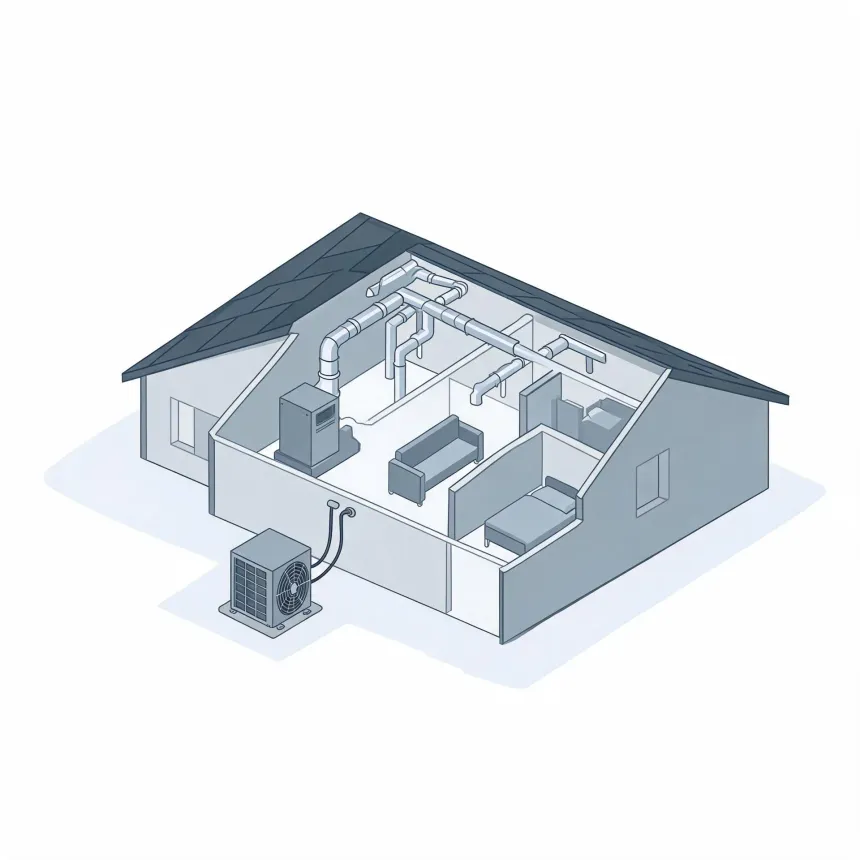
Isometric cutaway illustration of a single-story house showing interior rooms with furniture, an attic duct network connected to a furnace or air handler, and an outdoor condenser unit linked by lines outside the wall.
Your system heats October through May and cools July through August.

NOAA nClimDiv, 1991–2020 normals

Heat in Kingston runs October through May.

September is when to get a heat pump looked at, before the first cold month puts weight on a weak part.

Ulster County weather is ordinary. Most repairs come down to one worn part.

440 severe weather events from 2015 to 2024
11% of homes statewide lost power a day or more in 2024
372 damaging wind events from 2015 to 2024

Half the homes in Ulster County were built in 1966 or earlier. If your heat pump came with a house that old, it may not be the original unit, but there's a good chance it's been in service a long time either way. An older heat pump works the same way a new one does, but the reversing valve and compressor have had more years of cycles to wear through. A repair might be the right call. It might also be the second repair on a unit that's telling you it's done. Before paying for a big fix, it's worth asking how many years the system likely has left in it.

Electricity here isn't cheap. A struggling heat pump adds up.

New York homes paid 24.43 cents per kilowatt-hour in 2024, well above the national average. A heat pump that's short cycling, running constantly, or leaning on backup heat because of a bad part burns through that power every single day it's left alone. Getting the actual cause fixed stops that drain.

Find a contractor
A man in a cap, dark jacket and olive pants climbs porch steps toward a green front door, carrying a canvas tool bag filled with hand tools, with a potted shrub to the right.
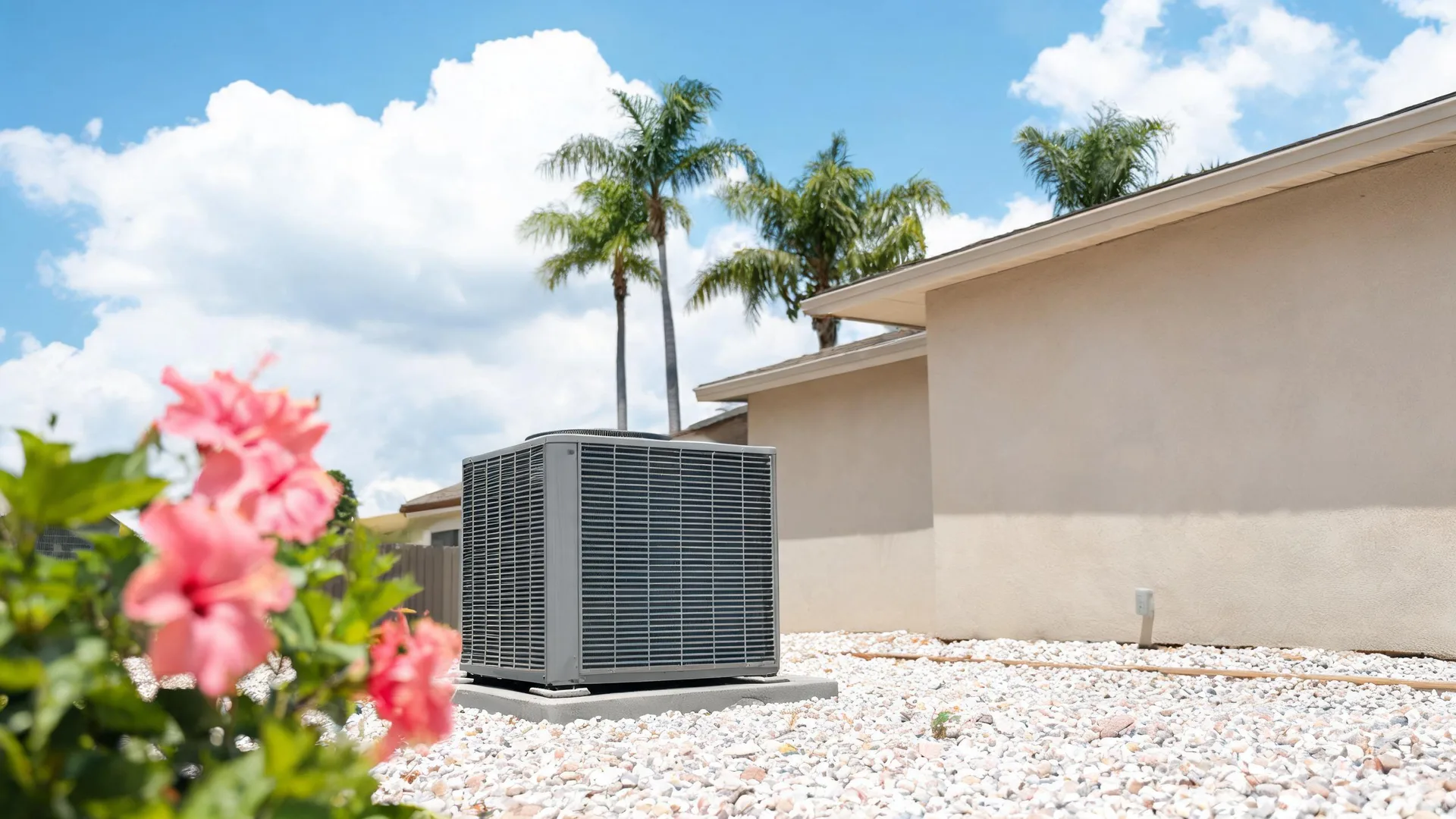
A residential heat pump outdoor unit mounted on a concrete pad next to a house with gray vinyl siding.

Worth fixing, or worth replacing

A contractor can check the unit's age against its service history and tell you which kind of call this is. If this isn't the first repair, that matters more than the age by itself. Ask directly whether this is worth fixing again or whether the system is near the end of its run.

A weak compressor only gets weaker

A compressor that's starting hard or running with a low charge is already under strain. Every cycle it completes in that state adds wear to the same parts that are struggling. Left alone, a compressor problem usually ends in the compressor failing completely, which is a far bigger repair than catching it early.
Ice that isn't clearing damages the coil

If the defrost cycle isn't kicking in right, frost builds up on the outdoor coil and stays there. Ice blocks airflow across the coil, so the system pulls even less heat from the air and runs longer to compensate. That longer runtime under a frozen coil is what turns a defrost control problem into a coil replacement.

Most heat pump failures trace back to a handful of parts, and they fail for ordinary reasons. The reversing valve, the part that switches the system between heat and cooling, can stick from simple wear or from a weak solenoid, and when it does the system blows the wrong temperature air or gets stuck in one mode. The defrost control can fail electrically or just lose track of the cycle, leaving frost to build on the outdoor coil instead of clearing on schedule. Capacitors weaken over time and stop giving the compressor and fan motor the jolt they need to start, which shows up as a unit that hums but doesn't turn on. Low refrigerant almost always means a leak somewhere in the line set or coil, not the system using up its charge the way a car uses gas. A dirty outdoor coil forces the whole system to work harder to move the same heat, and that strain tends to find whatever part was already weakest.

A repair is worth making when it fixes the part that's actually failing and leaves the rest of the system alone. Replacing a capacitor or a defrost control is straightforward because the rest of the unit isn't touched by that failure. It gets harder to justify once the compressor is the problem. A compressor replacement costs most of what a new system costs, because the compressor is the system. At that point the question isn't whether the repair works, it's whether it makes sense to put that money into a unit that's already shown you one major part can fail. A second unrelated repair within a short span of the first is usually the sign that the unit is past the point where fixing it piece by piece makes sense.