A row of illuminated white colonial houses along a road photographed at dusk.

Heat Pump Repair in Jamestown, NY

Tell us about the job

Takes about a minute. No obligation.

RepairHeat PumpChautauqua County, NY
Step 1 of 2

What ZIP code is the job in?

A furnace does the hard part

Overnight lows here average 19°F in December, January and February. A heat pump loses capacity in cold like that. Most systems pair with a backup furnace that takes over once the outdoor temperature drops below a set point. If your heat pump seems to quit on the coldest nights, that may be the system working as designed, not a failure.


The usual problem is still the usual problem

A heat pump that won't heat, runs constantly, or trips off on its own almost always comes down to a handful of things. Low refrigerant charge. A failing defrost control. A dirty outdoor coil. A bad capacitor. Nothing about this county changes that list. A contractor who checks the common causes first will usually find it.

8 months
October through May, your system heats
2 months
July through August, it cools
19°F
the average winter night it heats against
78°F
the average summer afternoon it cools against
Isometric illustration of a cutaway single-family house showing interior ductwork and an air handler, with an outdoor condenser unit connected by lines along the exterior wall.
Your system heats October through May and cools July through August.

NOAA nClimDiv, 1991–2020 normals

Heat here starts in October, after a September that puts no real load on a heat pump.

Once October's cold settles in, a weak capacitor or low charge shows itself fast.

At 24.43 cents a kilowatt-hour, a heat pump running wrong runs up your bill fast

Power costs 24.43 cents a kWh statewide
253 damaging wind events from 2015 to 2024
21 hail events from 2015 to 2024
Nothing unusual here, just the usual causesWind and winter storms hit this county often, but they don't break heat pumps. Worn parts do.

Half the homes in Chautauqua County were built in 1953 or earlier. If your heat pump came with a house that old, the unit itself is almost certainly newer, but it's worth finding out when it was actually installed. A heat pump that's been running for a long time is working harder to do the same job as one just a few years old. A major repair on an old system is a different decision than the same repair on a new one. Before paying for a big fix, ask the contractor how much life is likely left in the unit.

A heat pump running wrong costs you every day you wait

At 24.43 cents a kilowatt-hour, a bad capacitor or a low charge doesn't just leave you cold. It runs up the bill while it does it. Getting the real cause found and fixed stops both problems at once.

Find a contractor
A man in a dark jacket, tan work pants and cap, seen from behind, carries a canvas tool bag up concrete steps toward a dark green front door beside a potted shrub.
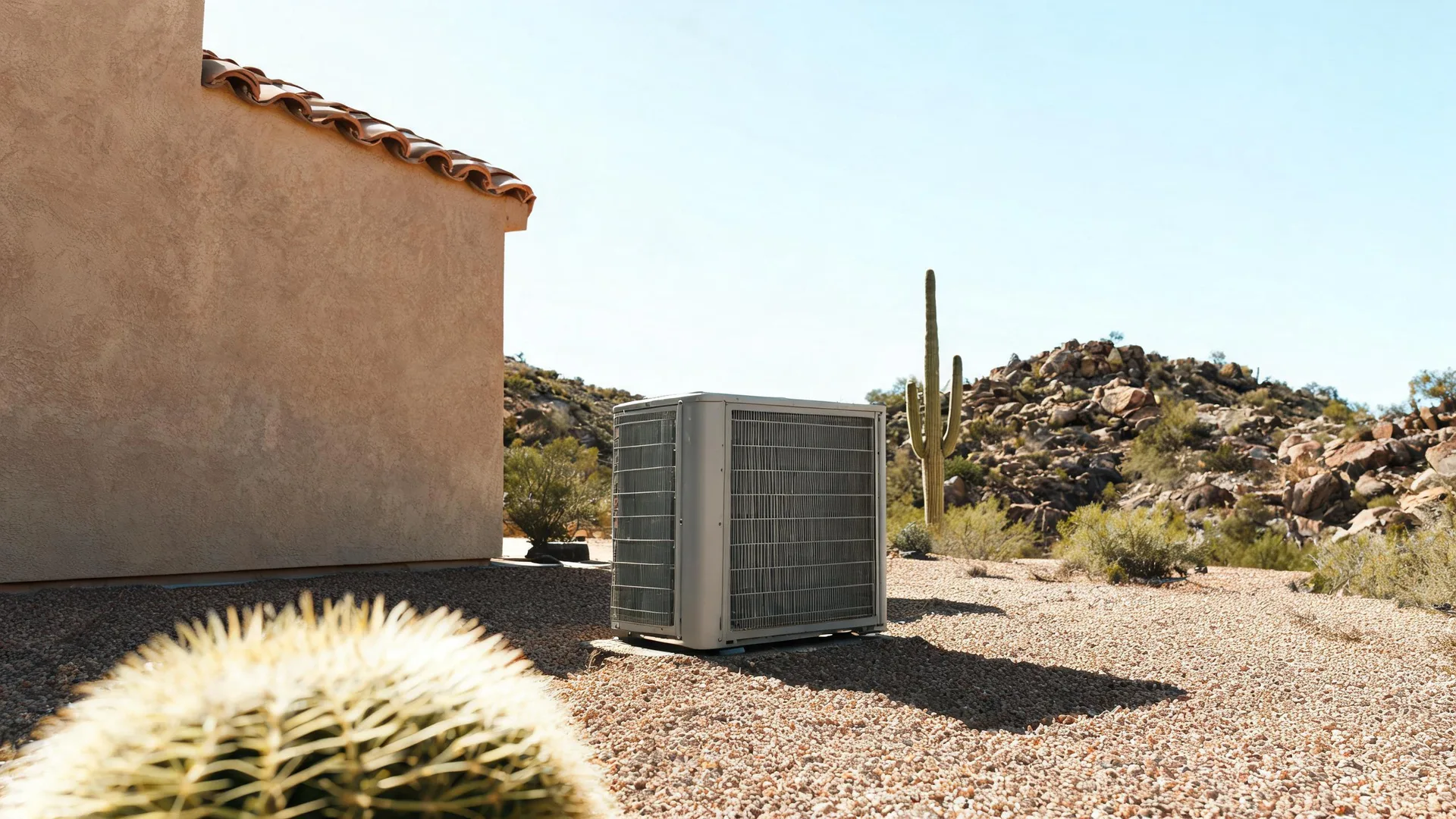
A gray heat pump outdoor unit mounted on a concrete pad next to a residential house with lap siding and stone accents.

The wear you can't see shows up as the system working harder

A heat pump that's about to need a repair usually tells you before it quits outright. It runs longer than it used to without the house feeling any warmer. It cycles on and off more than it should. The outdoor fan sounds different, or the compressor hums but doesn't start. Air out of the vents feels cooler than it used to, even though the system is running. Some of that is just the unit logging hours. Every hour run is a little more wear on the compressor, the fan motor, the bearings inside both. None of that shows up to the eye. What shows up is the system working harder and slower to do what it used to do without you noticing it at all.

A frozen coil doesn't fix itself

When the outdoor coil ices over, the heat pump loses its grip on the outside air. Left running, it pulls harder and still can't catch up, and the ice just builds. The defrost cycle is supposed to clear it before that happens. If the defrost control or sensor has failed, the system can run itself through the whole cycle without ever shedding the ice.

A struggling compressor wears out faster

Low refrigerant charge forces the compressor to work past what it was built for, and heat builds up inside it with nowhere to go. A compressor pushed like that for a few days is a different repair than one caught on day one. Once it fails outright, you're no longer fixing the heat pump. You're replacing it.

Before anyone comes out, there are a few things worth checking yourself. Look at the outdoor unit. If the coil is caked in ice or buried in leaves and debris, that alone can keep it from pulling heat from the air. Check the thermostat batteries and make sure it's set to heat, not just on. Walk around the house and check that no vents are closed or blocked by furniture. Look at your breaker panel. A heat pump that won't start at all sometimes just needs a tripped breaker reset. If you reset it and it trips again, stop there and leave it off. That's not a do-it-yourself problem anymore, that's a short somewhere in the system.

A diagnostic visit starts outside at the unit itself. The contractor checks the coil for ice or debris, watches the fan run, and hooks up gauges to check the refrigerant charge, since a low charge is one of the first things to rule in or out. Amp readings on the compressor and fan motor show whether either one is drawing power it shouldn't. Inside, the contractor checks the air handler, the filter, and the control board, since most systems log a fault code before they shut down or start running poorly. The defrost control gets checked too, since a heat pump that can't clear ice off the coil will never heat right no matter what else is fine. Only once the actual cause turns up does a repair get recommended.