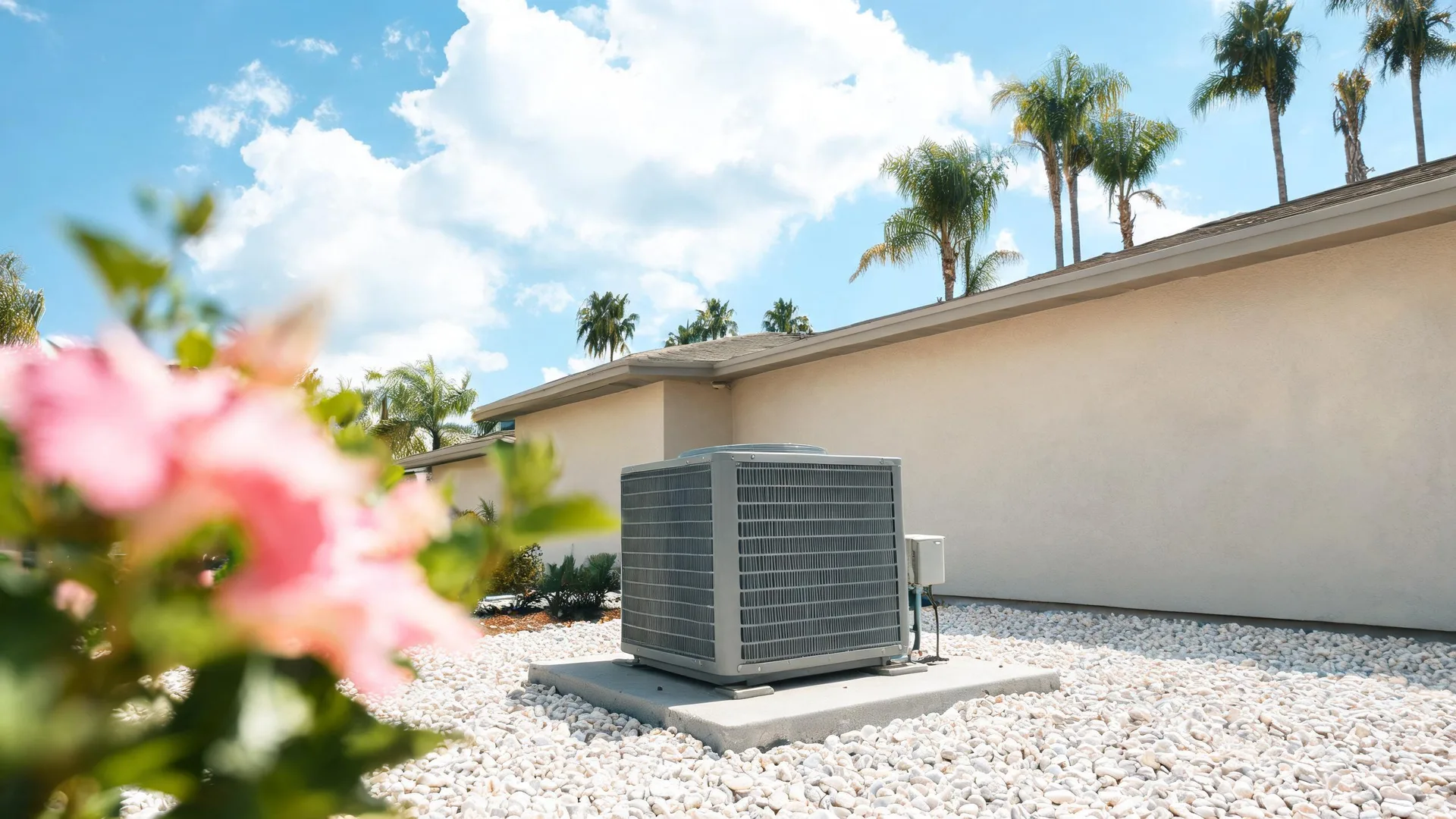
An outdoor air conditioning condenser unit mounted on a concrete pad in front of a single-story suburban house.

Heat Pump Repair in Ithaca, NY

Tell us about the job

Takes about a minute. No obligation.

RepairHeat PumpTompkins County, NY
Step 1 of 2

What ZIP code is the job in?

August is when a weak heat pump shows it

Heat in Tompkins County starts up in September, and August is the month before the load comes back hard. A heat pump that struggled last winter tends to show the same problem again right when it has to carry the house.

A heat pump in June or August is easier to diagnose

Cooling here only runs July and August, so a heat pump called out in June or August is not under full heating load yet. A contractor can trace the actual cause without a cold house pushing the job toward a quick fix.

9 months
September through May, your system heats
2 months
July through August, it cools
18°F
the average winter night it heats against
78°F
the average summer afternoon it cools against
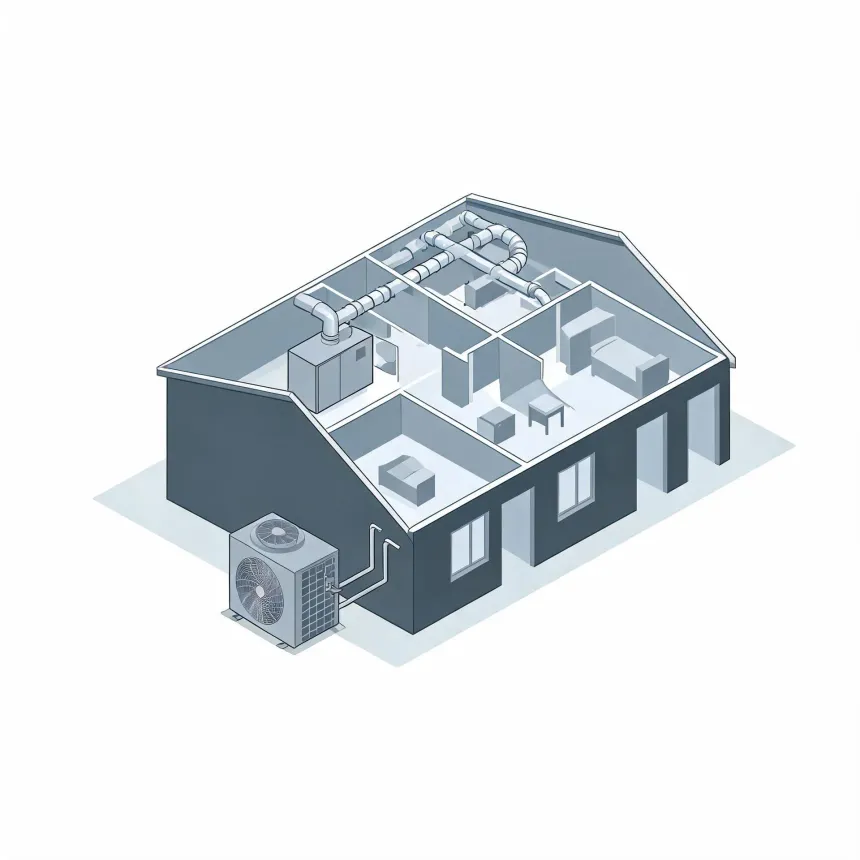
Isometric cutaway illustration of a single-story house showing interior rooms, attic ductwork and an air handler, with an outdoor condenser unit connected by lines along the exterior wall.
Your system heats September through May and cools July through August.

NOAA nClimDiv, 1991–2020 normals

Winter nights here average 18°F, not deep cold, and cooling only runs part of the year.

A heat pump that isn't pushed hard most of the year is usually still in good shape underneath, so fixing what's wrong is almost always worth it.

At 24.43 cents a kilowatt-hour, a heat pump running wrong runs up your bill fast

Power costs 24.43 cents a kWh statewide
Climate zone 5A
Cooling runs July through August

Get it looked at before it costs you another month

A heat pump that's short cycling, icing up, or running constantly is pulling power the whole time it does it, whether or not anything underneath is actually worn. At 24.43 cents a kilowatt-hour, that adds up fast. Get the actual cause found now, while it's a straightforward repair.

Find a contractor
A man in a cap, gray long-sleeve shirt and tan pants climbs concrete steps toward a dark green front door, carrying a worn canvas tool bag.
A gray heat pump outdoor unit mounted on a concrete pad next to the stone-accented exterior wall of a house.

What to check yourself first

Before anyone comes out, go look at the outdoor unit. If the coil is caked in ice, that tells a technician something different than if it's running clean. Check the air filter next. A filter clogged with dust chokes the airflow the whole system depends on, and it's the one thing in here you're meant to handle yourself. Walk around inside and check every vent is open and nothing's been pushed in front of one. Look at the thermostat and make sure it's set to heat, not auto or cool, and that the batteries aren't the reason the screen is dark. If you've got a breaker panel you can get to safely, check nothing's tripped. None of this fixes a bad reversing valve or a low refrigerant charge, but it rules out the simple stuff before anyone drives out to look at the hard stuff.

It's blowing air that doesn't feel hot

A heat pump in heat mode puts out air that feels warm, not hot, even when it's working right. If the air at the vent feels cool or barely different from the room, that's worth noting. Don't judge it by hand alone, though. The real test is whether the house actually holds its temperature over a few hours.

It's running without ever shutting off

A heat pump that never cycles off has lost capacity somewhere. The refrigerant charge may have dropped. A reversing valve may not be switching all the way over. Short cycling is a different problem, where it kicks on and off every few minutes. That points to a thermostat issue, a dirty filter choking the airflow, or a sensor misreading the coil.

A heat pump that's icing up or short cycling and gets left alone doesn't stay the same. It gets worse. Ice on the coil blocks airflow, so the system pulls harder to move the same heat, and that strain falls on the compressor. The compressor can't be fixed. It can only be replaced. A reversing valve that's partly stuck behaves the same way. It keeps working, badly, while something downstream carries the extra load. Low refrigerant wears a system down the same slow way, since a system low on charge runs hotter and longer to do the same job. None of this announces itself right away. It just means a small problem now is the reason for a bigger one later.

A diagnostic visit starts outside at the unit itself. A technician checks the refrigerant charge with gauges, not guesswork, since low charge and a failing compressor can look the same from inside the house. They run the system in heat mode and watch whether the reversing valve actually switches all the way over, because a valve stuck partway can make a homeowner think the whole unit is failing. Electrical readings come next, the capacitor, the contactor, the readings at the compressor itself. Airflow gets checked at the vents and back at the coil too, since weak airflow can come from more than one place and the fix is different depending on where it starts. None of this is guesswork. It's tracing the path the refrigerant and the air both take and ruling things out until what's left is the actual cause.