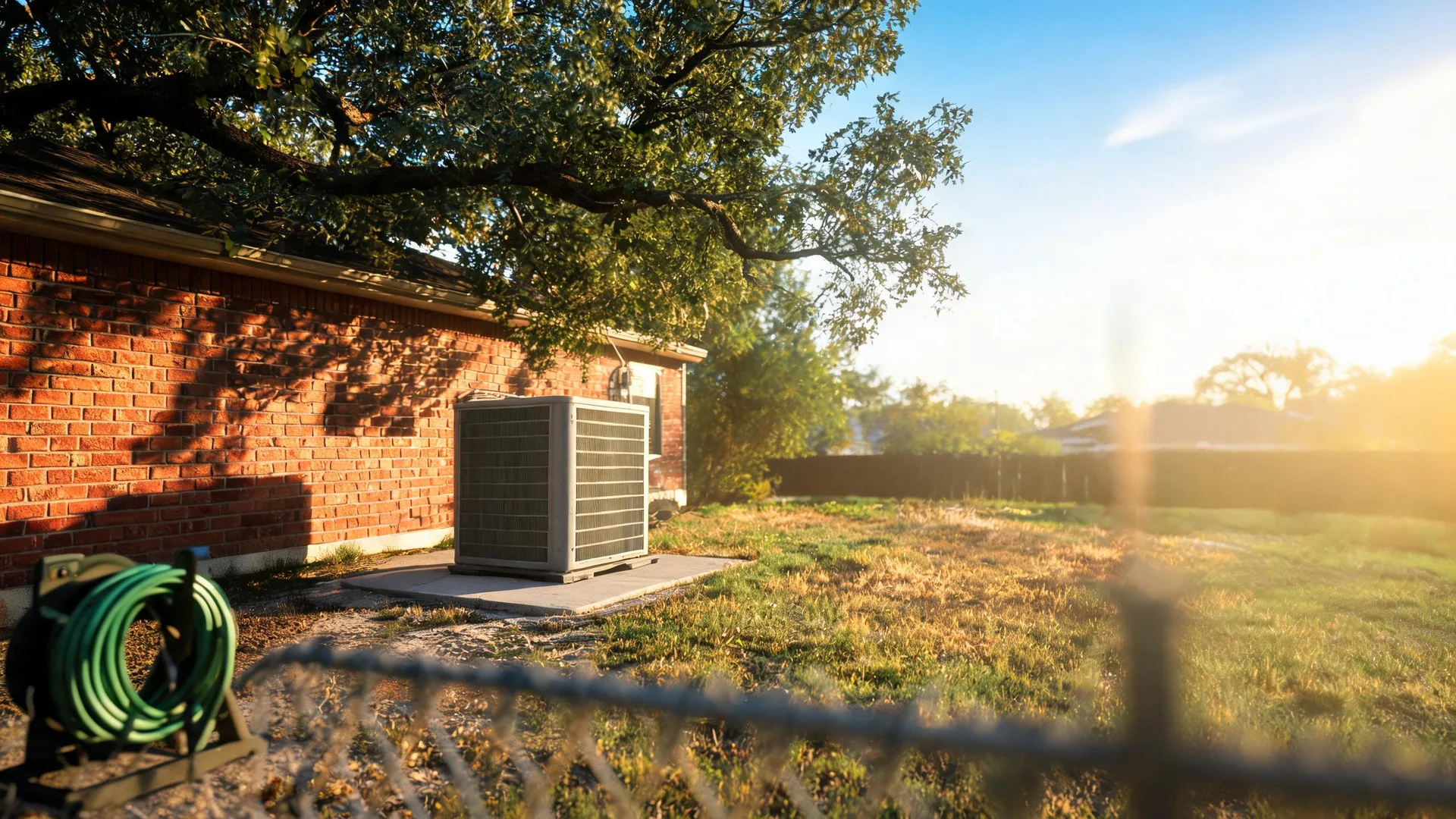
August is worth a look
Heat in Ilion starts up in September, which makes August the last quiet month for your heat pump. A weak part tends to sit fine doing nothing all summer, then fail once the system is asked to run heat again.

Takes about a minute. No obligation.
Heat in Ilion starts up in September, which makes August the last quiet month for your heat pump. A weak part tends to sit fine doing nothing all summer, then fail once the system is asked to run heat again.
Nine months of heat a year, September through May, means this system gets little rest. If something was already marginal, it usually shows up fast once the season starts, not months into it.
Ilion winters average 11°F overnight, which is cold but not unusual for a heat pump built for this zone.
When one stops keeping up here, the cause is almost always a worn part, not the weather asking too much of it.



At 24.43 cents per kilowatt-hour, New York power costs more than most of the country, and a heat pump that's losing efficiency burns through it fast. A unit short on refrigerant or running on a weak capacitor still pulls power trying to hit the set temperature. It just takes longer and runs longer doing it. That's not a problem that waits well. Getting a technician to look at it now costs you less than another month of it struggling.
Nothing about this area is especially hard on it. It's most likely the usual problem with the usual fix.
Find a contractor
A repair call is the right time to ask that question. A technician looking at what's wrong can also tell you the age and condition of what you have, and whether this repair is a reasonable one to make or the last one worth making.
A compressor working against a low charge or a weak capacitor doesn't just quit. It keeps trying to hit the set temperature, drawing more current than it should and running longer to get there. That strain is what turns a part that was failing slowly into one that fails outright.
A heat pump that's low on refrigerant or has a failing defrost control will often ice up the outdoor coil. Keep running it and that ice builds instead of clearing, blocking airflow across the coil entirely. At that point the system is heating poorly and risking the compressor at the same time.
Before you call anyone, a few things are worth checking yourself. Look at the outdoor unit first. If it's caked in ice beyond the thin frost that clears on its own during a normal defrost cycle, that's worth noting but don't chip at it. Check that nothing is blocking airflow around it, no leaves, no snow drift, no cover left on from last spring. Inside, pull the air filter and hold it up to a light. If you can't see through it, that's restricting airflow and making the whole system work harder. Check your thermostat is set to heat, not emergency heat, and that the batteries aren't the reason it's gone dark. If the system is running but the air coming out doesn't feel warm, that's normal for a heat pump and not a fault on its own. If it's not running at all, check the breaker before anything else.
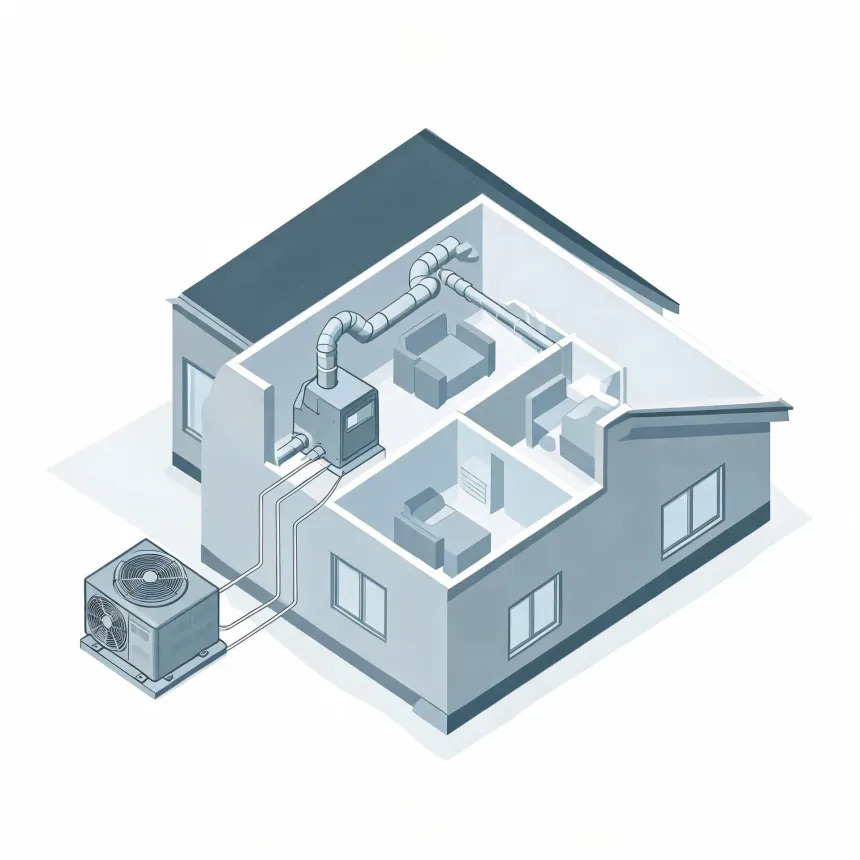
A diagnostic call starts outside, at the unit itself. The technician checks refrigerant pressure, because low charge is one of the most common reasons a heat pump stops keeping up, and it's not something you can see from the filter or the thermostat. From there it's the capacitor and the contactor, the parts that get the compressor and fan running in the first place. A weak capacitor can let a motor try to start without the strength to actually spin, which strains it every time it's asked to run. The defrost control gets checked too, since a bad one is what lets ice build on the coil instead of clearing on schedule. Airflow gets checked on both sides, the filter and the ductwork, because even a perfectly healthy compressor will struggle if the air around it can't move. By the end you should know which part failed, why, and whether it's one worth fixing or a sign the whole system is near the end of its run.