






A gray outdoor HVAC condenser unit mounted on a concrete pad in the front yard of a two-story suburban house.

Heat Pump Repair in Glens Falls, NY

Tell us about the job

Takes about a minute. No obligation.

RepairHeat PumpWarren County, NY
Step 1 of 2

What ZIP code is the job in?

A heat pump that needs a repair once in a while isn't telling you anything except that a part wore out. Compressors, reversing valves, fan motors and boards all have a lifespan, and replacing one when it fails is normal upkeep, not a warning sign. What changes the math is when the same system keeps calling for service, or when a repair involves the compressor itself, since that part accounts for most of what the unit costs. A heat pump that can't keep up in either direction, blowing air that doesn't feel warm enough in the cold months or cool enough in the hot ones, is often struggling with more than the single part that just failed. Age matters too, but only alongside how the system has actually been running. A tech who opens the cabinet can tell you whether this is a repair worth making or the start of a pattern.

9 months
September through May, your system heats
1 months
July through July, it cools
12°F
the average winter night it heats against
77°F
the average summer afternoon it cools against
Isometric cutaway illustration of a small house showing interior rooms with furniture, an indoor air handler with ductwork, and lines running to an outdoor condenser unit beside the building.
Your system heats September through May and cools July through July.

NOAA nClimDiv, 1991–2020 normals

Heat pumps here run heat from September through May, nine months of the year.

A weak part usually gives out in the first cold snap, right when the system first has to work for heat.

Half the homes here were built by 1973, old enough that a heat pump installed with the house is worth asking about

Half the homes here were built by 1973
192 damaging wind events from 2015 to 2024
7 hail events from 2015 to 2024

New York's electric rates ran 24.43 cents per kilowatt-hour in 2024, among the highest in the country. A heat pump running heat most of the year here uses a lot of that power. A unit that's short on refrigerant or working with a weak capacitor doesn't just heat worse, it pulls more power to do less work, and you pay that rate on every kilowatt-hour it wastes. That extra cost shows up on the bill long before the unit quits for good. A system running rough now is worth a service call soon, not after another month of paying for the problem.

Your heat pump problem is probably a normal one

Warren County sees its share of wind and winter storms, same as the rest of upstate New York. None of that points to anything unusual going on with your heat pump. The likely cause is a worn part, and a tech can tell you which one once they've had a look.

Find a contractor
A man in a cap, dark jacket and brown work pants climbs porch steps toward a dark green front door, carrying a waxed canvas tool bag, with a potted shrub to the right.
A residential heat pump outdoor unit mounted on a concrete pad next to a house with gray vinyl siding.

Ask how much life is left before you pay for the repair

If your heat pump came with the house and the house dates back to that era, the system is old enough that a repair call is a fair place to ask the tech for more than a fix. Ask what shape the compressor is in and whether the repair in front of you is likely the last one or one of several still coming. That answer should shape whether you pay for the part or start pricing a replacement.

It won't switch between heat and cool

A heat pump that gets stuck heating when you've called for cooling, or the other way around, usually has a reversing valve that's stuck or a solenoid that's failed. The system still runs, the air still moves, but it's doing the wrong job. This isn't something to wait out. It only gets worse, and it can leave you with no heat at all when you need it most.
It's icing up when it shouldn't be

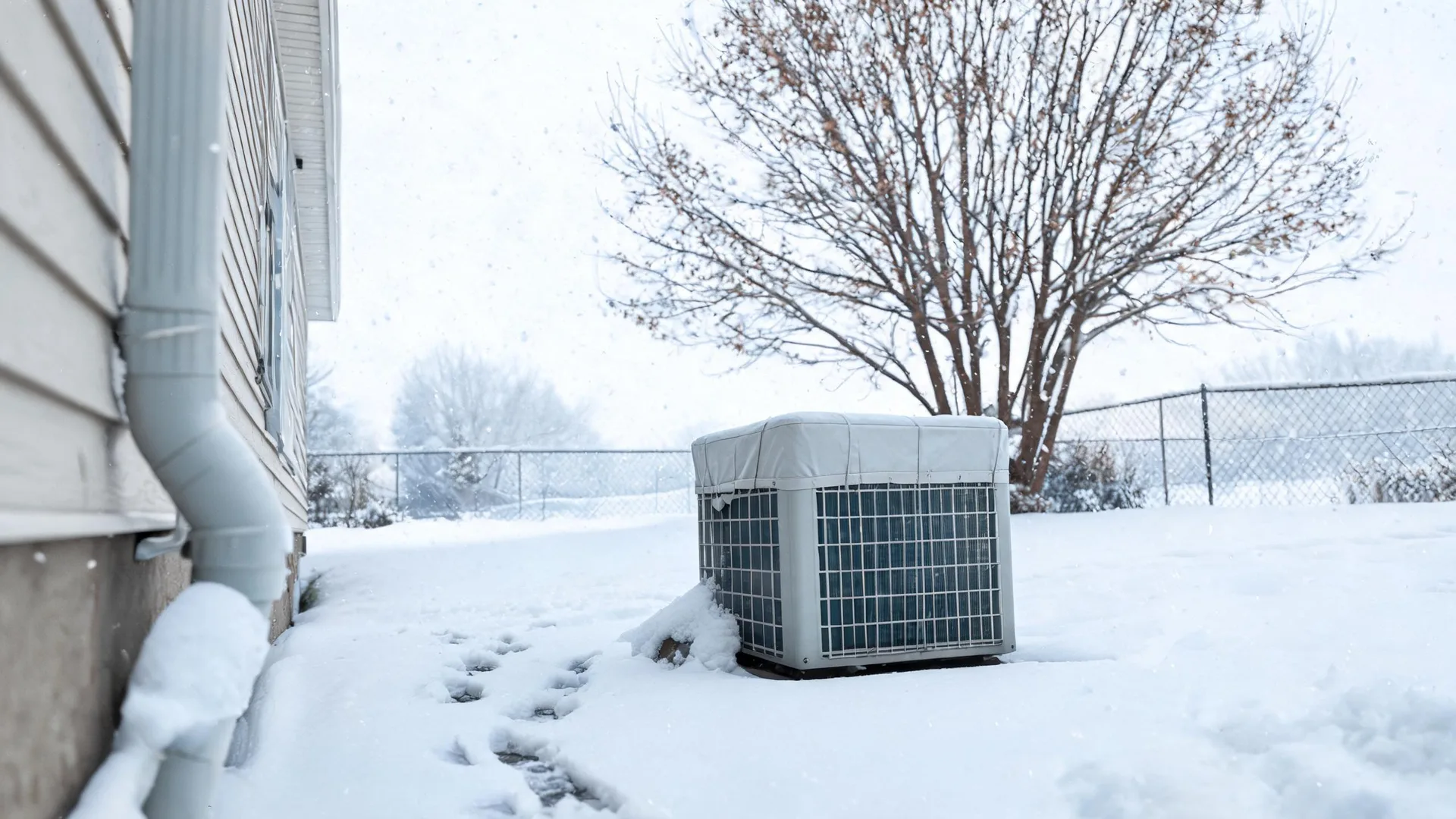
Some frost on the outdoor unit during a defrost cycle is normal. A coil that stays covered in ice, or ice that builds up fast and doesn't clear, points to a defrost control that isn't cycling right, a fan that's not moving air across the coil, or refrigerant that's low. Left alone, the ice keeps the coil from doing its job and the compressor ends up working harder to make up for it.

A heat pump that's struggling still runs, and that's what makes it easy to put off. But a compressor low on refrigerant or starved for airflow has to work harder to move the same heat, and running it that way wears the compressor down faster than normal use would. A reversing valve that's stuck partway puts strain on parts that were never built for that condition, and it tends to fail the rest of the way instead of holding steady. Ice left to build on the outdoor coil blocks airflow entirely, so the compressor keeps running against a coil that can't do its job, which is a harder way to run than the system was designed for. None of these get better by giving them time. The part either holds on until a tech gets to it or it doesn't, and running the system hard in the meantime is what decides which.

A diagnostic call starts outside, at the unit itself. The tech checks refrigerant pressure. He listens to how the compressor sounds and runs, and checks whether the fan is moving air across the coil the way it should. Inside, he'll check the air handler, the filter, and the board that controls defrost and the reversing valve. Electrical readings come next, things like the capacitor, the contactor, the windings on the motors. A part can look fine and still be failing underneath, which is why those readings matter more than how something looks. Most of this gets answered without pulling the system apart. Once the tech knows which part is behind the problem, he can tell you what it takes to fix it and what kind of shape the rest of the system is in.