




A row of similar gray clapboard houses with gabled roofs behind a white picket fence, with mown grass in front and dense green trees behind.

Heat Pump Repair in Geneva, NY

Tell us about the job

Takes about a minute. No obligation.

RepairHeat PumpOntario County, NY
Step 1 of 2

What ZIP code is the job in?

A heat pump in Geneva works hardest in winter, pulling heat out of air that averages 19°F overnight through December, January and February. That's a real job, but it's steady. The compressor isn't lurching between extremes, it's running a long, predictable season. Wear here tends to come from age or a missed service, not from the climate pushing the equipment past what it's built for. If yours is acting up, that points to a part that failed or wore out, and that's usually worth fixing.

8 months
October through May, your system heats
2 months
July through August, it cools
19°F
the average winter night it heats against
79°F
the average summer afternoon it cools against
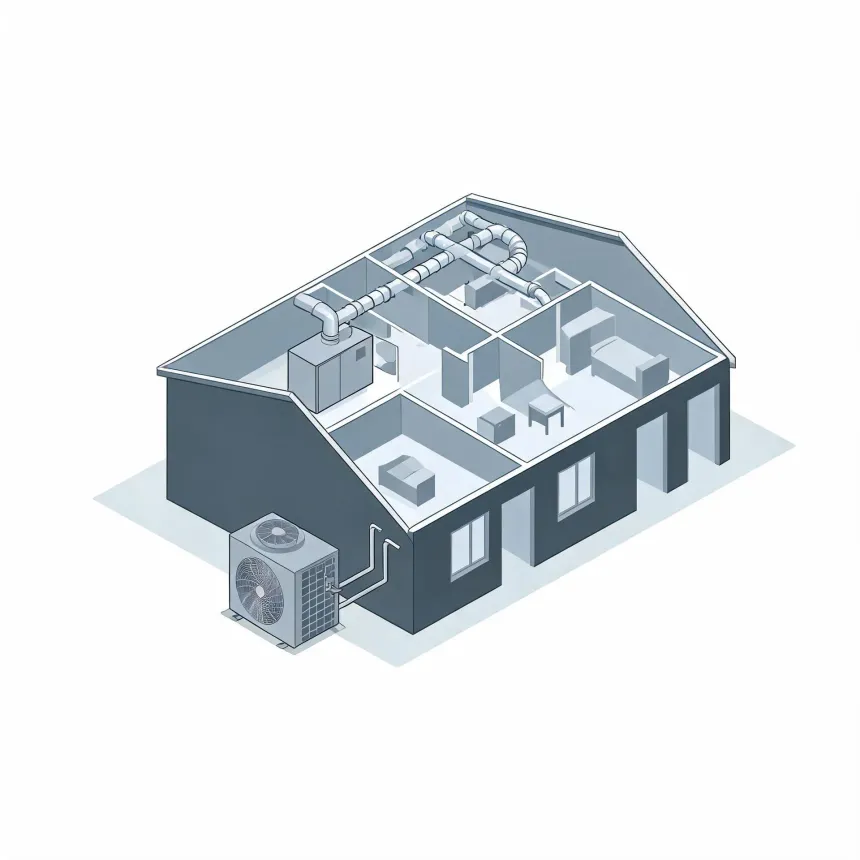
Isometric cutaway illustration of a single-story house showing interior rooms, attic ductwork and an air handler, with an outdoor condenser unit connected by lines along the exterior wall.
Your system heats October through May and cools July through August.

NOAA nClimDiv, 1991–2020 normals

October is the first real test for a heat pump that coasted through September.

A weak part that made it through fall often won't make it through the first cold week of October.

A furnace from the Ford administration is still common here

Half the homes here were built by 1976
Climate zone 5A
Power costs 24.43 cents a kWh statewide

Electricity in New York runs 24.43 cents per kilowatt-hour, well above what most states pay. A heat pump that's short on refrigerant or running on a weak capacitor doesn't just work harder, it draws more power doing less heating. You feel that on the bill before you feel it in the air. The longer a bad part sits, the more it costs you to wait. Worth getting looked at now rather than running it through the winter like this.

The usual cause, and the usual fix

Ontario County saw 195 damaging wind events between 2015 and 2024, along with hail, a couple of tornadoes, and some winter storms. None of that is what wears out a heat pump. A failed capacitor or a low refrigerant charge is still the most likely reason yours is acting up, and that's a straightforward repair once someone's looked at it.

Find a contractor
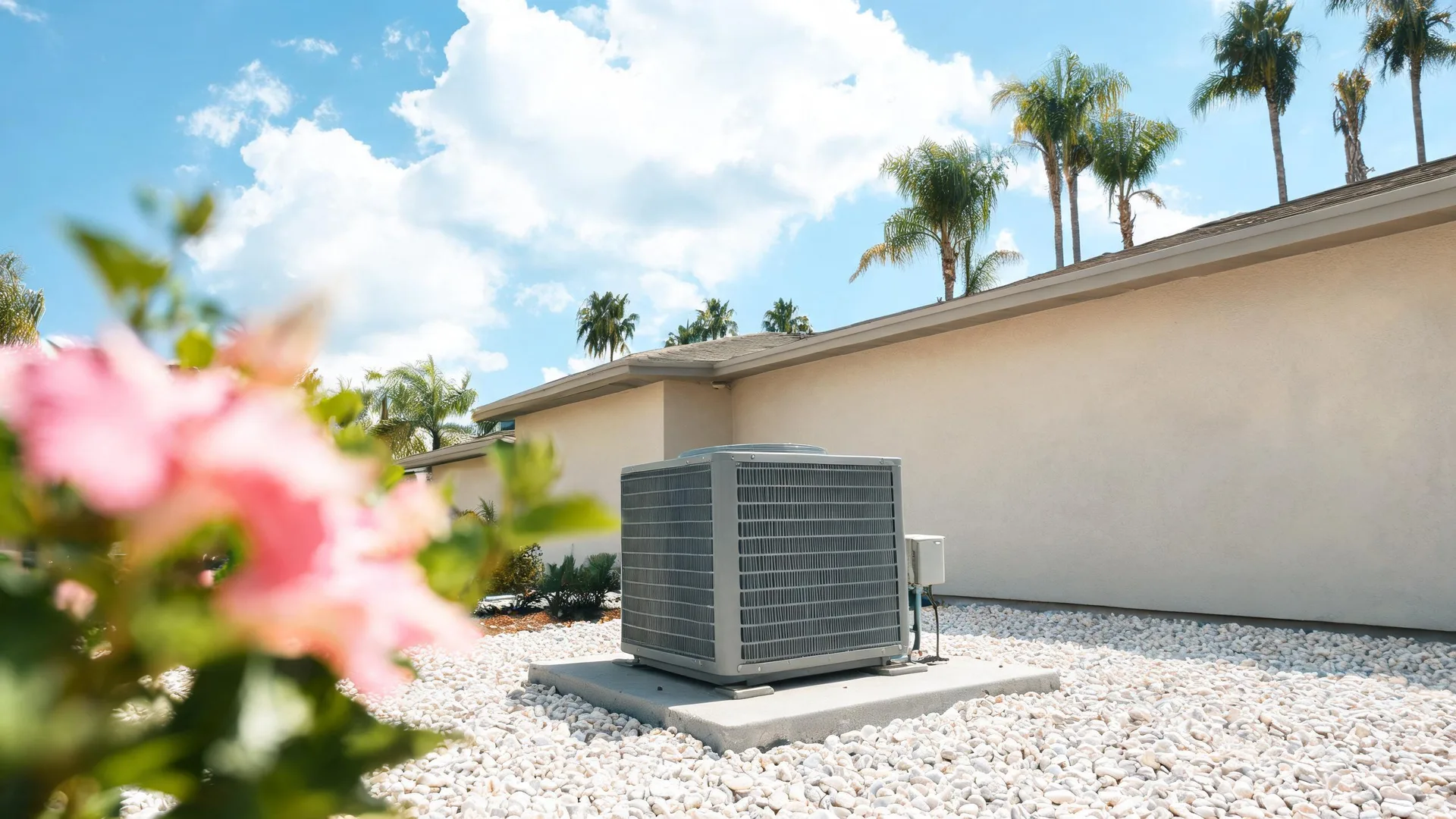
A gray heat pump outdoor unit mounted on a concrete pad next to the stone-accented exterior wall of a house.

What tells you it's time

A heat pump in trouble shows it in how it runs, not just whether it runs. Short cycling is one of the clearer signs, the unit kicking on, running a few minutes, then shutting off before it's done anything useful. That points to a sensor misreading the temperature or the compressor protecting itself from a problem somewhere else in the system. Air coming out lukewarm instead of warm is another one. People notice it as the system running constantly but never catching up, and that usually means the refrigerant charge is low or the reversing valve isn't fully switching over. Ice building up on the outdoor unit during a cold stretch is worth watching too. Some frost is normal and clears on its own as the unit defrosts itself. Ice that stays and keeps building means that isn't happening when it should. A hissing or bubbling sound near the lines usually means refrigerant escaping, and that calls for a tech to find the leak, not just add more in. A burning smell or a breaker that keeps tripping means shut it off and get it looked at before running it again.

Most failures are one part, not the whole unit

A capacitor weakens, a contactor pits and stops making clean contact, a defrost sensor reads wrong and the outdoor coil ices over. Any one of these stops the system or makes it run poorly, but the compressor itself usually outlasts the smaller parts around it. Replacing the failed part is what fixes it, not replacing the heat pump.
What that means for the visit

A tech checks the capacitor, the contactor, the refrigerant charge and the defrost cycle before deciding anything bigger is wrong. Most of that gets diagnosed and fixed in one trip. Low refrigerant is the exception worth asking about, since it usually means a slow leak somewhere in the line set that needs finding, not just a recharge.

Before anyone comes out, check a few things yourself. Look at the thermostat first and make sure it's set to heat and the set point is actually above room temperature. Go outside and look at the outdoor unit. If the coil is caked in ice or buried in leaves and debris, that can stop it from pulling heat at all. Check that the indoor filter isn't clogged, since a blocked filter starves the system of airflow and can make it seem like the unit's failing when it's just suffocating. Walk around to the breaker panel and confirm the breaker for the unit hasn't tripped. None of this fixes a bad capacitor or a refrigerant leak, but it rules out the simple stuff before you pay someone to find it for you.

The question is usually simpler than it feels. A heat pump is a handful of parts built around a compressor, and the compressor is the part that's expensive and hard to replace. Everything else around it, the capacitor, the contactor, the reversing valve, the defrost board, is cheap to swap and swapping it brings the whole system back to normal. So the real question isn't the age of the unit, it's which part failed. If the compressor itself is bad, or the coil's leaking in more than one spot, that's a different conversation, because now you're paying to protect parts that are already failing elsewhere. Short of that, a heat pump that heats and cools fine between breakdowns is a heat pump worth fixing. A tech can tell you which case you're in within a few minutes of looking.