A white clapboard house with dark shingled roof, black shutters and dormer windows stands behind a lawn, framed by large trees and a blurred green shrub in the foreground.

Heat Pump Repair in Corning, NY

Tell us about the job

Takes about a minute. No obligation.

RepairHeat PumpSteuben County, NY
Step 1 of 2

What ZIP code is the job in?

Winters here work the heat pump harder than summers do

Corning sits in a cool, humid climate zone where heating carries the bigger load, with overnight lows averaging 17°F in January. A heat pump here spends more of its life pulling heat in from the cold than pushing it out in summer. That's steady, expected work, not strain.


A repair is usually worth it

Nothing about this area runs a heat pump into the ground early. When one here is acting up, the cause is more often a part that's worn or a system that's overdue for attention, not a machine that's been pushed past what it can handle. That's good news for fixing it instead of replacing it.

9 months
September through May, your system heats
2 months
July through August, it cools
17°F
the average winter night it heats against
78°F
the average summer afternoon it cools against
Isometric line illustration of a cutaway house showing interior rooms with furniture, ceiling ductwork connected to an indoor air handler, and refrigerant lines running to an outdoor condenser unit on a pad.
Your system heats September through May and cools July through August.

NOAA nClimDiv, 1991–2020 normals

Heat here runs September through May, nine months of the year.

August is when a weak part gets found, right before the system has to carry the load.

Worn parts get fixed. A machine this fault-tolerant is worth fixing

179 damaging wind events from 2015 to 2024
7 hail events from 2015 to 2024
10 winter storms from 2015 to 2024

Electricity in New York ran 24.43 cents per kilowatthour in 2024, well above what most states pay. A heat pump leans on electricity for every bit of heat it moves, so a unit that's lost some efficiency doesn't just run poorly, it runs up the bill while it does it. A refrigerant leak, a failing capacitor, a compressor working harder than it should, all of these make the system draw more power to do the same job. That cost shows up every month until the part gets fixed, not just once. Catching it now costs less than paying the difference all winter.

This is a fixable problem, not a sign of something bigger

Steuben County sees its share of wind, hail and the occasional winter storm, like most places do. None of that is unusual, and none of it runs a heat pump harder than it already runs. So if yours is acting up, the cause is almost always something ordinary. A worn part, a system due for a look. That's a repair, not a replacement.

Find a contractor
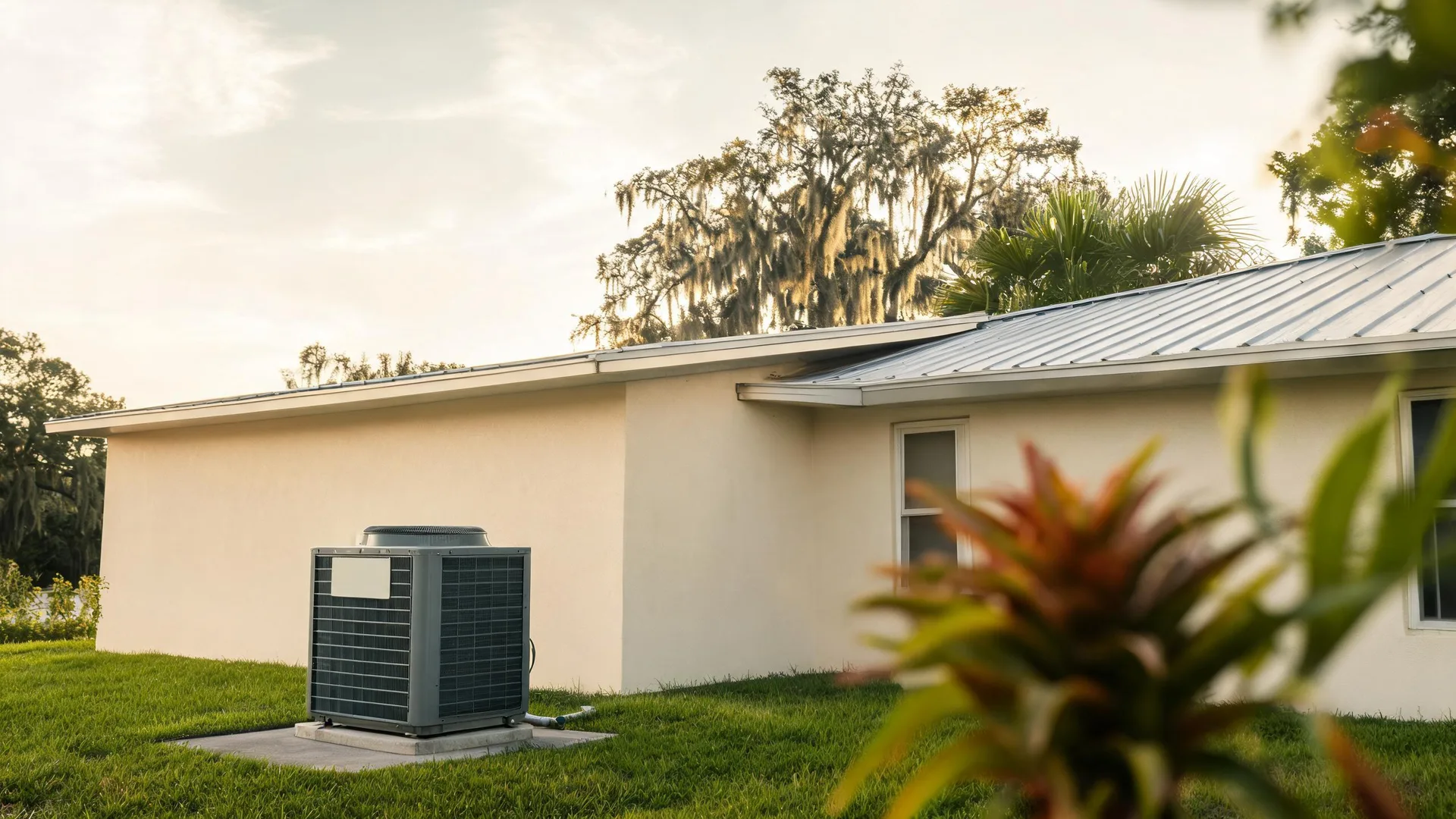
A dark gray heat pump unit mounted on a concrete pad next to a house with gray siding and a stone veneer wall.

What to check before you call anyone

Start with the thermostat. Set it to heat, not auto, and move the set point a few degrees above room temperature. A weak battery in there can look exactly like a dead system. Go outside next and look at the outdoor unit. Ice built up on the coil or leaves packed against it will choke the airflow, and the whole system suffers for it. Nothing should be stacked against the sides, no bins, no firewood. Pull the air filter and hold it to a light. If no light comes through, it's restricting airflow enough to cause a lot of what feels like a bigger problem. Walk the house and check that supply vents are open, not blocked by furniture or rugs. At the breaker panel, check for a tripped switch. A heat pump that's gone quiet outside while the indoor blower still runs often just lost power to the outdoor unit alone. Last, listen to what it's doing. Air that feels cool to the touch is normal for a heat pump, it runs cooler than a furnace and that's not failure on its own. Short-cycling, where it kicks on and off every few minutes, or a unit that runs nonstop without warming the house, are worth describing to whoever comes out.

A small fault asks the system to work around it

A heat pump low on refrigerant or running on a weak capacitor doesn't stop, it compensates. The compressor runs longer to move the same heat, the coil works harder to make up for lost airflow. Parts rated to cycle on and off end up running closer to nonstop, and that kind of duty wears them faster than the fault itself would have on its own.

Ice and frost spread while the system keeps going

A coil that starts icing at the edges will keep icing as long as the system runs, because the cause, whether it's weak airflow or low refrigerant, doesn't fix itself. More ice means less of the coil can do its job, so the system leans harder on what's left of it. Left alone, that cycle ends with a coil frozen solid or a compressor straining against conditions it was never meant to run in.

Most heat pump failures trace back to a handful of parts, and they tend to fail the same way every time. The capacitor is the one to know about. It gives the compressor and fan motors the jolt they need to start, and it weakens slowly over years until one day it can't do the job. A failing capacitor often shows up as a unit that hums but won't start, or a fan that spins slow. The reversing valve is another common one. It's what switches the system between heating and cooling, and if it sticks, the unit can blow cold air when it should be heating. Refrigerant leaks develop at joints and fittings over time, and a system low on charge has to run longer to do the same work, which stresses the compressor. The compressor itself rarely fails on its own. It's usually the last part to go, worn down by something else forcing it to work past what it was built for.

A diagnostic starts outside at the unit itself. Whoever comes out will hook up gauges and check refrigerant pressure, since that number says more about what's going on than how the system sounds or feels. They'll pull the access panel and test the capacitor on a meter, because a weak one shows up clearly there even when the unit still limps along. The reversing valve gets checked too, especially if the complaint is cold air during a heating call. Indoors, they'll look at airflow across the coil and check the filter, since restricted air can mimic a lot of other problems. Expect them to run the system through a full cycle rather than just glance at it, because some faults only show once the compressor has been working for a while.