A row of illuminated white colonial houses with black shutters and a stone wall along a road at dusk.

Heat Pump Repair in Buffalo, NY

Tell us about the job

Takes about a minute. No obligation.

RepairHeat PumpErie County, NY
Step 1 of 2

What ZIP code is the job in?

Winters here work the heat pump hard

Buffalo winters average 19°F overnight through December, January and February, and heating is the bigger load for homes in this area. A heat pump here runs its heating cycle more than its cooling cycle most years.


That points to ordinary wear, not a mystery

A heat pump leaning on its heating mode for months is the kind of job it's built for. When one stops keeping up, the cause is usually a part worn from normal use, like a contactor, a capacitor or a reversing valve, not something strange about this climate.

8 months
October through May, your system heats
2 months
July through August, it cools
19°F
the average winter night it heats against
78°F
the average summer afternoon it cools against
Isometric line illustration of a cutaway single-story house showing interior rooms with furniture and attic ductwork connected to an outdoor condenser unit beside the building.
Your system heats October through May and cools July through August.

NOAA nClimDiv, 1991–2020 normals

Heat here starts in October, and September is the one month to get a heat pump looked at before it has to work.

A heat pump that struggled last winter will show the same weak part again in the first cold snap.

Half the homes here were built by 1957, old enough that the heat pump itself is due for a look

Half the homes here were built by 1957
Climate zone 5A
Power costs 24.43 cents a kWh statewide
Electricity here costs more, so a struggling heat pump costs moreNew York homes paid 24.43 cents per kilowatt-hour in 2024

A heat pump that won't hold its heat setting is worth repairing if the compressor still runs and the problem traces back to one part, a weak capacitor, a failing reversing valve, a low refrigerant charge from a slow leak. Those are normal wear items, and swapping one gets the system back to doing its job. What changes the math is the compressor itself. It's the most expensive part in the system, and if it's failing, worn out or short cycling on its own, replacing it often costs close to a new unit anyway. Age matters less than how the system has been running. A heat pump that's needed a repair every season, or one where the contractor finds rust and corrosion through the cabinet, is telling you the next failure is close behind, even if nothing is broken today.

Find out if it's worth fixing before you pay for it

A heat pump that's original to the house has probably put in years already. Before paying for a big repair, ask the contractor how much life is likely left in the compressor. That answer tells you whether this is worth fixing.

Find a contractor
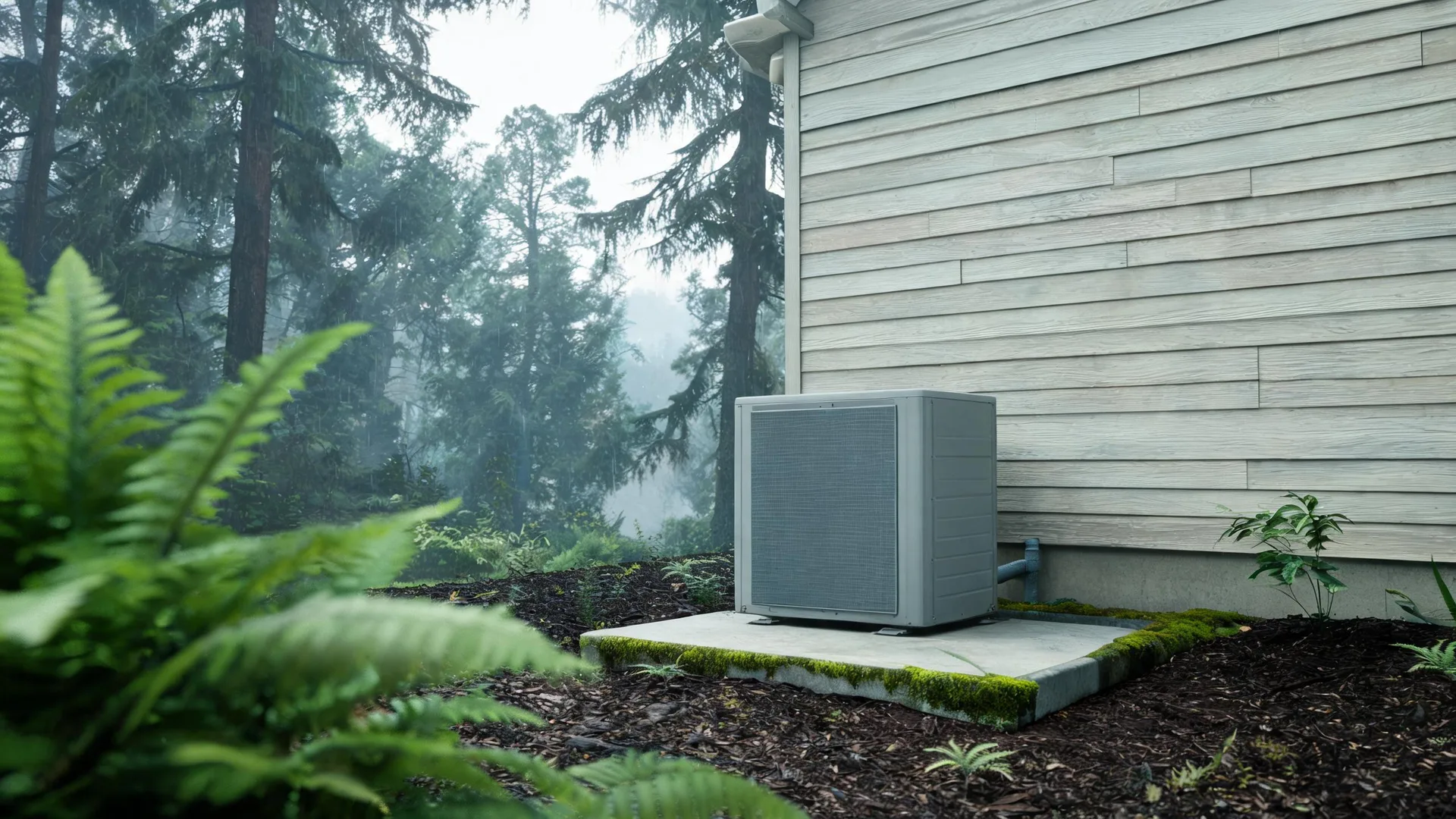
A gray heat pump outdoor unit mounted on a concrete pad next to the stone-accented exterior wall of a house.

What a struggling heat pump sounds and feels like before it fails

A heat pump that needs attention usually says so through the air coming out of the vents. Air that feels cool or barely warm during heating mode is the most common complaint, and it often means the system is stuck or struggling partway through its defrost cycle, or losing refrigerant through a slow leak. Ice building up on the outdoor unit and staying there is another sign worth acting on. Some frost in cold weather is normal, the unit is built to melt it off on its own, but a coil caked in ice that never clears points to a failed defrost control or a fan that's stopped pulling air across the coil. Listen to it too. A hard clunk when the system switches between heating and cooling usually means the reversing valve is sticking. A hum with no startup, or clicking that repeats without the compressor kicking on, often traces back to a worn capacitor or a failing contactor. Short cycling, where the system fires up and shuts off again within a few minutes, puts extra wear on the compressor every time it happens, and it's worth having looked at before it happens on every cycle instead of just some.

A weak part gets worse under load, not better

A capacitor that's starting to go still gets the compressor running, just with a harder jolt each time. A reversing valve that sticks a little will stick a little more next time it's asked to switch. None of these fix themselves by working through the problem. The strain of each cycle is what wears them down further, so the same fault shows up again sooner and harder.

A small fault can take the compressor down with it

The compressor is built to run under a specific refrigerant charge and a specific electrical load. A slow leak or a failing capacitor changes both of those while the system keeps trying to run as if nothing's different. That's what burns out a compressor that didn't start the season with anything wrong with it. Catching the small part early is what keeps it small.

Before calling anyone, check the thermostat first. Make sure it's set to heat and the set point is actually above room temperature, and swap the batteries if it uses them. Go outside and look at the outdoor unit. If the coil is buried in snow or the cabinet is packed in ice, clear it by hand, that alone can make a heat pump that seems dead start working again. Check the air filter next. A filter clogged with dust chokes airflow across the indoor coil, and a heat pump starved for airflow will struggle to keep up no matter what else is right with it. Walk around the house and check that no vents are closed or blocked by furniture. Last, look at the breaker panel. A heat pump that won't start at all sometimes just needs a tripped breaker reset, and if it trips again right away, that's worth telling the contractor before they arrive.

A diagnostic visit starts outside at the unit itself. The contractor checks refrigerant pressures with gauges, looks at the coil for ice or dirt buildup, and watches whether the fan pulls air the way it should. Inside, they pull the panel off the air handler and test the capacitor and contactor with a meter rather than guessing from how they look. They'll run the system through a full cycle, heating and defrost both, because a fault that hides at steady state often shows up the moment the system switches modes. Electrical readings get checked against what the unit is rated for, since a compressor pulling more current than it should is usually telling you something even before it fails outright. By the end, the contractor can usually point to one part and say that's the cause, rather than leaving it as a guess.