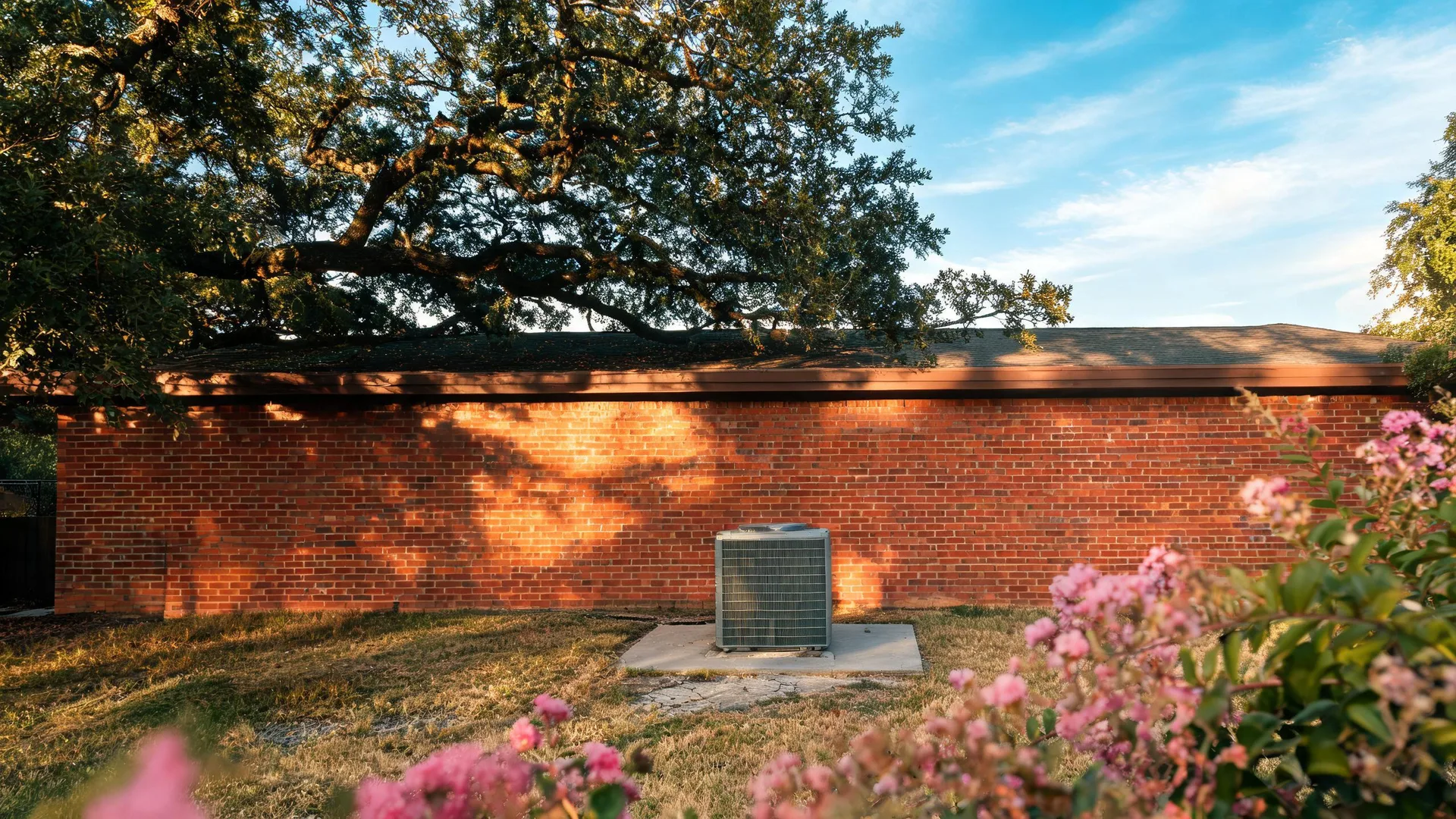
A weathered white picket fence runs along a mown grass lawn in front of a row of gabled houses with gray shingled roofs and siding, backed by large leafy trees.

Heat Pump Repair in Binghamton, NY

Tell us about the job

Takes about a minute. No obligation.

RepairHeat PumpBroome County, NY
Step 1 of 2

What ZIP code is the job in?

Winters here ask a lot of a heat pump

Binghamton sits in zone 5A, where heating carries the bigger load and overnight lows average 18°F across December, January and February. A heat pump running that hard, that often, wears on the same parts year after year. That's most of what shows up as a repair call.


So the usual causes are the ones to check first

A heat pump that's short cycling, not switching out of defrost, or losing heat on the coldest nights is usually dealing with a worn component or a refrigerant problem, not something particular to this county. Finding which one it is comes before any talk of replacing anything.

9 months
September through May, your system heats
2 months
July through August, it cools
18°F
the average winter night it heats against
79°F
the average summer afternoon it cools against
Isometric illustration of a cutaway house showing interior rooms, ceiling ductwork and an air handler, connected by lines to an outdoor condenser unit on a pad beside the building.
Your system heats September through May and cools July through August.

NOAA nClimDiv, 1991–2020 normals

Heat here runs September through May, nine months out of the year.

August is when a weak part finally gets tested, so repair calls start right as the heat kicks on.

A heat pump that's struggling costs more here every month it runs

Power costs 24.43 cents a kWh statewide
248 damaging wind events from 2015 to 2024
39 hail events from 2015 to 2024

Half the homes in Broome County were built in 1958 or earlier. If your heat pump came with a house that old, it's worth asking whether the unit itself is original or a later replacement. Heat pumps don't last as long as the house around them, and one running on borrowed time tends to break down the same way a newer one does, so the symptoms alone won't tell you its age. What it tells you is whether a repair now is worth it, or whether you're about to pay for this same visit again next year.

This is a fixable problem, not a county problem

Broome County sees its share of wind, hail and winter storms, but none of that is unusual for a heat pump. A system acting up here is almost always dealt a worn part or a refrigerant problem, the same two things that cause trouble anywhere else. Find which one it is and the fix is usually straightforward.

Find a contractor
A white mini-split heat pump outdoor unit mounted on a concrete pad beside a gray-sided house, surrounded by gravel and green shrubs.

Ask before you pay for the repair

Ask the contractor who comes out for a repair how old the unit actually is before any work starts. A nameplate or a service sticker from a past install can settle it fast. If there's no record either way, that uncertainty is itself worth knowing, since it means the repair decision is a guess about how much life is left.

Check the thermostat and the breaker first

Make sure the thermostat is set to heat and the temperature is actually above room temperature. Check the breaker panel for anything tripped, and look at any shutoff switch near the outdoor unit or in the basement. These take a minute to rule out and sometimes that's the whole problem.

Look at the outdoor unit itself

Walk outside and check whether the outdoor coil is caked in ice beyond a thin frost, or if the unit is buried in snow, leaves or debris. Airflow in and out of that unit matters, so anything blocking it front or back can cause the symptoms you're seeing. Also swap the air filter inside if it's been a while. None of this calls for opening the unit, just clearing what's around it.

A heat pump that's struggling still has to meet the thermostat setting, so it leans harder on whatever is left working. A low refrigerant charge makes the compressor run longer to move the same amount of heat, and that extra runtime is what wears it out early. A failing defrost control can let frost build past a thin coat into solid ice, and once the coil is iced over the system can't pull heat from outside air at all. A motor running on a bad capacitor draws more current than it should every time it starts, and that heat adds up in the windings until one day it doesn't start back up. None of these get better by waiting through another cold night. They tend to take other parts down with them, parts that didn't have to fail.

A repair is worth making when one part failed and the rest of the unit is still sound. A bad capacitor, a stuck reversing valve, a worn contactor. Swap the part and the coils, the compressor and the lines go on working like they did before. Replacement starts to make more sense when the compressor itself is the problem. That's the part that actually moves refrigerant and does the work of heating, and it isn't practical to replace on its own. A tech who finds a failed compressor is usually telling you something about the whole unit, not just that one part. Refrigerant is the other thing worth asking about. A slow leak can be topped off once, but if the leak itself isn't found and sealed, the charge runs low again. A unit that needs refrigerant more than once hasn't actually been fixed yet.