
Mini split light blinking in Lindenhurst, NY
Your request goes to a Suffolk County pro who takes mini split jobs.
Find a mini split proWhy is the light on my mini split blinking?
A blinking light on a mini split usually shows up at the worst time, when the unit stops cooling or heating the way it should and someone at home notices the room isn't right. The blinking itself looks the same whether it's a small thing or not, so it's natural to want to know what the unit is actually trying to say before deciding how much to worry about it.
It's an error code, not a warning light
That blinking light is the indoor unit counting out an error code, the number and pattern of blinks telling a technician which fault triggered it. Mini splits don't have a single warning light the way a smoke detector does. Each brand uses its own count and timing, and the same blink pattern can mean a clogged filter on one model and a refrigerant problem on another. With Suffolk County summers running humid and winters cold, these units run hard most of the year, and a code can point to something as simple as a dirty filter restricting airflow or as serious as a sensor or compressor fault. Matching the pattern to the model's chart is the only way to know which one you're dealing with.
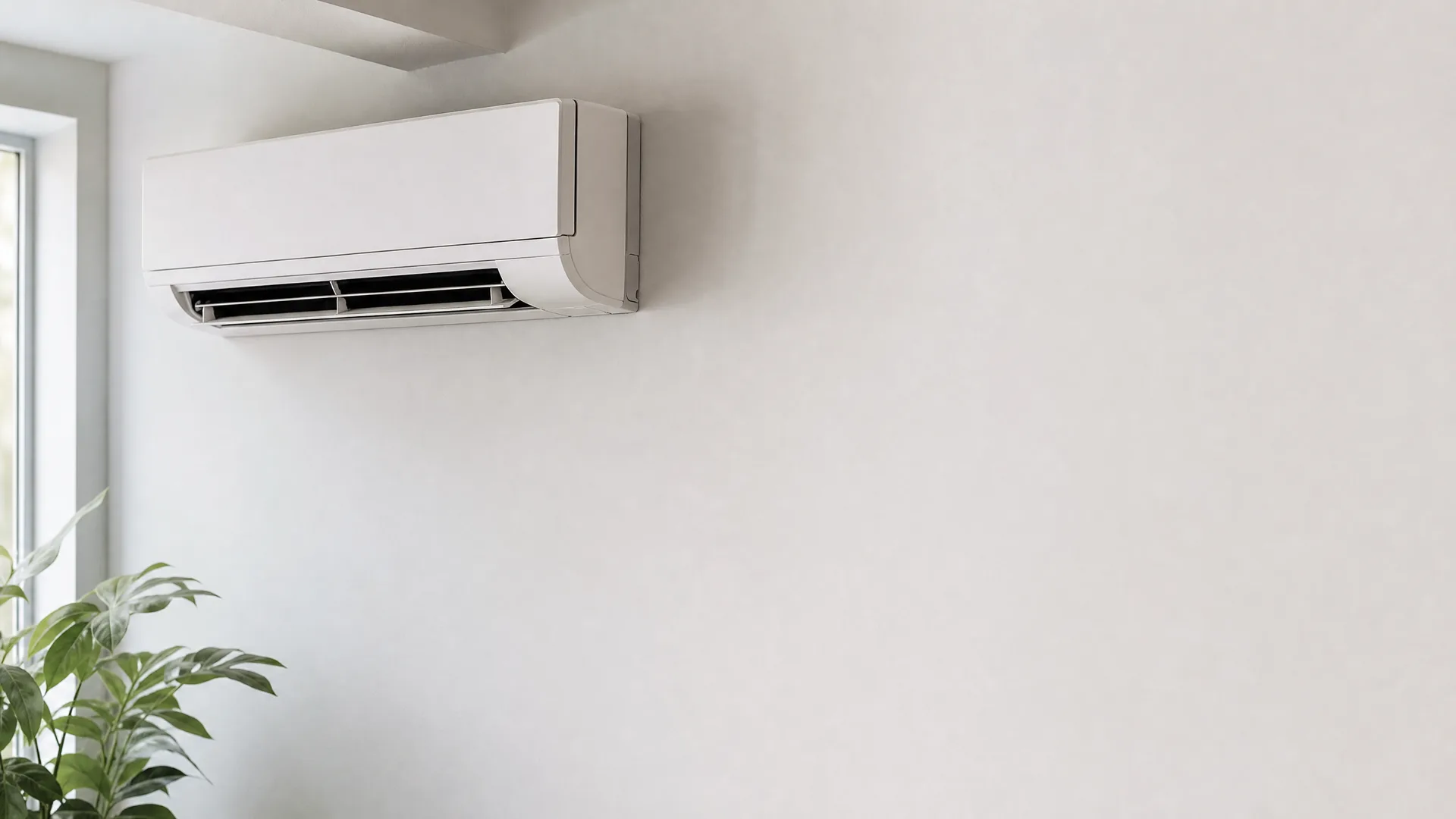
What the blinking light tells you
The light is a code, not just a warning. Most mini split brands use the number of flashes, or a pattern of long and short blinks, to point to a specific fault, like a frozen coil, a blocked filter, or a sensor that's failing. A contractor reads that pattern first before opening the unit up. If you can tell them how many times it blinks, or the pattern it repeats, you've already given them a head start on what's wrong.
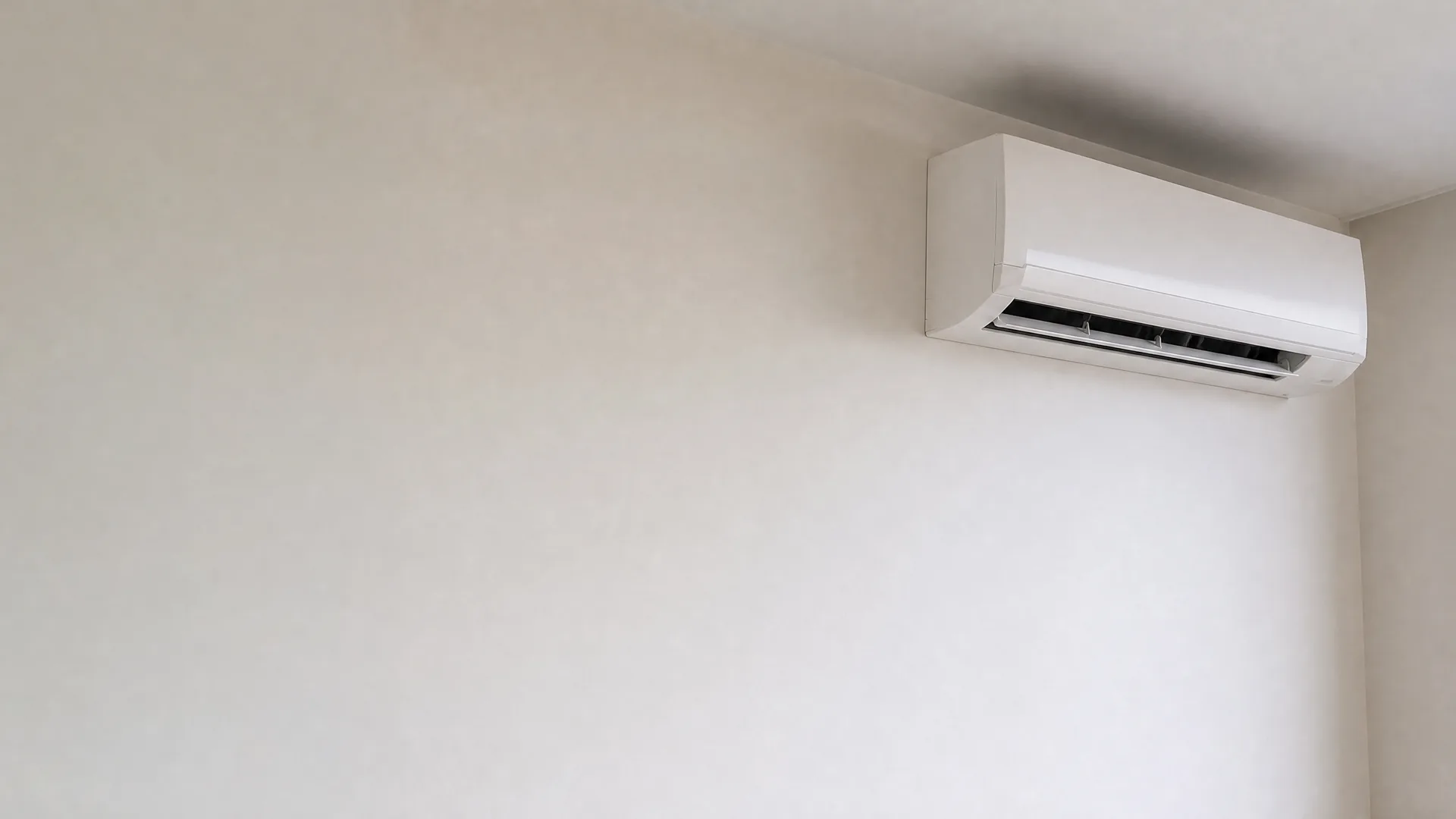
Why Suffolk County units blink more
A mini split here runs through sticky summers and cold winters, and that range puts more strain on the parts that tend to trigger a blinking light. The outdoor unit can ice up in freezing weather if the defrost cycle isn't keeping up. The indoor coil can clog faster in humid months. Either one can set off the same blinking pattern, which is why the light alone doesn't tell you the fix. It just tells you something needs a closer look.
What are you noticing in the room right now?
The room is off. Maybe it's running but the air coming out isn't cold, or isn't warm, and the light on the indoor unit keeps blinking no matter how many times you cycle the power. Maybe you hear a clicking from the unit every so often, or the fan runs but nothing else happens. Some homes notice ice on the outdoor line or a musty smell coming from the vents. If the house is counting on that mini split to keep a bedroom livable through a hot night or a cold one, a unit stuck blinking isn't just an inconvenience. Left alone, whatever's tripping that code usually doesn't clear itself, and the room it serves stays uncomfortable until someone looks at it.

The indoor unit's sensor board flags a fault it can't clear itself.
The control board counts out the blink pattern tied to that fault.
A contractor reads the pattern against the brand's fault code chart.
That code points to the part behind the problem before any cover comes off.
How hard does your mini split work in Lindenhurst
Cooling runs June through August
Cooling runs June through August, three months straight with no break for the unit or the person watching the thermostat.
Heat runs October through May
Heat runs October through May here, eight months of the year, longer than the mini split spends idle.
Power here costs 26.13 cents per kilowatt-hour
Power here runs 26.13 cents per kilowatt-hour, so a fault that makes the unit run longer than it should shows up fast.
NOAA nClimDiv 1991-2020 · EIA-861 2025
You can wait and see if the blinking clears on its own after a power cycle. Sometimes the board resets and the code doesn't come back, especially if it was a one-time trip.
If the light comes right back, the fault is still there and cycling the power again won't change that. A contractor reading the code can tell you which part it points to before more gets damaged.




The number of blinks isn't universal. A Mitsubishi and a Fujitsu can flash the same number of times and mean two different faults, so the pattern only means something once you know the brand. A light that blinks at a steady, even pace is usually telling you the board already found one fault and stopped there. A pattern that comes in groups, pauses, then repeats, is the board counting out a code digit by digit. Either way, the light is on the indoor unit, but that's just where the report shows up. The part behind the fault, a sensor on the coil, a clogged drain pump, a problem outside at the compressor, can be anywhere in the system. Some boards hold that code in memory even after the light goes dark, which is why a fault that seemed to clear overnight can still be read off the board later. Cutting the breaker doesn't erase that memory. The board just comes back up clean and waits to blink again if the fault is still there.
What the Blink Pattern Actually Means
- Every mini split brand assigns its own meaning to a given number of blinks, so the same pattern means something different on a Mitsubishi versus a Fujitsu.
- A steady blink, evenly spaced, usually points to one fixed fault the board has already identified and locked in.
- A blink pattern that changes or repeats in groups is the board counting out a specific code rather than just signaling that something is wrong.
- The indoor unit's light reports the fault, but the part causing it, like a coil sensor or a drain pump, is often somewhere else in the system entirely.
- Some boards store the fault in memory even after the light stops, so a contractor can pull the code later even if it cleared itself overnight.
- Cutting power at the breaker doesn't erase the fault count the way cycling the remote does, since the board reboots clean either way.


Get matched with a mini split pro in Suffolk County
That blinking light isn't going to sort itself out while your mini split runs eight months of heating and three months of cooling a year in Lindenhurst, back to back with barely a break between them. Every mile-a-minute swing from a muggy August to a cold January leans on that unit, and a board that's already flagging a fault isn't going to hold up better under more of that load. Figuring out which brand's chart that blink pattern matches, and which part it's pointing at, takes someone who reads these codes regularly, not a guess from across the room. With oil heat common here and electric rates among the highest in the country, a mini split that's limping along on a bad sensor or a frozen coil costs you more the longer it runs that way. Getting matched with a contractor who knows your unit means you stop guessing at blink counts and start getting an answer.
If you ignore the blink pattern
The unit keeps running in whatever state triggered the code, or it shuts itself down to protect the compressor. A frozen coil left alone keeps icing over every time the system tries to cool, and the ice itself blocks airflow, so the room gets no relief even on the hours the unit is on. A refrigerant leak behind a blink code doesn't seal itself, it keeps losing charge, and the compressor works harder against a lower charge each week it runs. By the time oil heat kicks back in come fall, a fault left alone all summer can mean a bigger repair than the one the blinking first pointed to, since the part it flagged has had months to wear against the rest of the system.
If you get the code read now
A contractor matches the blink pattern to the fault it names before the part behind it fails outright. A blocked filter or a low charge caught early is a smaller job than a seized compressor or a coil replaced after months of icing. Catching it now also means the unit is working right for whatever is left of the season, instead of running weak or shutting off on the days you need it most. Suffolk County doesn't give a mini split much downtime between eight months of heat and three of cooling, so a fault fixed while it's still small is one less thing competing for the unit's attention when the next season starts.
Cooling runs June through August
Three months of cooling isn't much time for a fault code to show up on its own and clear up on its own too. If that light started blinking partway through summer, the problem is new, and it's worth having someone look before the next stretch of hot days finds the unit not keeping up.
NOAA nClimDiv 1991-2020

A blinking light means the unit found a problem it can't fix by itself
That's the whole answer. The pattern of flashes is the board telling you which part or condition tripped it, and no amount of cycling the power changes what's wrong behind it. A frozen coil stays frozen until something stops the cause. A blocked filter stays blocked until someone cleans or replaces it. The light is just the messenger.
What happens next isn't on you. A contractor who works on your brand of mini split can read the blink pattern against that brand's fault chart, match it to the part it points to, and go straight to checking that part instead of guessing. You won't need to know whether it's a sensor, a coil, or a drain line before someone shows up. You just need the light reported as you see it, blinking fast or slow, steady or in groups, and someone who repairs these units can take it from there.


Mini Split Repair
Find a mini split repair pro in Suffolk County

- Get matched with a pro who works on mini splits in Suffolk County.
- A Suffolk County pro who repairs mini splits gets your request.

- Get the mini split repair search off your mind today.
- Once you send the form, finding a pro is off your list.

- Explain the mini split problem once instead of to every shop in Suffolk County.
- Skip calling shops to ask who repairs mini splits in Suffolk County.

- A licensed pro who repairs mini splits in Suffolk County gets your request.
- A licensed pro who works in Suffolk County gets your request.