
Running quiet, moving air clean
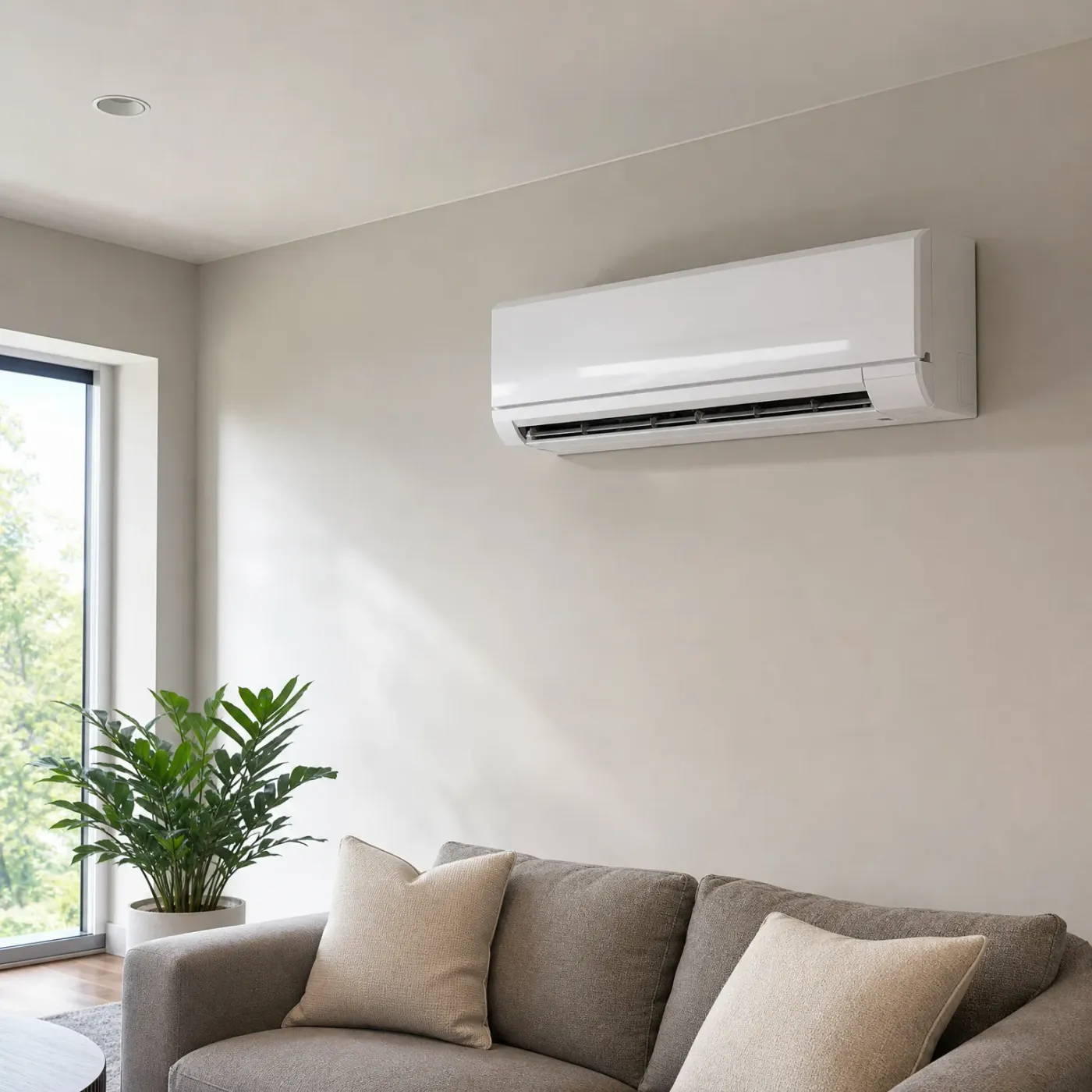
A mini split that sounds right hums low and even, with steady airflow out of the head. The coil stays clean, the fan blade stays balanced, and the only sound you notice is the compressor cycling outside.
Get matched with a pro who fixes mini splits in Nassau County.
Get matchedA mini split that's making noise is usually telling you something specific through the sound itself. A clicking at startup or shutoff is normal, that's the relay switching. A buzzing or rattling from the indoor head often means a fan blade is loose or has debris caught in it. A hissing points to refrigerant moving through the line, or possibly leaking out, which also hurts how well the unit heats and cools. A gurgling can mean the condensate drain line is clogged or the line set has air trapped in it. If the sound is coming from the outdoor unit and it's a hard metallic grinding, that's often the fan motor or the compressor itself struggling, and running it that way can shorten its life fast. The fix depends entirely on which sound you're hearing and where it's coming from, so pinning that down first is what tells you whether this is a quick adjustment or a repair that needs attention soon.
The compressor sits outside, and a sharp pulsing or a hard knock from that unit is different from the quieter sounds inside. It can mean a loose mounting bolt, a failing compressor, or ice built up where it shouldn't be in winter. If the outdoor unit is cycling on and off faster than usual along with the noise, that's worth mentioning when you describe the problem.
A mini split's noise usually shifts gradually before it stops working altogether. A faint hiss that grows louder over a few weeks can point to refrigerant escaping through a small leak. A rattle that comes and goes with the wind might just be a loose panel, not the unit itself. Noting when the sound happens, at startup, during steady running, or at shutoff, gives a contractor something specific to check first.
Cooling runs June through September
Cooling runs June through September, so a noise that starts now won't quiet down on its own before fall.
Heat runs October through May
Heat runs October through May, eight months of the compressor cycling on and off, which is eight months a strange sound keeps repeating.
Power here costs 25.49 cents per kilowatt-hour
Power here costs 25.49 cents per kilowatt-hour, so a unit working harder than it should because of a worn part shows up on the bill fast.
NOAA nClimDiv 1991-2020 · EIA-861 2025
A mini split doesn't make noise for no reason. Every sound it makes traces back to a part doing something, and most of the time you can work out what from the sound alone. The relay that clicks at startup is a small switch sending power to the compressor, and it clicks the same way every time the unit cycles on or off. Gurgling from the indoor head is refrigerant changing state as it moves through the line set, which is normal unless it comes with warm air blowing or ice on the lines, either of which points to low refrigerant instead. The condensate pump sits near the air handler and clears water that condensation leaves behind, and when it or the drain line is clogged you get a hiss or gurgle as it tries to push water through. A squeal on startup is friction, almost always the fan motor bearing starting to wear, and it tends to get worse over weeks rather than fix itself. A hum that deepens over time usually means the compressor is pushing against a restriction somewhere in the line, working harder than it should to move refrigerant through. Wind-driven rattling is mechanical, not electrical, and it means the bracket holding the outdoor unit to the wall has loosened enough to move. None of these sounds are random. Each one is a specific part telling you something specific is wrong.




Explain the mini split problem once instead of to every shop in Nassau County.
Get matched with a pro who works on mini splits in Nassau County.
Sending the form costs nothing.

A mini split that sounds right hums low and even, with steady airflow out of the head. The coil stays clean, the fan blade stays balanced, and the only sound you notice is the compressor cycling outside.

A head this dusty has likely gone a long stretch without a cleaning, and a dirty coil makes the fan work harder, which is where new rattles and hums start. A contractor can look at both the noise and the buildup causing it.
You're probably hearing it from the next room before you see it. A rattle that picks up when the fan speeds up. A hiss near the air handler that wasn't there last month. Maybe a knock from the unit mounted outside, the kind that changes pitch as it cycles. You might have noticed warm air coming out where cold used to, or the head blowing harder than usual to make up for it. Left alone, a loose part works itself looser, and a dirty coil makes the compressor work harder to do the same job, which shows up on your power bill before it shows up as a bigger repair.

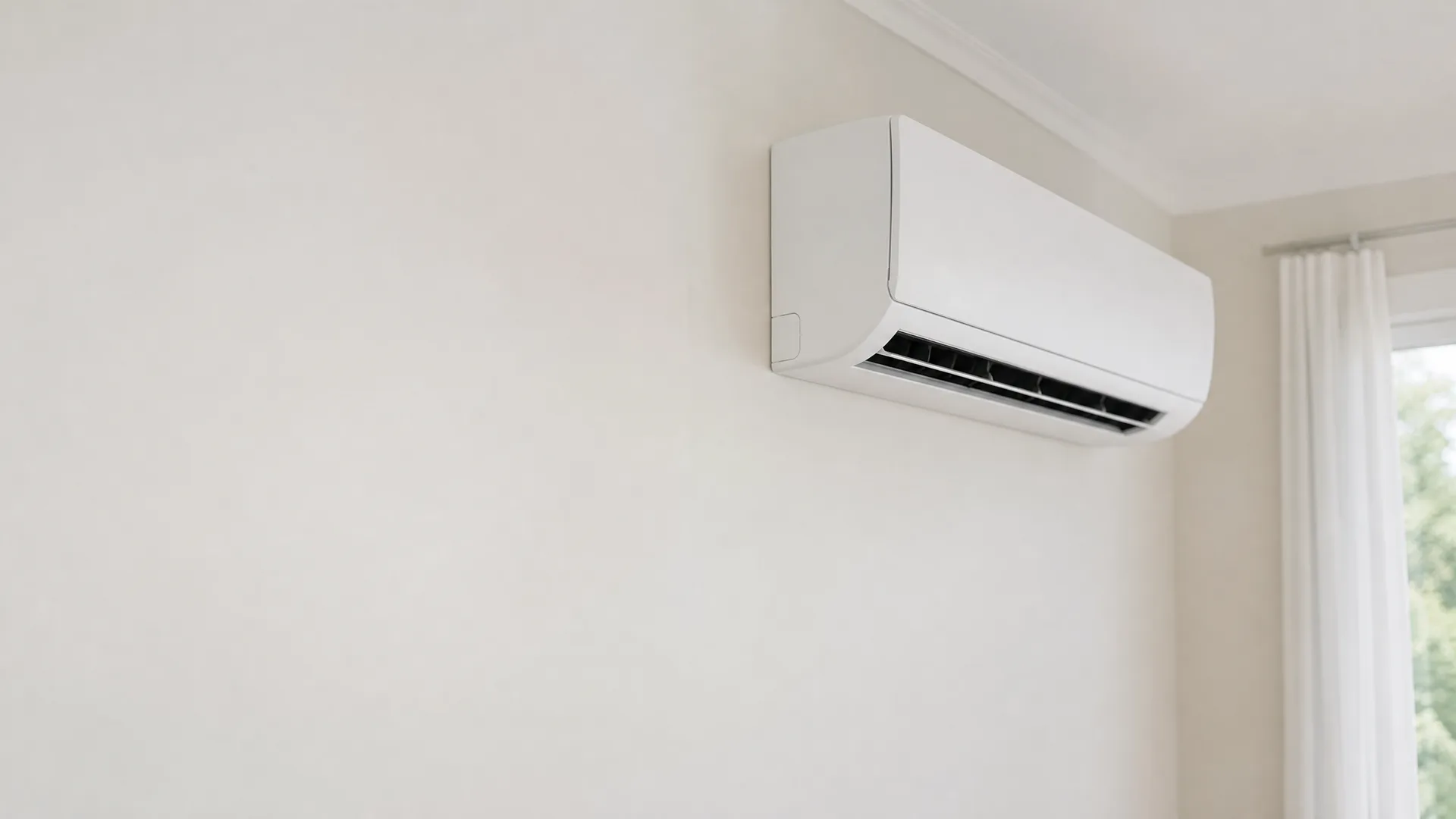
A mini split that's running right sits near the ceiling and hums low and steady. Air comes off the head evenly, no rattle, no hiss. You'd have to stand under it to notice it's on at all, and from across the room through a window it's just quiet.

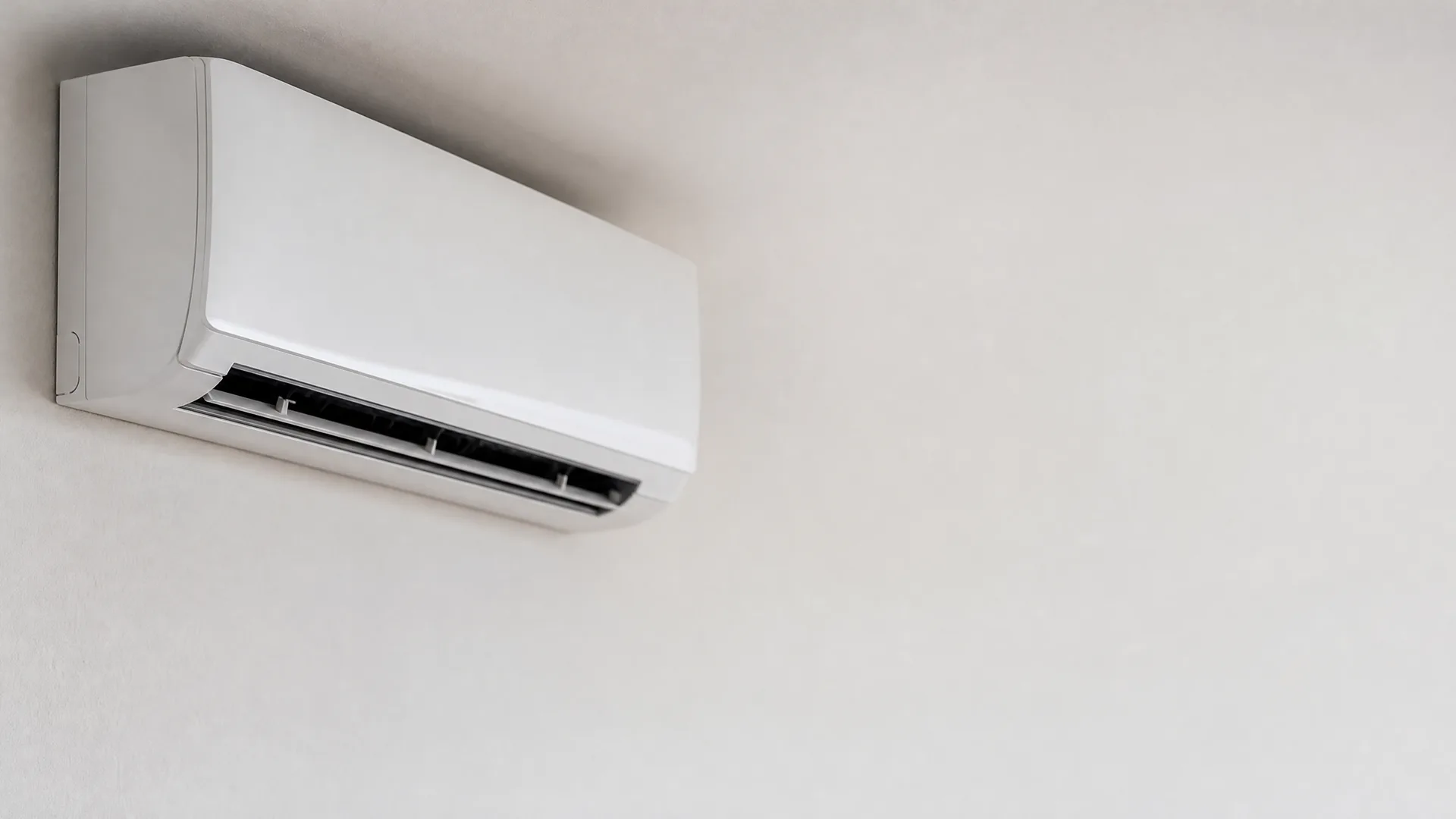
This one shows its age. The casing has gone dusty, the louvers are caked, and a unit in this shape is usually the one rattling or hissing from across the room. Dust buildup like this often travels with a dirty coil or a fan blade out of balance.
That clicking has probably made you pause more than once, trying to decide if it's something to worry about or just the unit doing what it always does. It's a fair question, especially with the unit running most of the year here between the summer humidity and the long heating months. A click isn't the same as a rattle or a hiss, and it's worth knowing why it happens before you assume the worst.
Inside the unit is a relay, a switch that sends power to the compressor when the thermostat calls for cooling or heat, and cuts it when the cycle ends. That switch makes a small mechanical click as it opens and closes. It happens at startup, it happens at shutoff, and it happens every time the compressor cycles, which in Hempstead is often given how long cooling and heating both run here. One click at each transition is normal. What's worth paying attention to is a change: clicking that repeats rapidly, or that's followed by a hum without the unit actually starting. That pattern usually points to the relay itself wearing out rather than just doing its job.

Summer air in Nassau County holds a lot of moisture, averaging a dew point of 65°F through June, July and August, according to NOAA. That's heavy air for your mini split to wring out, and the coil inside the indoor head works harder pulling water out of it than it would somewhere dry. If the coil has dust on it or the drain line is slow, that extra moisture backs up, and you'll hear it: a gurgle that wasn't there before, or a hiss as condensate drips somewhere it shouldn't. The noise usually shows up in the muggiest stretch of summer before it shows up anywhere else.
NASA POWER T2MDEW



A clicking relay, a loose fan blade, a knock from the outdoor unit, each one points at a different part, and the fix follows from which sound you've got. That's really all this page can tell you. What it can't tell you is how far along the problem is in your unit, running right now in your house, and that's the part that decides whether it's a quick fix or something bigger.
A contractor who works on mini splits in Hempstead can listen to it in person and tell you which it is. If you'd rather not spend the next few evenings calling around Nassau County, describing the same noise over and over and sorting through quotes, this page can match you with one who takes on jobs like yours and have them reach out to you directly. Either way, the sound won't go away on its own.

Skip calling shops to ask who repairs mini splits in Nassau County.