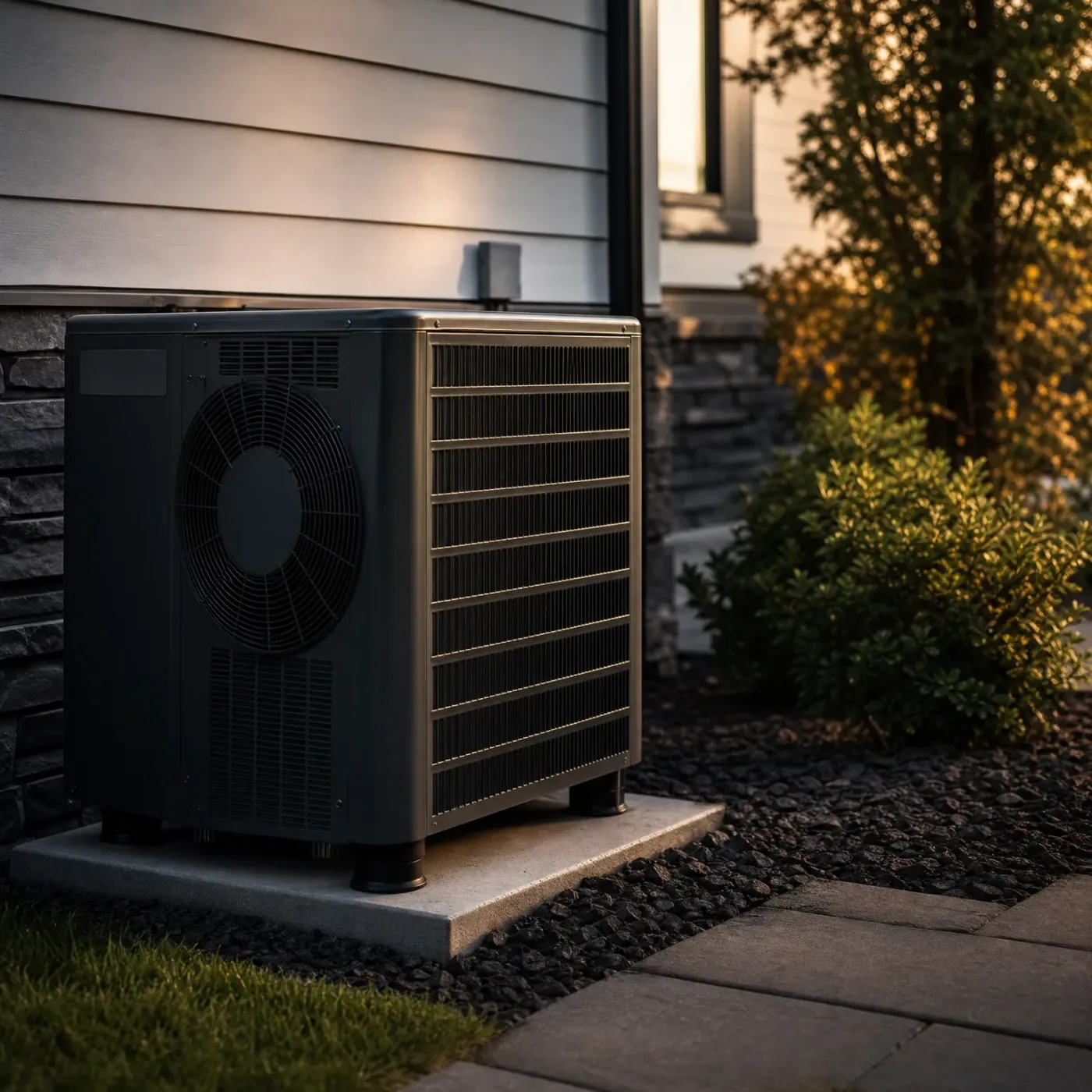
A dark outdoor heat pump unit with a round fan grille and finned coil sits on a concrete pad beside a house with horizontal siding and stone veneer, next to gravel, a paver walkway, grass and shrubs in warm low light.

Get matched with a heat pump pro in Suffolk County

Heat pump making a loud noise in Lindenhurst, NY

A heat pump that's banging, buzzing or rattling is telling you something specific, and the sound itself is a clue to what's wrong. A loose panel sounds different from a failing fan motor, and a grinding compressor sounds different from both. Answer a few questions about what you're hearing and get matched with a contractor who can take it from there.

Get a heat pump pro

A loud noise from your heat pump usually points to something loose, frozen, or wearing out. Rattling often means a panel or screws have worked loose from the cabinet vibrating over time. A buzzing sound can mean a failing contactor or a capacitor giving out, especially when the unit struggles to start. Grinding or squealing points to the fan motor bearings or the compressor itself, which is a harder repair. In winter here, ice can build up on the outdoor coil if the defrost cycle isn't clearing it, and that shows up as a cracking or hissing noise as the system tries to force air past the ice. The longer any of these run, the more they tend to wear on the parts around them, so a rattle left alone can turn into a bent fan blade, and a struggling motor can take the compressor down with it. What you're hearing is worth having someone look at before it gets louder.

A woman in a beige cardigan sits on a light-colored sofa with a blanket over her lap, looking off to the side, in a living room with large houseplants and a window.
A woman in a dark green sweater sits on a gray sofa in a living room with a large houseplant, a framed picture, a fireplace, and windows in the background.
A woman with long brown hair wearing a green V-neck top and beige cardigan sits on a light sofa, looking off to the side, with a dining table, lamp and framed picture in the background.
A woman with long wavy brown hair in a grey ribbed sweater sits on a couch indoors, looking toward a window, with a potted palm-like plant and fireplace behind her.

Why does your heat pump have to work so hard here?

  • Winter nights average 26°F

    Winter nights averaging 26°F mean the compressor runs long stretches at a hard load, and worn parts tend to announce themselves in cold weather first.

  • Heat runs October through May

    Eight months of heat means your heat pump logs more running hours than it would somewhere milder, so loose screws and worn bearings get found sooner.

  • Cooling runs June through August

    Three months of cooling adds more hours on the same compressor and fan motor, on top of the long heating stretch, with barely a break between.

NOAA nClimDiv 1991-2020

A gray outdoor heat pump unit with a large fan grille sits on a concrete pad beside a house with horizontal lap siding, next to a green shrub, mulch bed, and lawn.

Running quiet

A heat pump that sounds right hums steady when it kicks on and settles into a low whir once it's running. You can stand near the unit and hold a conversation without raising your voice. No clanking, no rattling panels, no grinding from inside the cabinet.

An outdoor air conditioner condenser unit on a concrete pad beside a house with horizontal lap siding, with a gray electrical disconnect box and conduit on the wall and bare dirt and mulch in the foreground.

Grinding and straining

Grime built up on the grilles chokes airflow, and the unit has to work harder to move the same amount of air. That strain shows up as noise first, a grind or a buzz from the fan motor or compressor, before it shows up as a breakdown. A dirty unit is a loud unit.

A woman stands in the open black front door of a white-sided house with a dark shingled roof while a man in a navy jacket approaches along the walkway, with lantern wall lights, a potted shrub, and flowering garden beds nearby.

That noise outside affects the heat inside

A heat pump that's grinding or banging in the backyard is still the thing keeping bedrooms warm on a 26 degree night. Most houses in Lindenhurst heat with oil, but if yours leans on the heat pump, a part that's about to fail outside means heat that's about to stop inside. That's a different problem at midnight in January than it is in June.

Letting the noise run on costs more than peace and quiet. A loose panel can wear against the cabinet until it cuts into wiring. A failing motor can seize and take the compressor down with it. Power here already runs expensive, and a system straining against a bad part pulls harder than one running right. Send the details in and a contractor who knows these units will reach out to figure out what's making the sound before it turns into a bigger repair.

A gray upholstered sofa with a textured cushion sits beside a dark round side table holding a vase of green foliage, with a table lamp and sheer-curtained window behind.
A gray outdoor condenser unit on a concrete pad beside a white horizontal-siding house, with refrigerant lines and conduit running to a wall-mounted disconnect box, bare soil in front and a green shrub at left.

What this looks like running right

The unit sits level on its pad, panels flush and screws tight. Refrigerant lines and the electrical conduit run clean into the disconnect box on the wall. Nothing rattles when it cycles on, and the cabinet stays free of buildup.

A weathered outdoor condenser unit on a concrete pad beside a house with light horizontal siding, surrounded by bare dirt and a shrub.

What trouble looks like

Grime cakes the grilles and top panel until air can barely pass through the coil. A unit left to sit like this strains harder to move air, and that extra strain is where the banging and grinding start.

An outdoor air conditioner condenser unit on a gray composite pad beside a house with horizontal lap siding, with refrigerant lines and a conduit running to a wall-mounted disconnect box, and a shrub at left.
Before you get your heat pump repair
A gray outdoor condenser unit on a concrete pad beside a beige vinyl-sided house, with a wall-mounted disconnect box, flexible conduit, mulch bed, shrubs and a concrete walkway in front.
After you get your heat pump repair

A local pro for your heat pump repair

After you send the request, you're done searching.

No charge to send it. You decide if you hire them.

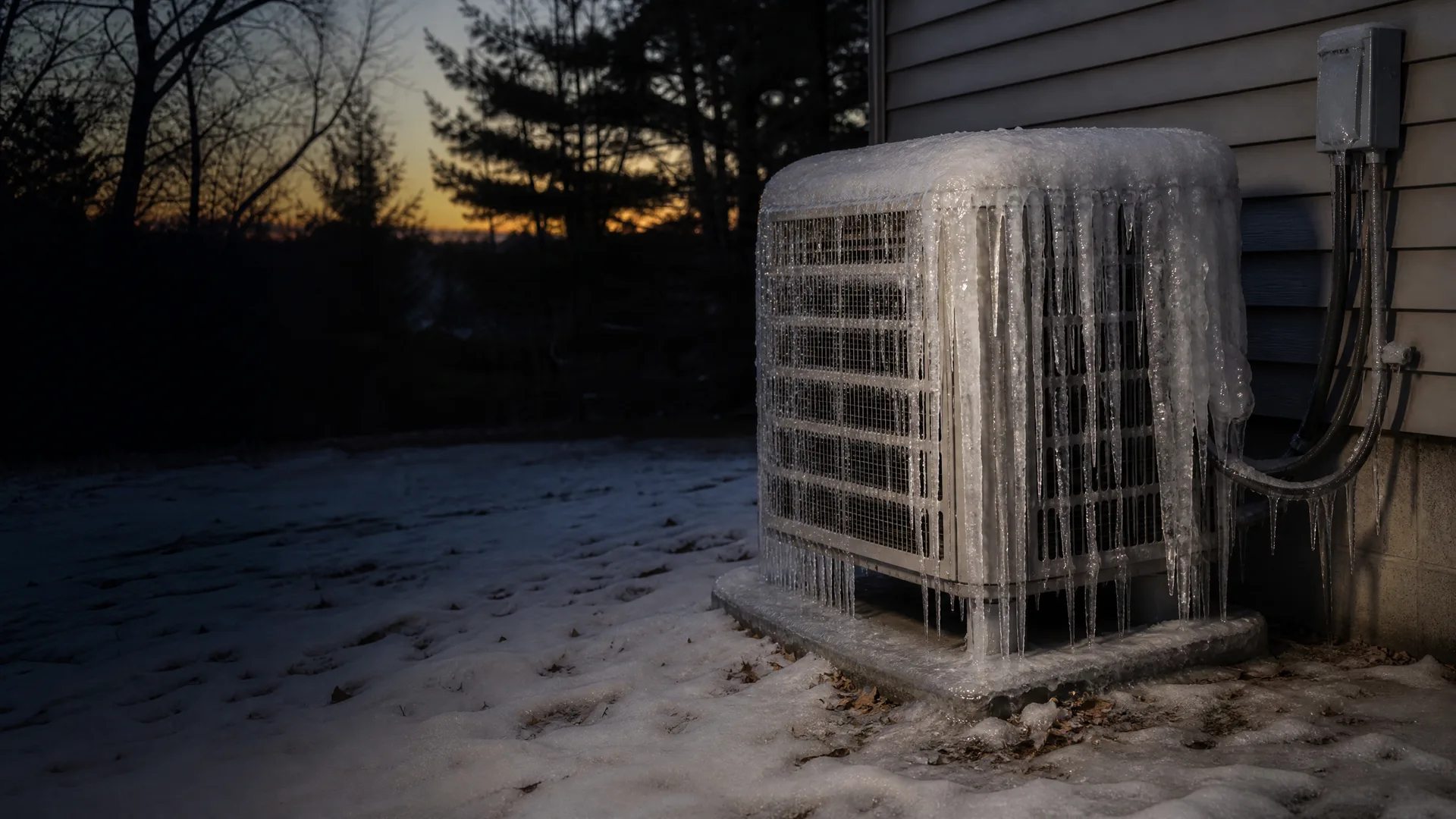
An outdoor air conditioning or heat pump unit encased in thick ice with hanging icicles, standing on a concrete pad beside a house with horizontal siding and an electrical box, with snow on the ground and a dusk sky behind bare trees.

Six in the morning, still dark, and you go out to the side yard because the unit sounds different today, a dull hum instead of the usual cycle. The outdoor unit is coated in ice, thick over the coils and down the sides, a crust thin enough in spots that you can see the fins underneath. Frost like this after a hard freeze isn't unusual on its own, but the unit isn't defrosting the way it should, and the hum means it's straining against ice it can't shed. Your breath shows in the cold. Somewhere behind you, the house is quiet, still holding its heat for now.

A gray outdoor condenser unit on a concrete pad beside a house with horizontal lap siding, a conduit and disconnect box on the wall, a shrub with white flowers at right and evergreen foliage at left.
A heat pump running right sits level and clean, lines and conduit routed neatly into the wall with nothing loose to vibrate.
A weathered outdoor condenser unit on a concrete pad beside a house with white horizontal vinyl siding, with refrigerant lines and conduit running to a wall-mounted electrical box.
Grime caked into the grilles and a weathered cabinet often go along with worn parts working harder than they should.
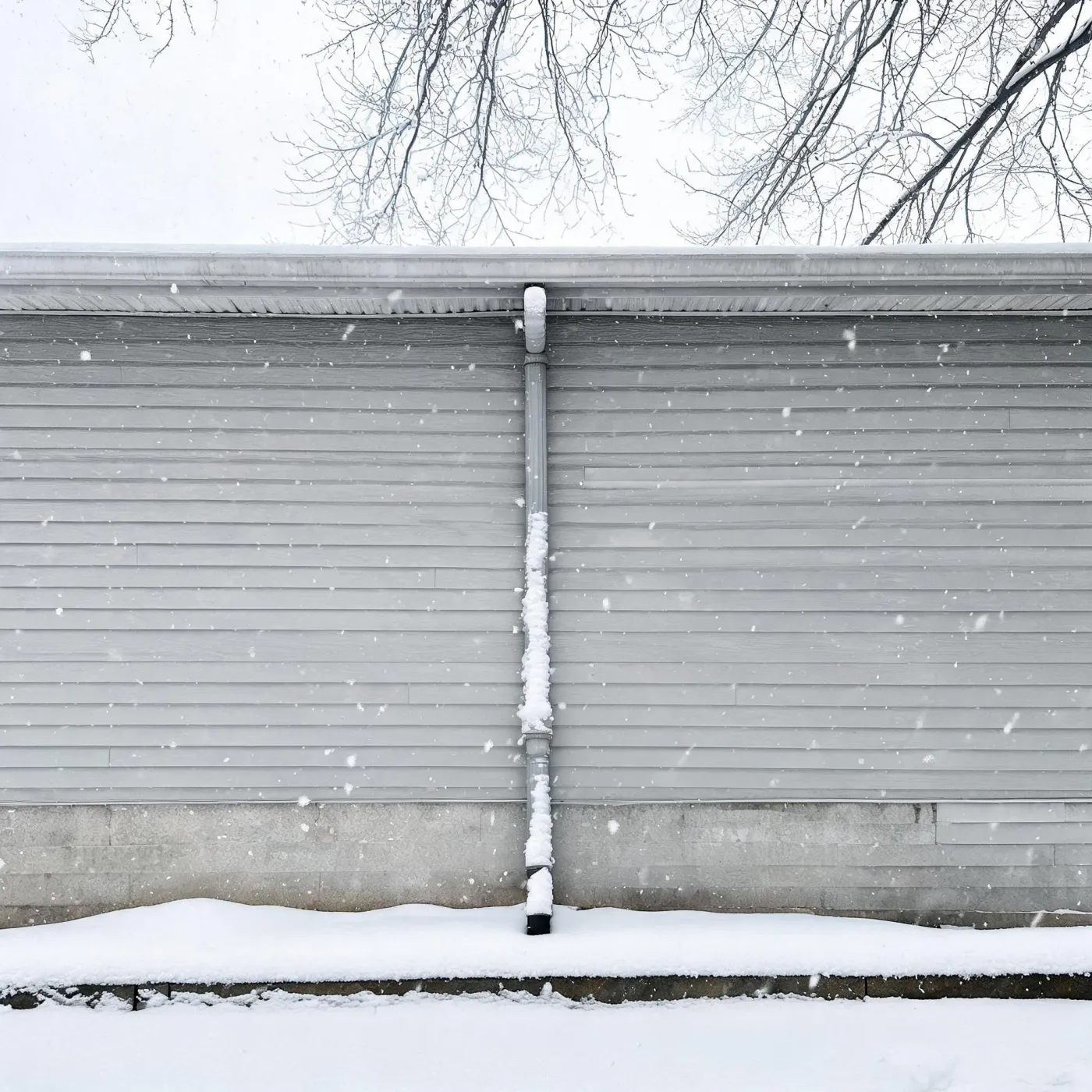
Gray horizontal lap siding on a building above a concrete block foundation, with a central downspout partly coated in snow, falling snowflakes, snow-covered ground, and bare tree branches against a white sky.

A compressor that has to push against a 26°F average overnight low all winter is under more strain than one working milder nights, and strain shows up as noise before it shows up as a breakdown. Bearings and mounts that have a little play in them get worse under a heavy, steady load, so a rattle or a grind tends to get louder as the night goes on rather than easing off. If the noise picks up on the coldest nights and quiets down some in the afternoon, that pattern itself is worth mentioning to whoever looks at the unit.

NOAA nClimDiv 1991-2020

An older woman with short blonde hair in a cream knit sweater smiles while looking to the side in a kitchen, with a round loaf of bread on a wooden board in the foreground and a snow-covered window behind her.
A woman with dark hair in a bun sits on a brown couch with a sleeping child resting against her, both wrapped in a cream knitted blanket, with a lit lamp and houseplants in the background.
  1. The compressor starts and refrigerant begins moving through the coils.

  2. A loose panel or mount vibrates against the cabinet as it runs.

  3. Worn bearings in the fan motor let the blade wobble and knock.

  4. A failing contactor buzzes as it struggles to hold the connection.

Power here costs 26.13 cents per kilowatt-hour

A heat pump working that hard to fight a 26 degree night pulls real power to do it, and here that power runs 26.13 cents a kilowatt-hour. A noisy unit is often working harder than it should, which means a worn part isn't just loud, it's costing you more every night it keeps running that way.

EIA-861 2025

What that noise is telling you

  • A new noise from your heat pump almost always traces to one of a few causes: a loose panel, a worn bearing, ice on the coils, or a failing electrical part.
  • Rattling, buzzing, and grinding each point toward a different fix, so the sound itself is useful information for whoever repairs it.
  • Nights averaging 26°F push the compressor to run long, hard cycles, and that strain tends to surface as noise before anything stops working.
  • A heat pump that's struggling still has to carry part of the load keeping rooms warm on those cold nights.
  • Once you send the details, matching with a contractor who handles this specific noise is no longer something you have to sort out yourself.

A loud heat pump is not a mystery. It is a panel working loose, a bearing wearing down, ice built up where it shouldn't be, or an electrical part on its way out. Each of those sounds different, and that difference is exactly what a contractor needs to hear before they ever touch the unit. Rattling, buzzing, grinding: none of it is random, and none of it means starting from scratch to figure out what's wrong.

The timing makes sense too. Overnight lows around 26°F keep the compressor running long, hard cycles most of the winter, and a part that has a little play in it or a connection that is starting to fail tends to show up right there, in the cold, before it quits outright. That is not bad luck. That is wear meeting load.

None of that changes what the unit is doing for the house. It is still the thing keeping bedrooms warm at six in the morning, and a noise outside does not pause that job, it just means the equipment is working harder than it should to do it. The sound is the early warning, not the failure itself, and catching it now is what keeps it from becoming the failure.

From here, the details you send are what connect you to a contractor who knows this noise and this kind of system. Once that's sent, you are not the one tracking down who's available or who handles heat pumps in this area. That part is off your plate.

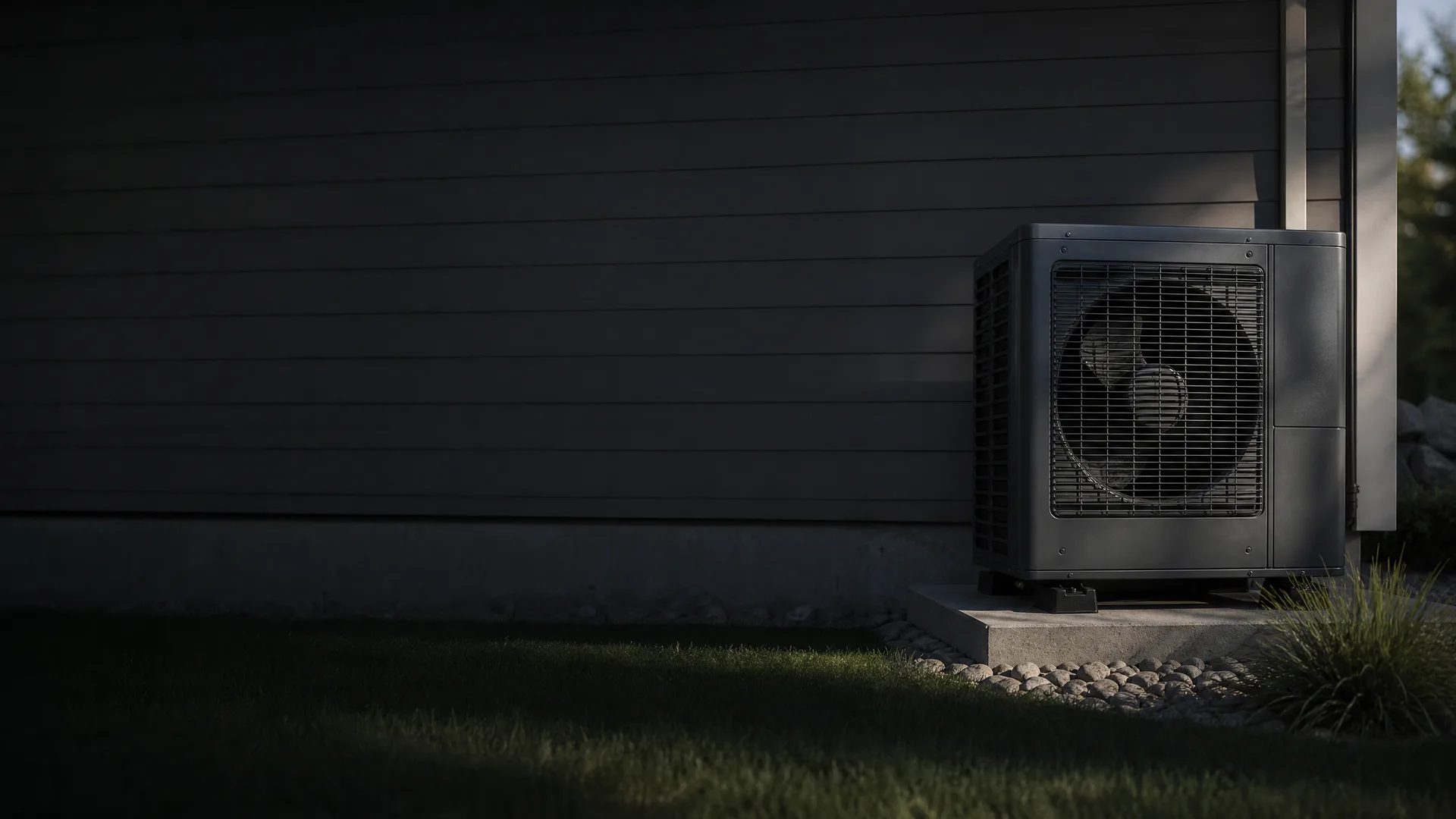
An outdoor air-source heat pump unit with a large fan grille stands on a concrete pad beside a dark horizontal-slat clad house wall, bordered by gravel, grass and an ornamental grass clump.

Get the right pro for your heat pump

Send the request today and stop worrying about who to call.

RepairHeat PumpSuffolk County, NY
Step 1 of 2

What ZIP code is the job in?