Electricity here runs 26.13 cents a kilowatt-hour
That's higher than most US counties pay. A mini-split runs on electricity alone, so every hour it runs draws power at that rate.
Takes about a minute. No obligation.
That's higher than most US counties pay. A mini-split runs on electricity alone, so every hour it runs draws power at that rate.
Two mini-splits can cool the same room and pull different amounts of power doing it. At Lindenhurst's electric rates, that difference shows up on the bill every single month.
NOAA nClimDiv, 1991–2020 normals
Oil heats 44 percent of homes in Suffolk County, more than any other fuel.
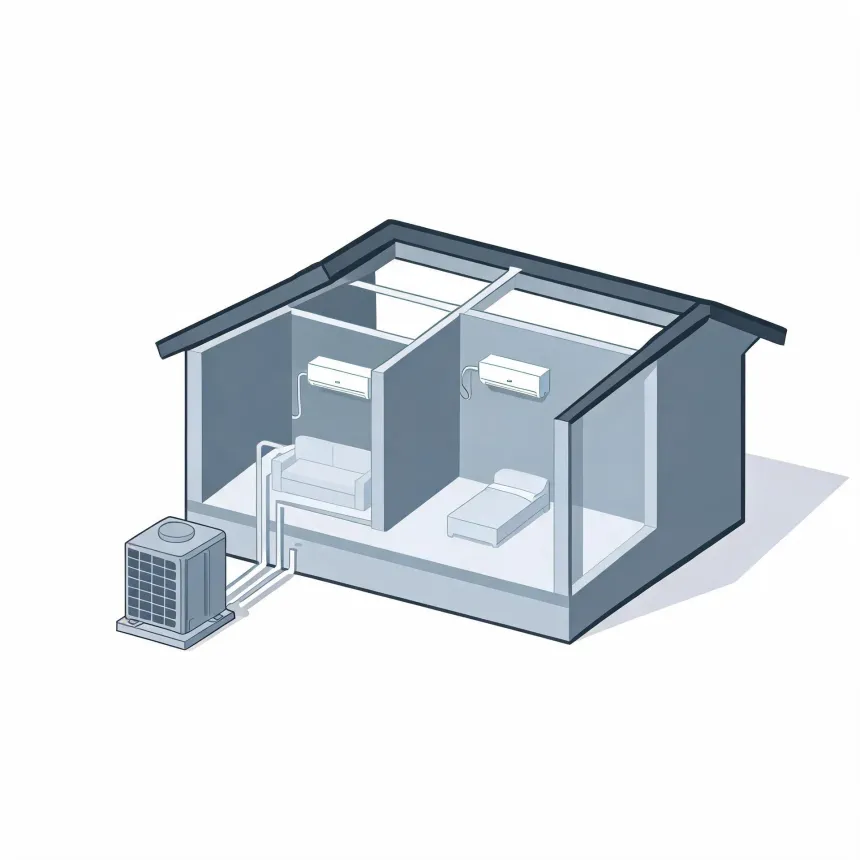
A mini-split installed here usually works alongside an oil furnace or boiler, not in place of it.



Half the homes in Suffolk County were built in 1970 or earlier. A house that age wasn't built with a mini-split in mind, and whoever installs yours has to work with the walls, framing and layout you actually have, not a clean slate. Where the line set can run, where the outdoor unit can sit, how far it has to travel to reach the indoor head, all of that depends on the house. None of it rules out a mini-split. It just means the installer needs to look at your house specifically before anything gets mounted.
The rate you pay doesn't change based on which system is on the wall. The efficiency of the unit does the rest of the work. Getting the sizing and the model right for this house is what decides whether that rate adds up fast or slow on every bill.
Find a contractorA mini-split installed in a Lindenhurst house is going to run in that same spot for years. The walls, the framing, the route the line set takes, whatever the installer works with on day one is what the system lives with for as long as it's mounted. If the unit is sized wrong for the room, that doesn't correct itself later. It runs long on humid days every summer after this one. Getting the sizing and placement right for this house the first time is what decides how it runs for the life of the equipment, not just the day it goes in.
The size of a mini-split should come from a room by room load calculation, not a rule of thumb based on square footage. Two rooms the same size can need different capacity depending on windows, insulation and what's on the other side of the wall. A unit sized too big will short cycle, turning on and off without running long enough to pull moisture out of the air. A unit sized too small runs constantly and still can't keep up on the hottest or coldest days.
Not every mini-split is built to produce heat once the outdoor temperature drops into the teens or lower. Some are rated for cold climates and keep working efficiently well below freezing. Others lose capacity fast once it gets cold and lean on backup heat strips or another heat source to keep up. If this unit needs to carry real heating load in winter, ask for its output at the coldest temperature it will actually see, not just its rating at a mild setpoint.
Sizing a mini-split comes down to heat gain and heat loss, not the size of the room. A contractor works out how much heat that specific space gains in summer and loses in winter, counting the windows, the insulation, the ceiling height, even which way the room faces. Two rooms that measure the same on a tape can carry completely different loads once you factor that in. Get it wrong on the high side and the unit short cycles, blasting cold air and shutting off before it ever pulls the humidity down, so the room feels cool but clammy. Get it wrong on the low side and it runs flat out all day without ever catching up on the hottest afternoons. The only way to land on the right capacity is a load calculation done for that room, not a chart that matches square footage to a model number.
Suffolk County saw 566 severe weather events between 2015 and 2024, and 434 of those were damaging wind. Ten tornadoes touched down in the same stretch, along with 17 hail events and 82 winter storms. An outdoor mini-split unit sits outside through all of it, so where it gets mounted and how it's protected matters. Statewide, 11 percent of New York households lost power for a day or more in 2024. A mini-split won't run without power, and neither will an oil burner's igniter or circulator pump, so an outage can mean no heat and no hot water at the same time. Worth asking the installer where the unit will sit and what, if anything, keeps it running when the grid doesn't.