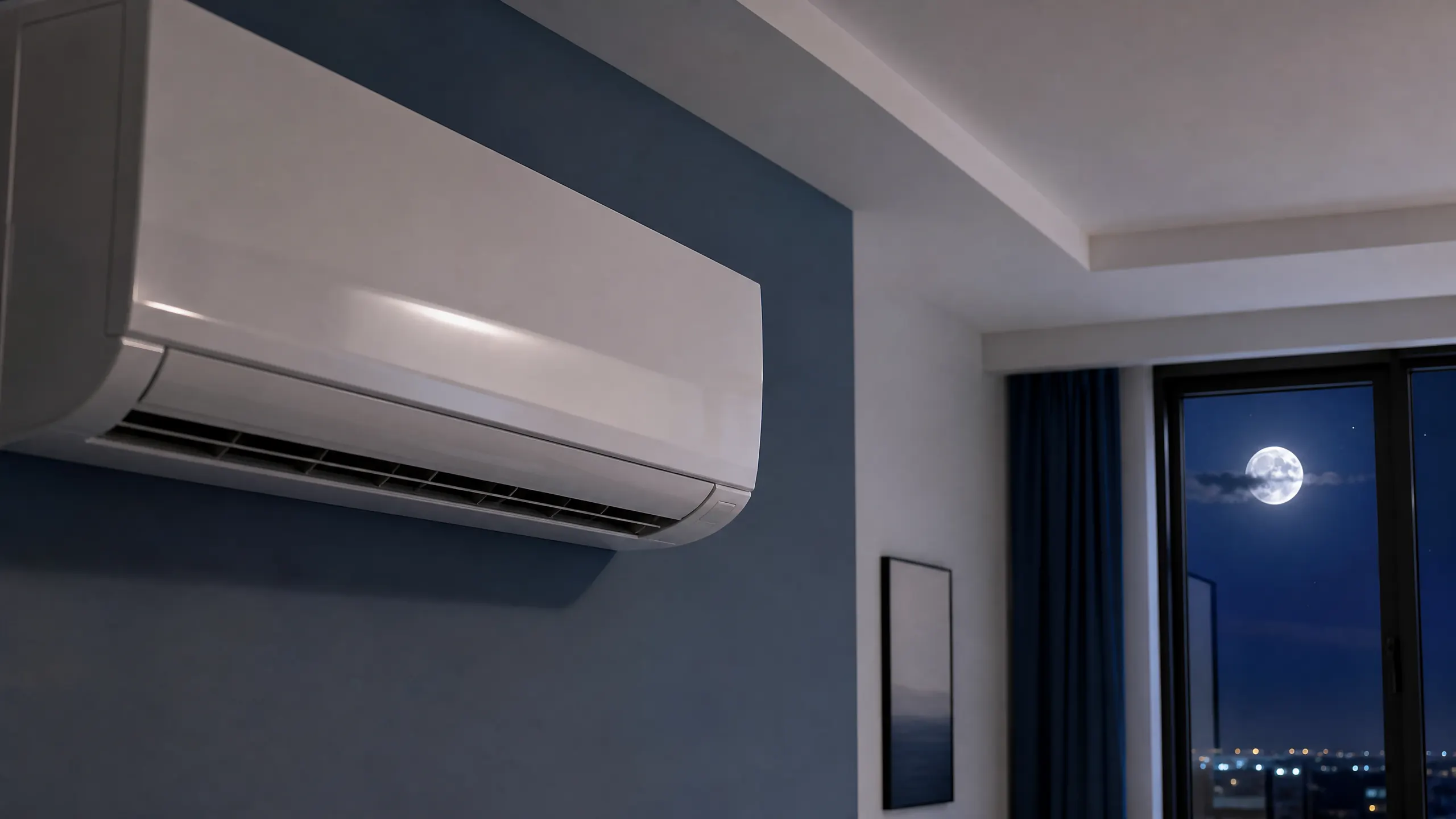





A white wall-mounted split air conditioner on a blue-grey wall, with a moonlit night sky visible through a nearby window.

Mini Split Installation in Buffalo, NY

Tell us about the job

Takes about a minute. No obligation.

New system or replacementMini-splitErie County, NY
Step 1 of 2

What ZIP code is the job in?

Almost every home in Erie County heats with utility gas, 86.8% of them. That means most houses already have a furnace or boiler doing the work. A mini split adds something that system doesn't do well. It cools a room in summer, or heats a space the ductwork never reached. It also gives you heat in that one room on a mild day without running the furnace for the whole house. If your home is one of the 8.7% running on electric heat, a mini split can carry more of that load, since it moves heat instead of generating it. Either way, it runs alongside what you already have rather than replacing it.

8 months
October through May, your system heats
2 months
July through August, it cools
19°F
the average winter night it heats against
78°F
the average summer afternoon it cools against
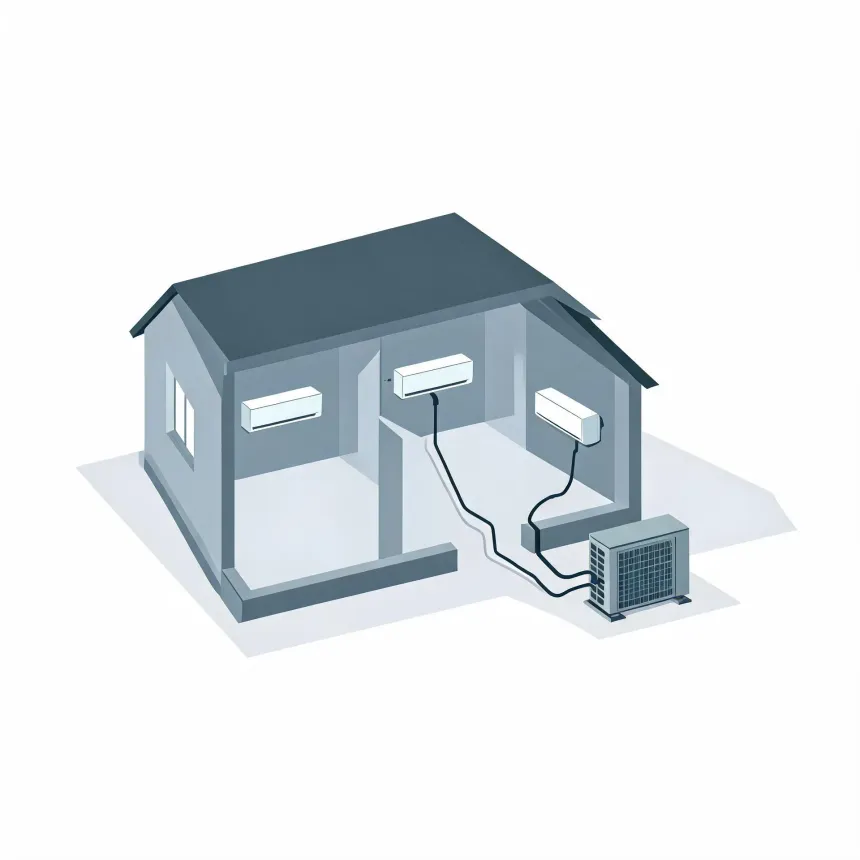
Isometric illustration of a cutaway single-story house with three wall-mounted indoor air conditioning units connected by lines to an outdoor condenser unit on the ground outside.
Your system heats October through May and cools July through August.

NOAA nClimDiv, 1991–2020 normals

A mini split doesn't need to be oversized to cover one room or one zone.

A standard size and efficiency rating does the job here, and costs less to run at 24.43 cents per kilowatt-hour.

Half these homes were built by 1957. A mini split has to work with the house you have, not a new one.

Half the homes here were built by 1957
Cooling runs July through August
Summer afternoons average 78°F
Built for this houseHalf the homes in Erie County went up in 1957 or earlier.

Erie County sits in zone 5A, a cool, humid climate where heating carries more of the year's work than cooling does. A ductless mini split counts as a split system under federal rules. Any unit manufactured from 2023 on has to meet the same minimums as other split heat pumps, 14.3 SEER2 for cooling and 7.5 HSPF2 for heating. There is no separate, lower bar for ductless systems. That standard sets the floor for how well the unit cools in summer and heats through the cold months that matter most here.

Not pushed hard, so built-in reliability counts more than top efficiency

Cooling only runs about two months here, July and August, with afternoon highs around 78. A mini split in Erie County isn't fighting extreme heat, so it doesn't need to be the highest-efficiency model on the shelf. A standard unit sized right for the room will hold up fine, since age and upkeep matter more here than how hard the system works.

Find a contractor
A white outdoor air conditioner condenser unit mounted on metal wall brackets against gray horizontal siding, with a blue sky and white clouds behind it.

Two months of work, then it sits

The clip shows July and August doing the work, then months of nothing. That's the actual schedule here, cooling two months a year while afternoon highs sit around 78. A compressor running that little isn't fighting the kind of heat that wears a system down early. When a mini split in this county needs a repair, it's more often because a part sat unused or went uninspected, not because it got run into the ground.

Ask what it takes to heat the coldest day, not the average one

Every mini split has a rated capacity that drops as the outdoor temperature drops. Ask for the capacity at the lowest temperature the area sees, not just the rating at mild conditions. Some units hold most of their heating output down to very cold air. Others fall off hard. That number tells you whether the system can actually carry a room through the coldest stretch or whether it will need backup heat to do it.
Ask who sizes the unit and how

The right size for a mini split comes from a load calculation on the specific room or space, not a guess based on square footage. A unit sized too large will short cycle, turning on and off more than it should, which wears the compressor and leaves the room feeling damp. A unit sized too small will run constantly and still not keep up on the hardest days. Ask whether the contractor is calculating the load or estimating it.

If you're adding a mini split rather than replacing a system outright, there's nothing old to deal with. It's new equipment going in alongside the furnace or boiler that stays put. The question only comes up if you're pulling out an older window unit or a through-wall AC to make room for the new indoor head. Those are small enough that a contractor can take them when the new unit goes in, no separate haul-away needed. If the job involves running new line sets or mounting an outdoor condenser, ask where it's going and whether the old unit's electrical hookup can be reused or needs to be pulled out too.

Installation starts outside with the line set, the pair of copper lines that carry refrigerant between the outdoor unit and the indoor head. A technician runs them through a small hole drilled in the wall, usually behind where the indoor unit will mount. Before anything gets charged with refrigerant, the lines get pulled down to a vacuum to clear out moisture and air. That step matters more than people expect. Any moisture left in the lines turns into acid once the system runs, and that shortens the life of the compressor. Once the vacuum holds steady, the system gets charged, the indoor head gets mounted and leveled, and the whole thing gets tested for proper airflow and temperature drop before anyone calls it done.