






A white picket fence runs along a grass lawn in front of a row of similar gabled houses with siding, beneath overhanging leafy tree branches.

Mini Split Installation in Brooklyn, NY

Tell us about the job

Takes about a minute. No obligation.

New system or replacementMini-splitKings County, NY
Step 1 of 2

What ZIP code is the job in?

Electricity here runs 36.97 cents per kilowatt-hour on average, well above most of the country. A mini-split that cools and heats efficiently matters more in Brooklyn than it would somewhere power is cheap. Every hour it runs, the difference between a well-matched system and an oversized or poorly installed one shows up on the meter. That dew point in summer, 65 degrees on average, means the air holds a lot of moisture, and a system sized and installed right will handle that load without working harder than it has to. Get the sizing or the installation wrong, and you pay the state's high rate for inefficiency on top of it.

7 months
October through April, your system heats
4 months
June through September, it cools
29°F
the average winter night it heats against
83°F
the average summer afternoon it cools against
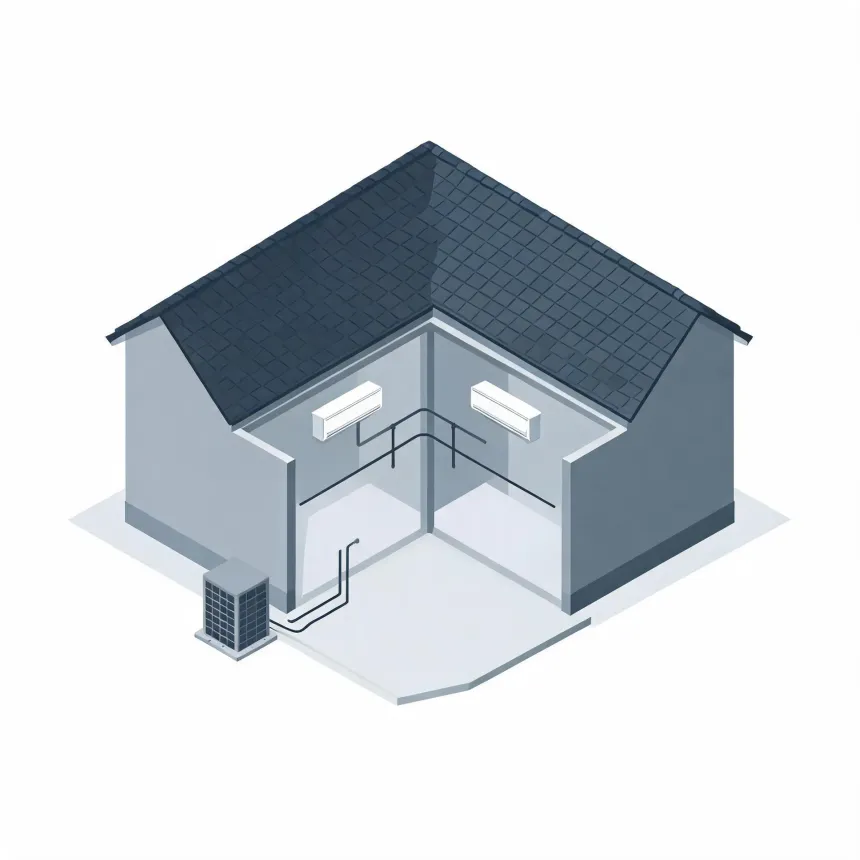
Isometric illustration of a cutaway gray house with a dark shingled roof, showing two wall-mounted indoor air conditioning units connected by piping to an outdoor condenser unit on the ground outside.
Your system heats October through April and cools June through September.

NOAA nClimDiv, 1991–2020 normals

Gas heats 72.2% of homes in Kings County, electricity only 14.2%.

A mini-split here is usually added alongside a gas furnace, not replacing the whole system.

May is the month to get this done, before June asks the system to work

Cooling runs June through September
Summer afternoons average 83°F
56 damaging wind events from 2015 to 2024
Built for radiators, not ductworkHalf the homes in Kings County were built in 1944 or earlier.

Kings County sits in climate zone 4A, which asks real work of both sides of a mini-split, the heating and the cooling. Any split-system heat pump built from 2023 onward has to meet a federal floor here: at least 14.3 Btu of cooling for every watt-hour it draws over the summer, and at least 7.5 Btu of heating for every watt-hour over the winter. That standard applies whether the system is ducted or ductless, so a mini-split has no separate, looser bar to clear. A unit that just squeaks by that minimum will cost more to run here than the same unit would somewhere power is cheap. A federal tax credit is available for qualifying heat pump installations, worth looking into when comparing what a system costs against what it will save.

The install decides what you pay to run it

Get the sizing right at install and that efficiency rating keeps paying off on every bill that follows. Get it wrong and you're covering the state's rate for a system working harder than it should.

Find a contractor
A man in a dark long-sleeve shirt and tan work pants, seen from behind, steps onto a porch toward a dark green paneled door while carrying a canvas tool bag with tools in its outer pockets, with a potted shrub to the right.
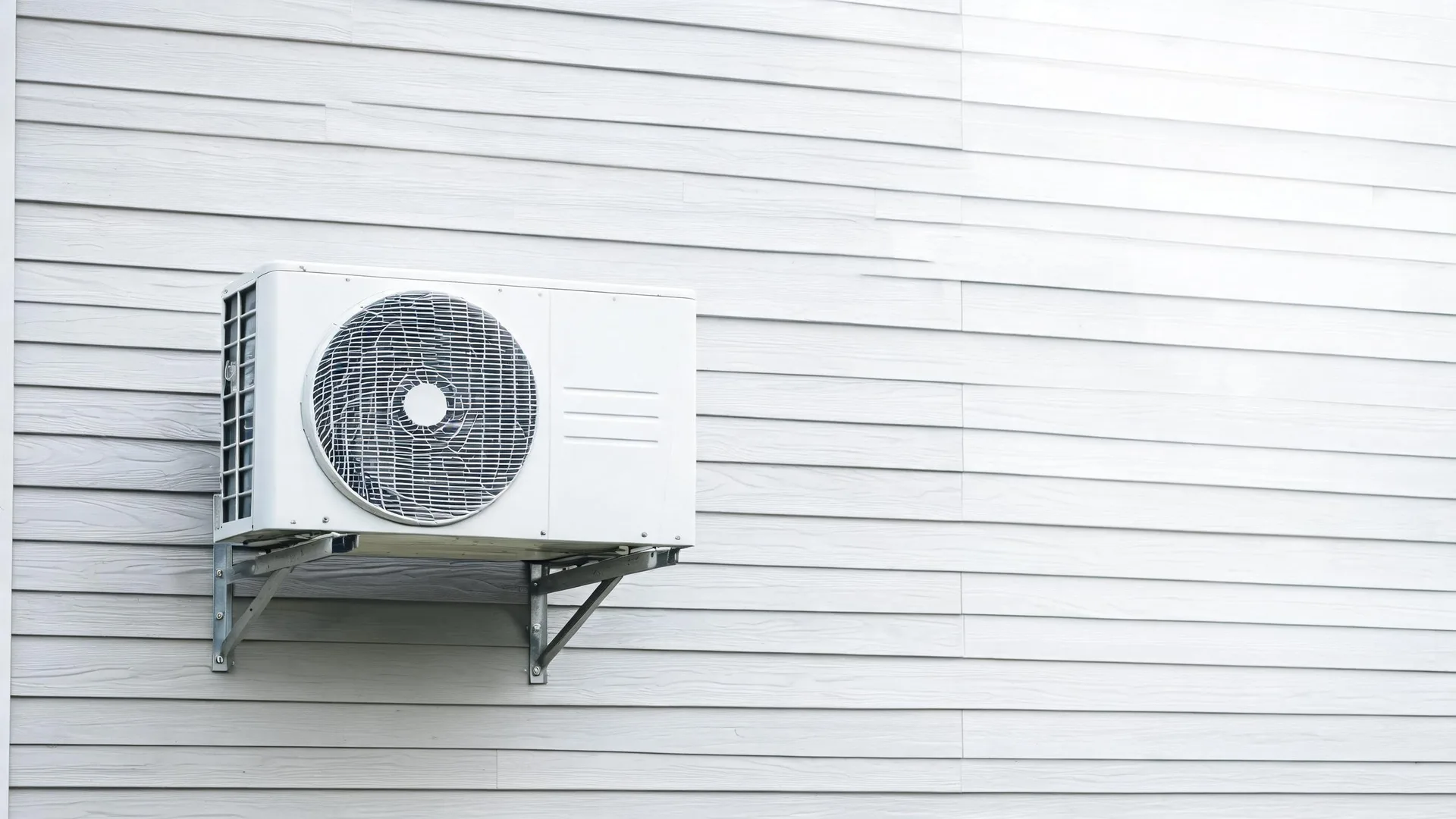
A white outdoor air conditioner condenser unit mounted on metal wall brackets against gray horizontal siding, with a blue sky and white clouds behind it.

An old house changes how this gets installed

A mini-split going into a house from 1944 or earlier isn't going into a duct system built for it. These homes were heated by radiators, and the walls and floors were never cut for ductwork. That favors a ductless system, since each indoor unit mounts on a wall or ceiling and runs its own small line set back to the outdoor condenser, no ducts required. Where the line set runs and how many walls it crosses is worth going over with whoever does the install, since that path affects how well each room holds the temperature you set.

The old system doesn't have to go anywhere

Adding a mini-split alongside a gas furnace means the furnace stays exactly where it is. Nothing about the gas lines, the burner or the ducts that serve it changes. The new system just gives the house a second way to heat and cool that doesn't run through those ducts at all.
What a working condenser or radiator is worth deciding on first

If a window unit or a space heater is getting replaced, that equipment comes out, but it was never tied into the house the way a furnace or radiator is. Worth figuring out early whether anything gets removed, reused, or just left running alongside the new unit, since that changes what the install crew needs to plan around.

Every mini-split quote names a model and a size, but the number worth asking about is the one for the specific room it's going into. A contractor should walk each space and work out its load from the windows, the insulation, and how the room is used, not just its square footage. Ask what that load came out to and why the unit matches it. The indoor and outdoor units also have to be rated to work together as a pair, so ask whether the quote is for a matched system or whether parts are being substituted. Ask too how the line set gets run and how many joints it needs, since every joint is a place a refrigerant leak can start. And ask what happens at low outdoor temperatures, because heat pumps lose capacity as it gets colder outside, and a unit that holds its output longer into the cold will keep the room warm on the days that matter most.

Installation starts with the outdoor condenser. It needs a pad or wall bracket, clearance on all sides for airflow, and a spot where the line set can reach the indoor unit without too many bends. That line set carries refrigerant lines, a condensate drain, and electrical wiring through a hole drilled in the wall, usually behind where the indoor head will hang. The crew mounts the indoor unit on a bracket first, runs the lines through the wall sleeve, then connects everything at both ends. Once the lines are joined, the system gets evacuated with a vacuum pump to pull out moisture and air before any refrigerant moves through it. Skip that step or rush it, and moisture left in the lines can cause corrosion or a restriction later. After the vacuum holds steady, the refrigerant valves open, the system gets powered up, and the tech checks the line pressures and the temperature split between the air going in and the air coming out of the indoor unit to confirm it's running the way it should.